
American Airlines Prepares RFP for Seatback Screens and High-Speed Connectivity on Narrowbody Fleet in 2026
American Airlines is shifting its inflight strategy, preparing a request for proposals to reinstall seatback entertainment screens across its narrowbody Boeing 737 and Airbus A321 fleets.

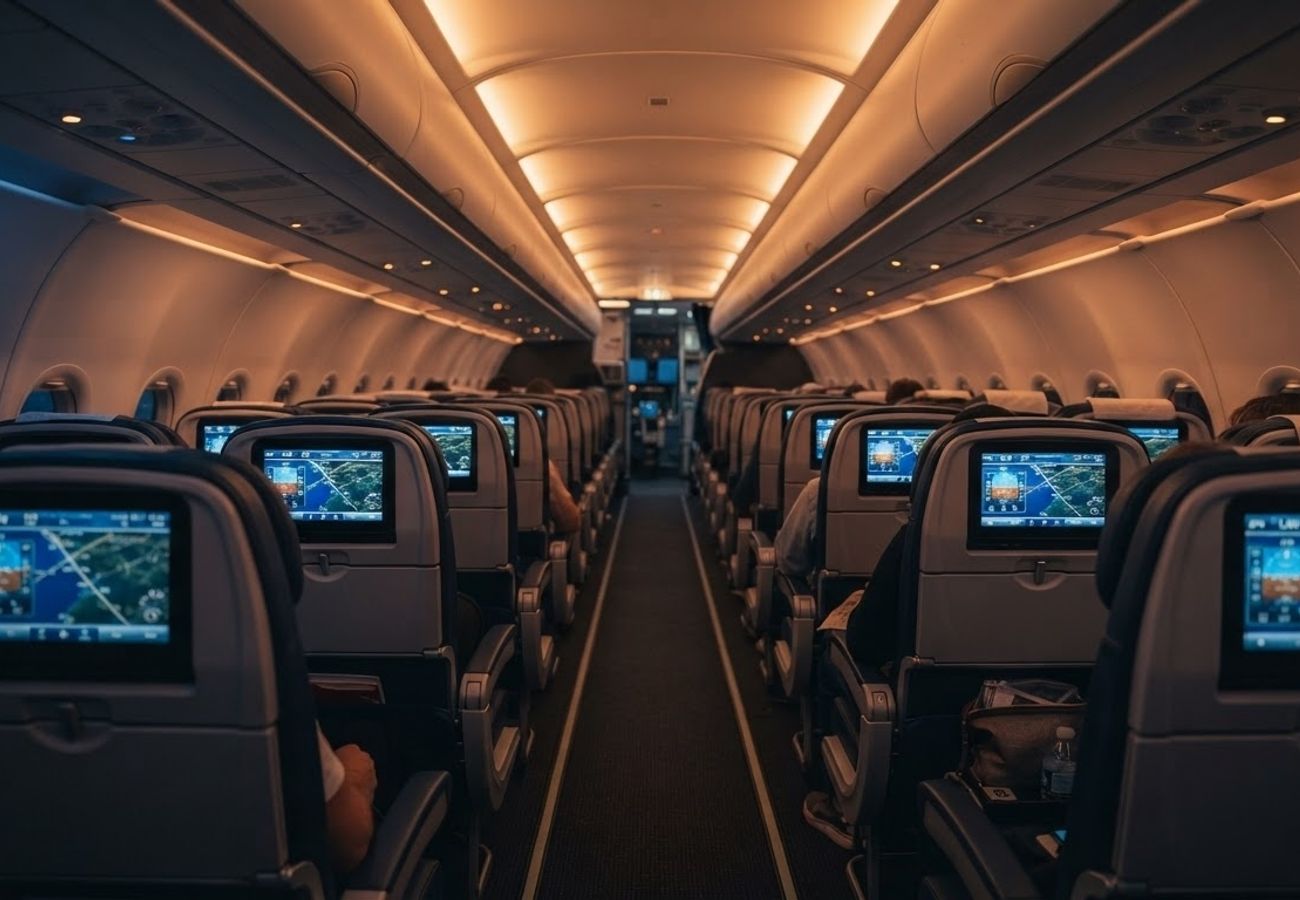
Image generated by AI
American Airlines is preparing a formal request for proposals (RFP) to reinstall seatback entertainment screens across its narrowbody fleet, marking a strategic reversal of its decade-long "bring your own device" (BYOD) policy.
Strategic Pivot in Inflight Entertainment
American Airlines is moving to integrate seatback entertainment and upgraded connectivity across its single-aisle aircraft. This shift follows years of removing screens from Boeing 737s and Airbus A321s under the "Project Oasis" retrofit program, which prioritized weight reduction and passenger-owned devices.
While the airline invested heavily in high-speed Wi-Fi and personal device holders, the lack of embedded screens created a perceived gap in product quality compared to Delta Air Lines and United Airlines. Both competitors have standardized high-definition displays and power outlets at every seat across their mainline narrowbody fleets.
Fleet and Hardware Impact Breakdown
Our analysis of the reported RFP indicates the airline is seeking integrated systems that combine next-generation hardware with high-bandwidth satellite connectivity.
- Affected Aircraft Models: The RFP covers Boeing 737 MAX and Airbus A321neo aircraft currently on order, as well as a significant portion of the existing Boeing 737 and Airbus A321 fleets.
- Technical Requirements: Vendors are expected to compete on screen weight, power efficiency, 4K display capabilities, and Bluetooth audio pairing.
- Connectivity Partners: American is reportedly in discussions with satellite providers, including Starlink and Amazon’s Kuiper project, to support these systems.
- Existing Exceptions: Currently, only a small subfleet of Airbus A319s and premium A321T transcontinental jets maintain built-in screens.
Passenger Rights & Advisory
For the affected passenger, the transition from a BYOD model to embedded screens changes the onboard experience and the expectations for service reliability.
Connectivity and Power Access Our analysis of the proposed upgrades suggests that the new systems will prioritize universal power ports at every seat. For passengers, this means a reduced reliance on portable battery packs and a decrease in "battery anxiety" during medium-to-long haul domestic flights.
Content Accessibility While American currently offers a streaming library via its portal, the shift to seatback screens means passengers will no longer need to manage their own hardware for moving maps and flight information. This is particularly beneficial for those with older devices that may not support the airline's current streaming protocols.
Rebooking and Service Standards While cabin hardware upgrades do not directly trigger compensation under EU261/2004 or DOT guidelines, the disparity in cabin products can lead to passenger dissatisfaction. We advise travelers to check the specific aircraft equipment via flight tracking tools or the airline's app to confirm if their specific flight is operated by a retrofitted or new-build aircraft.
Industry Analyst View
The decision to return to seatback screens signals that American Airlines now views hardware and connectivity as complementary rather than mutually exclusive. The original move to remove screens was driven by fuel-burn penalties associated with heavy legacy systems. However, the emergence of thinner, lighter 4K displays has mitigated these costs.
From a competitive standpoint, the "arms race" between the big three U.S. carriers has made embedded screens "table stakes" for full-service network airlines. High-yield corporate travelers, who frequently fly transcontinental and medium-haul trunk markets, typically demand a consistent premium environment. By aligning its narrowbody cabins with the 4K standards already promised for the Boeing 787-9 and Airbus A321XLR long-haul fleets, American aims to close the brand perception gap.
Implementation Timeline
Industry standards for RFP processes suggest a multi-month evaluation period. Due to certification and supply-chain lead times, the rollout is expected to follow this trajectory:
- Design & Testing: Refinement of hardware and satellite integration.
- New-Build Integration: New Boeing 737 MAX 10 and A321neo deliveries arriving in the late 2020s will likely feature the systems natively.
- Phased Retrofits: Existing aircraft will be upgraded in waves, likely focusing on high-traffic hub-to-hub and transcontinental routes first.
American Airlines is betting that a return to the screen will regain the loyalty of the premium domestic traveler.
Related Travel Guides
Disclaimer
This article is for informational and educational purposes only. It does not constitute legal, financial, or professional advice. While we strive to provide accurate and up-to-date information, travel policies, regulations, and conditions change rapidly. Always verify information with official sources before making travel decisions. Nomad Lawyer makes no representations about the accuracy, reliability, completeness, or suitability of the information provided. Readers should consult qualified professionals for advice specific to their circumstances. The views expressed in this article are those of the author and do not necessarily reflect the views of Nomad Lawyer.
Kunal K Choudhary
Co-Founder & Contributor
A passionate traveller and tech enthusiast. Kunal contributes to the vision and growth of Nomad Lawyer, bringing fresh perspectives and driving the community forward.
Learn more about our team →