
Trans-Tasman Aviation Disruptions: Air New Zealand, Qantas, and Jetstar Face Wave of Cancellations
Operational pressures have triggered a series of flight cancellations and delays across the Trans-Tasman network, with A

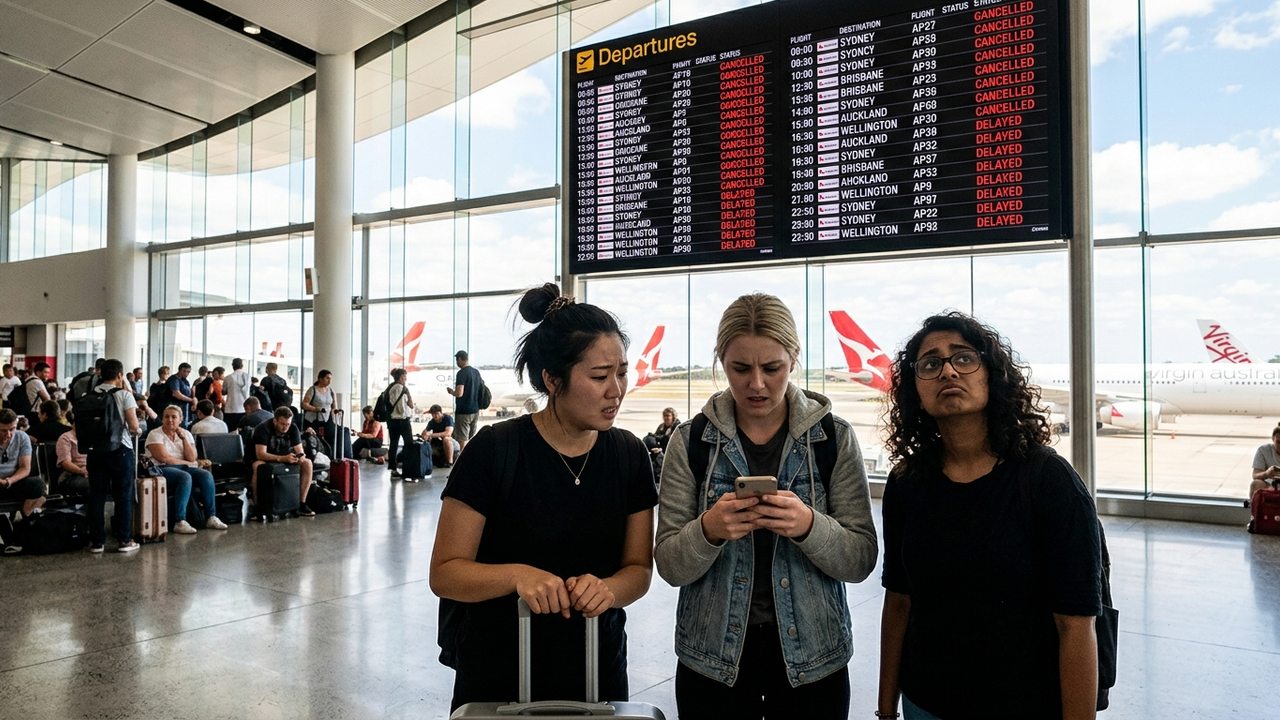
Image generated by AI
Aviation Gridlock Hits Key Australia-New Zealand Hubs
Travelers across Australia and New Zealand are facing significant itinerary disruptions as a wave of operational challenges hit three major carriers. A total of 22 flights were cancelled, accompanied by numerous delays, creating a ripple effect across domestic and international corridors.
The disruptions centered on high-traffic hubs, including Sydney and Brisbane in Australia, and Auckland, Wellington, and Christchurch in New Zealand. These outages have forced airlines to scramble for aircraft rotations and crew availability, leaving passengers to navigate revised schedules and missed connections.
While Qantas and Jetstar were impacted, the data reveals that Air New Zealand was the most heavily affected carrier, accounting for the vast majority of the suspended services.
Regional Breakdown of Flight Disruptions
The impact varied by city, with New Zealand's capital experiencing the most severe instability.
- Wellington International: Emerged as the hardest-hit airport, recording the highest volume of cancellations in the region.
- Sydney & Brisbane: Both major Australian gateways saw a mix of cancellations and heavy delays, primarily impacting trans-Tasman and domestic legs.
- Auckland & Christchurch: These hubs saw repeated disruptions, almost exclusively tied to Air New Zealand operations.
Operational Data: Cancellations and Delays
The following table details the specific impact across the affected airports and airlines:
| Airport | Cancelled Flights | Delayed Flights | Airline |
|---|---|---|---|
| Sydney | 1 | 69 | Air New Zealand |
| Sydney | 1 | 67 | Jetstar |
| Sydney | 1 | 0 | Qantas |
| Brisbane | 2 | 8 | Jetstar |
| Brisbane | 1 | 4 | Air New Zealand |
| Wellington Int’l | 7 | 3 | Air New Zealand |
| Wellington Int’l | 1 | 0 | Qantas |
| Auckland | 4 | 36 | Air New Zealand |
| Christchurch Int’l | 4 | 16 | Air New Zealand |
Strategic Analysis: Why This Matters
The concentration of cancellations within Air New Zealand (17 out of 22 total) suggests a carrier-specific operational bottleneck rather than a systemic regional weather event. When a single airline faces this level of disruption across multiple hubs—Auckland, Wellington, and Christchurch—it typically points to crew scheduling conflicts or aircraft maintenance surges.
For passengers, the impact is amplified on "thin" regional routes where alternative flight options are limited. The disruption of trans-Tasman flights between Sydney and New Zealand hubs creates a compounding effect, as delayed arrivals in Australia lead to delayed departures for the return legs.
Passenger Recovery Guide
If your travel plans are interrupted, aviation experts recommend the following steps:
- Verify Status Digitally: Use the airline's mobile app or official website for real-time updates before departing for the airport.
- Direct Communication: Prioritize online chat systems or phone lines over airport service desks to avoid long physical queues.
- Review Passenger Rights: Check the specific carrier's policy on rebooking and compensation. Note that rights vary by jurisdiction and whether the cancellation was within the airline's control.
- Explore Alternatives: If the next available flight is unsuitable, investigate alternative carriers or ground transportation (trains/buses) for domestic legs.
Key Takeaways
- Total Impact: 22 flights cancelled across five major Asia-Pacific cities.
- Primary Carrier Affected: Air New Zealand was responsible for 77% of all cancellations.
- Hardest Hit Hub: Wellington International Airport saw the highest number of suspended flights.
- Network Scope: Disruptions spanned both domestic regional travel and trans-Tasman international routes.
FAQ
Which airline had the most cancellations? Air New Zealand was the most affected, with 17 of the 22 total cancellations.
Which airports were most impacted? Wellington International Airport recorded the highest number of cancellations, while Sydney experienced the highest volume of delays.
What should I do if my flight is cancelled? Check your email and airline app for rebooking notices, contact customer service via digital channels, and review the airline's compensation policy.
Related Travel Guides
Disclaimer
This article is for informational and educational purposes only. It does not constitute legal, financial, or professional advice. While we strive to provide accurate and up-to-date information, travel policies, regulations, and conditions change rapidly. Always verify information with official sources before making travel decisions. Nomad Lawyer makes no representations about the accuracy, reliability, completeness, or suitability of the information provided. Readers should consult qualified professionals for advice specific to their circumstances. The views expressed in this article are those of the author and do not necessarily reflect the views of Nomad Lawyer.
Raushan Kumar
Founder & Lead Developer
Full-stack developer with 11+ years of experience and a passionate traveller. Raushan built Nomad Lawyer from the ground up with a vision to create the best travel and law experience on the web.
Learn more about our team →