
American Airlines Returns to Reykjavik Iceland After 7 Year Hiatus with New 2027 Global Routes
American Airlines reinstates its Philadelphia to Reykjavik route for 2027, capitalizing on the 'coolcation' trend while expanding its premium footprint into Vienna and Porto.

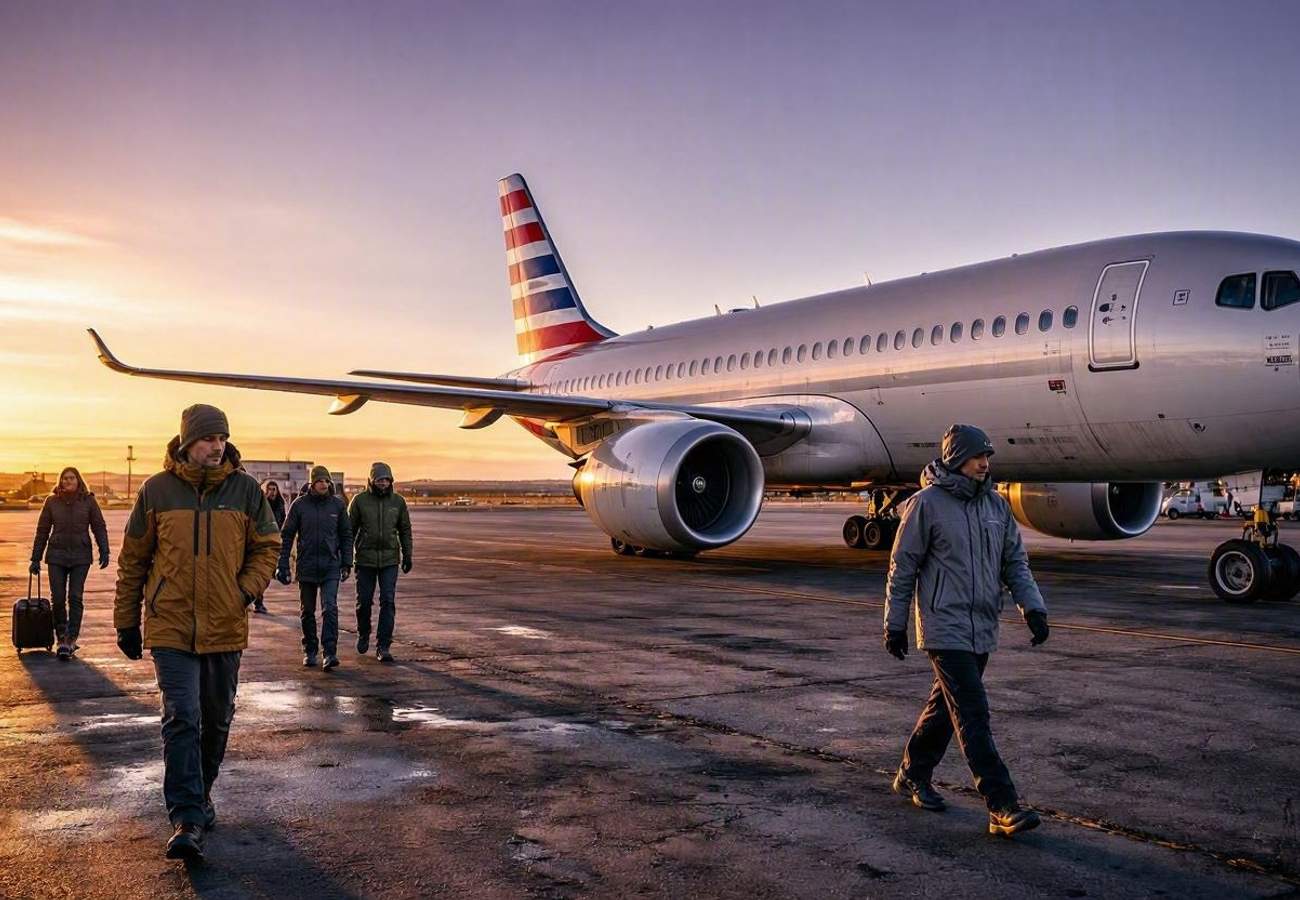
Image generated by AI
For the first time since 2019, American Airlines is reviving its connection to Iceland, ending a seven-year absence from the North Atlantic route. This return to Reykjavík is not merely a nostalgic flight path restoration but a strategic pivot toward a growing travel phenomenon known as "coolcations," where travelers intentionally seek out frigid climates to escape the increasingly oppressive heat waves of Southern Europe and North America.
The Rise of the Coolcation and the Return to Iceland
The travel industry is witnessing a fundamental shift in how people plan their summer escapes. While the Mediterranean has long been the gold standard for July and August, extreme temperature spikes have pushed a new wave of tourists toward the Arctic Circle. Iceland has emerged as the primary beneficiary of this trend, offering a sanctuary of temperate weather, midnight sun, and dramatic geological features.
American Airlines is leaning into this shift by reinstating the round-trip service from Philadelphia International Airport (PHL) to Reykjavík. The route, which vanished from the schedule in 2019 and was further sidelined by the global pandemic, is designed to capture the 2027 peak season. For those planning their next venture, the timing is precise: the peak Icelandic season begins in June, making the announcement in September 2026 a strategic window for early bookings.
Beyond the weather, the appeal lies in the raw, visceral experiences that Iceland provides. Travelers are increasingly prioritizing "bucket list" activities over traditional lounging. This includes snorkeling in the crystalline waters of the Silfra Fissure—where the North American and Eurasian tectonic plates diverge—and trekking across ancient glaciers. The allure of the aurora borealis also remains a primary driver for visitors, though the "coolcation" trend specifically emphasizes the relief of lower average summer temperatures.
Expanding the Premium Global Footprint
The return to Iceland is part of a much larger aggressive expansion strategy for Summer 2027. American Airlines is not just returning to old haunts; it is establishing entirely new beachheads in Europe and Asia. The airline has announced seven new routes, including three brand-new destinations that signal a push toward premium, long-haul travel.
One of the most significant milestones in this expansion is the launch of service to Vienna, Austria. American Airlines now stands as the only U.S. carrier providing direct service to the Austrian capital, a move that positions it uniquely in the Central European market. Additionally, the airline is introducing a new route to Porto, Portugal, further diversifying its Atlantic offerings.
The logistics of these flights reflect a commitment to modern aviation technology. The use of the Airbus A321XLR—a long-range, narrow-body aircraft—allows the airline to serve these "long-thin" routes (destinations with high demand but not enough to justify a massive jumbo jet) with greater efficiency and comfort.
For those looking at the full 2027 schedule, the expansion is detailed below:
| Origin | Destination | Start Date | Aircraft Type |
|---|---|---|---|
| Philadelphia, PA (PHL) | Reykjavik, Iceland (KEF) | May 27 | Airbus A321neo |
| Philadelphia, PA (PHL) | Vienna, Austria (VIE) | May 6 | Airbus A321XLR |
| Philadelphia, PA (PHL) | Porto, Portugal (OPO) | March 28 | Airbus A321XLR |
| Charlotte, NC (CLT) | Barcelona, Spain (BCN) | May 27 | Boeing 777-200ER |
| New York (JFK) | Amsterdam, Netherlands (AMS) | March 28 | Airbus A321XLR |
| New York (JFK) | Nice, France (NCE) | May 6 | Airbus A321XLR |
| Chicago, IL (ORD) | Tokyo, Japan (NRT) | March 19 | Boeing 787-9 |
The addition of the Chicago to Tokyo Narita route is particularly timed to coincide with the cherry blossom festivals, one of Japan's most high-traffic periods. This route is bolstered by a partnership with Japan Airlines, simplifying the logistics for North American travelers entering the East Asian market.
Visitor Insider Tips
Navigating a trip to Iceland or the new European destinations requires more than just a ticket. To make the most of these new routes, consider these local insights:
Timing the North: If you are heading to Reykjavík for a "coolcation," aim for the window between late June and early August. This is when you experience the midnight sun, providing nearly 24 hours of daylight for exploring. However, to avoid the heaviest crowds at the Blue Lagoon or the Golden Circle, arrive at these sites before 8:00 AM or after 7:00 PM.
The AAdvantage Edge: For frequent flyers, the American Airlines AAdvantage program is a significant tool for these routes. Earning and redeeming miles for international travel is often more efficient when utilizing partner airlines like Japan Airlines for the Tokyo leg.
Transport in Iceland: Once you land at Keflavík (KEF), remember that the airport is roughly 45 minutes from the city center. While rental cars are the standard for exploring the Ring Road, the Flybus service is the most reliable way to reach downtown Reykjavík without the stress of navigating Icelandic wind and weather.
Etiquette and Essentials: In Iceland, tapping is king; you will rarely need physical cash. Additionally, always pack a high-quality waterproof shell—not just an umbrella—as the wind in the North Atlantic often renders umbrellas useless.
Cultural and Environmental Context
The surge in "coolcationing" brings a complex set of challenges to destinations like Iceland. While the economic influx from increased flights is welcome, the environmental strain on fragile volcanic soil and moss-covered lava fields is a growing concern. Iceland's tourism board and local authorities have been working to steer visitors away from over-saturated sites toward the Westfjords and the North to distribute the human footprint more evenly.
The interaction between massive U.S. carriers and small island nations often highlights the tension between accessibility and preservation. As American Airlines increases capacity, the pressure on local infrastructure—from hotel beds in Reykjavík to the parking lots of the Skógafoss waterfall—intensifies. Travelers are encouraged to visit UNESCO World Heritage sites in the region with a "leave no trace" mentality to ensure these landscapes survive the boom in Arctic tourism.
Furthermore, the shift away from Southern Europe due to heat waves is a direct reflection of climate change influencing global tourism patterns. The "coolcation" is not just a trend; it is a behavioral adaptation to a warming planet, shifting the economic center of summer tourism from the Mediterranean to the North Atlantic.
FAQ: Visiting Iceland and Europe 2027
What is the best time to visit Iceland for the Northern Lights? The aurora borealis is best viewed from September to March when the nights are longest and darkest. However, if you are seeking the "coolcation" experience with extended daylight, June through August is ideal.
Do I need a visa to visit Iceland or Austria? U.S. citizens typically do not need a visa for short-term tourism in the Schengen Area (which includes Iceland and Austria). However, ensure your passport is valid for at least six months beyond your planned departure date.
How do I get from Keflavík Airport to Reykjavík? The most common methods are the Flybus or Airport Direct shuttles, which run frequently. Alternatively, renting a 4x4 vehicle is highly recommended if you plan to leave the city and explore the highlands.
Is it safe for solo travelers in Iceland? Yes, Iceland consistently ranks as one of the safest countries in the world for solo travelers. The primary risks are environmental (weather and terrain) rather than social.
Trade the heatwave for a glacier and see why the North is the new summer gold standard.
Related Travel Guides
Disclaimer
This article is for informational and educational purposes only. It does not constitute legal, financial, or professional advice. While we strive to provide accurate and up-to-date information, travel policies, regulations, and conditions change rapidly. Always verify information with official sources before making travel decisions. Nomad Lawyer makes no representations about the accuracy, reliability, completeness, or suitability of the information provided. Readers should consult qualified professionals for advice specific to their circumstances. The views expressed in this article are those of the author and do not necessarily reflect the views of Nomad Lawyer.
Naina Thakur
Contributor & Travel Specialist
Travel enthusiast and legal writer covering visa regulations, responsible tourism, and cultural journeys across global destinations.
Learn more about our team →