
Canada’s Arctic Tourism Doctrine: Linking Polar Sovereignty, Dual-Use Infrastructure, and Indigenous Governance
Canada reframes Arctic tourism as a cornerstone of polar sovereignty, integrating dual-use airstrips, CanNor enterprise grants, and Inuit co-governance across the Far North.

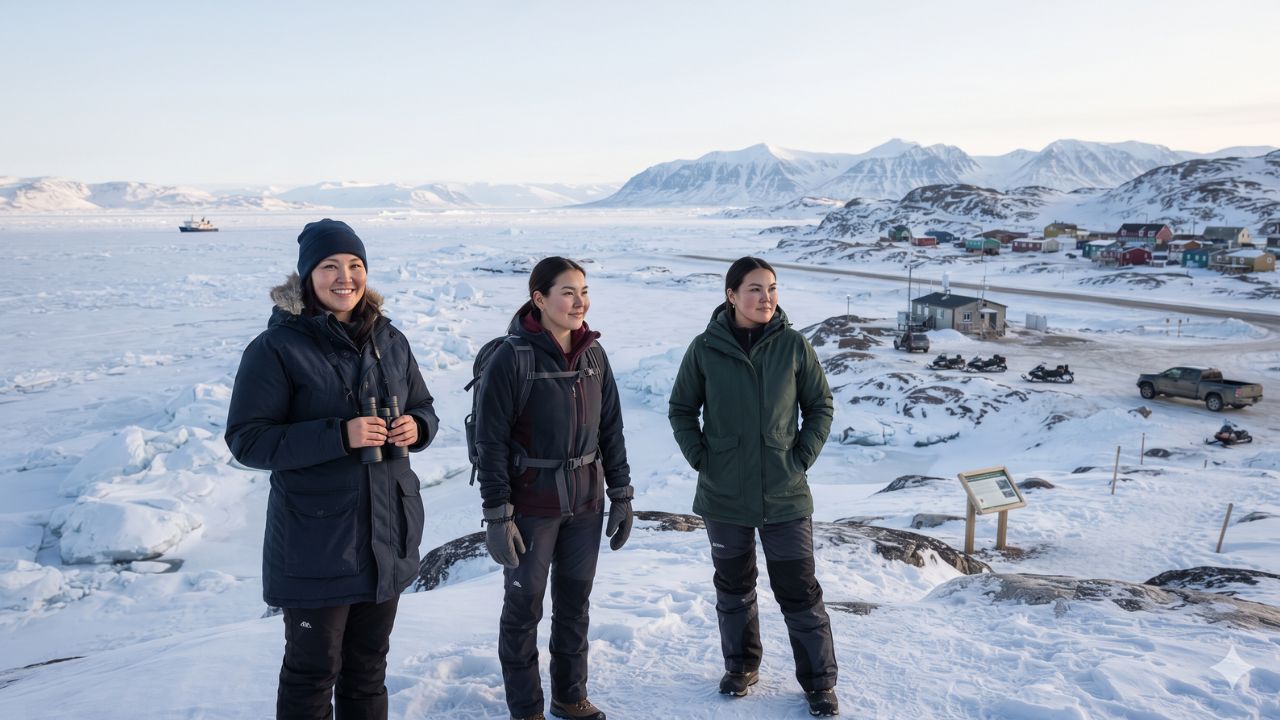
With Indigenous populations comprising more than 50 percent of the permanent populace across Canada’s northern territories and federal capital channeled through targeted dual-use infrastructure, Canada is executing a structural realignment that fuses Arctic tourism directly with polar sovereignty. Articulated by Canadian Foreign Affairs Minister Anita Anand before circumpolar leaders at the Arctic Circle Assembly in Reykjavík, Iceland, the federal doctrine formally reframes the Far North from an extractive resource frontier into an inhabited, culturally governed homeland. By unifying administrative strategies across Yukon, the Northwest Territories (NWT), and Nunavut under the Arctic Canada Tourism Network (ACTN), Ottawa is demonstrating that sustainable, high-yield visitor economies serve as frontline instruments of geopolitical presence and territorial integrity.
Administered regionally through the Canadian Northern Economic Development Agency (CanNor) and co-designed alongside national Inuit leadership through Inuit Tapiriit Kanatami (ITK), the policy represents a decisive rejection of absentee northern management. Rather than treating national security purely as a military equation, Canadian policy asserts that sovereign territory is most effectively defended by prosperous, self-determining northern communities equipped with modern transport networks, environmental monitoring capacity, and globally competitive cultural tourism enterprises.
The Reykjavík Doctrine: From Resource Frontier to Living Homeland
The momentum behind Canada’s updated northern strategy was unveiled at the Arctic Circle Assembly, where Minister Anand framed community economic viability as the bedrock of Arctic defense. In an era marked by shifting circumpolar navigation corridors, accelerating climate transformation, and intensifying great-power interest in the Northwest Passage, the federal government has positioned resident-led tourism as a vehicle for continuous territorial stewardship.
Under this doctrine, territorial defense relies on community resilience. Military forward operating locations derive operational value only when embedded alongside thriving civilian settlements that maintain year-round supply lines, medical facilities, and search-and-rescue readiness. By aligning foreign policy commitments with territorial development, Canada links domestic community spending directly to its Arctic Council and circumpolar defense mandates.
A central institutional achievement of this realignment is the eradication of inter-territorial competition. Historical marketing rivalries between Whitehorse, Yellowknife, and Iqaluit have been replaced by the Arctic Canada Tourism Network. By establishing a unified international brand identity, the collaborative framework pools international promotion budgets, prevents price wars, and negotiates directly with high-end expedition cruise lines and overseas operators.
Furthermore, Canadian northern leadership has established transatlantic operational ties through bilateral partnerships with the Arctic Europe Tourism Cluster (AETC). This circumpolar alliance shares best practices across northern Norway, Sweden, Finland, and Canada, establishing common safety certifications for sub-zero wilderness expeditions, cold-weather hospitality workforce training, and synchronized environmental regulations governing high-latitude maritime transits.
Dual-Use Infrastructure, Capital Deployment, and Indigenous-Led Enterprise
The physical reality of Arctic expedition travel requires capital investment in transport and connectivity. To bridge the infrastructure gap between southern metropolitan centers and remote high-latitude hamlets, federal planning utilizes a "dual-use" development model where civil aviation, maritime security, and tourism access share common capital assets:
- Remote Airstrip Extensions: Paving and lengthening gravel runways across remote settlements ensures year-round landing capability for Royal Canadian Air Force transport aircraft while simultaneously allowing scheduled commercial flights and chartered passenger jets to land safely.
- Deep-Water Port Infrastructure: Modern marine berthing facilities engineered to dock offshore patrol vessels provide the freshwater bunkering, fueling, and waste-disposal services required by regulated expedition cruise ships.
- Low-Earth Orbit Telecommunications: Deploying high-speed satellite arrays and subsea fiber-optic cables across northern hamlets strengthens defense early-warning communication arrays while providing local outfitting cooperatives and international travelers with reliable data uplinks.
- Logistical Search-and-Rescue Hubs: Upgrading regional air and sea bases ensures that civilian search-and-rescue teams can mobilize immediately across hazardous maritime straits, substantially reducing medical evacuation risk for remote wilderness travelers.
To ensure federal funding directly benefits northern communities, CanNor distributes capital straight to local operators. Signature funding programs support Inuit-owned outfitters like Arctic Bay Adventures in northern Baffin Island, enabling the acquisition of specialized safety gear, heated all-terrain passenger transport, and digital reservation platforms for spring floe-edge expeditions. Concurrently, regional initiatives like the Yukon "Spark" Micro-Grant fund emerging entrepreneurs specializing in guided aurora viewing, dog-sledding, and traditional artisan crafts, while major capital investments modernize cultural orientation facilities like the Unikkaarvik Visitor Centre in Iqaluit.
The following data table breaks down the strategic pillars, operational objectives, and traveler impacts governing Canada's unified Arctic tourism doctrine:
| Strategic Policy Pillar | Implementing Agencies & Partners | Core Operational Objective | Traveler & Economic Impact |
|---|---|---|---|
| Arctic Canada Tourism Network (ACTN) | Yukon, NWT, and Nunavut territorial tourism boards | Unified international marketing and brand cohesion | Eliminates regional competition; pools global marketing; creates multi-territory travel corridors |
| Dual-Use Aviation & Port Infrastructure | Transport Canada, Department of National Defence, CanNor | Pave high-latitude runways; build deep-water ports | Expands commercial jet access; enables regulated cruise docking; provides emergency medical evacuation |
| Grassroots Enterprise Funding | CanNor, Yukon "Spark" Grants, Spectacular NWT | Direct capital injections to northern-owned operators | Funds safety equipment for outfitters like Arctic Bay Adventures; expands modern digital booking |
| Indigenous Co-Governance Framework | Inuit Tapiriit Kanatami (ITK), land-claim authorities | Co-design travel rules based on traditional knowledge | Ensures local storytelling ownership; protects hunting grounds; enforces local economic retention |
| Circumpolar Safety Alliances | Arctic Europe Tourism Cluster (AETC), ACTN | Standardize cold-climate hospitality and marine protocols | Enforces strict vessel ice-class limits, guide certifications, and Leave-No-Trace operational rules |
Expert Analysis: The Economics of Regenerative High-Latitude Travel, Cruise Restrictions, and Indigenous Qaujimajatuqangit
Canada’s Arctic tourism model deliberately diverges from the mass-market, high-density cruise ship economics that have overwhelmed ports in the Caribbean and Southern Europe.
For travelers booking this route, the direct consequence is an elevated financial threshold that reflects genuine operational safety and environmental protection. High-latitude expedition voyages through the Northwest Passage or winter dog-sledding expeditions across Nunavut command premium tariffs ranging from $10,000 to over $25,000 per person. These prices are driven not by artificial scarcity, but by the mandatory inclusion of specialized ice-strengthened hulls, mandatory indigenous cultural guides, private medical personnel, and extensive emergency extraction insurance.
The pricing pressure this creates means that outbound tour operators can no longer treat the Canadian Arctic as a passive photo backdrop. Under regulatory frameworks developed with Inuit Tapiriit Kanatami, commercial travel licenses require measurable local economic retention. Cruise vessels and terrestrial outfitters must demonstrate direct local employment, purchase regional country foods—such as arctic char and caribou—from local hunters, and pay access fees directly to municipal land-claim corporations.
Central to this governance is the formal integration of Inuit Qaujimajatuqangit (IQ)—the codified body of Inuit traditional ecological knowledge. Rather than relying solely on satellite weather modeling, expedition operators must respect seasonal wildlife movement alerts, historical sea-ice drift observations, and traditional hunting seasons communicated by community elders. Mandatory wildlife buffer zones dictate strict vessel approach distances, engine noise restrictions near narwhal migration corridors, and passenger group caps on tundra shore landings.
By transforming northern tourism into a regulated, high-value, community-led industry, Canada achieves an essential geopolitical objective. Every licensed wilderness guide, operational airfield, and staffed visitor center across the 60th parallel acts as tangible proof of active civilian occupation, transforming independent travel into an enduring pillar of Arctic sovereignty.
Key Takeaways
- Sovereignty Through Community Strength: Canadian Arctic strategy formally connects northern economic resilience with polar defense and 21st-century national sovereignty.
- Unified Pan-Territorial Alliance: The Arctic Canada Tourism Network unites Yukon, Northwest Territories, and Nunavut, replacing competition with pooled marketing and safety standards.
- Dual-Use Infrastructure Investment: Upgraded remote runways, deep-water ports, and satellite communications serve both national security operations and commercial expedition travel.
- Direct Grassroots Funding: Federal capital through CanNor delivers direct enterprise grants to local operators, including Arctic Bay Adventures and cultural centers in Iqaluit.
- Indigenous-Led Governance: Guidelines co-designed with Inuit Tapiriit Kanatami mandate that Inuit Qaujimajatuqangit (traditional knowledge) shapes seasonal routes, protecting wildlife and retaining local revenue.
FAQ: Canadian Arctic Tourism and Polar Sovereignty 2026
What was Minister Anita Anand's Arctic announcement in Reykjavík?
Minister Anita Anand declared at the Arctic Circle Assembly that Canada views its Arctic as an inhabited, living homeland where community economic strength and tourism directly reinforce polar sovereignty.
What is dual-use infrastructure in Canada's Arctic?
Dual-use infrastructure refers to capital assets—such as paved high-latitude runways, deep-water ports, and satellite networks—that simultaneously support military defense operations and civilian tourism transport.
How does Inuit traditional knowledge affect travelers visiting Nunavut?
Under Inuit Qaujimajatuqangit, traditional ecological knowledge dictates mandatory wildlife buffer zones, seasonal travel routes, and small-group shore visits to protect wildlife and traditional hunting territories.
Why are Arctic expeditions in Canada priced at a premium?
High pricing reflects strict environmental standards, small passenger caps, mandatory local Inuit guide ratios, specialized ice-class vessels, and comprehensive remote search-and-rescue contingency systems.
By anchoring Arctic defense in the cultural pride and economic autonomy of its northern peoples, Canada demonstrates that the truest guardian of polar sovereignty is a living, flourishing homeland.
Related Travel Guides
Disclaimer
This article is for informational and educational purposes only. It does not constitute legal, financial, or professional advice. While we strive to provide accurate and up-to-date information, travel policies, regulations, and conditions change rapidly. Always verify information with official sources before making travel decisions. Nomad Lawyer makes no representations about the accuracy, reliability, completeness, or suitability of the information provided. Readers should consult qualified professionals for advice specific to their circumstances. The views expressed in this article are those of the author and do not necessarily reflect the views of Nomad Lawyer.
Naina Thakur
Contributor & Travel Specialist
Travel enthusiast and legal writer covering visa regulations, responsible tourism, and cultural journeys across global destinations.
Learn more about our team →