
Alaska Airlines and Boeing Launch Virtual Airplane Training Platform for US Pilot Education
Alaska Airlines partners with Boeing to implement revolutionary Virtual Airplane Training Platform, transforming US pilot training with cost-effective digital solutions and immersive cockpit simulation technology.

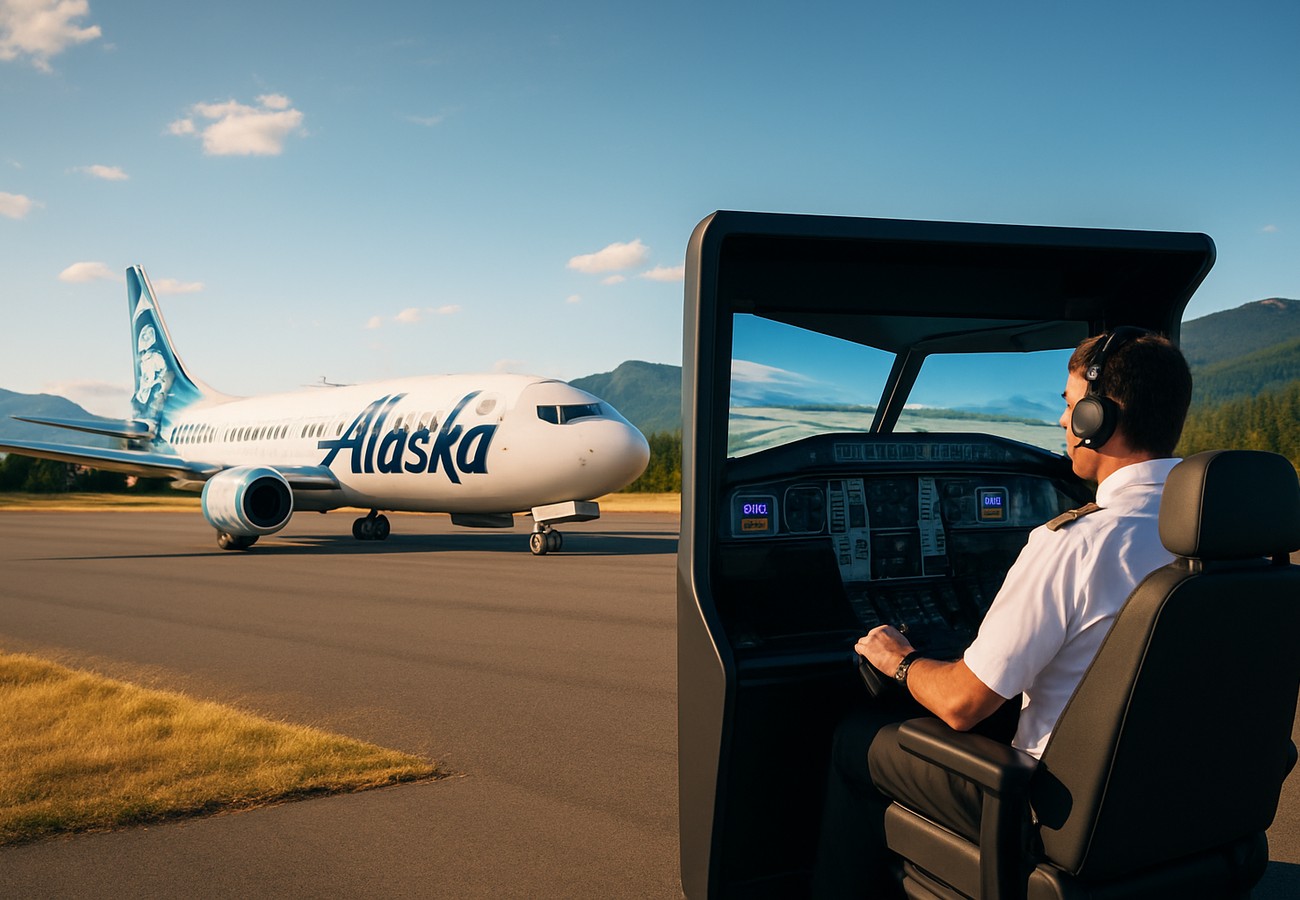
Image generated by AI
Alaska Airlines and Boeing Launch Virtual Airplane Training Platform to Revolutionize US Pilot Training Standards
Historic Partnership Brings Cost-Effective Digital Cockpit Simulation to American Carriers
Alaska Airlines has announced a landmark strategic partnership with Boeing to deploy the groundbreaking Boeing Virtual Airplane Training Platform, a revolutionary digital solution poised to fundamentally reshape how pilots are trained across the United States. Unveiled at the prestigious 2026 World Aviation Training Summit, this innovative collaboration marks a pivotal moment in modern aviation education, offering U.S. carriers an unprecedented opportunity to enhance pilot competency while dramatically reducing operational training expenses.
The Transformation of US Aviation Training Begins
The aviation industry has long grappled with the escalating costs and logistical challenges associated with traditional flight simulator training. Alaska Airlines' decision to embrace Boeing's cutting-edge virtual training ecosystem signals a broader industry shift toward digital-first pilot education methods. This partnership arrives at a critical juncture, as the U.S. aviation sector confronts mounting demand for well-trained aviators and the need for more flexible, scalable training infrastructure.
The Boeing Virtual Airplane Training Platform represents a watershed moment in pilot preparation methodology. Rather than confining training exercises to expensive, maintenance-intensive full-motion simulators, this digital platform delivers comprehensive cockpit functionality through accessible software deployable on tablets and standard computers. The implications are profound: airlines can now maintain training quality while liberating themselves from substantial capital expenditures and infrastructure constraints.
Boeing Virtual Airplane Platform: Core Features and Capabilities
The Boeing Virtual Airplane system has been engineered with several transformative capabilities that distinguish it from conventional training approaches:
Unparalleled Flexibility and Accessibility Pilots can now complete training modules on-demand, from virtually any location, eliminating geographical and scheduling constraints that have historically limited training frequency and accessibility. This distributed training model enables aspiring aviators to maintain consistent skill development without extended absences from operational duties.
Comprehensive Procedures Training Architecture The platform delivers immersive, scenario-based training covering critical cockpit procedures, flight management system (FMS) operations, and complex aviation tasks. Pilots undergo realistic simulations that directly correlate with actual flight operations, bridging the gap between theoretical knowledge and practical application.
Advanced Flight Management System (FMS) Trainer A standout innovation, the integrated FMS trainer permits pilots to practice data entry, simulate aircraft systems operations, and master the intricate procedures essential to modern commercial aviation. This specialized component addresses one of aviation's most challenging training elements with unprecedented interactivity.
Economically Advantageous and Infinitely Scalable Compared to full-motion simulators requiring substantial ongoing maintenance and capital investment, the virtual platform offers dramatically reduced costs while simultaneously enabling airlines to expand training capacity without proportional financial burden. This cost-effectiveness permits even smaller carriers to access world-class pilot training infrastructure.
Immersive Digital Learning Environment Realistic virtual simulations create engaging training experiences that demonstrably improve pilot preparedness for real-world flying scenarios. The immersive nature of the platform enhances knowledge retention and practical skill development compared to traditional classroom-based instruction.
Alaska Airlines' Strategic Vision for Pilot Training Excellence
Alaska Airlines has consistently positioned itself as an innovation leader within American aviation. The carrier's decision to integrate Boeing's Virtual Airplane platform reflects years of collaborative development between Alaska Airlines' training department and Boeing's engineering teams. Alaska Airlines has already experienced tangible benefits from Boeing's digital cockpit solutions within existing pilot programs, validating the partnership's foundational premise.
This strategic implementation will establish a hybrid training model, seamlessly integrating the Boeing Virtual Airplane system with Alaska Airlines' traditional training methodologies. The result is an elevated training regimen that maximizes pilot preparedness while maintaining rigorous educational integrity. Alaska Airlines anticipates that this digital infrastructure will enable more frequent training iterations, greater scheduling flexibility, and enhanced consistency in training delivery across the airline's entire pilot roster.
The partnership demonstrates Alaska Airlines' unwavering commitment to pilot excellence and operational safety. By embracing this transformative technology, the airline reinforces its market position as an industry standard-bearer for pilot development and workforce preparation.
Broader Industry Implications: The Future of US Aviation Training
The widespread adoption of virtual training platforms like Boeing's represents a potential nationwide revolution in pilot education methodology. As U.S. air traffic continues its upward trajectory and pilot demand intensifies, the aviation industry must embrace modern training solutions capable of meeting contemporary educational requirements.
While conventional flight simulators have served aviation admirably for decades, digital tools and virtual reality (VR) technologies are rapidly becoming indispensable to contemporary pilot education. These platforms possess inherent advantages: they adapt quickly to emerging aircraft systems, enable timely training on cutting-edge technologies, and provide cost structures permitting frequent training iterations.
As Boeing expands its virtual training portfolio, other U.S. carriers will undoubtedly recognize the operational and financial advantages, potentially catalyzing industry-wide adoption. This technological migration could substantially diminish pilot training costs across the entire American aviation sector while simultaneously elevating safety standards and operational reliability.
Industry Analysis: Drivers of Transformation
Multiple factors converge to make virtual training platforms increasingly attractive to U.S. carriers:
- Pilot Shortage Mitigation: Enhanced training capacity enables airlines to develop pilot talent more efficiently, partially addressing the sector's persistent pilot shortage
- Operational Cost Reduction: Eliminating simulator maintenance costs and maximizing training facility utilization directly impacts airline profitability
- Regulatory Compliance: Virtual platforms can be rapidly updated to reflect evolving Federal Aviation Administration (FAA) standards and procedures
- Safety Enhancement: Increased training frequency and accessibility contribute to higher proficiency levels and improved safety outcomes
- Flexibility for Operations: Distributed training enables pilots to maintain operational schedules while completing required training iterations
Alaska Airlines: A Legacy of Aviation Innovation
Alaska Airlines has established itself as a forward-thinking carrier committed to excellence in pilot training and operational performance. The airline's training department has consistently prioritized safety, efficiency, and continuous adaptation to evolving aviation requirements. This partnership with Boeing represents an organic extension of Alaska Airlines' longstanding commitment to innovative pilot development.
The integration of the Virtual Airplane platform into Alaska Airlines' training framework underscores the carrier's dedication to maintaining the highest training standards while positioning itself advantageously within an increasingly competitive U.S. aviation marketplace.
Conclusion: A New Era in US Pilot Education
The collaboration between Alaska Airlines and Boeing marks a transformative milestone in American aviation training evolution. As the U.S. aviation industry expands and pilot demand intensifies, training methodology must advance in parallel. By embracing sophisticated virtual training technology, Alaska Airlines and its industry peers can sustain leadership in aviation safety, operational efficiency, and workforce development.
This partnership inaugurates a new era wherein traditional pilot training methods are augmented by virtual solutions that demonstrably enhance training outcomes, improve safety standards, and increase operational efficiency. Alaska Airlines' pioneering embrace of Boeing's Virtual Airplane Training Platform provides an instructive model for the entire U.S. aviation sector, offering a compelling vision of aviation training's future.
Key Takeaways
- Landmark Partnership: Alaska Airlines and Boeing collaborate to deploy the Virtual Airplane Training Platform, reshaping U.S. pilot education
- Cost Reduction: Digital training substantially reduces expenses compared to traditional full-motion simulator infrastructure
- Enhanced Accessibility: Pilots can complete training modules remotely and on-demand, maximizing scheduling flexibility
- Safety Improvement: Increased training frequency and immersive simulations directly correlate with enhanced pilot proficiency
- Industry-Wide Implications: Widespread adoption could transform pilot training across the entire U.S. aviation sector
- Hybrid Training Model: Alaska Airlines integrates virtual training with traditional methods for comprehensive pilot development
- Future-Ready: The platform rapidly adapts to new aircraft systems and evolving regulatory requirements
Related Travel Guides
Disclaimer
This article is for informational and educational purposes only. It does not constitute legal, financial, or professional advice. While we strive to provide accurate and up-to-date information, travel policies, regulations, and conditions change rapidly. Always verify information with official sources before making travel decisions. Nomad Lawyer makes no representations about the accuracy, reliability, completeness, or suitability of the information provided. Readers should consult qualified professionals for advice specific to their circumstances. The views expressed in this article are those of the author and do not necessarily reflect the views of Nomad Lawyer.
Kunal K Choudhary
Co-Founder & Contributor
A passionate traveller and tech enthusiast. Kunal contributes to the vision and growth of Nomad Lawyer, bringing fresh perspectives and driving the community forward.
Learn more about our team →