Atlas Ocean Voyages Unveils Grand Voyage Collection Featuring 16 Extended Expeditions Across Europe and the Arctic for 2027–2028

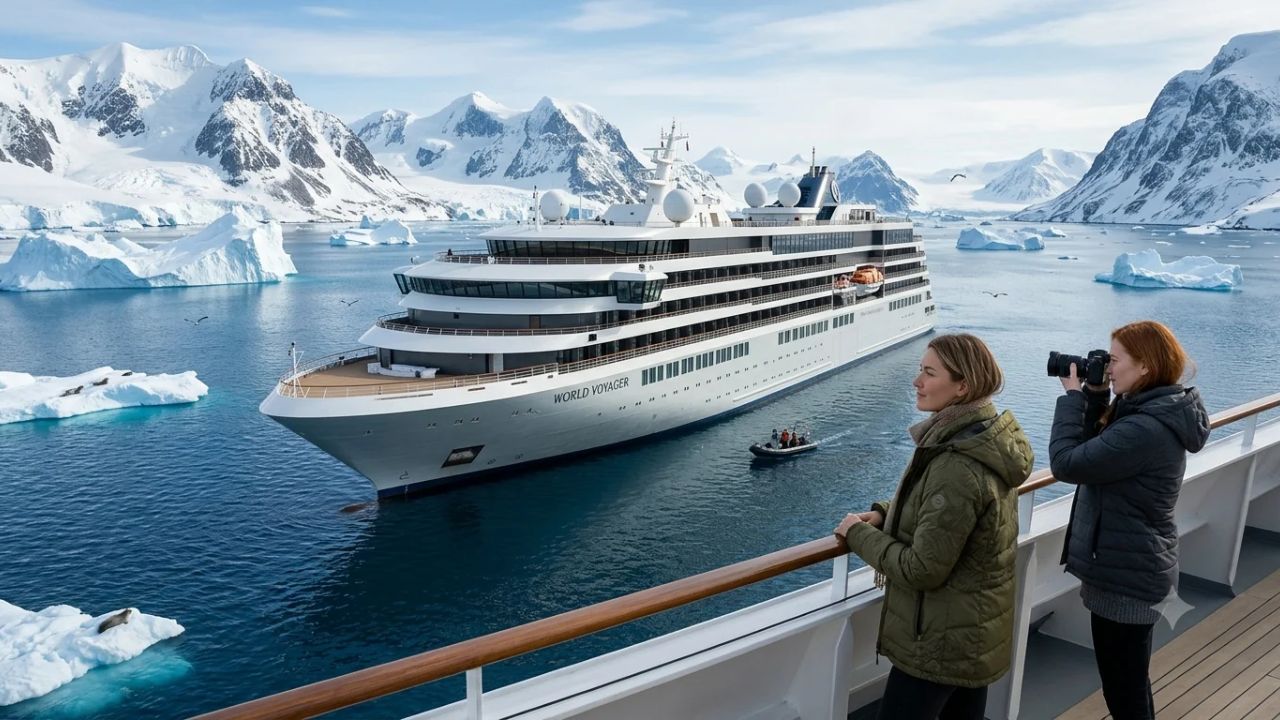
LISBON — Atlas Ocean Voyages has formally introduced its ambitious Grand Voyage Collection for the 2027 and 2028 sailing seasons, unveiling sixteen extended combination journeys across Europe, the Mediterranean, Northern Europe, and the High Arctic. Designed around the brand’s trio of purpose-built luxury expedition yachts—World Navigator, World Traveller, and World Voyager—the newly expanded deployment connects two to three consecutive voyages into singular itineraries spanning between 14 and 31 nights. The strategic programme responds directly to an escalating global preference among luxury travelers for immersive, slow-paced maritime exploration that eliminates the logistical friction of frequent stateroom transfers, airport connections, and fragmented travel bookings.
The centerpiece of the comprehensive collection is an extraordinary 31-night polar-to-temperate expedition scheduled for September 2028. Sailing aboard World Voyager, the month-long voyage departs from the remote Arctic outpost of Longyearbyen in Svalbard, navigating south through Norwegian fjords, the North Sea, and Western Europe's Atlantic rim before concluding in Lisbon. Across both sailing years, the boutique cruise line has mapped routes that blend classical Mediterranean culture with extreme polar wilderness, utilizing small-ship technical advantages to dock in historic city centers and secluded natural harbors entirely inaccessible to conventional mega-cruise vessels.
The Evolution of Slow Travel in the Luxury Expedition Sector
The unveiling of the Grand Voyage Collection signals a broader structural transformation within the global luxury expedition cruise industry. For decades, the standard expedition model relied on compact seven- to ten-night itineraries engineered around rapid turnaround cycles. While commercially efficient, this structure increasingly clashed with the expectations of discerning international travelers—particularly long-haul vacationers from North America, Australasia, and Asia—who view extensive air travel as an investment that warrants deeper, uninterrupted regional immersion.
By linking distinct voyages into continuous extended journeys, Atlas Ocean Voyages addresses the primary pain points of contemporary luxury travel:
- Seamless Single-Ship Continuity: Guests remain in the same stateroom or suite across multiple sailing segments, avoiding the disruptive chores of repacking, mid-voyage hotel transfers, and repetitive embarkation security screenings.
- Geographic and Cultural Contrast: Combining warm-water Mediterranean and Atlantic itineraries with high-latitude sub-Arctic and polar environments offers dramatic environmental variety within a single vacation window.
- Extended Port Dwell Times: Smaller passenger manifests enable extended stays and overnight calls in marquee ports such as Seville, Bordeaux, Venice, Istanbul, and Tromsø, allowing guests to experience destinations after day-tourist crowds disperse.
- Curated Expedition Enrichment: Rather than generic shipboard lectures, extended voyages feature rotating teams of destination specialists, including marine biologists, polar historians, glaciologists, and regional sommeliers tailored to each geographic segment.
This approach reflects the maturation of Atlas Ocean Voyages under parent company Mystic Invest Holding. By pairing boutique luxury amenities with genuine expedition hardware, the operator is establishing a distinctive market position between traditional ultra-luxury lines like Seabourn or Silversea and specialized expedition operators like Ponant, Lindblad Expeditions, and Hurtigruten.
Technical Capabilities of the Expedition Fleet
Executing extended multi-regional deployments that transition from shallow Mediterranean rivers to ice-choked Arctic fjords demands exceptional marine engineering. The three sister vessels assigned to the Grand Voyage Collection—World Navigator (delivered in 2021), World Traveller (delivered in 2022), and World Voyager (integrated into the fleet in 2023)—were custom-engineered at Portugal’s WestSEA shipyard in Viana do Castelo.
Each vessel incorporates advanced maritime technologies that provide distinct operational advantages:
- Polar Code Category C and Ice Class 1B Certification: The reinforced steel hulls allow the yachts to safely navigate first-year polar pack ice, drift ice fields, and remote sub-polar channels during summer and early autumn operations in Svalbard, Iceland, and Greenland.
- Hydro-Jet Dynamic Positioning Systems: Equipped with twin 360-degree pump jets and GPS-guided dynamic positioning, the ships can hover motionless over fragile seabed ecosystems and marine sanctuaries without dropping traditional anchors, preventing damage to coral reefs, kelp forests, and sensitive benthic flora.
- Low-Emission Hybrid Propulsion: The propulsion plant utilizes clean-burning marine gas oil (MGO) paired with selective catalytic reduction systems, drastically reducing nitrogen oxide and sulfur emissions while operating in sensitive emission control areas (ECAs) throughout Northern Europe and the Mediterranean.
- Shallow Draft and Compact Dimensions: Measuring 126 meters (413 feet) in length with a draft of just 4.7 meters (15.4 feet), the vessels can sail up narrow maritime arteries, including the Guadalquivir River into downtown Seville, the Corinth Canal in Greece, and the River Thames into central London.
- Intimate Passenger Capacity: Accommodating a maximum of 196 guests served by an international crew of 127, the yachts maintain an elite crew-to-guest ratio of 1:1.5. This boutique scale ensures expedited Zodiac boarding, personalized service, and access to environmentally sensitive Arctic landing sites where local regulations cap simultaneous shoreside visitors at 100 individuals.
| Vessel Specification | Fleet Metric / Technical Standard | Operational Advantage |
|---|---|---|
| Gross Tonnage | 9,923 GT | Exceptional stability with boutique yacht agility |
| Guest Capacity | 196 passengers (double occupancy) | Unrestricted access to regulated polar landing zones |
| Ice Classification | Polar Code Category C / Ice Class 1B | Safe navigation in Arctic ice floes and summer drift ice |
| Positioning Technology | FarSounder 3D Forward-Looking Sonar & DP | Anchor-free holding over delicate marine ecosystems |
| Expedition Craft | 12 Zodiac Milpro heavy-duty boats & sea kayaks | Direct beach landings and inaccessible fjord exploration |
The 2027 Grand Voyage Collection: Six Extended Expeditions
The 2027 phase of the Grand Voyage Collection comprises six carefully curated itineraries spanning from 16 to 25 nights. The schedule bridges the sunlit archipelagos of the Mediterranean and Atlantic with the pristine wilderness of Scandinavia and the Svalbard archipelago.
1. Las Palmas to Nice: Atlantic Islands and the French Riviera (17 Nights)
Departing on 15 April 2027 aboard World Traveller, this 17-night itinerary traces the ancient maritime trade paths connecting Macaronesia with continental Europe. Beginning in Las Palmas de Gran Canaria, the yacht explores the volcanic topography of the Canary Islands before crossing the open Atlantic toward southern Spain. The ship calls at historic Andalusian ports along the Gulf of Cádiz, traverses the Strait of Gibraltar, and traces the Spanish Costa del Sol and Balearic Islands of Ibiza and Mallorca. The final leg navigates the Ligurian Sea, calling at picturesque ports along the Italian Riviera before concluding in Nice on the French Côte d'Azur.
2. Málaga to Valletta: The Western Mediterranean Mosaic (23 Nights)
Commencing on 23 April 2027, World Traveller undertakes a 23-night journey from Málaga to the fortified harbor of Valletta, Malta. This sweeping route provides an in-depth survey of Western Mediterranean coastal heritage, weaving through southern Spanish enclaves, the rugged coastline of Catalonia, the French Riviera, and the French island of Corsica. Continuing southward, the vessel explores northern and western Sardinia, circles the historic ports of Sicily—including Palermo and Syracuse—and docks beneath the dramatic limestone ramparts of Valletta’s Grand Harbour.
3. Naples to Civitavecchia: Southern Italian Shores and Tyrrhenian Jewels (22 Nights)
Setting sail on 9 May 2027, World Traveller embarks on a 22-night circular exploration of the central Mediterranean. Departing from the shadow of Mount Vesuvius in Naples, the yacht calls along the Amalfi Coast and the island of Capri before heading south toward Malta. After exploring the Maltese archipelago, the itinerary turns north through the Ionian Sea, circumnavigating Sicily, visiting the volcanic Aeolian Islands, and exploring the Tuscan Archipelago before concluding at Civitavecchia, the primary maritime gateway to Rome.
4. Livorno to Venice: The Tuscan Coast and the Adriatic Sea (16 Nights)
On 20 August 2027, World Traveller launches a 16-night voyage connecting the Tyrrhenian and Adriatic seas. Departing from Livorno—the historic port serving Florence and Pisa—the ship navigates south past Elba and the Roman coast, rounds the southern heel of the Italian peninsula at Puglia, and crosses into the Adriatic. Guests explore the fjord-like Bay of Kotor in Montenegro and the walled coastal citadels of Dubrovnik, Split, and Hvar along Croatia’s Dalmatian Coast, before arriving at the Venetian Lagoon for a spectacular arrival in Venice.
5. Lisbon to Fredrikstad: Atlantic Seaboard to Norwegian Fjords (25 Nights)
Transitioning to Northern European waters, World Navigator departs Lisbon on 7 May 2027 for an expansive 25-night Atlantic coastal odyssey. The vessel tracks the rugged Atlantic coast of northern Portugal and Spain’s Galicia, crosses the Bay of Biscay, and sails deep into the Gironde Estuary toward the premier wine estates of Bordeaux. The voyage continues through the English Channel, visiting maritime heritage ports in southern England and Normandy, before crossing the North Sea to Norway. The itinerary concludes in Fredrikstad, a preserved 17th-century fortified town near Oslo, offering a gateway into Scandinavian culture.
6. Reykjavík to Longyearbyen: Volcanic Iceland and High Arctic Ice (18 Nights)
Departing on 5 June 2027 aboard World Voyager, this 18-night expedition delivers pure wilderness exploration. Beginning in Iceland’s capital, Reykjavík, the yacht navigates the dramatic fjords and bird cliffs of the Icelandic Westfjords and northern fishing outposts like Akureyri and Húsavík. Crossing the Greenland Sea, the ship calls at the isolated volcanic outpost of Jan Mayen, dominated by the glacier-capped Beerenberg stratovolcano. The final leg enters the Svalbard archipelago, exploring Spitsbergen’s tidewater glaciers, pack-ice edges, and wildlife habitats sheltering polar bears, walruses, and Arctic foxes, before disembarking in Longyearbyen at 78 degrees North latitude.
The 2028 Grand Voyage Collection: Ten Diverse Itineraries
The 2028 deployment significantly expands the scope of the Grand Voyage Collection, offering ten extended itineraries ranging from 14 to 26 nights. The program features heightened regional diversity, highlighted by rare river transits, Grand Prix timing, and comprehensive Arctic circumnavigations.
1. Seville to Nice: Andalusian Rivers and Mediterranean Shores (14 Nights)
Launching on 14 April 2028, World Traveller begins a 14-night sailing highlighting one of the most distinctive navigation achievements in modern cruising. Thanks to its shallow draft, the yacht sails 50 miles up the Guadalquivir River to dock directly in the heart of Seville. After an overnight stay in the Andalusian capital, the ship descends to the Atlantic, navigates past Gibraltar, and traces the Mediterranean coastline through Valencia, Barcelona, and the French Riviera, concluding in Nice.
2. Civitavecchia to Lavrion: The Grand Prix and the Aegean Sea (17 Nights)
Departing Rome’s port of Civitavecchia on 31 May 2028, this 17-night voyage aboard World Traveller is intentionally scheduled around the prestigious Monaco Grand Prix weekend, allowing guests to witness world-class motorsport along the Riviera. The vessel subsequently charts a course through southern Italy, passes the Strait of Messina, and ventures deep into the Greek Isles, exploring Crete, Santorini, and Mykonos before docking at Lavrion, near Athens.
3. Lavrion to Istanbul: Greek Antiquities and the Bosphorus Strait (17 Nights)
Beginning 17 June 2028 from Lavrion, World Traveller embarks on a 17-night exploration of the Aegean and Black Sea approaches. The itinerary meanders through the Cyclades and Dodecanese islands, visits the historic ruins of Ephesus via Kusadasi, and sails through the Dardanelles and Sea of Marmara. The voyage features an extended overnight stay in Istanbul, where the vessel docks along the Bosphorus, providing direct access to the historic Sultanahmet district.
4. Nice to Lavrion: Midsummer Mediterranean Immersion (21 Nights)
Departing 9 August 2028 aboard World Traveller, this 21-night midsummer voyage explores the Mediterranean at the height of the summer season. The itinerary weaves through the glamorous resorts of the Côte d'Azur, Corsica, Sardinia, and Sicily before crossing the Ionian Sea into Greece. Visiting lesser-known islands alongside celebrated ancient archaeological sites, the voyage terminates at Lavrion.
5. Venice to Lisbon: Trans-Mediterranean Odyssey (21 Nights)
On 13 September 2028, World Traveller departs Venice for a comprehensive 21-night voyage that spans the entire breadth of the Mediterranean basin. From the canals of Venice, the ship sails the length of the Adriatic, calls at Corfu and Sicily, visits the Spanish Balearic Islands, and transits the Strait of Gibraltar to explore the southern coast of Portugal, concluding along the banks of the Tagus River in Lisbon.
6. Barcelona to Lisbon: The Iberian Peninsula Perimeter (15 Nights)
Departing 13 April 2028, World Voyager executes a focused 15-night circumnavigation of the Iberian Peninsula. Sailing from Barcelona, the itinerary visits Valencia, Cartagena, Málaga, Gibraltar, and Cádiz, followed by calls along Portugal’s Algarve coast, including Portimão and Sagres, before arriving in Lisbon.
7. Lisbon to Stockholm: Atlantic Seaboard and Baltic Capitals (26 Nights)
On 29 April 2028, World Navigator sets forth on an epic 26-night voyage connecting Southern Europe with the Baltic Sea. The route traces Western Europe's Atlantic coast, sails up the River Thames for an overnight mooring in central London, crosses the North Sea to visit Amsterdam and Hamburg, transits the historic Kiel Canal, and calls at Copenhagen, Tallinn, and Helsinki before ending amidst the thousands of granite islands of the Stockholm Archipelago.
8. Stockholm to Longyearbyen: Baltic Splendor to the High Arctic (23 Nights)
Departing Stockholm on 25 May 2028, World Navigator undertakes a dramatic 23-night transition from Scandinavian cultural capitals to pristine polar landscapes. The vessel sails around the southern tip of Sweden, explores the breathtaking fjords of western Norway—including Geiranger and Flåm—crosses the Arctic Circle to call at the Lofoten Islands and Tromsø, and navigates past Bear Island into the icy wilderness of Svalbard, concluding in Longyearbyen.
9. Bordeaux to Reykjavík: Wine Châteaux to Glacial Volcanism (23 Nights)
Beginning 30 May 2028 aboard World Voyager, this 23-night itinerary connects Europe's premier wine-growing heartland with volcanic sub-Arctic outposts. Departing Bordeaux, the yacht navigates the Bay of Biscay, visits coastal Cornwall and the Celtic Sea, explores the Hebrides and remote Scottish Highlands, calls at the Danish Faroe Islands, and completes a comprehensive circuit of Iceland, concluding in Reykjavík.
| Year & Ship | Route Details | Duration | Departure Date | Distinctive Geographic Focus |
|---|---|---|---|---|
| 2027: World Traveller | Las Palmas to Nice | 17 Nights | 15 April 2027 | Canary Islands, Andalusia, Costa del Sol, French Riviera |
| 2027: World Traveller | Málaga to Valletta | 23 Nights | 23 April 2027 | Southern Spain, Corsica, Sardinia, Sicily, Malta Grand Harbour |
| 2027: World Traveller | Naples to Civitavecchia | 22 Nights | 9 May 2027 | Amalfi Coast, Capri, Malta, Sicily, Tuscan Archipelago |
| 2027: World Navigator | Lisbon to Fredrikstad | 25 Nights | 7 May 2027 | Atlantic Portugal, Bordeaux, English Channel, Norwegian Fjords |
| 2027: World Voyager | Reykjavík to Longyearbyen | 18 Nights | 5 June 2027 | Icelandic Westfjords, Jan Mayen, Svalbard Polar Pack Ice |
| 2027: World Traveller | Livorno to Venice | 16 Nights | 20 August 2027 | Tuscany, Southern Italy, Montenegro, Dalmatian Coast, Venice |
| 2028: World Voyager | Barcelona to Lisbon | 15 Nights | 13 April 2028 | Catalonia, Spanish Mediterranean, Gibraltar, Algarve Coast |
| 2028: World Traveller | Seville to Nice | 14 Nights | 14 April 2028 | Guadalquivir River navigation, Seville overnight, French Riviera |
| 2028: World Navigator | Lisbon to Stockholm | 26 Nights | 29 April 2028 | Thames London mooring, Kiel Canal, Copenhagen, Baltic Capitals |
| 2028: World Navigator | Stockholm to Longyearbyen | 23 Nights | 25 May 2028 | Baltic, Norwegian coastal fjords, Lofoten, Tromsø, Svalbard |
| 2028: World Voyager | Bordeaux to Reykjavík | 23 Nights | 30 May 2028 | Gironde Estuary, British Isles, Scottish Hebrides, Faroe, Iceland |
| 2028: World Traveller | Civitavecchia to Lavrion | 17 Nights | 31 May 2028 | Monaco Grand Prix timing, Southern Italy, Cyclades, Athens |
| 2028: World Traveller | Lavrion to Istanbul | 17 Nights | 17 June 2028 | Aegean Archipelago, Dardanelles Strait, Bosphorus overnight |
| 2028: World Traveller | Nice to Lavrion | 21 Nights | 9 August 2028 | French Côte d'Azur, Italian islands, Greek archaeological sites |
| 2028: World Traveller | Venice to Lisbon | 21 Nights | 13 September 2028 | Adriatic Sea, Ionian Islands, Balearics, Strait of Gibraltar |
| 2028: World Voyager | Longyearbyen to Lisbon | 31 Nights | 5 September 2028 | Flagship Expedition: High Arctic, Norway, British Isles, Portugal |
The Flagship Expedition: 31 Nights from Svalbard to Lisbon
The crowning jewel of the entire Grand Voyage Collection is the 31-night Extraordinary Expedition scheduled to depart on 5 September 2028 aboard World Voyager. Representing one of the longest continuous combination voyages ever offered by an expedition line, the sailing unites three consecutive itineraries into an extraordinary journey across 30 degrees of latitude.
From Glacial Wilderness to Temperate Coastlines
The expedition commences in the High Arctic at Longyearbyen, situated at 78°13′ North. During the opening segment, World Voyager explores the rugged fjords and calving ice sheets of Spitsbergen, where guests embark on daily Zodiac excursions led by polar naturalists to observe marine mammals, migratory seabirds, and polar bears preparing for the approaching winter freeze.
Departing Svalbard, the ship sails south across the Barents Sea, making landfall along Norway’s northern coast. Guests witness the dramatic transformation of the landscape as barren tundra gives way to forested granite peaks, deep inland fjords, and picturesque fishing hamlets throughout the Lofoten and Vesterålen archipelagos. Calls in Tromsø and historic coastal trading ports highlight the maritime heritage of the indigenous Sámi people and early Arctic explorers.
The Western European Seaboard
As the vessel enters the North Sea, the expedition pivots from sub-polar adventure to European maritime history. The itinerary weaves through Scotland’s Orkney and Shetland islands, traces the rugged cliffs of the British coastline, and traverses the English Channel.
Continuing south across the Bay of Biscay, the yacht hugs the Atlantic shores of western France and northern Spain, calling at historic pilgrimage and seafaring ports in Brittany, Asturias, and Galicia. The final leg traces the scenic western edge of the Iberian Peninsula, past the dramatic headlands of Cabo da Roca, before sailing up the Tagus River to dock in Lisbon on 6 October 2028.
This 31-night odyssey offers an unmatched geographical narrative, allowing travelers to experience the gradual shift in climate, ecology, architecture, and gastronomy across the European continent in a single, uninterrupted journey.
Regulatory Compliance and Environmental Stewardship in Polar Waters
Operating extended luxury expeditions in ecologically sensitive environments demands rigorous adherence to international maritime protocols. In recent years, both Arctic and European coastal regulators have tightened operational constraints to protect fragile ecosystems and combat overtourism.
Atlas Ocean Voyages operates in strict accordance with environmental management standards:
- AECO Guidelines in Svalbard: As a registered member of the Association of Arctic Expedition Cruise Operators (AECO), the line adheres to strict guidelines regarding wildlife approach distances, cultural site preservation, and visitor group limits. Shore excursions in Svalbard operate with an expedition staff-to-guest ratio of at least 1:10, ensuring constant naturalist supervision and armed polar bear safety coverage.
- Noise Abatement and Wildlife Protection: The vessels' electric hydro-jet propulsion systems allow silent running at low speeds, significantly reducing underwater acoustic disturbance near marine mammal haul-outs, walrus resting beaches, and cetacean feeding grounds.
- Port Emission Caps and Shore Power: Across European municipal ports, the fleet complies with increasingly stringent low-sulfur fuel mandates and utilizes shore-side electrical connectivity (cold ironing) where available, eliminating local air emissions while docked in urban centers like Nice, Venice, and Stockholm.
- Strict Waste Management: Advanced wastewater treatment systems (AWTS) on all three yachts treat black and grey water to standards exceeding municipal terrestrial requirements, with a strict zero-discharge policy maintained in polar waters and marine protected areas.
Strategic Booking Considerations for Expedition Travelers
For luxury vacationers evaluating the Grand Voyage Collection, these extended itineraries require careful logistical planning and proactive preparation.
Stateroom Selection and Long-Stay Comfort
Spending 14 to 31 consecutive nights aboard an expedition yacht elevates the importance of cabin layout and amenities. Every accommodation aboard World Navigator, World Traveller, and World Voyager features exterior ocean views, with more than 85 percent offering private walk-out balconies or Juliet-style sliding panoramic windows. Suites provide expanded living rooms, walk-in closets, and spacious bathrooms with walk-in mosaic-tiled showers and L'Occitane amenities, ensuring residential comfort throughout multi-week journeys.
Included Expedition Amenities
Atlas Ocean Voyages distinguishes itself through an all-inclusive pricing structure designed to minimize incidental onboard expenditures:
- Gratuities and Dining: All onboard gratuities, gourmet dining across multiple venues, and 24-hour room service are included in the base fare.
- Beverage Package: Unlimited premium wines, craft spirits, specialty coffees, and regional beverage tastings are provided throughout the voyage.
- Expedition Gear and Excursions: For High Arctic and sub-polar voyages, guests receive complimentary thermal expedition parkas, use of waterproof muck boots for wet beach landings, and guided Zodiac excursions led by expert naturalists. In Mediterranean and European ports, curated cultural immersion tours are provided in select marquee destinations.
- Emergency Medical and Evacuation Insurance: A vital inclusion for expedition cruising, comprehensive emergency medical evacuation insurance is automatically provided for all booked guests, providing peace of mind during remote Arctic navigations.
Advance Planning and Booking Windows
Because the fleet accommodates fewer than 200 guests per sailing and extended combination voyages occupy capacity across multiple consecutive departures, availability in premium suite categories is inherently constrained. Travelers targeting landmark itineraries—such as the 31-night Svalbard-to-Lisbon expedition or the Monaco Grand Prix Mediterranean voyage—are strongly encouraged to secure bookings 12 to 18 months in advance.
Summary Assessment: Elevating the Standards of Expedition Cruising
The launch of the Grand Voyage Collection establishes a new benchmark for luxury exploration cruising across Europe and the High Arctic. By uniting the intimate elegance of boutique mega-yachts with authentic Polar Code expedition capability, Atlas Ocean Voyages has engineered an innovative travel format that responds directly to the sophisticated demands of today’s luxury explorers.
Whether gliding past the icebergs of Spitsbergen, docking in the heart of Seville via the Guadalquivir River, or tracing the ancient coastline of the Adriatic, guests participating in these sixteen extended journeys are offered an unparalleled vantage point on the world's most captivating maritime regions. Through thoughtful scheduling, environmental stewardship, and seamless onboard luxury, the Grand Voyage Collection redefines what it means to explore Europe and the Arctic in unhurried, all-inclusive elegance.
Related Travel Guides
- High Arctic Expedition Cruising: Svalbard, Greenland, and Northwest Passage Regulations
- Boutique Yacht Cruising in Europe: Small-Ship Access to Hidden Coastal Ports
- Monaco Grand Prix by Sea: Luxury Cruise Moorings and French Riviera Berthing Guide
- European Slow Travel: Best Multi-Week Rail and Cruise Itineraries Across the Continent
This article is for informational purposes. Flight routes, passenger regulations, visa rules, and transit advisories are subject to change by airlines and aviation authorities. Readers are advised to verify schedules and travel documentation with relevant carriers and border agencies before departure.
Related Stories
Australia and Pacific Island Nations Tighten Maritime Borders as New Biosecurity and Digital Entry Rules Reshape Oceania Cruise Tourism

Japan’s New Cruise Tax Refund Rules Take Effect as Customs Split Reshapes Port and Airport Shopping Procedures