
Japan’s New Cruise Tax Refund Rules Take Effect as Customs Split Reshapes Port and Airport Shopping Procedures

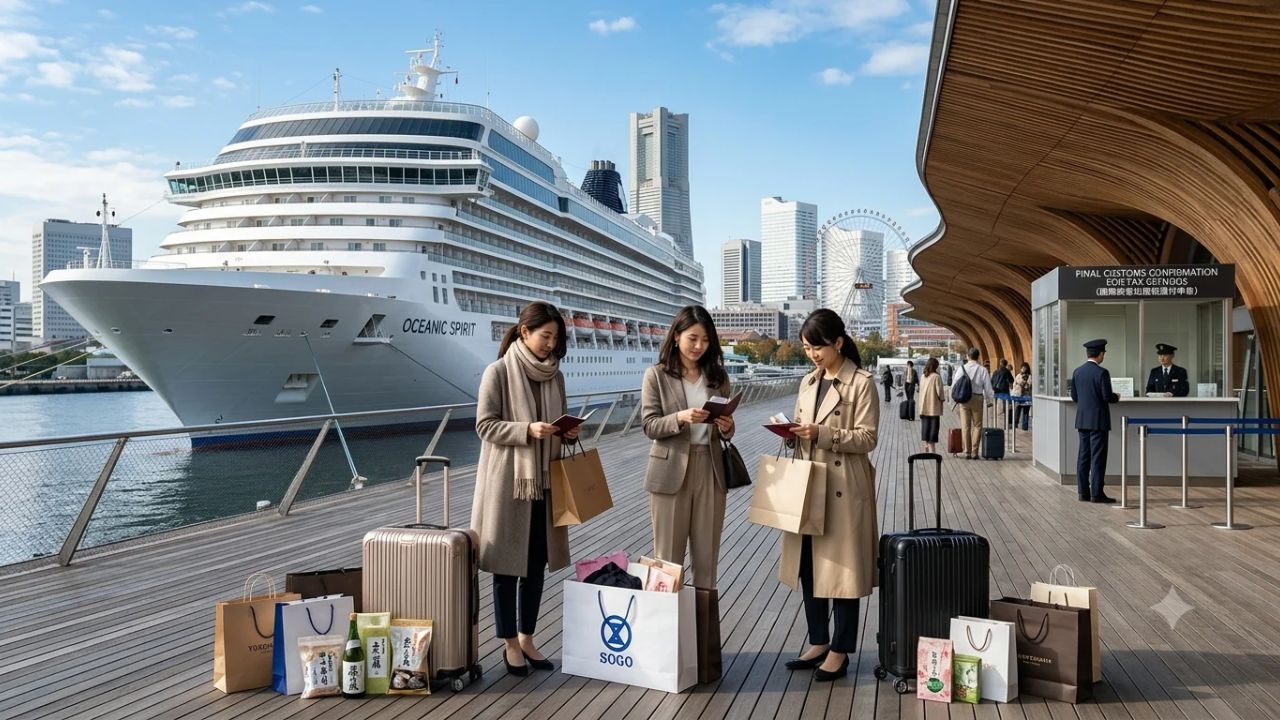
TOKYO — Japan has officially enacted a comprehensive restructuring of its inbound consumption tax refund system, establishing distinct customs verification pathways that split procedural clearance between maritime cruise berths and international airport departure terminals. The regulatory overhaul, introduced on 1 November 2026 by Japan Customs in coordination with the Japan Tourism Agency (JTA) and the National Tax Agency (NTA), fundamentally alters how international cruise vacationers, fly-cruise holidaymakers, and visiting shoppers claim relief on the nation's 10 percent consumption levy. Under the revised framework, tax-free retail exemptions are no longer deducted immediately at shop cash registers. Instead, overseas travelers must pay consumption tax upfront across all retail counters, securing financial reimbursement only after their purchased goods undergo physical or digital validation at their designated Japanese departure gate.
For the hundreds of thousands of international travelers embarking on cruise journeys across Japanese territorial waters, identifying the correct customs checkpoint has emerged as an essential travel requirement. Depending on whether a voyage begins and concludes outside Japan, operates as a domestic roundtrip originating in Japanese homeports with an intermediate foreign call, or connects into outbound international aviation networks, the legal venue for customs export clearance changes entirely. Passengers who fail to present their purchases at the precise exit point mandated by their itinerary risk total forfeiture of their refund entitlements, introducing operational complexity into a regional cruise sector experiencing unprecedented post-pandemic expansion.
The Structural Overhaul: Transitioning to Upfront Tax Collection
For more than a decade, Japan operated one of the most accessible duty-free retail environments in the world. Foreign tourists presenting a valid international passport at licensed department stores, electronics superstores, drugstores, and boutique shops received instantaneous exemption from the standard 10 percent Japanese consumption tax, as well as the 8 percent reduced levy applicable to specific food and beverage items. The point-of-sale deduction eliminated financial friction for international visitors, allowing them to depart retail counters having paid only the net price.
However, escalating fiscal audit scrutiny exposed systemic vulnerabilities within that frictionless model. Inquiries conducted by the Ministry of Finance and regional taxation bureaus revealed widespread fraudulent exploitation of the point-of-sale exemption. Significant networks of unauthorized buyers and domestic resale brokers recruited inbound travelers to purchase millions of dollars worth of luxury cosmetics, designer apparel, high-end watches, and premium consumer electronics tax-free. Rather than exporting the goods out of Japan as required by customs legislation, these items were illicitly offloaded onto domestic gray markets at substantial markups, depriving the Japanese treasury of billions of yen in rightful revenue.
To eliminate fraudulent reselling while safeguarding legitimate international visitor commerce, Japan enacted legislative reforms mandating an export-validated refund architecture. Effective 1 November 2026, all duty-free purchases made by non-resident foreign nationals are taxed at the prevailing domestic rate at the moment of retail checkout. The consumer pays the gross retail figure inclusive of the 10 percent or 8 percent consumption levy. The retailer transmits the electronic transaction record directly into the National Tax Agency's customs data exchange.
The actual reimbursement of the consumption tax occurs only after Japan Customs confirms that the traveler has arrived at their final point of departure from Japan and has the items ready for international transport. Once customs clearance is verified through automated passport reader kiosks or personal inspection by customs officers, the transaction is electronically authorized. Refund service providers or participating merchants then deposit the returned tax funds back onto the traveler’s credit card, digital payment wallet, or, in designated airport facilities, issue cash payouts in Japanese yen. This fundamental reversal of the payment sequence places the entire burden of proof upon the departing traveler, elevating itinerary awareness into a critical financial consideration.
Understanding the Itinerary Split: Port Berths Versus Departure Airports
The core complexity confronting cruise vacationers under the 1 November 2026 regulations centers on geographical jurisdiction. Because cruise vessels navigate complex multi-port schedules that frequently blend Japanese domestic stops, short calls in neighboring sovereign territories, and multi-week regional relocations, determining where export validation occurs is not uniform across passengers.
Japan Customs and the Japan Tourism Agency have demarcated three primary travel configurations, each governed by distinct procedural standards:
Itinerary Pattern A: Closed-Loop and Transit Voyages Starting and Ending Overseas
The first classification applies to cruise itineraries that begin and conclude at maritime terminals outside Japanese territory, treating Japan strictly as a series of intermediate foreign port calls. Representative examples include major trans-Pacific crossings, Southeast Asian deployments, or East Asian seasonal circuits, such as Royal Caribbean International's Spectrum of the Seas or MSC Cruises' Bellissima sailing roundtrip from Shanghai, Keelung, or Hong Kong with scheduled stops in Japanese destinations like Kagoshima, Kochi, Osaka, and Tokyo.
For passengers on these itineraries, the final Japanese port of call serves as the legally designated customs export checkpoint. If a vessel calls at Kagoshima, proceeds to Osaka, and concludes its Japanese coastal itinerary at the Tokyo International Cruise Terminal in Odaiba before setting sail directly across the Pacific or back toward China, Tokyo represents the definitive exit gate.
Under Japan Customs protocols:
- Eligible cruise guests must present their physical passports, cruise tourist landing permits, and purchased retail goods to the temporary customs inspection counters established within the Tokyo cruise passenger terminal.
- Clearance must be completed prior to passing through final security screening and boarding the gangway for the vessel's departure from Japanese waters.
- Once the vessel unmoors from its final Japanese berth and enters international maritime boundaries, no supplementary customs validation can occur.
- If a passenger packs their duty-free merchandise into deep shipboard luggage, leaves it inside their cabin wardrobe, or fails to report to the port terminal customs desk before gangway closure, the electronic data record remains unconfirmed, and the upfront tax paid at retail outlets throughout the country cannot be refunded.
Itinerary Pattern B: Fly-Cruise Voyages Originating in Japan with Foreign Port Calls
The second classification governs fly-cruise passengers participating in roundtrip voyages that embark and disembark within Japan, but include an intermediate call at a neighboring foreign port. This structure represents a foundational pillar of Japanese cruise tourism. Under Japanese cabotage and maritime regulations, foreign-flagged cruise liners operating domestic itineraries are legally required to visit at least one foreign port during their voyage. Consequently, vessels such as Princess Cruises' Diamond Princess or Costa Cruises' ships routinely depart Yokohama or Kobe, call at Japanese regional ports along the Honshu or Kyushu coast, make an intermediate operational stop in Busan or Jeju Island in South Korea, return to Yokohama to disembark passengers, after which foreign travelers spend additional days in Tokyo before boarding international flights home.
Under the 1 November 2026 regulations, Japan Customs explicitly clarifies that an intermediate foreign port call on a Japan-originating roundtrip does not qualify as the final export exit for international fly-cruise travelers. Even though the ship temporarily sails into foreign territorial waters at Busan, passengers who disembark back in Yokohama and subsequently fly out of Tokyo are treated as remaining within the Japanese tourism ecosystem.
Therefore:
- Fly-cruise passengers on these voyages must not attempt customs export clearance at the intermediate maritime port or upon final disembarkation in Yokohama.
- The official customs verification occurs exclusively at the international departure airport (such as Tokyo Haneda Airport, Tokyo Narita International Airport, or Kansai International Airport) handling the passenger’s ultimate outbound flight from Japan.
- Attempting to claim refunds at the port terminal upon disembarkation from the ship will be refused by customs personnel, as the passenger has not yet concluded their physical departure from Japanese territory.
Itinerary Pattern C: Multimodal Connections Involving Domestic Flights
The third common profile involves multimodal transit, where travelers conclude an itinerary at a regional maritime port and utilize domestic aviation links before boarding their international long-haul flight. For instance, a luxury expedition cruise may disembark passengers in Otaru or Hakodate on the northern island of Hokkaido. Travelers then board a domestic commercial flight from New Chitose Airport or Hakodate Airport into Tokyo Haneda, transferring to an intercontinental service back to North America, Europe, or Australia.
Under these circumstances, Japan Customs mandates that tax refund validation must take place at the final international departure airport (Haneda or Narita in this scenario), rather than the regional domestic terminal. Because domestic airport gates lack international customs processing facilities and export inspection officers, travelers cannot validate their tax-free documentation during regional domestic departures. This procedural requirement introduces severe logistical considerations regarding how luggage is checked and forwarded across domestic transit networks.
| Travel Profile | Representative Route Scenario | Designated Customs Clearance Venue | Verification Timing Window | Primary Baggage Risk |
|---|---|---|---|---|
| Itinerary A: Overseas Roundtrip / Closed-Loop | Shanghai – Kagoshima – Osaka – Tokyo – Shanghai | Final Japanese Port Terminal (e.g., Tokyo Cruise Terminal) | Prior to terminal security and gangway re-boarding at last Japanese port | Goods left in ship stateroom or deep luggage |
| Itinerary B: Japan Roundtrip Fly-Cruise | Yokohama – Hiroshima – Busan – Yokohama $\rightarrow$ Flight Home | International Departure Airport (e.g., Haneda / Narita) | At international airport departure lobby prior to passenger security | Checking bags with airline before customs scanning |
| Itinerary C: Multimodal Regional Transfer | Cruise ends in Hakodate $\rightarrow$ Domestic Flight $\rightarrow$ International Flight | Final Gateway International Airport (e.g., Haneda / Kansai) | In international departure lobby before boarding international flight | Interlining checked baggage through from domestic flight |
The Baggage Inspection Dilemma and Luggage Forwarding Pitfalls
The operational separation between port and airport customs processing intersects directly with one of Japan’s most celebrated travel conveniences: hands-free travel facilitated by Takkyubin (nationwide luggage delivery and luggage forwarding networks operated by Yamato Transport, Sagawa Express, and Japan Post). For decades, experienced international visitors and cruise vacationers have relied on luggage delivery services to transport bulky suitcases directly from cruise berths to Tokyo hotels, or from regional ryokans directly to airport departure lobbies.
Under the new 1 November 2026 tax-free regulations, uncoordinated luggage forwarding represents a direct route to forfeiting tax refunds. The statutory framework established by Japan Customs requires that all tax-free purchases must remain physically accessible for random or mandatory customs inspection at the moment of export validation.
When a traveler presents their passport at the electronic customs verification scanner at an airport or maritime port terminal, the automated system executes an algorithmic risk analysis. The monitor returns one of two immediate results:
- Green Screen (Automated Clearance): The digital export transaction is instantaneously confirmed. The traveler is cleared to proceed through security and immigration, and the refund is released for electronic processing.
- Red Screen (Mandatory Physical Inspection): The traveler must step aside to an adjoining customs inspection bay, where customs officers verify that the physical merchandise matches the electronic invoices recorded in the National Tax Agency database.
If a passenger has packed their tax-free purchases inside large suitcases that were collected by luggage forwarding couriers two days prior and delivered directly to the airline check-in counter, or if the traveler checks their bags with an airline before completing the customs scan, physical compliance becomes impossible. If the customs terminal issues a red inspection notice and the traveler cannot produce the physical items because they are already sealed inside an aircraft's cargo hold or locked inside a transit van, customs officers are legally prohibited from validating the export. The traveler forfeits their refund entitlement, and the 10 percent tax paid at the retail counter remains unrecoverable.
Packing Protocols for Cruise Vacationers
To protect against inadvertent tax forfeiture, maritime and aviation authorities advise travelers to maintain strict segregation of their retail purchases:
- Carry-On Prioritization: High-value general goods, including jewelry, luxury timepieces, designer accessories, cameras, and consumer electronics, should remain packed within carry-on baggage that stays in the passenger’s direct physical possession until passing through international security checkpoints.
- Oversized and Liquid Consumables: When duty-free acquisitions consist of bulky items, Japanese sake, whisky, or liquid cosmetics exceeding the 100-milliliter aviation security threshold, travelers must bring the packed bags directly to the customs inspection desk before handing luggage over to airline check-in agents. Major international hubs, including Haneda, Narita, and Kansai, have established designated customs inspection desks located directly in the public departure check-in hall, allowing travelers to present their goods to customs officers first, obtain verified export clearance stamps, and subsequently drop their bags at airline counters.
- Tamper-Evident Packaging Integrity: All consumable goods—such as confections, packaged foodstuffs, skincare products, and pharmaceuticals—must remain sealed within the clear, tamper-evident plastic bags applied by licensed merchants at the time of purchase. Breaking the adhesive seal, opening the bag, or consuming the contents while inside Japanese territory invalidates the tax exemption, triggering mandatory payment of the consumption tax regardless of export intentions.
Procedural Thresholds, Eligibility Standards, and Digital Systems
Securing tax refunds in Japan requires strict adherence to statutory purchase minimums and administrative documentation. The revised framework preserves established monetary thresholds while tightening compliance verification.
Expenditure Thresholds and Merchandise Categories
To qualify for tax-free status, purchases must satisfy established monetary baselines:
- General Goods: Includes clothing, footwear, handbags, electronic appliances, kitchen knives, and traditional artisanal handicrafts. The total spending must equal or exceed ¥5,000 (excluding consumption tax) at a single merchant or participating commercial facility on a single calendar day. General goods carry no mandatory export sealing requirements and may be utilized while in Japan, provided they are not resold and are transported out of the country upon departure.
- Consumable Goods: Encompasses packaged food products, confectionery, alcoholic beverages, cosmetics, skincare formulations, and over-the-counter health remedies. Total expenditure must equal or exceed ¥5,000 and must not exceed ¥500,000 (excluding tax) at a single business establishment on a single calendar day. Consumables must remain sealed in designated packaging until exit.
- Combined Purchase Provisions: When general goods and consumable goods are bundled together to achieve the ¥5,000 qualifying minimum, the entire transaction is classified under consumable regulations, requiring complete sealing in tamper-evident bags and prohibiting use within Japan prior to departure.
The 90-Day Departure Limitation
All tax-free merchandise purchased under the 1 November 2026 framework must be exported from Japan within 90 days from the recorded date of purchase. For extended voyages, grand Asia expeditions, or sabbatical travelers undertaking extensive overland journeys across Japan before embarking on a cruise, tracking the 90-day calendar is vital. Purchases completed beyond the 90-day threshold are disqualified from export tax validation, rendering the paid consumption tax non-refundable.
Documentation Requirements at Points of Purchase and Departure
At retail counters, foreign travelers must verify their non-resident eligibility by presenting valid official identification:
- Passports and Landing Permits: Travelers holding standard tourist visas must display their physical passport containing the official "Temporary Visitor" status stamp affixed upon arrival.
- Cruise Ship Tourist Landing Permit: For passengers arriving aboard cruise vessels without standard passport visa stamps, Japanese immigration issues an official Cruise Ship Tourist Landing Permit—a specialized slip affixed to the passenger's documentation or manifest card. While several major department store groups in port cities now accept electronic scans or digital passport data via the Visit Japan Web platform for initial sales logging, the physical passport and landing permit must be presented at the final customs departure terminal.
- Digital Infrastructure Deployment: To streamline processing and reduce departure congestion, the Japan Tourism Agency and the Digital Agency have expanded Visit Japan Web functionality. Dedicated high-speed Wi-Fi networks and automated digital guidance terminals have been deployed across departure lobbies at seven primary international hubs: Tokyo Haneda (HND), Tokyo Narita (NRT), Kansai International (KIX), Chubu Centrair (NGO), Fukuoka Airport (FUK), New Chitose Airport (CTS), and Naha Airport (OKA) in Okinawa. Travelers can link their tax-free transaction barcodes directly into the mobile application, monitoring real-time clearance status as they approach customs gates.
Macroeconomic Momentum: The Surge in Japanese Cruise Tourism
The implementation of refined customs and tax-free mechanisms comes at a transformative juncture for Japan's maritime tourism economy. Following several years of strict border measures and phased maritime reopenings, foreign cruise traffic across Japanese archipelagos has surged to unprecedented levels.
Official performance statistics published by the Ministry of Land, Infrastructure, Transport and Tourism (MLIT) reveal the extraordinary scale of the sector's recovery and structural evolution:
- Total Cruise Visitor Arrivals: During 2025, foreign passenger arrivals by cruise ship in Japan reached 1.767 million, representing a dramatic 20 percent expansion compared to 2024 figures.
- Total Port Calls: Japanese coastal ports recorded a aggregate total of 3,117 cruise ship port calls across the year, marking an impressive 30 percent increase over the previous 12-month period.
- Foreign-Flagged Vessels: Foreign cruise ships accounted for 2,352 port calls, significantly exceeding the national strategic target of 2,000 international vessel calls well ahead of scheduled timeline projections.
- Port Diversification: International cruise liners docked across 93 distinct ports throughout the Japanese archipelago, rapidly approaching the government's target of distributing regular cruise operations across 100 regional maritime harbors.
- Fly-Cruise Surge: Fly-cruise traffic—where international guests fly into Japanese gateway cities to join homeported vessels—reached an all-time record of 181,000 overseas visitors, underscoring the rapid internationalization of ports like Yokohama, Kobe, and Tokyo.
The financial dimensions of this inbound surge are equally striking. Preliminary quarterly data compiled by the Japan Tourism Agency indicates that total inbound visitor expenditure reached approximately ¥2.21 trillion during the third quarter of 2026 (July to September), representing a 3.2 percent year-on-year increase. Inbound retail purchasing, long anchored by duty-free shopping districts in Tokyo’s Ginza and Shinjuku, Osaka’s Shinsaibashi, and port markets in Hakodate and Naha, forms an indispensable component of this expenditure profile.
The Cabinet-approved national tourism strategy establishes ambitious milestones, targeting 60 million international arrivals and ¥15 trillion in foreign visitor spending annually by 2030. Achieving these targets requires a delicate policy balance: providing a seamless, world-class experience for legitimate travelers while erecting rigorous administrative safeguards to prevent revenue leakage, illegal parallel exporting, and domestic market distortion.
Strategic Operational Guidance for Cruise Vacationers
Navigating Japan’s revised tax refund architecture requires systematic planning and meticulous adherence to procedural timelines. To ensure that retail savings are fully realized without disrupting boarding schedules or departure flights, cruise travelers should integrate the following practical protocols into their travel routines:
1. Identify Your Itinerary Category Before Making Major Purchases
Before completing high-value acquisitions in Tokyo, Kyoto, or regional port towns, verify your voyage’s exact routing structure. If your ship began in Hong Kong or Singapore and will sail directly to an international destination after its last Japanese port, your refund clearance will take place at that maritime terminal. If your cruise is an all-Japan or Japan-roundtrip itinerary returning to Yokohama or Kobe, and you are flying home afterward, your clearance will occur at the airport before your flight. Knowing your designated exit point dictates how you pack and when you report for inspection.
2. Safeguard All Digital and Physical Receipts
While retail systems electronically transmit transaction records to the National Tax Agency, discrepancies occasionally arise within digital cross-border networks. Retain all original itemized purchase receipts and merchant tax invoices in an accessible travel folder. If an automated customs scanner encounters a system mismatch or data delay, presenting paper receipts alongside physical goods enables immediate manual override by customs officers.
3. Maintain Tamper-Evident Packaging Intact
Under no circumstances should you unseal plastic consumable bags while inside Japan. Even if you wish to redistribute skincare items or packaged confections across multiple travel bags to optimize weight distribution, breaking the seal invalidates your tax-free status. If an inspection officer identifies a broken seal or missing items, the consumption tax will be assessed and retained.
4. Coordinate Luggage Forwarding with Extreme Caution
If utilizing Takkyubin services to transfer bags between cruise ports and airports, do not pack tax-free merchandise inside forwarded suitcases. Keep all duty-free items in your personal carry-on luggage, or ensure that you collect your forwarded baggage at the airport luggage holding counter before approaching customs inspection desks. Never proceed through passenger security or check baggage with airline counters until your tax refund confirmation has received official approval.
5. Allocate Adequate Buffer Time at Departure Gates
The introduction of mandatory customs export validation adds an administrative step to international departure workflows. Cruise passengers departing from high-volume maritime berths (such as the Tokyo International Cruise Terminal) or major aviation hubs (Haneda and Narita) should factor an additional 30 to 45 minutes into their pre-boarding schedules. Peak embarkation and flight departure windows frequently generate queues at customs automated scanner banks and physical inspection counters.
Summary Assessment: The Modernized Standard for Japanese Travel
The tax-free shopping reforms enacted on 1 November 2026 mark the definitive closure of an era characterized by loosely regulated point-of-sale exemptions, aligning Japan with the digital export-verification standards observed across the European Union and other developed travel economies. For international cruise vacationers and fly-cruise passengers, the updated system guarantees that genuine travelers continue to enjoy substantial savings on Japan’s extraordinary consumer goods, provided they respect the clear division between maritime and aviation customs jurisdictions.
As Japan’s maritime cruise sector continues its record-setting trajectory toward the government’s 2030 tourism objectives, procedural transparency and traveler preparedness will serve as the foundation of sustainable growth. By understanding itinerary classifications, respecting baggage inspection requirements, and utilizing digital platforms like Visit Japan Web, cruise passengers can explore Japan's coastal destinations and historic port cities with complete confidence, maximizing their retail privileges while ensuring effortless customs clearance as they sail or fly home.
Related Travel Guides
- Japan Cruise Port Terminals: Complete Berth, Rail, and Transfer Guide 2026
- Tokyo Haneda vs. Narita: Navigating International Flight Connections and Customs Procedures
- East Asia Luxury Expedition Cruising: Regulations, Cabotage Laws, and Seasonal Routes
- Smart Packing and Luggage Forwarding Across Japan’s Shinkansen and Cruise Networks
This article is for informational purposes. Flight routes, passenger regulations, visa rules, and transit advisories are subject to change by airlines and aviation authorities. Readers are advised to verify schedules and travel documentation with relevant carriers and border agencies before departure.
Related Stories
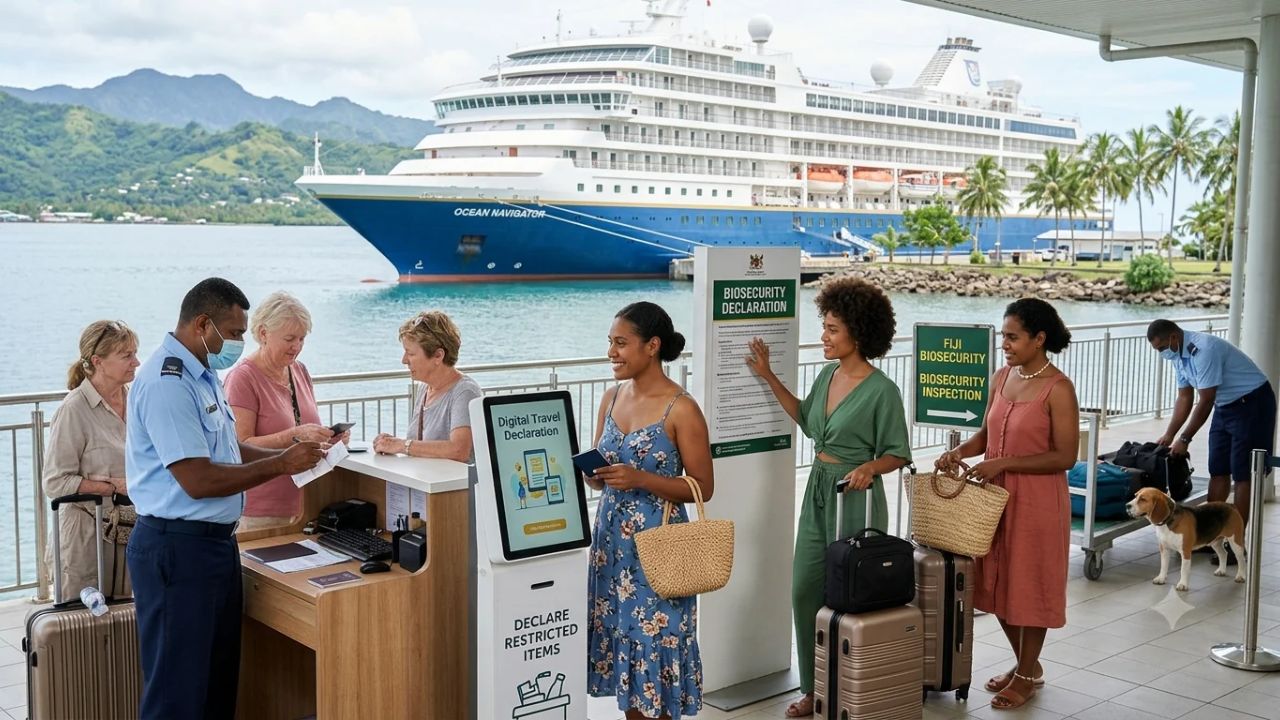
Australia and Pacific Island Nations Tighten Maritime Borders as New Biosecurity and Digital Entry Rules Reshape Oceania Cruise Tourism

Atlas Ocean Voyages Unveils Grand Voyage Collection Featuring 16 Extended Expeditions Across Europe and the Arctic for 2027–2028