Silversea Concludes Epic 77-Day Grand South Pacific Expedition as Silver Cloud Connects 57 Destinations from Australia to Chile

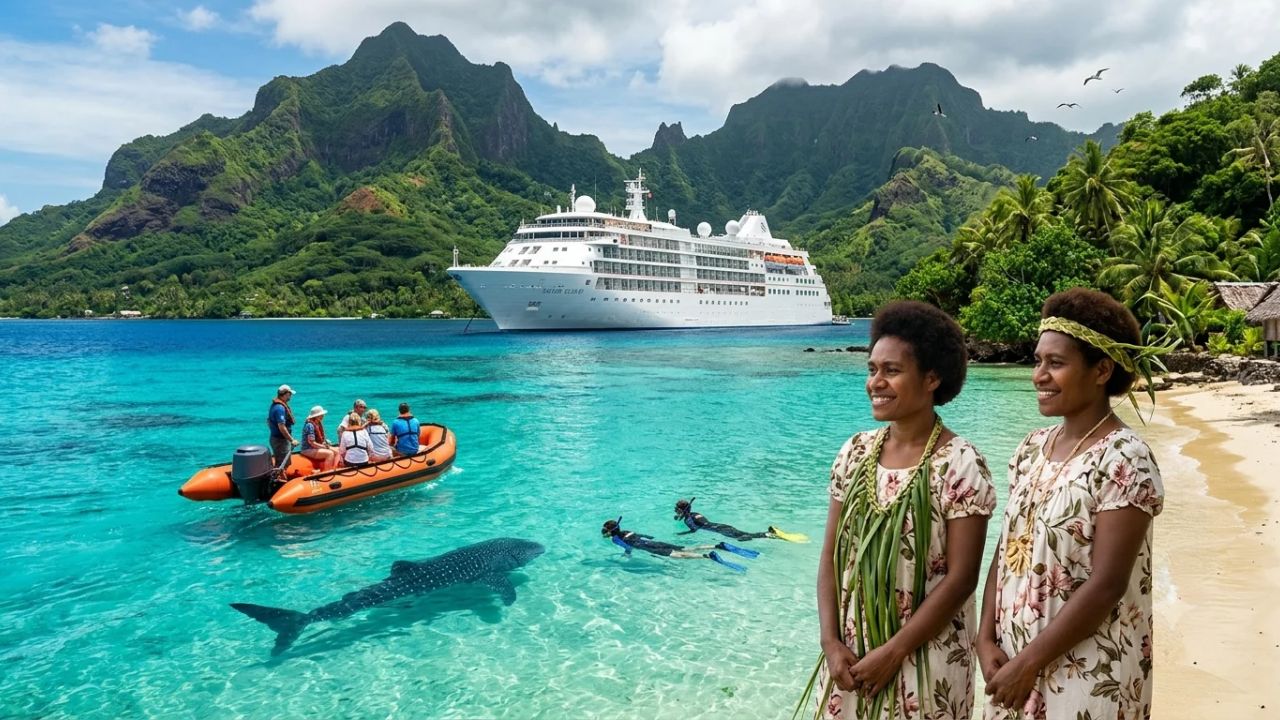
VALPARAÍSO, Chile — Dropping anchor in the historic Pacific amphitheater of Valparaíso after crossing thousands of nautical miles across the southern hemisphere, Silversea Cruises has formally concluded one of the most ambitious trans-oceanic expeditions in modern commercial seafaring.
The luxury expedition brand, a division of Royal Caribbean Group, confirmed the successful completion of its 77-day Grand South Pacific Expedition 2026 on 4 November 2026.
Sailing aboard the ice-class expedition vessel Silver Cloud, the voyage traversed the Pacific Ocean from west to east, having embarked from Fremantle, Western Australia, on 20 August 2026.
Across eleven weeks of continuous maritime exploration, the expedition called at 57 distinct destinations distributed across eleven sovereign nations and territories: Australia, Indonesia, Papua New Guinea, the Solomon Islands, Vanuatu, Fiji, Tonga, the Cook Islands, French Polynesia, Pitcairn Island, and Chile.
Unlike conventional oceanic voyages that focus on industrialized mega-ports and resort towns, the Grand South Pacific Expedition was structured around remote destination immersion.
Guests navigated the tidal gorges and ancient rock art of Australia’s Kimberley coast, snorkeled alongside gentle whale sharks in Indonesia’s Cenderawasih Bay, witnessed sacred fire dances and ritual Rom mask ceremonies across Melanesia, explored the volcanic topography of the Marquesas, and participated in exclusive private cultural recitals on the isolated Polynesian outpost of Rapa Nui (Easter Island).
The successful execution of this trans-oceanic voyage illustrates the growing prominence of high-yield expedition cruising, where affluent travelers prioritize meaningful cultural exchange, small-group Zodiac exploration, and access to off-grid communities over static resort vacations.
SILVERSEA GRAND SOUTH PACIFIC EXPEDITION 2026 SCORECARD
| Category / Entity | Details / Impact |
|---|---|
| Operating Vessel | Silver Cloud (Ice-Class Luxury Expedition Ship; 254 Guests) |
| Expedition Duration | 77 Days (Embarkation: 20 August 2026; Disembarkation: 4 Nov 2026) |
| Departure & Arrival Ports | Fremantle (Perth), Australia to Valparaíso (Santiago), Chile |
| Total Destinations Visited | 57 Coastal, Island, and Archipelagic Destinations |
| Sovereign Countries & Terr. | 11 Nations (Australia, Indonesia, PNG, Solomons, Vanuatu, Fiji, |
| Tonga, Cook Islands, French Polynesia, Pitcairn, Chile) | |
| Primary Nautical Stages | 4 Segments: Aus/Kimberley, Melanesia, Polynesia, Eastern Pacific |
| Kimberley Season Milestone | Concluded Silversea’s 10-Voyage 2026 Australian Kimberley Program |
| Australian Signature Event | Finniss River Lodge (6 Sept; 50k-Acre Station, Helicopter Tour) |
| Rapa Nui Signature Event | Toki School of Music & Art (26 Oct; Mahani Teave Piano Recital) |
| Key Wildlife Milestone | Cenderawasih Bay, Indonesia (Zodiac Snorkeling with Whale Sharks) |
| Cultural Preservation Markers | Gwion Gwion Rock Art, Ambrym Rom Dance, Tahai Moai Sunset Hoko |
| Future Grand Voyages (2027–28) | Grand Med 2027 (Silver Dawn), Grand S. America 2028, Grand Asia 28 |
The Four-Stage Trans-Pacific Odyssey: Nautical Routing and Geographic Topology
Executing a 77-day continuous expedition across the vast expanse of the southern Pacific Ocean demands meticulous maritime logistics, variable fuel management, and multi-jurisdictional diplomatic coordination.
Silversea structured the Grand South Pacific Expedition into four distinct geographical segments, allowing guests to experience the dramatic environmental transitions connecting the Australian arid coast, the equatorial coral reefs of Southeast Asia, the lush islands of Melanesia, and the remote volcanic pinnacles of Eastern Polynesia.
THE 4 OPERATIONAL STAGES OF THE GRAND SOUTH PACIFIC EXPEDITION
| Column 1 |
|---|
| [ STAGE 1: Fremantle to Darwin (Australia) ] |
| Western Australia coastline, Shark Bay, Montebello Islands, and the Kimberley gorges. |
| v |
| [ STAGE 2: Darwin to Lautoka (Indonesia & Melanesia) ] |
| Raja Ampat, Cenderawasih Bay, Papua New Guinea, Solomon Islands, Vanuatu, and Fiji. |
| v |
| [ STAGE 3: Lautoka to Papeete (Polynesian Crossing) ] |
| Fiji out-islands, Kingdom of Tonga, Cook Islands (Aitutaki), and Society Islands. |
| v |
| [ STAGE 4: Papeete to Valparaíso (Eastern Pacific & Chile) ] |
| Marquesas volcanic spires, isolated Pitcairn Island, Rapa Nui (Easter Island), Chile. |
Each stage was calibrated to balance long open-ocean navigation with daily off-ship exploration. Because the majority of ports lacked commercial piers, Silver Cloud anchored offshore in sheltered bays or natural fjords, deploying its fleet of motorized Zodiac boats to transfer guests ashore onto tidal sand flats, coral platforms, or rocky coves.
Onboard expedition teams—comprising marine biologists, anthropologists, ornithologists, and historians—delivered daily educational briefings, ensuring that travelers engaged with each community and ecosystem with contextual understanding and ecological sensitivity.
Stage 1: Western Australia and the Kimberley Wilderness
The expedition commenced on 20 August 2026 from Fremantle, the historic port city adjacent to Perth, before charting a northward course along Western Australia's Coral Coast.
Initial expedition stops introduced travelers to the maritime graveyard and seal colonies of the Houtman Abrolhos Islands, the red sand dunes of Cape Peron within the Shark Bay World Heritage Area, the turtle sanctuaries of North Muiron Island, the nuclear testing heritage of the Montebello Islands, and the indigenous petroglyphs of the Dampier Archipelago.
From Dampier, Silver Cloud entered the Kimberley, universally recognized as one of the world's last true coastal wildernesses. The ship navigated through Adele Island’s seabird colonies, the turbulent tidal currents of the Buccaneer Archipelago, the mangrove networks of the Hunter River, and the isolated coral formations of Ashmore Reef.
At Swift Bay, guests stepped ashore to inspect ancient Gwion Gwion (formerly known as Bradshaw) rock art paintings—delicate ochre depictions of ceremonial human figures created by Indigenous Australians over 12,000 years ago.
The stage culminated in an excursion up the dramatic red sandstone canyon of the King George River, where dual waterfalls plunge eighty meters into tidal waters.
The arrival in Darwin on 6 September also marked the formal conclusion of Silversea’s 2026 Kimberley season. Between 8 May and 6 September, the line completed ten dedicated regional voyages covering 25 Kimberley destinations, with Silver Cloud transitioning directly from its regional deployment into the trans-Pacific journey.
To celebrate this milestone, Silversea staged the first of its two signature exclusive events on 6 September at Finniss River Lodge, situated southwest of Darwin.
Guests traveled to the 50,000-acre working cattle and pastoral station, embarking on four-wheel-drive journeys through paperbark forests and boarding private helicopters to view floodplains, coastal wetlands, and the winding Finniss River from the air.
The event concluded with an exclusive regional culinary banquet highlighting locally harvested barramundi, wild game, and native tropical fruits.
STAGE 1 HIGHLIGHT: FINNISS RIVER LODGE EXCLUSIVE EVENT (6 SEPT 2026)
| Category / Entity | Details / Impact |
|---|---|
| Location & Property | Finniss River Station, Northern Territory, Australia |
| Total Land Acreage | 50,000 Acres of Working Cattle Station & Coastal Wetlands |
| Terrestrial Exploration | Custom 4WD Safaris Across Paperbark Forests & Billabongs |
| Aerial Sightseeing Asset | Private Helicopter Flights Over Escarpments & Floodplains |
| Gastronomic Experience | Seasonal Territory Banquet Featuring Native Ingredients |
| Operational Role | Official Celebration Concluding 2026 Kimberley Cruise Season |
Stage 2: Indonesia and Melanesia: Marine Giants and Living Traditions
Leaving Darwin, Silver Cloud crossed the Arafura Sea into eastern Indonesia, entering the marine biodiversity epicenters of West Papua: Raja Ampat and Cenderawasih Bay.
At Pulau Kokas, expedition teams navigated Zodiacs along towering limestone karst cliffs, bringing guests beneath overhangs where prehistoric hand stencils and animal figures remain etched above the water line.
In Raja Ampat, the voyage emphasized community stewardship through a visit to Child Aid Papua, an educational foundation dedicated to empowering local youth through marine conservation, English literacy, and vocational environmental training.
Further east at Pulau Num, the vessel executed a maiden call where residents from five separate coastal villages converged on the beach, welcoming guests with ceremonial drumming, wooden flute harmonies, and traditional ancestral dances.
The marine apex of the Indonesian stage took place within the sheltered waters of Cenderawasih Bay National Park. Here, travelers participated in regulated snorkeling excursions alongside wild whale sharks (Rhincodon typus).
Drawn to the artisanal floating fishing platforms (bagans) where local fishermen share their baitfish catch, these massive filter feeders—reaching lengths of up to twelve meters—swim calmly alongside swimmers.
Under the direct supervision of onboard marine scientists and Indonesian park rangers, strict non-contact distance protocols were enforced, ensuring that travelers observed the gentle giants without disrupting their natural feeding patterns.
INDONESIAN & MELANESIAN EXPEDITION ENCOUNTERS
| Category / Entity | Details / Impact |
|---|---|
| Destination | Defining Cultural / Wildlife Experience |
| Pulau Kokas (West Papua) | Zodiac navigation along limestone cliffs & rock art caves |
| Raja Ampat (Child Aid Papua) | Community education visit; youth marine conservation model |
| Pulau Num (Cenderawasih) | Maiden expedition call; 5-village traditional song welcome |
| Cenderawasih Bay | Guided non-invasive snorkeling with giant whale sharks |
| Papua New Guinea Outposts | Elaborate feathered headdress dances & twilight fire rites |
| Santa Ana (Solomon Islands) | Customary village welcome; ancient spirit house artifacts |
| Ambrym Island (Vanuatu) | Sacred Rom ritual mask dance amidst active volcanic soils |
From Indonesia, the journey entered the cultural mosaic of Melanesia. In Papua New Guinea, coastal villages welcomed guests with ceremonial dances featuring towering headdresses constructed from the plumage of birds of paradise, cassowary quills, and cowrie shells, culminating in dramatic twilight fire dances.
In the Solomon Islands, the ship called at the coral atoll of Santa Ana, where guests visited traditional canoe houses and observed woodcarvers crafting ceremonial bowls inlaid with mother-of-pearl.
In Vanuatu, the expedition landed on the volcanic shores of Ambrym Island, globally renowned for its active basaltic volcanoes and spiritual traditions.
Guests were granted rare access to observe the traditional Rom dance—a sacred ceremony where initiated men wear towering, hand-painted banana-fiber masks (tatanok) and dried plant cloaks, stamping out hypnotic rhythms on the ash-covered ground to honor agricultural fertility and ancestral spirits.
Stage 3: The Polynesian Archipelagos: Fiji, Tonga, and the Cook Islands
Crossing the international date line into Western Polynesia, Silver Cloud docked at Lautoka on the main Fijian island of Viti Levu before heading toward Fiji’s secluded northeastern margins.
The ship explored the lush rainforested slopes of Taveuni—known as "The Garden Island"—and the remote Ringgold Isles, an extinct volcanic caldera encircled by pristine coral barrier reefs where guests engaged in drift snorkeling through underwater marine corridors.
The voyage continued south into the Kingdom of Tonga, the only Pacific nation to avoid formal foreign colonization.
In the protected waterways of the Vava'u Group, guests explored sea caves, limestone cliffs, and Euaiki Island, observing southern right whales and humpbacks traversing seasonal migratory channels.
STAGE 3 POLYNESIAN ISLAND CIRCUIT: FIJI, TONGA & COOK ISLANDS
| Entity / Route | Metrics | Operational Status |
|---|---|---|
| Archipelagic Group | Primary Ports & Atolls | Marine & Cultural Assets |
| Northern Fiji Islands | Taveuni Island, Ringgold Isles | Barrier reef drift dives; |
| Budd Reef Lagoon | Endemic tagimoucia flora | |
| Kingdom of Tonga | Vava'u Archipelago, Euaiki | Deep marine sea caves; |
| Swallows Cave, Neiafu | Humpback whale corridors | |
| The Cook Islands | Aitutaki Lagoon, Rarotonga | Turquoise sandbar motus; |
| Arutanga Channel | Polynesian drumming rites | |
| French Polynesia (Society Is) | Bora Bora, Raiatea, Tahiti | Sacred Marae Taputapuatea |
Entering the Cook Islands, the vessel dropped anchor off Aitutaki, renowned for possessing one of the world's most spectacular marine lagoons.
Zodiacs ferried passengers across shimmering turquoise shallows to uninhabited sandbar islets (motus), where guests snorkeled above giant clam (Tridacna maxima) reserves and observed nesting red-tailed tropicbirds.
In Rarotonga, the nation’s cultural capital, guests engaged with local artisans preserving traditional Polynesian tattooing, wood carving, and traditional seafaring canoe construction.
Passing through the Society Islands of French Polynesia—including Raiatea, the spiritual cradle of ancient Polynesian navigation—the ship concluded its third stage in the harbor of Papeete, Tahiti, reprovisioning fresh stores and fuel before venturing into the remote eastern Pacific.
Stage 4: The Remote Eastern Pacific: The Marquesas, Pitcairn, and Rapa Nui
The final 3,500-nautical-mile trans-oceanic crossing from Tahiti to Chile represents one of the most geographically isolated passages on Earth.
The stage commenced in the rugged Marquesas Islands (Te Fenua Enata), an archipelago devoid of protective coral barrier reefs where jagged volcanic peaks plunge directly into the pounding Pacific swell.
On the island of Fatu Hiva, Silver Cloud navigated into Hanavave’s Bay of Virgins, widely regarded by maritime navigators as one of the most dramatic natural anchorages in the world.
Surrounded by sheer basalt spires rising hundreds of meters into the clouds, guests went ashore at the village of Omoa, observing local women beating the inner bark of mulberry trees to create traditional tapa cloth painted with ancient Marquesan geometric motifs.
Heading southeast across empty ocean waters, the ship reached Pitcairn Island, one of the most isolated inhabited communities in the world.
Home to roughly fifty permanent residents—the direct descendants of the 1789 HMS Bounty mutineers and their Tahitian companions—landing on Pitcairn requires navigating heavy open-ocean swells into Bounty Bay.
While shore landings on Pitcairn are heavily subject to prevailing wave conditions, the voyage provided a rare encounter with an isolated society preserving 18th-century English dialects and self-sufficient gardening traditions.
STAGE 4 EXPEDITION FINALE: RAPA NUI TO VALPARAÍSO
| Entity / Route | Metrics | Operational Status |
|---|---|---|
| Milestone Marker | Geographic Location | Strategic Event |
| The Marquesas (Fatu Hiva) | Bay of Virgins & Omoa Village | Tapa cloth art; volcanic |
| Pitcairn Island | Bounty Bay, Adamstown | HMS Bounty mutiny lore |
| Rapa Nui (Easter Island) | Hanga Roa, Tahai Moai Complex | Exclusive Toki Concert |
| Final Continental Port | Valparaíso Harbor, Chile | 77-Day Expedition Finish |
On 26 October 2026, Silver Cloud reached Rapa Nui (Easter Island), the open-air archaeological monument famous for its colossal stone moai statues.
Here, Silversea staged the grand cultural finale of the expedition at the Toki School of Music and Art (Toki Rapa Nui).
Founded by internationally acclaimed concert pianist Mahani Teave, the non-profit school provides free, high-caliber classical music and traditional Polynesian cultural education to the children of Easter Island within an earth-sheltered, self-sustaining eco-building constructed from recycled tires and bottles.
Guests attended an exclusive classical and traditional concert featuring Mahani Teave performing on piano, accompanied by student choral and instrumental recitals.
Following the musical showcase, travelers were transferred to the ceremonial complex of Tahai, where five restored moai stand perched on a stone ahu platform silhouetted against the Pacific horizon.
Against the backdrop of the setting sun, guests enjoyed a private beachside reception and witnessed an intense performance of the hoko—the traditional Rapanui warrior dance celebrating spiritual ancestral power (mana).
Departing Rapa Nui, Silver Cloud completed the final 3,700-kilometer oceanic crossing to the South American mainland, gliding past the coastal bluffs of central Chile to dock in the historic port of Valparaíso on 4 November, successfully concluding its 77-day trans-Pacific journey.
The Evolution of Ultra-Luxury Expeditioning: Silver Cloud and Future Grand Voyages
The completion of the Grand South Pacific Expedition demonstrates how ultra-luxury cruising has adapted to satisfy travelers who seek remote, intellectually enriching exploration without sacrificing five-star hospitality standards.
Originally built as a conventional luxury cruise vessel, Silver Cloud underwent a comprehensive multi-million-dollar conversion into an ice-class expedition ship.
Carrying just 254 guests and maintaining an almost 1:1 guest-to-crew ratio, the vessel bridges the gap between rugged polar exploration craft and six-star floating boutique hotels.
Guests enjoy all-suite accommodations with dedicated butler service, open-seating fine dining across multiple specialty restaurants, an extensive wellness spa, and an observation lounge equipped with high-powered spotting scopes for marine wildlife monitoring.
The success of the 2026 trans-Pacific journey forms part of Silversea’s broader strategic commitment to extended "Grand Voyages"—epic multi-month journeys designed for seasoned travelers who have the time and financial resources to explore entire continental perimeters within a single voyage.
Silversea has already confirmed its forward-looking Grand Voyages schedule across 2027 and 2028:
- Grand Mediterranean 2027 (Silver Dawn): Departing Lisbon on 28 September 2027 and concluding on 27 November 2027, this 60-day autumn voyage covers 48 ports across 12 nations, emphasizing unhurried exploration of the Mediterranean beyond summer peak crowds, enriched by Silversea’s signature S.A.L.T. (Sea and Land Taste) culinary immersion program.
- Grand South America 2028 (Silver Ray): Operating from 15 January to 1 April 2028 aboard the line's newest Nova-class vessel, this 77-day circle of the South American continent spans 40 ports across 21 nations, sailing from Miami to Fort Lauderdale via the Panama Canal, the Chilean fjords, Cape Horn, Ushuaia, and the Amazon River, featuring overnight stays in Buenos Aires, Rio de Janeiro, and Manaus.
- Grand Asia 2028 (Silver Muse): A 51-day comprehensive Asian journey operating between Singapore and Tokyo, visiting 28 destinations across seven nations, combining historic regional capitals with rarely visited island outposts.
SILVERSEA FUTURE GRAND VOYAGES CALENDAR (2027–2028)
| Entity / Route | Metrics | Operational Status |
|---|---|---|
| Grand Voyage Title | Operating Vessel | Published Itinerary Specs |
| Grand Mediterranean 2027 | Silver Dawn (60 Days) | 28 Sept – 27 Nov 2027; |
| Lisbon Roundtrip | 48 Ports, 12 Countries | |
| Grand South America 2028 | Silver Ray (77 Days) | 15 Jan – 1 April 2028; |
| Miami to Fort Lauderdale | 40 Ports, 21 Countries | |
| Grand Asia 2028 | Silver Muse (51 Days) | Singapore to Tokyo; |
| 51 Days Trans-Asia Route | 28 Ports, 7 Countries |
Strategic Guidance for Extended Expedition Travelers
For travelers contemplating multi-month international expedition cruises, extensive advance preparation ensures an enriching and comfortable journey:
- Physical Readiness for Zodiac Operations: While expedition cruising offers uncompromising luxury on board, shore excursions require active mobility. Guests must be physically capable of stepping into and out of moving Zodiacs on wet sand or slippery rock platforms, walking across uneven volcanic terrain, and ascending steep gangways. Regular mobility and balance training prior to departure is strongly recommended.
- Complex Multi-Jurisdictional Documentation: A continuous voyage spanning eleven nations requires rigorous document verification. While Silversea coordinates collective ship manifests for group shore excursions, individual passengers must verify passport validity rules (at least six months remaining beyond the cruise conclusion date) and acquire necessary electronic travel authorizations (such as Australia’s ETA, Chile’s SAG declarations, and French Polynesian entry forms).
- Cross-Cultural Etiquette in Remote Villages: When visiting isolated tribal communities in Papua New Guinea, Vanuatu, or the Solomon Islands, travelers must adhere strictly to local cultural protocols. Dress modestly, always request explicit permission before taking personal photographs of village elders or children, and refrain from distributing private gifts or sweets, allowing expedition leaders to make centralized community contributions through designated school or health funds.
- Comprehensive Multi-Month Travel Insurance: Standard travel insurance policies frequently limit single-trip coverage to 30 or 45 days. Travelers booking extended Grand Voyages must acquire specialized long-stay policies that explicitly provide continuous emergency medical evacuation coverage, trip interruption insurance, and baggage delay protection across all international maritime boundaries.
As Silver Cloud rests in Valparaíso after completing its trans-Pacific crossing, the Grand South Pacific Expedition stands as a testament to the transformative power of destination-led exploration.
By uniting isolated island communities, ancient indigenous traditions, and fragile marine ecosystems across 57 destinations, Silversea demonstrates that the ultimate luxury in modern travel is the luxury of time—the time to understand our shared world from the water.
Related Travel Guides
- Luxury Expedition Cruising Masterclass: Ships, Zodiac Excursions, and Remote Ports
- The Kimberley Coastal Travel Guide: Waterfalls, Tidal Gorges, and Ancient Rock Art
- Rapa Nui Travel Masterclass: Exploring Easter Island Moai, Culture, and Toki Heritage
- South Pacific Island Navigation: Culture, Coral Lagoons, and Marine Sanctuaries
This article is for informational purposes. Flight routes, passenger regulations, visa rules, and transit advisories are subject to change by airlines and aviation authorities. Readers are advised to verify schedules and travel documentation with relevant carriers and border agencies before departure.
Related Stories
Australia and Pacific Island Nations Tighten Maritime Borders as New Biosecurity and Digital Entry Rules Reshape Oceania Cruise Tourism
Atlas Ocean Voyages Unveils Grand Voyage Collection Featuring 16 Extended Expeditions Across Europe and the Arctic for 2027–2028