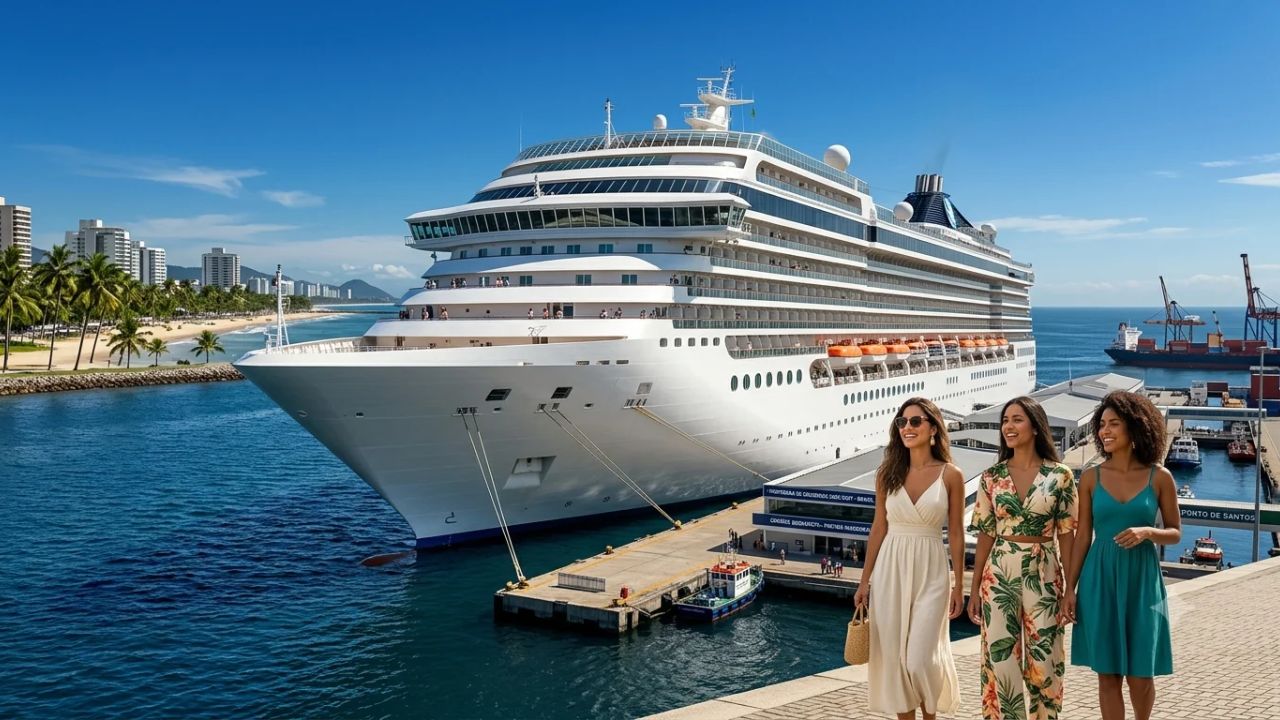
Australia and Pacific Island Nations Tighten Maritime Borders as New Biosecurity and Digital Entry Rules Reshape Oceania Cruise Tourism

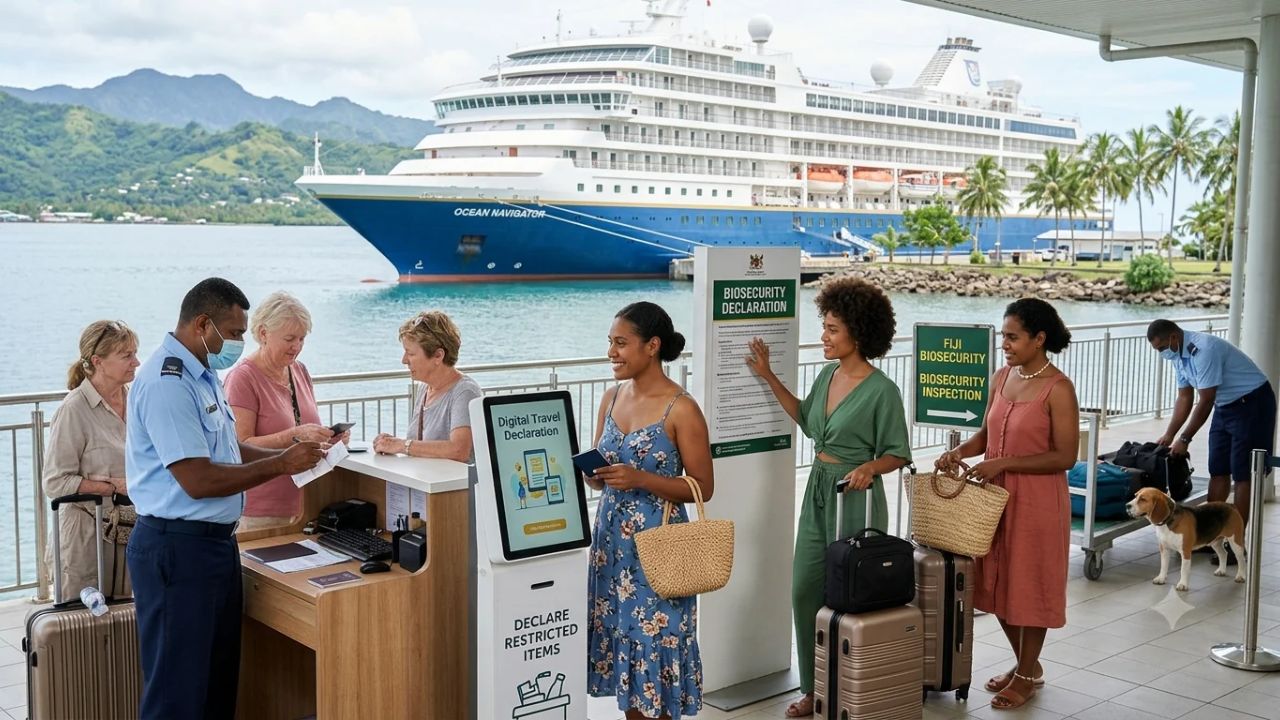
SYDNEY — Maritime borders across Oceania have entered a new era of heightened regulatory enforcement, as Australia, New Zealand, Fiji, and Papua New Guinea coordinate strict biosecurity inspections, digital entry mandates, and environmental controls for international cruise travelers. Enacted throughout 2026, the sweeping compliance overhauls fundamentally redefine passenger pre-clearance, port-of-call declarations, and baggage scrutiny across a regional cruise economy projected to welcome more than 1.5 million travelers and inject upwards of AUD $5.5 billion into domestic and island economies. Driven by an urgent imperative to defend isolated agricultural habitats from invasive pests, protect indigenous cultural sites from overtourism, and collect dedicated funding for ecological conservation, national authorities have eliminated the historical distinction between maritime arrivals and commercial airport screening.
For international vacationers sailing across the South Pacific, the consequence of these synchronized policies is immediate and uncompromising. An overlooked electronic travel authorization, an uninspected apple retained from a shipboard buffet, or an improperly filed declaration form no longer results in simple administrative warnings. Across Sydney, Auckland, Suva, and Port Moresby, non-compliance now triggers instant boarding denials at embarkation berths, on-the-spot biosecurity fines exceeding AUD $3,300, and potential deportation. As shipping companies adapt to higher port berthing levies, mandatory shore-power installations, and stringent zero-discharge standards, understanding the intricacies of Oceania's multi-jurisdictional border framework has become an essential prerequisite for maritime travel.
The Ecological Imperative: Why Oceania Imposed Strict Maritime Controls
To understand the intensity of border enforcement across the South Pacific, one must recognize the extreme ecological vulnerability of the region. Australia and the surrounding Pacific island archipelagos developed in profound geographical isolation over tens of millions of years. This evolutionary seclusion produced unique biospheres characterized by high levels of endemism—species of animals, insects, plants, and marine organisms found nowhere else on Earth.
However, that identical evolutionary isolation leaves native ecosystems exceptionally vulnerable to introduced biological threats. A single foreign pest—such as the Brown Marmorated Stink Bug (Halyomorpha halys), the Varroa mite (Varroa destructor), Foot-and-Mouth Disease (FMD) viral particles, or aggressive fruit fly variants—possesses the potential to devastate multi-billion-dollar domestic farming sectors, contaminate pristine island soil, and drive endemic wildlife toward extinction.
While international aviation terminals have long maintained intensive biosecurity inspection corridors, maritime cruise terminals historically operated under more relaxed operational flows. Mega-cruise liners carrying between 2,000 and 5,000 passengers frequently overwhelmed local port authorities during morning disembarkation windows. Travelers accustomed to walking off ships with fresh fruit, packaged souvenirs, or wooden artisanal carvings routinely bypassed quarantine controls.
The regulatory shifts implemented across 2026 formally close those loopholes. Under joint directives issued by agricultural ministries and maritime safety boards across the region, cruise passengers are now legally categorized under the identical high-risk biosecurity profile as international airline passengers. The result is a synchronized defense apparatus that integrates advanced digital pre-clearance with uncompromising shoreside inspection protocols.
Australia's Zero-Tolerance Maritime Biosecurity Regime
Australia maintains what is universally recognized as the world’s most stringent border biosecurity apparatus, overseen jointly by the Australian Border Force (ABF) and the Department of Agriculture, Fisheries and Forestry (DAFF). Throughout 2026, both agencies expanded automated and physical inspection systems across all commercial maritime cruise facilities, including the Overseas Passenger Terminal in Sydney, Station Pier in Melbourne, and the Brisbane International Cruise Terminal.
Mandatory Declarations and Financial Penalties
Every passenger arriving in Australia aboard an international cruise vessel must complete an official Incoming Passenger Card (IPC) or complete an approved digital declaration prior to stepping ashore. Biosecurity laws demand absolute declaration of:
- Any food products, regardless of whether they are commercially packaged, fresh, cooked, dried, or vacuum-sealed.
- All plant material, seeds, nuts, wooden items, dried flowers, and traditional woven handicrafts.
- Animal items, including meat products, dairy, feathers, shells, coral, and animal skins.
- Physical currency or negotiable monetary instruments with an aggregate value of AUD $10,000 or greater (or foreign equivalent).
Failure to declare restricted items represents a serious violation of the Commonwealth Biosecurity Act 2015. DAFF biosecurity officers deployed at passenger gangways are legally empowered to issue on-the-spot infringement notices starting at AUD $3,300 for travelers who provide false or misleading declarations. In severe instances involving intentional concealment of high-risk biosecurity risks, authorities can cancel temporary visitor visas on the spot, refuse entry into the Commonwealth, and impose a mandatory three-year re-entry ban.
Pre-Boarding Visa Verification
Maritime travelers entering Australian territorial waters must possess valid electronic entry documentation verified before embarking at foreign ports of departure:
- Electronic Travel Authority (Subclass 601): Available to passport holders from eligible visa-waiver nations (including the United States, Canada, Japan, South Korea, and European Union member states), requiring application via the official Australian ETA mobile app.
- eVisitor (Subclass 651): Available free of charge to eligible European citizens.
- Visitor Visa (Subclass 600): Required for citizens of non-waiver jurisdictions, demanding extensive advance processing, financial verification, and biometric logging.
Cruise operators are mandated to cross-reference their passenger manifests against the ABF's electronic Advance Passenger Information (API) system. Guests lacking verified entry clearance at the initial port of embarkation are strictly prohibited from boarding, protecting shipping lines from severe carrier fines.
| Agency / Nation | Governing Mechanism | Primary Compliance Requirements | Penalties for Non-Compliance |
|---|---|---|---|
| Australia (DAFF / ABF) | Biosecurity Act 2015 & Migration Regulations | Complete declaration of all food, organics, wood, currency $>$ AUD $10k; valid ETA / Subclass 600 visa | On-the-spot fines starting at AUD $3,300; instant visa cancellation and 3-year entry bans |
| New Zealand (INZ / MPI) | Immigration Act & Biosecurity System | Approved NZeTA selected as "visiting"; payment of NZD $100 IVL fee 72h prior to sailing | Immediate boarding refusal at foreign port; NZD $400 fines for undeclared biosecurity risk goods |
| Fiji (BAF / Immigration) | Biosecurity Promulgation | 6-month passport validity beyond stay; complete bag inspection; zero fresh produce | Confiscation of goods; heavy administrative fines; pre-manifest clearance denial |
| Papua New Guinea (ICA) | Migration Act & Provincial Regulations | Advance paper/electronic visa; strict daily site quotas (150 visitors); approved cultural tours | Port entry denial; shipwide excursion cancellations; detention for unauthorized landing |
New Zealand: Digital NZeTA Standards and the NZD $100 Conservation Levy
Across the Tasman Sea, New Zealand has similarly overhauled its maritime border architecture, pursuing dual goals of native biodiversity defense and self-sustaining environmental funding. Governed by Immigration New Zealand (INZ) and the Ministry for Primary Industries (MPI), the country's border controls place significant compliance duties on foreign vacationers.
The NZeTA "Visiting" Distinction
All international cruise passengers holding citizenship in visa-waiver countries must obtain a New Zealand Electronic Travel Authority (NZeTA) prior to boarding any vessel that calls at a New Zealand port (including Auckland, Tauranga, Napier, Wellington, Akaroa, and Fiordland National Park).
Immigration authorities emphasize a pivotal procedural distinction:
- When applying via the official NZeTA smartphone app or government website, cruise travelers must explicitly choose "visiting" as their arrival purpose, rather than "transiting."
- Selecting "transit" invalidates the passenger’s authorization for shore disembarkation, as maritime port calls are legally classified as temporary shore entries rather than airport sterile airside transits.
- Travelers must submit their NZeTA applications at least 72 hours prior to initial voyage embarkation. Cruise lines operating from Sydney, Melbourne, or Honolulu will refuse check-in to any passenger lacking an issued NZeTA, as maritime regulations strictly prohibit un-vetted foreign travelers from sailing toward New Zealand territory.
- Exemptions: Australian citizens holding valid Australian passports are entirely exempt from both the NZeTA and associated visitor levies. However, Australian permanent residents must obtain an NZeTA, although they remain exempt from the conservation levy.
The NZD $100 International Visitor Levy (IVL)
A major economic pillar of New Zealand's updated border system is the increased International Visitor Conservation and Tourism Levy (IVL), adjusted in 2026 to NZD $100 per foreign traveler (collected automatically during the NZeTA application transaction).
The quadrupled fee structure generates upwards of NZD $80 million annually, allocated directly to environmental conservation initiatives, including:
- Restoration and trail reinforcement across heavily trafficked national parks and coastal reserves, where independent ecological audits indicated cruise passenger foot traffic had accelerated trail erosion by 25 percent.
- Eradication programs targeting invasive mammalian predators (rats, stoats, and possums) under the national Predator Free 2050 framework.
- Marine sanctuary protection and surveillance along fragile coastal waterways like Milford Sound (Piopiotahi) and the Bay of Islands.
While the fee increase sparked initial debate among international cruise associations, traveler perception has largely shifted toward viewing the levy as a direct, tangible contribution to preserving the pristine natural landscapes that define the New Zealand cruise experience.
Fiji: Protecting Island Agriculture Amid a Tourism Resurgence
The Republic of Fiji has experienced an extraordinary post-pandemic tourism expansion, with international cruise calls into the primary maritime gateways of Suva and Lautoka setting new regional records. However, this surge in ship arrivals has prompted the Biosecurity Authority of Fiji (BAF) and the Fiji Department of Immigration to implement uncompromising protective countermeasures.
Fiji's economy and food security rely deeply on domestic agriculture—specifically sugar cane, taro, cassava, and tropical fruits—alongside flourishing coastal reef ecosystems. The introduction of foreign pathogens or plant parasites could devastate rural village livelihoods across Viti Levu and Vanua Levu.
Consequently, BAF inspectors and customs officers maintain total oversight over all arriving cruise liners:
- Strict Disembarkation Baggage Screening: High-definition mobile x-ray scanning units and trained detection canine teams screen passenger daypacks at port terminal gates. Undeclared food products, fresh fruit from the ship's galley, seeds, or organic soil on hiking boots are confiscated immediately, accompanied by severe administrative penalties.
- Passport Validity Compliance: International visitors must hold passports valid for a minimum of six months beyond their scheduled departure date from Fiji. Cruise manifest clearance officers flag and offload travelers failing to meet this baseline.
- Pre-Arrival Manifest Clearance: Cruise operators must transmit certified passenger and crew health manifests 48 hours prior to arriving in Fijian territorial waters. Any reported gastrointestinal or viral symptoms aboard trigger immediate dockside health quarantine evaluations before shore leave is authorized.
Papua New Guinea: Cultural Heritage Quotas and Remote Port Logistics
Operating cruise itineraries throughout Papua New Guinea presents distinct logistical, environmental, and geopolitical realities. Featuring remote volcanic archipelagos, rugged topography, and isolated provincial outposts, PNG lacks the industrialized terminal infrastructure found in Sydney or Auckland. Consequently, the PNG Immigration and Citizenship Authority (ICA) and provincial tourism bodies have established highly controlled maritime access frameworks.
Advance Visa Mandates
Unlike transit hubs offering visa-on-arrival processing, regional PNG ports of call—such as Alotau in Milne Bay, Rabaul in East New Britain, Madang, and Port Moresby—maintain no on-site facilities to process unapproved arrivals. International travelers must secure an approved e-Visa or physical consular visa in advance of boarding. Cruise liners are legally barred from granting shore disembarkation to passengers whose digital visas have not cleared official ICA immigration databases.
Indigenous Stewardship and Daily Visitor Quotas
To prevent cultural commodification, ecological harm, and the degradation of sacred tribal lands, PNG provincial councils have enacted strict visitor management frameworks:
- Daily Site Quotas: Shore excursion group sizes are strictly limited, with daily visitor quotas capped at 150 individuals per historic or cultural site.
- Community-Led Revenue Distribution: Under formal cultural stewardship charters, 80 percent of excursion revenue remains directly within local host villages, providing essential funding for community schools, rural solar electrification, clean water filtration, and traditional arts preservation societies.
- Mandatory Cultural Competency Briefings: Cruise lines must complete structured orientation sessions with local village elders and clan chiefs before obtaining sovereign permits to anchor in tribal waters. Disembarking passengers are subject to strict conduct codes prohibiting unauthorized photography in sacred spirit houses (haus tambaran) and mandating modest attire in rural villages.
This community-governed model ensures that indigenous communities retain absolute autonomy over their ancestral heritage, establishing an international standard for ethical, low-impact maritime tourism.
Maritime Decarbonization and Regional Environmental Mandates
Oceania’s border transformations in 2026 extend beyond passenger screening, encompassing strict maritime emissions and environmental discharge laws enforced by the Australian Maritime Safety Authority (AMSA), Maritime New Zealand, and regional Pacific environmental protection agencies.
Clean Energy and Shore-Power Infrastructure
To combat atmospheric pollution in coastal population centers, regional port authorities have invested more than AUD $450 million in modern shoreside electrical infrastructure. Cruise liners operating within designated coastal control zones must utilize low-sulphur marine gas oil (MGO) or connect directly to dockside renewable power grids ("cold ironing") while berthed in major ports like Sydney and Auckland. Connecting to shoreside electricity reduces berthed vessel carbon emissions by up to 95 percent, virtually eliminating localized particulate matter and sulfur dioxide emissions.
Zero-Discharge Environmental Legislation
Under regional maritime protection frameworks, territorial waters across Oceania are designated as zero-discharge zones:
- Cruise ships are strictly prohibited from discharging untreated graywater, treated sewage effluent, or food waste within 12 nautical miles of coastlines, coral reefs, and marine protected parks.
- Vessels must utilize advanced wastewater treatment systems (AWTS) meeting purity standards equivalent to municipal drinking water.
- High seas plastic disposal is subject to international criminal enforcement. Port authorities conduct random unannounced inspections of shipboard discharge logs and environmental holding tanks, levying severe financial penalties exceeding AUD $500,000 for illegal discharges or tampered monitoring sensors.
To maintain compliance, major ports have integrated closed-loop waste management centers, requiring cruise ships to offload sorted recyclables and solid waste directly into terrestrial circular economy facilities that convert organic refuse into municipal compost and renewable biogas.
Macroeconomic Expansion and Emerging Demographic Trends
Despite tightening border friction, the Oceania cruise economy is experiencing robust financial momentum. Industry analyses project that total cruise passenger arrivals across the South Pacific will eclipse 1.5 million travelers throughout 2026, delivering an aggregate economic impact exceeding AUD $5.5 billion.
However, managing record passenger traffic alongside strict regulatory constraints has reshaped market economics:
- Rising Berth and Port Levies: Port congestion, environmental infrastructure upgrades, and biosecurity staffing expansions have driven up maritime berthing fees across the region. Cruise operators have absorbed these expenses by adjusting average passenger ticket prices upward by approximately 12 percent compared to historical averages.
- Demographic Realignment Toward Families: The profile of the typical South Pacific cruise vacationer has shifted dramatically. Once dominated by older, retired travelers, multi-generational family groups now represent 42 percent of total regional bookings—a 15 percent increase above pre-pandemic benchmarks. This shift has driven increased demand for flexible, all-inclusive excursions and streamlined digital processing to avoid family bottlenecks at port customs gates.
- Work-from-Ship Digital Nomads: The deployment of low-earth-orbit (LEO) satellite broadband networks, such as Starlink Maritime, has catalyzed a 25 percent year-on-year surge in extended "work-from-ship" bookings. Remote professionals are increasingly combining multi-week luxury South Pacific voyages with full-time remote employment, prompting regional authorities in Fiji and French Polynesia to explore specialized digital nomad visas tailored for maritime visitors.
- Medical Preparedness Standards: To safeguard remote island populations from imported disease outbreaks, regional maritime regulations mandate advanced onboard hospital facilities, including HEPA and ultraviolet germicidal irradiation (UVGI) air purification across all decks. A reported contagion threshold exceeding 2 percent of passengers legally empowers port health officers to quarantine vessels offshore until viral clearance is verified.
The Regional Harmonization Challenge: Overcoming Visa Fragmentation
The single greatest operational challenge confronting both cruise operators and passengers in 2026 is the absence of a unified, multi-national visa framework across Oceania. Unlike the European Union’s Schengen Area—which permits seamless border transit across multiple member states under a single visa—the South Pacific remains fragmented across independent sovereign jurisdictions.
A typical 14-night South Pacific voyage departing Sydney may require:
- An Australian Electronic Travel Authority (ETA Subclass 601) or Visitor Visa.
- A New Zealand Electronic Travel Authority (NZeTA) with an attached NZD $100 IVL fee.
- Pre-cleared passenger manifest submissions for Fiji with 6-month passport validity checks.
- An advance e-Visa for ports of call in Papua New Guinea.
This multi-layered administrative matrix has triggered a notable 35 percent decrease in spontaneous, last-minute cruise bookings, as vacationers can no longer reserve berths without weeks of advance document preparation. In response, major cruise corporations have established dedicated shore-side compliance teams and integrated automated visa-verification portals into their pre-boarding apps, alerting passengers to missing national clearances well before gangway boarding.
While regional tourism organizations continue to advocate for a standardized "Pacific Pass" or synchronized digital entry framework, national security and distinct ecological priorities suggest that independent sovereign vetting will remain the regulatory standard for the foreseeable future.
Essential Practical Advice for South Pacific Cruise Travelers
To ensure an uninterrupted vacation across Australia and the Pacific Islands, travelers should execute a rigorous pre-departure compliance checklist:
1. Secure National Authorizations at Least 30 Days in Advance
Never postpone visa or electronic entry applications. Submit NZeTA and Australian ETA filings at least one month before departure to account for potential biometric requests or administrative delays. Remember to specify "visiting" rather than "transiting" on New Zealand documentation.
2. Verify Strict Six-Month Passport Validity
Inspect all family passports to verify they remain valid for at least six months beyond your scheduled return date. Several Pacific nations, including Fiji and PNG, enforce this standard without exception.
3. Maintain Zero-Tolerance Food Discipline
Adopt a strict rule: never carry food off a cruise ship. Even commercially packaged snacks, fresh apples taken from breakfast buffets, or vacuum-sealed travel snacks can trigger mandatory AUD $3,300 fines at Australian and Fijian port inspection gates. If you are uncertain about an item in your bag, declare it immediately to biosecurity officers.
4. Retain Accessible Paper and Digital Documentation
Keep hard copies and downloaded offline digital versions of all approved visas, NZeTA confirmations, travel insurance policies, and vaccination cards in your personal carry-on luggage. Remote island ports frequently experience mobile data outages, making paper backups indispensable for clearance.
5. Support Community-Certified Shore Excursions
When visiting regional ports in Papua New Guinea and rural Fiji, book shore excursions vetted by local provincial tourism boards. Supporting community-governed tours ensures that your travel spending directly benefits indigenous schools, clean water projects, and cultural preservation initiatives.
Summary Assessment: The Era of Responsible Oceania Cruising
The comprehensive border, biosecurity, and environmental regulations reshaping maritime travel across Australia, New Zealand, Fiji, and Papua New Guinea reflect a necessary evolution toward sustainable, high-integrity tourism. While the expanded digital procedures, conservation levies, and strict baggage inspections demand greater diligence from travelers, they provide vital protection for some of the planet’s most fragile ecosystems and ancient cultural traditions.
By respecting national entry mandates, honoring indigenous stewardship frameworks, and maintaining uncompromising biosecurity compliance, international cruise passengers can continue to experience the peerless beauty of the South Pacific. In this new era of regulated maritime exploration, thorough preparation is the true key to an unforgettable voyage across the world’s most magnificent oceanic landscapes.
Related Travel Guides
- Australia Maritime Biosecurity: Port Terminal Inspection and Declaration Guide 2026
- New Zealand NZeTA and IVL Conservation Levy: Complete Cruise Passenger Rules
- South Pacific Island Cruising: Cultural Etiquette, Village Protocols, and Shore Excursions
- Remote Expedition Cruising in Papua New Guinea: Permits, Ports, and Tribal Waters
This article is for informational purposes. Flight routes, passenger regulations, visa rules, and transit advisories are subject to change by airlines and aviation authorities. Readers are advised to verify schedules and travel documentation with relevant carriers and border agencies before departure.
Related Stories
Atlas Ocean Voyages Unveils Grand Voyage Collection Featuring 16 Extended Expeditions Across Europe and the Arctic for 2027–2028

Japan’s New Cruise Tax Refund Rules Take Effect as Customs Split Reshapes Port and Airport Shopping Procedures