
The Living Soul of the Continent: How Zanzibar, Ethiopia, and Africa’s Heritage Cities Are Redefining Cultural Travel
From Kendwa Rocks' sustainable beachfront innovations in Zanzibar to Lalibela's living rock churches, discover Africa's most authentic heritage cities and cultural circuits.

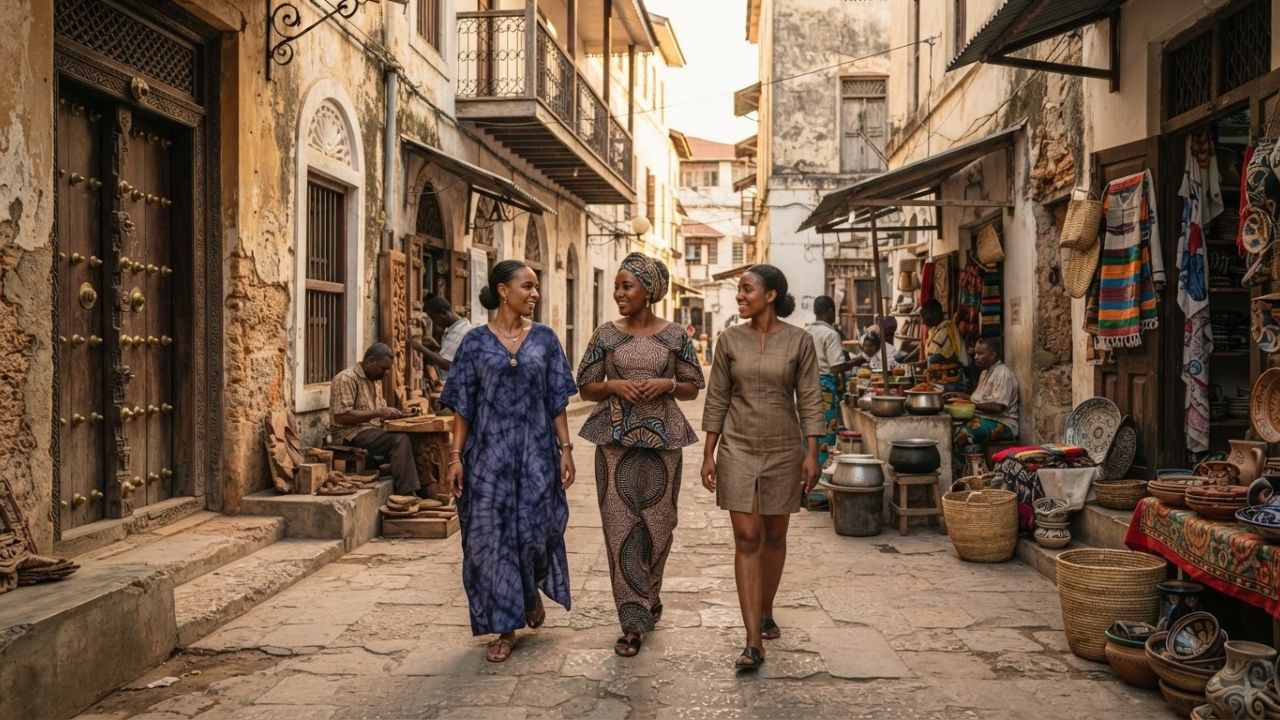
Image generated by AI
On the tide-free northern shores of Zanzibar, a beachfront property that started thirty years ago as a humble backpacker campsite where travelers pitched canvas tents now draws 26,000 annual guests to its monthly cultural gatherings—all while extracting its drinking water directly out of thin ocean air through atmospheric condensation. Revealed in a September 16, 2026 assessment by Nooa Kilupy, Assistant General Manager of Kendwa Rocks Beach Hotel, this marriage of grassroots African identity and cutting-edge ecological resilience reflects a sweeping revolution across the continent. Far beyond the standard safari-and-resort circuit, travelers from Europe, the United States, and China are seeking out living historic cities where centuries-old traditions thrive within functioning neighborhoods. From the spice-infused Swahili coral-stone lanes of Stone Town to the subterranean rock-hewn monolithic sanctuaries of Lalibela and the walled Islamic sanctuaries of Harar in Ethiopia, Africa’s historic capitals are proving that genuine luxury lies in living culture, ancestral craft, and community-led preservation.
From Tent Camps to Atmospheric Water: The Hospitality Evolution in Zanzibar
Positioned along the calm waters of Kendwa Beach, Kendwa Rocks Beach Hotel embodies the resilience and adaptability of Zanzibar’s coastal hospitality sector. Over three decades of continuous operation, the property transformed organically from a basic tent site into rustic thatched huts, eventually expanding into a distinctive 130-room resort. Rather than relying on sterile international templates, the hotel anchors its identity in African heritage: guest rooms are named after African countries, featuring customized regional artwork and decor inspired by destinations such as Malawi.
Entertainment serves as a cultural bridge rather than mere background music. The property’s renowned Full Moon Party has emerged as one of East Africa’s signature monthly gatherings, welcoming between 1,500 and 4,000 revelers per event and recording around 26,000 attendees across its 2025 calendar. Operating in a mid-to-higher price tier with flexible seasonal rates, the resort complements its flagship night events with paint-and-sip workshops, traditional dance classes, and open-air beach movie screenings, while providing a major stage for emerging Tanzanian musicians and established pan-African artists.
Environmental innovation matches this cultural focus. Having phased out single-use plastic from guest accommodations and bars in 2019, Kendwa Rocks deployed atmospheric water generators that capture ambient humidity from sea breezes, condensing and mineralizing the moisture to produce pure drinking water served in reusable glass bottles. Supported by solar energy arrays, reverse osmosis filtration, bamboo toiletries, and rechargeable systems, the property demonstrates how island resorts can dramatically reduce waste. During the low-season refurbishment, the hotel refreshed dozens of guest rooms with materials sourced from local Zanzibari carvers, East African craft networks, South Africa, and Bali, alongside creating a new courtyard waterfall installation.
This grassroots grounding has helped the property weather recent geopolitical headwinds. When regional conflict in the Middle East disrupted transit flights through Qatar and Dubai—historically vital air links for European and Asian arrivals—the hotel absorbed approximately 5% booking cancellations. By pivoting toward emerging group bookings from the United States and exploring Asian partnerships, the hotel illustrates how authentic, culturally anchored hospitality can navigate global aviation volatility.
What Makes Africa's Historic Cities Different: Living Neighborhoods, Not Static Museums
Beyond beachfront shores, Africa’s historic urban centers offer an encounter with antiquity that remains woven into daily community life. In these ancient trading hubs, historical preservation does not wall off neighborhoods behind museum stanchions; it lives in bustling courtyards, resonant morning prayers, and generational artisan stalls.
In Stone Town, Zanzibar, recognized by the UNESCO World Heritage Centre, more than a thousand years of Indian Ocean maritime exchange echoes through narrow coral-stone passages. The town blends Swahili, Arab, Persian, Indian, and European architectural influences, celebrated for its heavy carved teak doors fitted with brass defensive studs. Walking from the 17th-century Old Fort to the Anglican Christ Church Cathedral—built directly over the whipping post of the former slave market—visitors experience an urban setting where fishmongers, dhow builders, and school children navigate centuries-old alleys every day.
In Morocco, the Medina of Fez (Fez el-Bali) preserves the world’s oldest continuously operating university, Al Quaraouiyine, alongside the 14th-century Bou Inania Madrasa. Founded in the ninth century and reaching its architectural peak under the Marinid dynasty, Fez el-Bali remains a car-free universe of 9,000 winding lanes, where donkey carts transport hides to the open-air Chouara tanneries and metalworkers hammer brass lanterns by hand. Further south, Marrakesh pairs 11th-century Almoravid heritage with the hypnotic open-air theater of Jemaa el-Fna, surrounded by the Saadian Tombs, Bahia Palace, and Ben Youssef Madrasa.
Ethiopia presents an unbroken connection to ancient civilizations. In the northern highlands of Lalibela, King Lalibela ordered the carving of eleven monolithic medieval churches directly down into pink volcanic tuff in the 12th and 13th centuries. Structures like Biete Medhani Alem and Biete Mariam remain active pilgrimage sanctuaries where white-robed Orthodox faithful assemble before sunrise. To the east, the fortified town of Harar Jugol stands as the fourth holiest city in Islam, enclosing 82 mosques and 102 shrines within its 16th-century stone ramparts. Meanwhile, in Kumasi, Ghana, the historic capital of the Asante Kingdom keeps royal court traditions alive at Manhyia Palace, surrounded by 18th-century Asante Traditional Buildings constructed from timber, bamboo, and sculpted earthen reliefs.
Visitor Insider Tips: Timing, Local Gastronomy, and Heritage Lodging
Experiencing these historic centers with cultural depth requires moving to the rhythm of local life:
- Savor Authentic Swahili Dining in Stone Town: Avoid generic tourist cafes along the main harbor and head inland to Lukmaan Swahili Restaurant or ZAFA SWAHILI DISHES. Feast on slow-simmered octopus curry cooked in fresh coconut milk, tamarind beef skewers, spiced biryani, and warm Zanzibar flatbread. At dusk, stroll to the Forodhani Gardens waterfront to drink fresh sugarcane juice pressed with ginger and lime.
- Base Yourself in Restored Heritage Properties: In Stone Town, stay in restored 19th-century merchant mansions like Emerson Spice, featuring rooftop views over minarets and church spires. In Fez and Marrakesh, select an authentic riad inside the medina walls, such as Riad Fes or La Sultana, where central tiled courtyards provide tranquil sanctuaries away from market noise. In Lalibela, lodge in locally run guesthouses near the Lasta Tukul stone dwellings.
- Observe Sacred Protocol at Lalibela: Visit the church complexes at 5:30 AM to witness the morning liturgical prayers. Remove your shoes before stepping onto antique woven rugs, dress in modest, light-colored clothing covering shoulders and knees, and walk with quiet reverence. Book a cooking session at Elefign Lalibela Restaurant to learn how to ferment teff batter for tangy injera bread, followed by dining at the cliffside Ben Abeba.
- Explore Harar with an Authorized Guide: Harar Jugol’s winding alleys and private courtyards require local guidance to understand Harari family architecture, basket-weaving guilds, and Quranic bookbinding workshops. In the evening, visit the city perimeter to observe the generational ritual of feeding wild spotted hyenas by hand, a tradition practiced for centuries to maintain peace between predators and city dwellers.
- Adopt the 12-Day Trans-African Heritage Circuit: Structure an ambitious multi-city journey starting with three nights in Stone Town, three nights navigating Fez, three nights in Marrakesh, two nights exploring Lalibela, and concluding with a heritage excursion into Harar or Kumasi.
Cultural and Environmental Context: Water Innovation and Living Community Heritage
The movement toward sustainable cultural tourism is essential for safeguarding Africa's fragile urban ecosystems and living traditions. In Zanzibar, where water scarcity presents a constant challenge, Kendwa Rocks’ deployment of atmospheric condensation systems demonstrates how private enterprise can alleviate pressure on local groundwater reserves, supporting conservation frameworks overseen by the Zanzibar Commission for Tourism.
Preserving architectural heritage requires balancing visitor access with the everyday dignity of local residents. In Stone Town, Harar, and Fez, municipal authorities prioritize functional urban life over museumification. When historic houses continue to shelter multi-generational families, when community fountains supply drinking water, and when neighborhood souks supply local spices rather than imported souvenirs, authenticity is preserved naturally.
Discerning travelers contribute directly to this balance by supporting locally owned guesthouses, dining at neighborhood warungs and eateries, hiring accredited municipal guides, and honoring religious customs. By engaging respectfully with local artisans, travelers ensure that traditional plaster carving, zellige tile production, kente textile weaving, and sacred music remain vibrant livelihoods for the generations ahead.
FAQ: Navigating Africa's Authentic Heritage Cities in 2026
What makes Kendwa Beach in Zanzibar different from other coastal areas? Kendwa Beach is located on the northwestern coast where ocean tides do not recede for miles, allowing uninterrupted swimming and water sports throughout the entire day.
How do travelers visit the rock-hewn churches of Lalibela? Visitors fly into Lalibela Airport via domestic Ethiopian Airlines connections from Addis Ababa, hiring licensed local heritage guides to navigate the northern and southern church groups.
What is the dress code for exploring Stone Town and Harar? Both Stone Town and Harar are traditional coastal and Islamic societies. Visitors should dress modestly, wearing clothing that covers shoulders, chests, and knees when walking outside resort beaches.
How much time is needed to explore the Medina of Fez? Travelers should dedicate at least two to three full days to Fez to explore Fez el-Bali's artisan quarters, visit historic madrasas, and take a guided craft workshop without rushing.
Across the sunlit alleys of the continent, true heritage is not locked behind glass—it lives in the laughter of courtyards, the resonance of morning prayers, and the ancient warmth of an open door.
Related Travel Guides
Disclaimer
This article is for informational and educational purposes only. It does not constitute legal, financial, or professional advice. While we strive to provide accurate and up-to-date information, travel policies, regulations, and conditions change rapidly. Always verify information with official sources before making travel decisions. Nomad Lawyer makes no representations about the accuracy, reliability, completeness, or suitability of the information provided. Readers should consult qualified professionals for advice specific to their circumstances. The views expressed in this article are those of the author and do not necessarily reflect the views of Nomad Lawyer.
Raushan Kumar
Founder & Lead Developer
Full-stack developer with 11+ years of experience and a passionate traveller. Raushan built Nomad Lawyer from the ground up with a vision to create the best travel and law experience on the web.
Learn more about our team →