
Why Are Silent Biometric Surveillance Cameras Tracking Every Single Passenger And Changing The Future Of Travel In Jackson County, Find Out Now
Why Are Silent Biometric Surveillance Cameras Tracking Every Single Passenger And Changing The Future Of Travel In Jackson County, Find Out Now

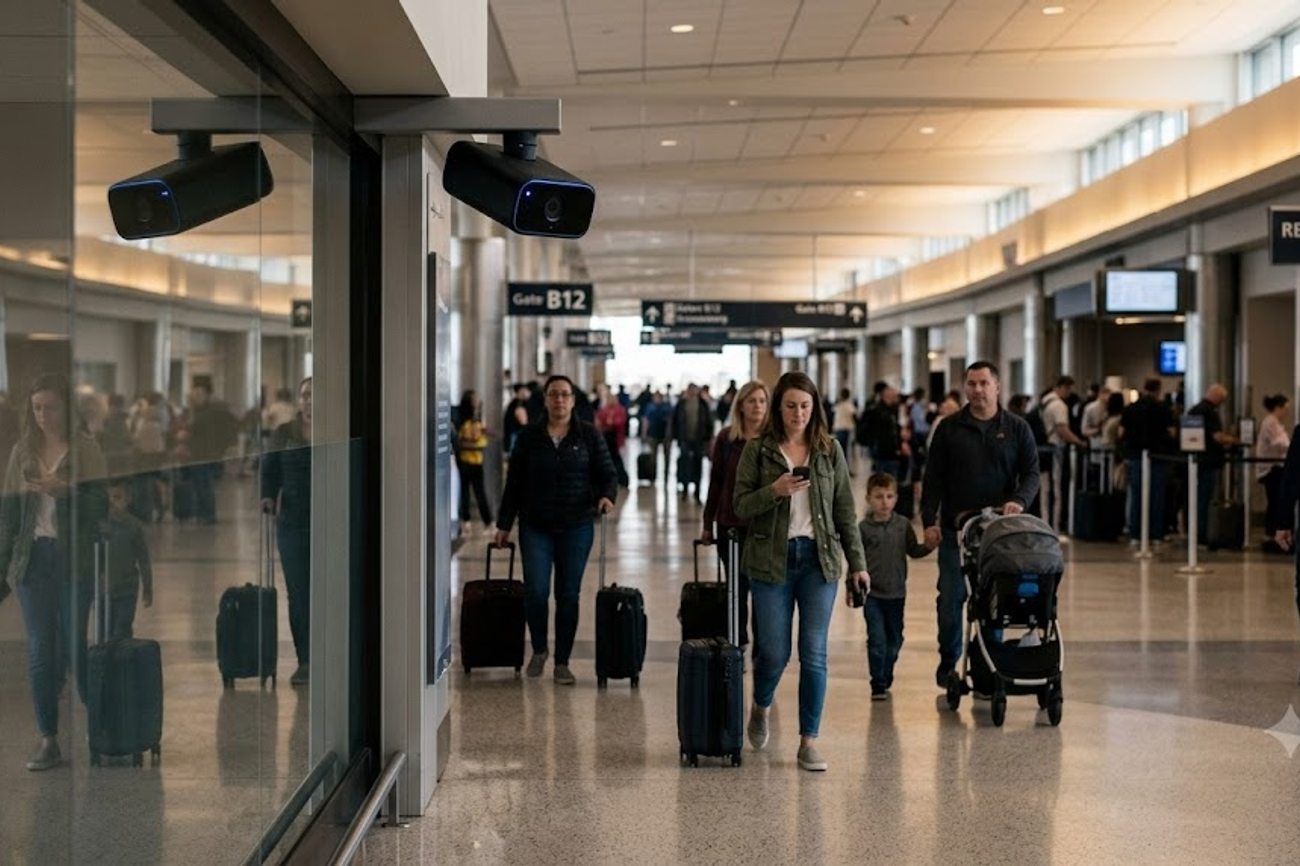
Image generated by AI
[Atlanta, October 2023] — Hartsfield-Jackson Atlanta International Airport is aggressively integrating mandatory biometric surveillance and automated facial comparison technology into its passenger processing pipeline. The deployment transforms the transit hub into a zone of perpetual mass identification, utilizing high-speed cameras to convert physical human features into digital templates for immediate database matching.
The system operates by capturing live imagery at security gates, check-in counters, and boarding points. These digital vectors are evaluated through 1:1 or 1:N matching processes against federal repositories managed by the U.S. Department of Homeland Security (DHS), specifically through Biometric Exit/Entry systems. The infrastructure is designed to handle the massive throughput of Hartsfield-Jackson, which processes more than 100 million passengers annually, by replacing manual document verification with algorithmic identification.
The Shift to Algorithmic Border Control
The transition from traditional passport checks to biometric ingestion is driven by a push for "seamless" security. However, the operational reality involves the extraction of immutable biological markers without genuine passenger consent. This process turns the physical body into a permanent digital identifier, a move that critics argue violates Article 17 of the International Covenant on Civil and Political Rights (ICCPR), which protects individuals against arbitrary interference with their privacy.
At the technical level, these systems rely on proprietary commercial algorithms to match live feeds against stored data. Because these algorithms are often closed-source, travelers have no mechanism to audit the software or challenge automated matching errors. This lack of transparency is compounded by "function creep," where data initially collected for border enforcement is expanded into general law enforcement networks without explicit statutory authorization.
Populations and Hubs Under Surveillance
The deployment of these systems is not limited to Atlanta but is part of a broader global trend affecting major international transit nodes. The impact is felt most acutely by specific demographic groups who face higher failure rates due to algorithmic bias.
| Affected Group / Location | Primary Impact | Risk Factor |
|---|---|---|
| Non-White Travelers | Higher match error rates | Demographic disparity in algorithm training |
| Women & Children | Increased false positives | Systematic algorithmic bias |
| Elderly Passengers | Processing friction | Age-related biometric variance |
| Atlanta (ATL) | Mass biometric ingestion | Volume of 100M+ annual passengers |
| London Heathrow (LHR) | Involuntary compliance | Unclear opt-out protocols |
| Tokyo Haneda (HND) | Privacy erosion | Mandatory biometric collection |
According to benchmark assessments from the National Institute of Standards and Technology (NIST), facial recognition software consistently demonstrates demographic disparities. These errors lead to disproportionate friction for targeted populations, resulting in invasive secondary interrogations, missed flight connections, and improper entry denials.
What This Means for Travelers
For the average passenger booking a flight through a major hub, the "convenience" of shorter lines comes with a significant trade-off in personal autonomy and data security.
1. Loss of Anonymity: Travelers can no longer move through a public airport anonymously. Every movement through a checkpoint is linked to a digital identity marker. 2. Permanent Identity Risk: Unlike a password or a physical passport, biometric data cannot be changed if breached. A leak of a centralized biometric repository exposes a traveler to lifelong identity theft. 3. Forced Compliance: While some hubs claim to offer choices, the "illusion of choice" often forces passengers into biometric lanes to avoid massive delays, effectively making the surveillance mandatory. 4. Behavioral Modification: The presence of continuous database checks creates a "chilling effect," where travelers modify their natural behavior and movement patterns due to the pressure of constant algorithmic surveillance.
The Future of Biometric Governance
The trajectory of global travel points toward deeper integration of biometric markers, but regulatory pressure is mounting to establish safeguards. To prevent the total erosion of privacy, advocates are calling for governments to implement strict "necessity and proportionality" testing before any new surveillance framework is deployed.
Key requirements for future deployments include:
- Mandatory Opt-Outs: The provision of clear, non-discriminatory signage directing passengers to manual passport checks without penalty or excessive delay.
- Data Retention Caps: Laws mandating the immediate deletion of biometric vectors for passengers not flagged for law enforcement purposes.
- Independent Audits: The publication of transparent Privacy Impact Assessments (PIAs) and third-party algorithmic audits to reduce demographic bias.
- Strict Interoperability Limits: Binding regulations to prevent the unregulated transfer of travel data between border agencies and domestic civil surveillance networks.
As hubs like Hartsfield-Jackson continue to scale these systems, the tension between operational throughput and human dignity will likely define the next decade of international aviation law.
FAQ: Biometric Travel Surveillance 2023
Do I have a choice to opt out of facial recognition at the airport? While some airports claim to offer opt-outs, they are often poorly signed or result in significant delays. Travelers should proactively ask for manual document verification at check-in and boarding to avoid automated biometric ingestion.
What happens if the facial recognition system misidentifies me? Algorithmic errors often trigger "false positives," which lead to secondary screenings. This can result in invasive interrogations, delays in boarding, or, in severe cases, improper denial of entry into a country.
Is my biometric data stored forever? Storage policies vary by agency. However, there is a significant risk of "function creep," where data is kept longer than necessary or shared across different government agencies without the traveler's knowledge.
Why is biometric theft more dangerous than a password leak? Passwords can be reset; your face and fingerprints cannot. If a centralized biometric database is breached, your immutable biological markers are permanently compromised, creating a lifelong risk of sophisticated identity theft.
The convenience of the fast lane may be the most expensive ticket a traveler ever buys.
#HartsfieldJackson #ATL #BiometricSurveillance #DHS #NIST #InternationalTravel2023
Related Travel Guides
Disclaimer
This article is for informational and educational purposes only. It does not constitute legal, financial, or professional advice. While we strive to provide accurate and up-to-date information, travel policies, regulations, and conditions change rapidly. Always verify information with official sources before making travel decisions. Nomad Lawyer makes no representations about the accuracy, reliability, completeness, or suitability of the information provided. Readers should consult qualified professionals for advice specific to their circumstances. The views expressed in this article are those of the author and do not necessarily reflect the views of Nomad Lawyer.
Naina Thakur
Contributor & Travel Specialist
Travel enthusiast and legal writer covering visa regulations, responsible tourism, and cultural journeys across global destinations.
Learn more about our team →