
Washington Manassas Airport Secures FAA Approval for Commercial Passenger Flights by 2027
Washington Manassas Airport (HEF) has obtained critical FAA Part 139 certification and environmental clearances, paving the way for scheduled commercial airline service to launch in Northern Virginia by 2027.

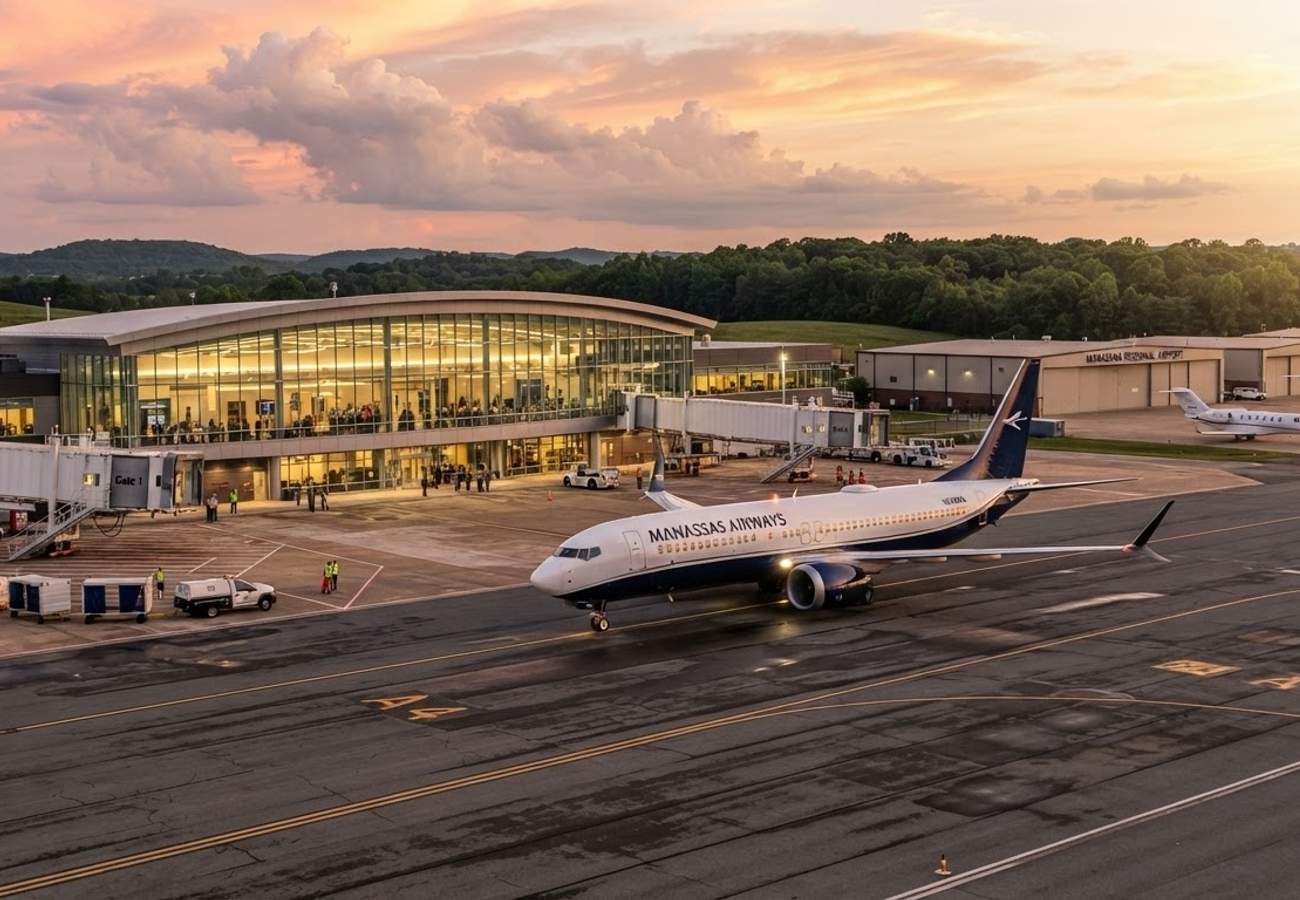
Image generated by AI
Virginia’s largest general aviation hub is officially transitioning into a commercial gateway. Washington Manassas Airport has cleared the final federal regulatory hurdles to begin scheduled passenger operations by 2027.
The facility, previously known as Manassas Regional Airport, has secured the critical federal authorizations required to integrate into the Washington D.C. metropolitan passenger network. This shift transforms the airport from a primary reliever field into a full-scale commercial participant, aiming to alleviate pressure on the region's existing major hubs.
Located approximately 28 miles from downtown Washington, the airport—which retains the identifier HEF—has historically served as a center for corporate, military, medical, and law enforcement aviation. The strategic rebranding to "Washington Manassas Airport," approved by the Manassas City Council in 2026, is designed to increase market visibility as the facility prepares for its first scheduled airline arrivals.
Regulatory Milestones: FAA Part 139 and Environmental Clearance
The transition to commercial status was contingent upon two primary federal approvals: the FAA Part 139 Airport Operating Certificate and a comprehensive environmental review.
The FAA Part 139 certification is a mandatory requirement for any airport intending to serve scheduled air carriers using larger passenger aircraft. To earn this, the airport had to prove strict compliance with federal standards regarding:
- Aircraft rescue and firefighting (ARFF) capabilities.
- Runway safety and marking.
- Fuel handling protocols.
- Wildlife management and snow/ice control.
Beyond physical infrastructure, the airport implemented a Safety Management System (SMS) to systematically identify and mitigate risks associated with increased passenger traffic.
Simultaneously, the FAA completed an environmental review of the commercial service program. This clearance allows the airport to proceed with necessary infrastructure expansions, including terminal upgrades and expanded parking, without further federal environmental delays.
Infrastructure Evolution and Terminal Development
Working with management partner Avports, the airport is executing a multi-phase development plan to accommodate the shift in traffic. The focus is on creating a passenger-centric experience while maintaining the airport's general aviation roots.
The planned terminal facility will feature:
- Dedicated security screening areas and TSA-compliant checkpoints.
- Modern baggage handling systems and hold rooms.
- Enhanced curbside access and expanded parking facilities.
- Upgraded perimeter security to meet commercial aviation standards.
According to city budget and capital planning documents, the first phase of the terminal is targeted to open in the fall of 2027. This timeline aligns with the projected start of scheduled passenger flights.
Strategic Market Position and Route Potential
Washington Manassas Airport is positioned to become the fourth passenger airport serving the Washington metropolitan area, joining Ronald Reagan Washington National, Washington Dulles International, and Baltimore/Washington International Thurgood Marshall.
By targeting the western suburbs and exurban communities of Northern Virginia, the airport aims to capture travelers who currently face long commutes to larger hubs. While no airlines have officially committed to specific routes, early planning discussions suggest a focus on high-demand, point-to-point markets.
Potential initial destinations identified in public meetings include:
- New York: High-frequency business and leisure connectivity.
- Orlando: Strong demand for low-cost vacation travel.
Industry analysts suggest that HEF's uncongested airspace and proximity to major highway corridors provide a competitive advantage. For low-cost carriers, the airport offers the potential for faster turn times and lower operating costs compared to the slot-constrained environments of Dulles or Reagan National.
Operational Transition and Financial Framework
As the project moves from regulatory approval to implementation, the airport is updating its financial and operational structures. This includes the establishment of new landing fees and the application for Passenger Facility Charges (PFCs), which will help fund ongoing capital improvements.
The airport will maintain its role as a general aviation hub, creating a hybrid environment where scheduled commercial flights coexist with charter and on-demand services. This dual-purpose model is expected to reshape the airfield's daily traffic patterns, particularly during peak travel windows.
Implementation Timeline
| Milestone | Status/Target Date | Detail |
|---|---|---|
| FAA Part 139 Certification | Completed | Required for scheduled air carriers |
| Federal Environmental Review | Completed | Clears terminal and parking expansion |
| Infrastructure Construction | 2025–2026 | Terminal and landside development |
| Phase 1 Terminal Opening | Fall 2027 | Initial passenger facility launch |
| Scheduled Flight Commencement | 2027 | Start of commercial airline operations |
Key Takeaways
- New Gateway: Washington Manassas (HEF) will become the fourth passenger airport in the D.C. region by 2027.
- Federal Approval: The airport has successfully secured both the FAA Part 139 certificate and necessary environmental clearances.
- Strategic Target: The airport aims to serve Northern Virginia's exurban populations, reducing reliance on Dulles and Reagan National.
- Hybrid Model: HEF will continue to support general aviation while adding commercial narrowbody and regional airline services.
FAQ
When will commercial flights start at Washington Manassas Airport? Scheduled passenger operations are targeted to begin in 2027, coinciding with the opening of the first-phase terminal in the fall of that year.
Which airlines will fly into HEF? No airlines have officially signed agreements yet, but planners expect low-cost and point-to-point carriers to be interested in routes to cities like New York and Orlando.
Will the airport still handle private and corporate jets? Yes, the airport will maintain its status as a general aviation hub while adding commercial passenger services.
A strategic shift in Northern Virginia's aviation map that promises to decentralize D.C. air travel.
Related Travel Guides
Disclaimer
This article is for informational and educational purposes only. It does not constitute legal, financial, or professional advice. While we strive to provide accurate and up-to-date information, travel policies, regulations, and conditions change rapidly. Always verify information with official sources before making travel decisions. Nomad Lawyer makes no representations about the accuracy, reliability, completeness, or suitability of the information provided. Readers should consult qualified professionals for advice specific to their circumstances. The views expressed in this article are those of the author and do not necessarily reflect the views of Nomad Lawyer.
Kunal K Choudhary
Co-Founder & Contributor
A passionate traveller and tech enthusiast. Kunal contributes to the vision and growth of Nomad Lawyer, bringing fresh perspectives and driving the community forward.
Learn more about our team →