Japan Spring 2027: How to Access Akita's Late-Blooming Cherry Blossoms After Tokyo's Peak

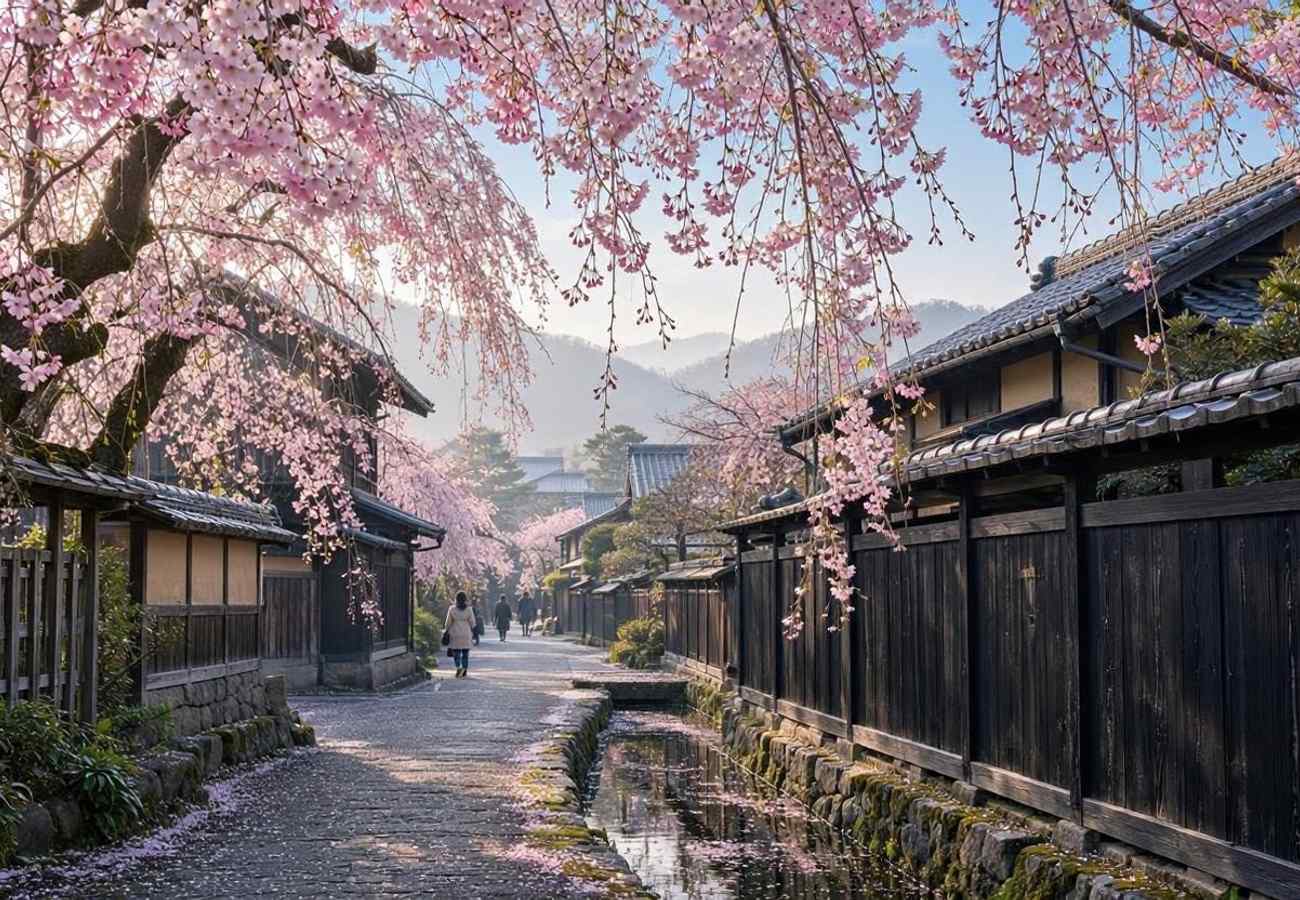
Image generated by AI
Are you worried about missing the cherry blossom peak in Tokyo for your 2027 trip? If your schedule lands you in Japan after the early April fade, you can effectively "reset" your Sakura experience by traveling north to Akita Prefecture, where the cooler climate pushes the bloom into late April.
The Northward Shift: Akita's 2027 Bloom Window
While Tokyo's blossoms typically peak between late March and early April, Akita offers a strategic window for travelers to witness the flowering season a second time. The primary draw is the town of Kakunodate, which generally sees its peak blossoms from mid-April to early May.
For those planning their 2027 calendar, the historical festival window has previously run from 15 April to 5 May. Because Akita is located in the Tohoku region, the temperature drop ensures that the pink canopy persists long after the blossoms in central Japan have fallen.
Route and Schedule Details
The most efficient way to reach this region is via the high-speed rail network. The Akita Shinkansen (Komachi) serves as the primary artery connecting the capital to the north.
| Route | Frequency | Aircraft/Train | Duration | Status |
|---|---|---|---|---|
| Tokyo $\rightarrow$ Kakunodate | Regular | Akita Shinkansen | ~3 Hours | Active |
| Tokyo $\rightarrow$ Akita City | Regular | Akita Shinkansen | Variable | Active |
| Tazawako $\rightarrow$ Nyuto Onsen | Scheduled | Local Bus | 40-45 Mins | Active |
| Regional Rural Routes | Daily | Akita Nairiku Railway | Variable | Active |
Traveler Logistics Guide
Navigating the Tohoku region requires a different approach than the dense urban transit of Tokyo. Here is the step-by-step logistics breakdown for a Spring 2027 visit.
1. Rail Booking and Transit To maximize efficiency, use the JR East booking system to reserve your Komachi Shinkansen seats. Since the Sakura season creates a massive surge in demand, booking exactly 30 days in advance is highly recommended. Once you arrive at Kakunodate Station, the historic samurai district is a manageable 15-20 minute walk.
2. Managing the "Two-Track" Sakura Experience In Kakunodate, you must plan for two distinct viewing zones:
- The Samurai District: Home to 162 nationally protected weeping cherry trees. This area is best visited in the early morning to avoid photography crowds.
- Hinokinai River: A 2km corridor featuring over 400 Somei Yoshino trees planted in 1934. This path is ideal for evening walks, as the area often hosts night illuminations.
3. Connecting to Remote Sites If you are extending your trip to Lake Tazawa (Japan's deepest lake at 423 meters) or the Nyuto Onsen hot springs, do not rely on walking.
- Lake Tazawa: Accessible via the Shinkansen to Tazawako Station, followed by local transit.
- Nyuto Onsen: Take the bus from Tazawako Station. The journey takes approximately 40-45 minutes. Note that because these are mountain resorts, some walking trails may remain closed due to snow until late April.
4. Dietary Logistics Akita's cuisine is distinct. Look for kiritanpo nabe (grilled rice sticks) and Inaniwa udon. For those with dietary restrictions, most hotels in Akita City can arrange vegetarian or pork-free options, but this must be requested at the time of booking.
Regional Connectivity Impact
The accessibility of Akita via the Shinkansen has transformed it from a remote outpost into a viable extension of the "Golden Route" (Tokyo-Kyoto-Osaka). By adding Akita to a spring itinerary, travelers can avoid the extreme over-tourism of Tokyo's parks.
Furthermore, the integration of the Akita Nairiku Inland Railway allows for "slow travel" through mountain valleys, providing a transition between the high-speed efficiency of the Shinkansen and the rustic nature of the Towada-Hachimantai National Park. For the most up-to-date travel advisories and rail passes, consult the Japan National Tourism Organization (JNTO).
FAQ: Akita Transit 2027
Do I need a special rail pass for Akita? The JR Pass or the specific JR East Tohoku area pass is highly recommended, as the Akita Shinkansen can be expensive when purchased as individual point-to-point tickets.
How long should I stay in Akita for a full experience? A 2-to-3 day itinerary is optimal. This allows one full day for Kakunodate's blossoms and a second day for Lake Tazawa and the Nyuto Onsen baths.
Can I check my bags through from Tokyo to Akita? While the Shinkansen does not have "check-through" service, you can use Takkyubin (luggage delivery services) to send your large suitcases from your Tokyo hotel directly to your Akita accommodation.
Will there still be snow in April? Yes, in the mountain regions like Nyuto Onsen, snow often lingers into early spring, creating a contrast between the hot springs and the cold landscape.
Trade the Tokyo crowds for the samurai streets of the north.
Related Travel Guides
This article is for informational purposes. Flight routes, passenger regulations, visa rules, and transit advisories are subject to change by airlines and aviation authorities. Readers are advised to verify schedules and travel documentation with relevant carriers and border agencies before departure.
Related Stories

US and Global Biometric Border Shifts: Analyzing the 2027 Passport and E-Gate Transformation
Exploring Canada's 29 Most Stunning Lakes: Insider Guide to Alberta, BC, and Ontario 2026