Cambodia Travel Industry Navigates Arrival Slowdown: Inside the Multi-Billion-Dollar Strategy to Revitalize Angkor, Sihanoukville, and Eco-Tourism

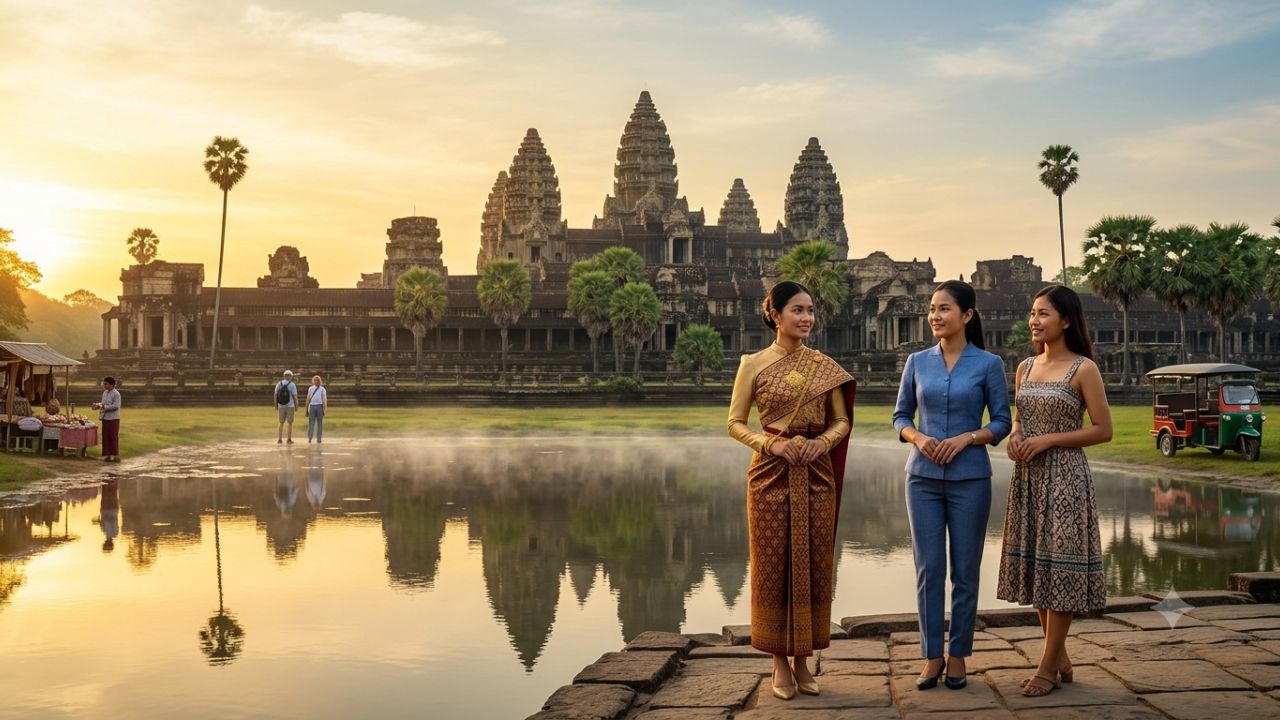
PHNOM PENH, November 4, 2026 — Confronted by an acute slowdown in international arrivals and shifting macroeconomic currents across the Asia-Pacific region, the Kingdom of Cambodia has initiated a comprehensive structural overhaul of its multi-billion-dollar tourism economy. Official data released by the Ministry of Tourism shows that the country recorded 2.46 million international visitors during the first nine months of 2026. While regional neighbors like Vietnam and China continue to provide a foundation of arrivals, the aggregate figures illustrate a prolonged post-pandemic recovery curve that has placed intense financial pressure on hoteliers, boutique guesthouse operators, tuk-tuk cooperatives, and regional aviation carriers. Rather than relying on passive historical appeals centered exclusively on the monumental stone temples of Angkor, Cambodian authorities and private-sector leaders are mounting an aggressive campaign to diversify the nation’s travel assets.
This strategic pivot encompasses an ambitious array of structural reforms. Government ministries are actively addressing the reputational and physical legacy of unfinished casino developments in the coastal hub of Sihanoukville, directing investment into community-based ecotourism across the Cardamom Mountains, and establishing blockchain-secured digital infrastructure across heritage reserves. By developing high-yield wellness sanctuaries, upgrading cross-border expressways, and expanding regional flight corridors, Cambodia aims to transition from a brief, low-yield transit stop into a high-value, immersive destination capable of commanding extended visitor stays and resilient foreign exchange.
========================================================================================
CAMBODIA TOURISM PERFORMANCE & RECOVERY MATRIX (JANUARY – SEPTEMBER 2026)
========================================================================================
  [TOTAL ARRIVALS]           --> 2.46 Million International Visitors (9-Month Baseline)
  [TOP FEEDER MARKET #1]     --> Vietnam (691,486 Visitors | 28.1% Regional Share)
  [TOP FEEDER MARKET #2]     --> China (643,314 Visitors | 26.1% Regional Share)
  [TRANSIT ENTRY CHANNELS]   --> 40% Overland & Waterways | 60% Regional Aviation
  [STRATEGIC INFRASTRUCTURE] --> $1.2 Billion Capital Expenditure in Highways & Rail
  [RECOVERY PILLARS]         --> Cardamom Ecotourism, Smart Tech, Wellness, Sihanoukville Reset
========================================================================================
Strategic Key Indicators for Cambodia's Tourism Recovery
- Regional Market Concentration: Vietnam and China collectively account for over 54% of all international arrivals, demonstrating that geographic proximity and regional commerce serve as the principal stabilizers of national visitation.
- Overland Mobility Footprint: Nearly 40% of all international visitors enter the Kingdom via overland border checkpoints and riverine transit points from Vietnam and Thailand, highlighting the expanding importance of cross-border highways.
- Aviation Capacity Deficit: Direct international flight seat capacity across secondary Southeast Asian airports remains 22% below pre-pandemic baselines, continuing to restrict high-spending long-haul arrivals from Europe and North America.
- Ecotourism Counter-Trend: Bookings at verified zero-waste eco-lodges in rural provinces have expanded by 28% year-on-year, illustrating robust consumer demand for low-impact, nature-based travel experiences.
- Technological Modernization: Deployments of blockchain-powered entry ticketing across major archaeological parks have eliminated counterfeit ticket fraud by 98% while ensuring transparent conservation reinvestment.
The Anatomy of the Downturn: Parsing the 2.46 Million Nine-Month Arrival Figures
To comprehend the scale of the challenge facing Cambodia’s hospitality industry, the nine-month total of 2.46 million visitors must be analyzed against the nation’s pre-pandemic high-water mark. In 2019, Cambodia welcomed a record 6.61 million international tourists, generating $4.92 billion in revenue and contributing roughly 12% of national gross domestic product. The subsequent global travel disruptions, combined with uneven economic recoveries in East Asia and altered consumer spending habits, have resulted in an extended period of suppressed volume.
SOURCE MARKET DISTRIBUTION: CAMBODIA VISITOR ARRIVALS (JAN–SEP 2026)
| Entity / Facility | Delays | Cancellations | Details |
|---|---|---|---|
| Source Market | Arrival Volume (Pax) | Market Share (%) | Primary Entry Mode |
| Vietnam | 691,486 | 28.1% | Overland & Ferry |
| China | 643,314 | 26.1% | Direct Aviation |
| United States | 142,500 | 5.8% | Connecting Aviation |
| France & UK | 138,200 | 5.6% | Connecting Aviation |
| Indonesia | 112,400 | 4.6% | Regional Aviation |
| Australia & Japan | 104,800 | 4.3% | Connecting Aviation |
| Rest of World | 627,300 | 25.5% | Mixed Transit |
A closer inspection of the data reveals sharp demographic divergences. Arrivals from Vietnam topped the national ledger at 691,486 visitors, driven by overland cross-border commerce, short family excursions through the Bavet border corridor, and riverine cruises along the Mekong River into Phnom Penh. China followed closely with 643,314 arrivals. However, the nature of Chinese visitation has fundamentally shifted. The sprawling group-package tours that once packed Siem Reap’s five-star hotels have largely been replaced by independent business travelers, infrastructure engineers, and specialized investors connected to regional trade agreements.
Western long-haul markets—including the United States, France, the United Kingdom, and Australia—continue to represent an important segment of the visitor mix, but their overall numbers remain constrained. The primary barrier is logistical. With few direct intercontinental flights landing at Cambodian airports, Western travelers must connect through regional hubs such as Bangkok, Singapore, Kuala Lumpur, or Ho Chi Minh City. This multi-leg routing increases overall travel costs and flight durations, placing Cambodia at a competitive disadvantage compared to regional destinations with direct long-haul airlift.
The entry channel breakdown reflects this reality. Approximately 40% of visitors enter via land gates (such as Poipet on the Thai border and Bavet on the Vietnamese frontier) or via waterways connecting Chau Doc to Phnom Penh. While these overland travelers support cross-border transport companies and local border economies, their average daily spend and hotel stay lengths are substantially lower than those of long-haul cultural tourists who fly directly into the country. Consequently, the hospitality industry in primary centers like Siem Reap and Phnom Penh faces depressed room rates and lower occupancy margins.
The Shadow of Sihanoukville: Unwinding Casino Enclaves and Restoring Coastal Credibility
No single issue has exerted a more complex influence on Cambodia's international tourism reputation than the rapid rise and subsequent stagnation of Sihanoukville. Situated on the Gulf of Thailand in Preah Sihanouk province, Sihanoukville was once a tranquil coastal enclave favored by independent backpackers and regional beach enthusiasts. Between 2015 and 2019, an unprecedented influx of foreign capital transformed the town into a dense casino center, driven by online gambling operations and speculative real estate construction. High-rise hotel towers, gaming establishments, and entertainment compounds replaced quiet beachside bungalows.
The turning point arrived in August 2019, when the Cambodian government issued a directive banning unlicensed online gambling operations, a policy enforced with renewed vigor in early 2020. The sudden regulatory shift, compounded by pandemic border closures, prompted an immediate exodus of casino operators and speculative capital. The departure left more than four hundred partially constructed concrete building skeletons standing across the urban perimeter, creating an urban landscape characterized by paused construction and unpaved roads.
========================================================================================
SIHANOUKVILLE'S TRANSFORMATION ROADMAP: CASINOS TO SUSTAINABLE SEZ
========================================================================================
  [HISTORIC SPECULATION] --> Rapid construction boom driven by online gambling (2015-2019)
  [REGULATORY CORRECTION]--> Strict national ban on unlicensed online gambling (2019-2020)
  [CONSTRUCTION SKELETONS]--> Over 400 paused building projects across the municipal zone
  [SPECIAL INCENTIVE PLAN]--> Tax holidays, permit fast-tracking & legal dispute resolution
  [STRATEGIC EVOLUTION]  --> Modern deep-water port, coastal eco-tourism, industrial SEZ
========================================================================================
The fallout extended beyond Sihanoukville itself. International media coverage surrounding gambling compounds, financial disputes, and cross-border cyber-scam operations created negative reputational spillovers that affected international traveller perceptions of safety across the entire country, including peaceful cultural centers like Siem Reap. On nearby islands like Koh Rong and Koh Rong Sanloem, where crystal-clear waters and coral reefs offer world-class marine tourism, boutique eco-resort operators struggled against the broader negative coastal narrative.
To resolve this challenge, the government launched the "Special Programme to Promote Investment in Preah Sihanouk Province 2024–2026." Chaired by senior economic ministers, this initiative provides comprehensive fiscal incentives—including multi-year corporate income tax exemptions, value-added tax relief, and streamlined construction permit approvals—to investors willing to finish, repurpose, or safely demolish abandoned structures. The strategic objective is to re-engineer Sihanoukville into a legitimate multi-purpose Special Economic Zone (SEZ), centered on advanced light manufacturing, clean industrial logistics, and high-end coastal tourism.
On Koh Rong, private hospitality leaders are pioneering a low-density, high-value alternative to mainland overdevelopment. Luxury resorts such as the Royal Sands Koh Rong and Song Saa Private Island have established a different standard for coastal hospitality, combining private pool villas with marine conservation programs, coral nursery restoration, and village community support. By drawing a clear line between mainland industrial logistics and offshore ecological sanctuaries, tourism authorities are working to restore Cambodia’s reputation as a safe, pristine beach and island destination.
Beyond Angkor Wat: Product Diversification Across Secondary Provinces
For decades, Cambodia’s tourism model suffered from single-asset dependency. The archaeological wonder of Angkor Wat, a UNESCO World Heritage Site spanning more than 400 square kilometers near Siem Reap, served as the primary driver of national tourism. While Angkor’s breathtaking stone temples—including the serene smiling faces of the Bayon, the jungle-strangled corridors of Ta Prohm, and the pink sandstone carvings of Banteay Srei—remain bucket-list treasures, relying on a single complex left the national tourism economy vulnerable. Travelers frequently treated Cambodia as a brief, forty-eight-hour excursion tacked onto a broader tour of Thailand or Vietnam before departing.
To capture greater economic value and extend average visitor stays, the Ministry of Tourism has prioritized product diversification across secondary provinces. By establishing regional travel corridors, the administration is encouraging visitors to explore the kingdom’s neglected natural and cultural landscapes.
SECONDARY PROVINCIAL CIRCUITS: DIVERSIFYING CAMBODIAN TOURISM
| Entity / Route | Metrics | Operational Status |
|---|---|---|
| Province / Region | Geographic Character | Primary Tourism Product |
| Battambang | Tonle Sap river basin; rich soils | French colonial architecture, |
| and ancient pagoda clusters | art galleries, bamboo railway | |
| Mondulkiri | Eastern rolling highland plateau; | Indigenous Bunong culture, |
| pine forests and cool climate | ethical elephant sanctuaries | |
| Ratanakiri | Northeastern volcanic highlands; | Yeak Laom volcanic crater |
| dense jungles and gemstone mines | lake, indigenous weaving arts | |
| Kampot & Kep | Southern coastal foothills; | GI Kampot pepper plantations, |
| mangrove estuaries & river fronts | blue crab markets, Bokor Hill | |
| Kratie & Stung | Upper Mekong River corridors; | Freshwater Irrawaddy dolphin |
| Treng | flooded forests and sand islands | kayaking, bird-watching trips |
In the northwest, the province of Battambang has emerged as an artistic and architectural hub. Located just three hours southwest of Siem Reap, Battambang features Southeast Asia’s best-preserved collection of French colonial shophouses, alongside ancient Khmer ruins like Wat Ek Phnom and Prasat Banan. The city’s vibrant contemporary art scene, supported by non-profit institutions like Phare Ponleu Selpak (an arts school that trains underprivileged youth in world-class circus arts, painting, and music), provides travelers with authentic cultural engagement. Visitors can also ride the historic "norry" (bamboo train) through rural rice paddies, providing direct income to village operators.
In the eastern highlands, the provinces of Mondulkiri and Ratanakiri offer a landscape of rolling pine hills, thundering waterfalls like Bou Sra, and cool plateau air. Here, community-based tourism centers on the ancestral lands of the indigenous Bunong people. Rather than supporting exploitative elephant-riding camps, travelers visit ethical sanctuaries like the Elephant Valley Project, where rescued Asian elephants roam freely across protected forest valleys. In Ratanakiri, the emerald waters of Yeak Laom Lake—a nearly circular volcanic crater lake surrounded by primary rainforest—provide visitors with serene swimming and authentic encounters with indigenous Tompuon artisan weavers.
In the south, the riverside town of Kampot and the tranquil coastal enclave of Kep attract discerning travelers seeking culinary history and relaxed riverfront hospitality. Famous globally for its certified Protected Geographical Indication (PGI) Kampot pepper, the region offers guided culinary tours through organic pepper farms, kayaking along the "Green Loop" mangrove estuaries, and seafood dining at Kep's famous Crab Market. By knitting these distinct provincial experiences into coherent itineraries, Cambodia is successfully transforming short excursionists into extended-stay explorers.
The Regenerative Eco-Tourism Boom: Cardamom Canopies and Zero-Waste Sanctuaries
While overall national arrival numbers experienced a downturn in 2026, one specific hospitality segment has expanded against the trend: verified, regenerative eco-tourism. Market research indicates that bookings across zero-waste eco-lodges and community-managed conservation reserves rose by 28% year-on-year. In parallel, global travel sentiment data reveals that 74% of international explorers actively seek accommodations with verifiable sustainability credentials.
The epicenter of this green revolution is the Cardamom Mountains, one of Southeast Asia's largest remaining continuous rainforest wildernesses. Spanning across Koh Kong, Pursat, and Kampong Speu provinces, the Cardamom wilderness serves as a vital watershed and provides habitat for endangered species, including the Indochinese tiger, Asian elephant, Siamese crocodile, and pileated gibbon. Historically, this dense forest suffered from illegal logging, wildlife poaching, and slash-and-burn clearing. Today, innovative conservation-tourism partnerships are demonstrating that living trees and protected wildlife generate far greater sustainable revenue than timber extraction.
========================================================================================
THE CARDAMOM REGENERATIVE ECO-TOURISM MODEL
========================================================================================
  [PROTECTED BIOME]      --> 4.4 Million Hectares of Primary Tropical Evergreen Forest
  [COMMUNITY FORESTRY]   --> Chi Phat: Former poachers retrained as guides & homestay hosts
  [LUXURY CONSERVATION]  --> Shinta Mani Wild: 15 tented villas funding 16 armed rangers
  [SPECIES PRESERVATION] --> Direct habitat protection for Gibbons, Sun Bears, & Crocodiles
  [ECONOMIC SHIFT]       --> Ecotourism revenue replaces illegal logging and poaching
========================================================================================
A leading example of community-managed ecotourism is Chi Phat, located in the Southern Cardamom National Park. Initiated by the international conservation organization Wildlife Alliance, the Chi Phat project helped former poachers and illegal loggers transition into certified nature guides, mountain bike operators, cooks, and homestay proprietors. International travelers hike through evergreen forests, paddle wooden canoes along misty waterways, and explore bat caves, with 100% of tour fees directed into a communal village fund that finances local schools, sanitation systems, and forest patrol teams.
At the luxury end of the spectrum, Shinta Mani Wild—a Bensley Collection property situated along a 1.5-kilometer river valley in the Southern Cardamom corridor—proves that ultra-luxury hospitality can directly fund front-line wilderness preservation. Featuring fifteen custom-designed tented villas suspended over roaring river rapids, the property requires zero trees to be felled during construction and operations. Every guest booking directly funds a dedicated team of armed Wildlife Alliance forest rangers who patrol the surrounding wilderness daily, confiscating snares, raiding illegal charcoal kilns, and rescuing trafficked wildlife. Guests are invited to accompany the rangers on their forest patrols, transforming a luxury retreat into an immersive educational masterclass in tropical ecology.
In the eastern plains, the Jahoo Gibbon Camp in Mondulkiri's Keo Seima Wildlife Sanctuary operates on an innovative direct-benefit model with the local Bunong community. Visitors join specialized indigenous trackers to observe habituated groups of endangered southern yellow-cheeked crested gibbons at dawn. Under the community agreement, every successful wildlife sighting triggers a direct financial payment into the village development fund, creating an immediate economic incentive for local families to protect endangered primates from hunting and habitat loss.
The $1.3 Trillion Wellness Frontier: Ancient Khmer Healing and Mindful Travel
The global wellness tourism sector has expanded into a $1.3 trillion industry, with the Asia-Pacific region emerging as its fastest-growing operational hub. Modern international travelers, recovering from corporate burnout and urban stress, are reallocating their discretionary travel budgets toward holistic retreats that offer genuine physical and psychological restoration. Significantly for developing destinations, wellness tourists spend an average of 178% more per trip than conventional leisure travelers, making this demographic an invaluable prize for Cambodia’s hospitality industry.
Cambodia is uniquely endowed to lead this wellness renaissance. The country’s healing traditions, rooted in centuries-old Khmer medical manuscripts (Tamra Preah Osoth) preserved in Buddhist pagodas, combine botanical pharmacology, Buddhist mindfulness, and therapeutic bodywork.
TRADITIONAL KHMER WELLNESS MODALITIES IN CONTEMPORARY HOSPITALITY
| Entity / Route | Metrics | Operational Status |
|---|---|---|
| Healing Tradition | Historical Methodology | Modern Resort Integration |
| Kru Khmer Herbalism | Formulations of wild mountain | Custom herbal poultices, bath |
| roots, barks, and forest leaves | infusions, and detox teas | |
| Chouk (Herbal Steam | Enclosed chambers infused with | Pre-treatment cleansing steam |
| Therapy) | lemongrass, kaffir lime, & ginger | rooms opening respiratory path |
| Sraing Bodywork | Targeted acupressure following | Therapeutic restorative massage |
| energy pathways with warm oils | releasing deep muscular tension | |
| Vipassana Dhyana | Silent walking and seated breath | Resident Buddhist monk guided |
| (Mindfulness) | meditation in sacred pagoda sites | sunrise meditation sessions |
The foundational pillar of Khmer restorative medicine is the knowledge of the Kru Khmer—traditional herbal doctors whose lineages extend back to the Angkorian Empire. Utilizing locally cultivated medicinal plants such as wild turmeric (kamin chuk), aromatic ginger, holy basil, lemongrass, and moringa, wellness practitioners create personalized herbal infusions and poultices designed to balance the body's internal energy humors (Dhat).
In Siem Reap and the countryside around Kampot, luxury boutique properties are incorporating these ancestral practices into comprehensive health journeys. Properties like Navutu Dreams Resort & Wellness Retreat in Siem Reap provide structured multi-day detoxification, acupuncture, and Ayurvedic balancing therapies led by international specialists and local healers. Guests participate in sunrise meditation sessions at centuries-old rural pagodas, guided by resident Buddhist monks who teach practical techniques for cultivating inner stillness and mindfulness.
In the coastal mountains, properties situated along the Bokor plateau and the river valleys of Kampot provide cool mountain air and natural spring waters ideal for yoga immersions and restorative bodywork. By developing specialized wellness retreats, Cambodia is attracting affluent, health-conscious travelers who stay for two to three weeks, generating stable revenue that is completely decoupled from seasonal holiday spikes.
Aviation Bottlenecks and Infrastructure Horizon: The $1.2 Billion Connectivity Overhaul
The single greatest structural bottleneck limiting Cambodia’s tourism expansion has long been transport infrastructure. While regional travelers from Vietnam and Thailand can utilize overland highways, high-spending cultural tourists from Europe, North America, and East Asia rely heavily on commercial aviation. For years, direct flight capacity across secondary Southeast Asian airports has remained 22% below pre-pandemic levels. In addition, the historic Siem Reap International Airport featured an abbreviated runway constrained by ancient temple height restrictions, preventing wide-body long-haul passenger aircraft from landing and requiring travelers to transfer through expensive regional hubs.
To permanently overcome these logistical hurdles, the Cambodian government and private development consortiums have committed more than $1.2 billion toward modernizing the nation's air, road, and maritime transit networks.
========================================================================================
CAMBODIA'S $1.2 BILLION INFRASTRUCTURE MODERNIZATION BLUEPRINT
========================================================================================
  [SIEM REAP ANGKOR AIRPORT (SAI)] --> 4E/4F Category runway handling wide-body long-haul
  [TECHO INTERNATIONAL AIRPORT]   --> New mega-hub serving Phnom Penh (phased 2025-2027)
  [PHNOM PENH-BAVET EXPRESSWAY]    --> $1.4B high-speed link connecting Vietnam border
  [RAIL MODERNIZATION STUDIES]    --> High-speed passenger rail connecting Poipet & Coast
  [DEEP-WATER PORT EXPANSION]     --> Sihanoukville Autonomous Port handling mega-freight
========================================================================================
The cornerstone of this aviation strategy is the Siem Reap Angkor International Airport (SAI), situated forty kilometers east of the Angkor archaeological park in Soutr Nikom district. Constructed with a 3,600-meter runway capable of handling wide-body passenger aircraft such as the Boeing 777 and Airbus A350, the facility removes the threat of aircraft vibrations causing structural damage to Angkor Wat's delicate sandstone bas-reliefs while providing the technical capacity for direct nonstop routes from Europe, the Middle East, and East Asia.
In the southern economic corridor, construction continues on Techo International Airport (KTI), located twenty kilometers south of Phnom Penh. Designed by the prestigious architectural firm Foster + Partners, this mega-hub will serve as Cambodia’s primary intercontinental gateway, with initial phases engineered to handle thirteen million passengers annually, scaling to thirty million upon final completion. To translate these runways into active passenger arrivals, civil aviation authorities have negotiated agreements for 2026 to re-establish fourteen direct regional carrier routes, connecting Phnom Penh and Siem Reap with emerging source markets in India, Japan, South Korea, and the Middle East.
Ground transit is undergoing an equally dramatic transformation. Following the successful opening of the $2 billion Phnom Penh-Sihanoukville Expressway—which cut driving times between the capital and the coast from six grueling hours to just two—construction has advanced on the $1.4 billion Phnom Penh-Bavet Expressway. This high-speed arterial corridor will link Phnom Penh directly with the Vietnamese border, integrating with Vietnam’s highway network to allow seamless overland tourist transit between Ho Chi Minh City and Phnom Penh in less than three hours. Feasibility studies are also underway to upgrade the national railway network into high-speed passenger rail, connecting the Thai border at Poipet through Phnom Penh down to the Sihanoukville deep-water port.
Digital Transformation: Blockchain Ticketing, Smart Heritage Passes, and AI Concierges
The modern international traveler demands effortless digital access and personalized exploration. Contemporary tourism research indicates that destinations implementing smart digital technologies—such as contactless mobile bookings, augmented reality (AR) interactive guides, and digitized multi-site passes—achieve a 35% increase in engagement among travelers under forty years old. At the same time, mobile-first booking platforms now account for over 55% of all independent travel reservations across Southeast Asia.
To satisfy these expectations, Cambodia's heritage management agencies have modernized their ticketing systems. For decades, the process of purchasing an Angkor Pass required visitors to travel to a sprawling ticketing complex outside Siem Reap, stand in lengthy physical queues to have their photographs taken, and carry laminated paper passes that were vulnerable to loss, damage, and unauthorized counterfeiting.
SMART HERITAGE MANAGEMENT: THE DIGITAL TRANSFORMATION AT ANGKOR
| Entity / Route | Metrics | Operational Status |
|---|---|---|
| System Component | Legacy Operational Model | Modern Smart Digital Standard |
| Ticketing Platform | Physical ticketing center; cash | Cloud-based mobile e-pass; |
| payment queues & printed passes | instant QR code on smartphone | |
| Security & Audit | Manual hole-punch verification; | Immutable blockchain ledger; |
| vulnerable to voucher forgery | 98% reduction in counterfeits | |
| Revenue Reinvestment | Delayed accounting reconciliation | Real-time direct allocation |
| across central ministerial funds | to Apsara conservation funds | |
| Site Interpretation | Static paper guidebooks and | Augmented reality 3D models |
| physical signboards at gates | showing original temple roofs |
The introduction of blockchain-powered digital ticketing has transformed this operational environment. Recent audits confirm that digital validation and cryptographic verification have eliminated counterfeit ticket vouchers by 98%. International visitors purchase digital Angkor Passes directly through their smartphones or hotel concierge platforms, receiving an encrypted QR pass linked to secure biometric facial verification at temple entry gates. The underlying blockchain ledger guarantees that 100% of conservation surcharges and temple fees are transferred transparently and instantaneously into dedicated restoration accounts managed by the Apsara National Authority, ensuring that visitor spending directly supports stone conservation, temple drainage maintenance, and monument stabilization.
Simultaneously, the Apsara Authority has introduced augmented reality (AR) interactive interpretation across major monuments, including Angkor Wat, the Bayon, and the labyrinthine corridors of Preah Khan. By pointing their smartphones or AR tablets at crumbling pediments and weathered stone walls, visitors can view digital 3D reconstructions showing the temples as they appeared during the height of the twelfth-century Khmer Empire—complete with gilded wooden roofs, painted red and gold ceilings, and ceremonial silk tapestries.
To complement these on-site digital tools, tourism authorities are deploying artificial intelligence-powered travel concierge applications integrated with national tourism databases. These intelligent platforms analyze traveler preferences, physical pacing, and real-time site crowd densities, delivering hyper-personalized daily itineraries that steer visitors away from congested monuments during peak tour-bus windows. An independent traveler visiting Siem Reap might receive an automated morning recommendation to explore the newly inscribed UNESCO site of Koh Ker—located ninety minutes northeast of Siem Reap—or visit the remote jungle citadel of Beng Mealea, spreading tourist spending into rural communities while preserving the serene spiritual atmosphere of primary temples.
Culinary Diplomacy: Elevating Khmer Gastronomy from Street Markets to Fine Dining
Culinary exploration has become one of the most powerful motivators in global vacation planning. Consumer behavior surveys reveal that 68% of culinary tourists select their destinations primarily based on local food culture and street food authenticity. In addition, culinary experiences account for approximately 25% of total visitor expenditure during regional Asian travel, making gastronomy a vital economic engine that delivers financial benefits directly to street vendors, organic family farmers, and artisanal culinary specialists.
========================================================================================
KHMER GASTRONOMY VALUE CHAIN & ICONIC HERITAGE DISHES
========================================================================================
  [AMOK TREY]       --> Steamed freshwater goby or snakehead in kroeung curry custard
  [NOM BANH CHOK]   --> Hand-pressed fermented rice noodles in fragrant lemongrass fish soup
  [SAMLOR KORKO]    --> Ancient "stirring soup" combining green papaya, pumpkin, & prahok
  [KAMPOT PEPPER]   --> PGI certified black, red, and white pepper from southern coast
  [NIGHT ECONOMY]   --> Heritage illumination & street food night markets boosting spend 34%
========================================================================================
Cambodian gastronomy (Mhop Khmer) is distinguished by its subtle, complex balance of sour, sweet, salty, and bitter flavors, utilizing fresh herbs, aromatic pastes, and fermented ingredients rather than overwhelming chili heat. The core of Khmer culinary technique is kroeung, a fragrant aromatic herb paste freshly pounded in stone mortars from lemongrass, galangal, kaffir lime zest, fresh turmeric, garlic, and shallots. Combined with prahok—a fermented fish paste that provides deep umami richness—kroeung serves as the foundation for the kingdom's national culinary identity.
The undisputed flagship of this culinary heritage is Amok Trey. Fresh fillets of sweet Mekong River freshwater fish (such as snakehead or sheatfish) are coated in a rich emulsion of kroeung, coconut milk, egg, and slivered noni leaves (slik ngor), carefully wrapped in fresh banana leaves folded into intricate square bowls, and gently steamed until set into a savory, delicate custard. Another iconic staple celebrated during morning cultural tours is Nom Banh Chok, a heritage dish consisting of hand-pressed fermented rice noodles bathed in a golden, fragrant river fish gravy infused with pounded lemongrass, fingerroot ginger (kcheay), and coconut milk, garnished with crisp banana blossoms, water lily stems, and fresh cucumber ribbons.
To elevate this culinary heritage into an internationally recognized tourism asset, private chefs and cultural entrepreneurs are redefining Khmer dining. In Siem Reap and Phnom Penh, fine-dining establishments like Cuisine Wat Damnak (the first Cambodian restaurant to earn international acclaim) combine ancestral foraging traditions with contemporary culinary presentation, utilizing forgotten native forest fruits, edible tree leaves, and fermented wild honey. Culinary schools offer half-day cooking classes where visitors tour local morning wet markets to purchase fresh ingredients before learning the art of pounding fresh kroeung in traditional stone mortars.
Complementing this daytime culinary focus is the revitalization of the night-time economy. In historical urban centers like Phnom Penh, Battambang, and Siem Reap, municipal authorities have established pedestrianized, well-illuminated evening street food markets. Projects illuminating ancient heritage landmarks—such as Wat Phnom in the capital and historic riverside promenades in Kampot—have extended daily visitor activity deep into the evening hours. Tourism expenditure studies confirm that destinations investing in structured evening street markets and architectural lighting experience a 34% increase in daily visitor spend, directly enriching neighborhood street food vendors, independent fruit juice purveyors, and local acoustic musicians.
Comparative Regional Benchmark Table
To place Cambodia's tourism performance and recovery strategy into a broader Southeast Asian context, the following comparative matrix examines the key operational, financial, and infrastructural metrics across neighboring destinations:
SOUTHEAST ASIAN REGIONAL TOURISM BENCHMARKING (2026 PERFORMANCE METRICS)
| Country Metric | Cambodia | Vietnam | Thailand | Laos |
|---|---|---|---|---|
| 9-Month Arrivals | 2.46 Million | 12.7 Million | 26.5 Million | 2.85 Million |
| (Jan–Sep 2026) | ||||
| Avg. Daily Spend | $78 USD | $115 USD | $154 USD | $48 USD |
| Per Visitor | ||||
| Average Stay | 4.6 Days | 7.8 Days | 11.2 Days | 5.1 Days |
| Duration | (Siem Reap: 2.8d) | (Extended circuits) | (Islands: 14.5d) | (Luang Prabang:3d) |
| Primary Growth | High-value eco- | Coastal leisure, | Dry-season beach, | Cross-border rail |
| Driver | tourism, wellness | cultural circuits | wellness, nightlife | travel (Boten-Vte) |
| Core Logistics | Aviation deficit, | Strong regional air | Comprehensive mega- | Limited direct air |
| Constraint | transit bottlenecks | & rail networks | hub air connections | connectivity |
| Strategic Focus | Cardamom eco-lodges | Digital e-visas, | High-yield spending | Eco-trekking, |
| (2026–2030) | & smart heritage | resort development | community dispersal | high-speed train |
The benchmarking data illustrates both Cambodia’s immediate challenges and its untapped potential. While Thailand and Vietnam command substantially larger arrival headcounts and higher average visitor spend—driven by extensive international airport networks and diversified beach-and-mountain resort complexes—Cambodia holds a distinct advantage in low-density, high-authenticity cultural and ecological travel. By implementing the current recovery blueprint, Cambodia can elevate its average stay duration from 4.6 days to regional parity, unlocking billions of dollars in incremental tourism receipts without succumbing to the destructive pressures of mass overtourism.
Practical Field Guide for Travelers to Cambodia
For travelers planning an independent journey to Cambodia during the 2026–2027 season, thoughtful logistical preparation is the key to an unforgettable, low-impact adventure. The following operational field protocols outline essential planning recommendations:
PRACTICAL FIELD PROTOCOL: INDEPENDENT TRAVEL PLANNING IN CAMBODIA
| Category / Entity | Details / Impact |
|---|---|
| Planning Dimension | Practical Guidance |
| Optimal Window | November through February offers cool, dry weather with daytime |
| temperatures averaging 26°C and minimal tropical rainfall. | |
| Entry Protocols | Utilize the official government e-visa portal prior to arrival; |
| avoid unauthorized third-party border visa processing agents. | |
| Temple Etiquette | Shoulders and knees must be fully covered at all sacred sites; |
| climbing on fragile stone pediments is strictly prohibited. | |
| Mobile Payments | Download the Bakong Tourists App for seamless QR code payments |
| accepted across street food stalls, markets, and boutique hotels. | |
| Regional Transit | Utilize licensed express minivan lines (e.g., Giant Ibis) or |
| modern expressways; avoid uncertified late-night night buses. |
When visiting the Angkor Archaeological Park, travelers should consider purchasing a three-day or seven-day pass rather than rushing through the complex in a single exhausted afternoon. Beginning temple explorations at dawn allows visitors to witness spectacular sunrises over Angkor Wat’s lotus-shaped towers before retreating to air-conditioned cafes or pool villas during the midday heat, returning in the late afternoon to explore quieter forest temples like Ta Nei or Banteay Kdei in serene golden light.
In terms of personal finance, Cambodia has undergone a digital payment revolution. While the US dollar was historically the dominant currency for tourism transactions, the National Bank of Cambodia’s blockchain-based Bakong payment network is now ubiquitous. Travelers can download the dedicated Bakong Tourists mobile application upon arrival, link their international payment cards, and execute contactless KHQR payments in Cambodian Riel across thousands of neighborhood grocery stalls, tuk-tuk operators, and independent cafes, eliminating the inconvenience of carrying crisp, unmarked foreign banknotes.
Travelers exploring the coastal provinces should consider bypassing mainland urban developments in favor of passenger ferries departing Sihanoukville Autonomous Port directly for Koh Rong or Koh Rong Sanloem. When planning visits to natural biomes like the Cardamom Mountains or Mondulkiri, booking through verified non-profit conservation partners—such as Wildlife Alliance, the Elephant Valley Project, or community ecotourism cooperatives—ensures that every dollar spent directly finances forest ranger patrols, wildlife rehabilitation, and indigenous village prosperity.
The Strategic Roadmap: Transitioning from Transit Stop to Sovereign Destination
As the Kingdom of Cambodia navigates the current arrival downturn, the nation is laying the foundation for a more mature, resilient, and equitable tourism economy. The historical reliance on short-stay mass tourism centered solely on Angkor Wat is yielding to a diversified model that honors the nation's profound archaeological heritage while celebrating its lush rainforests, vibrant culinary traditions, and gentle, restorative wellness arts.
The multi-billion-dollar investments currently advancing across civil aviation, cross-border expressways, smart digital governance, and community conservation are not short-term fixes; they represent a fundamental restructuring of the kingdom's economic geography. By restoring integrity to coastal zones, protecting primary rainforests through high-value ecotourism, and empowering local communities through digital transparency and culinary pride, Cambodia is ensuring that the rewards of international travel flow directly to its people. For the conscious global traveler, there has never been a more rewarding moment to explore this extraordinary land—not merely as a passive observer of ancient monuments, but as an engaged participant in the sustainable rebirth of a proud and welcoming nation.
Related Travel Guides and Analysis
- Thailand Tourism Slowdown and High-Value Community Travel Strategy
- Spain, France, Austria, and Thailand Top Global Winter Tourist Rankings
- Dominica 48th Independence and Creole Heritage Tourism Resilience
- Tunisia Asian Tourism Expansion and UNESCO Heritage Strategy (2026)
- South Korea Beauty Tourism and Clinic Regulatory Crackdown
- South Africa Backs Woman-Owned Spa at Addo Elephant National Park
- Qatar Tourism Records 2.95 Million International Visitors in 2026
This article is for informational purposes. Flight routes, passenger regulations, visa rules, and transit advisories are subject to change by airlines and aviation authorities. Readers are advised to verify schedules and travel documentation with relevant carriers and border agencies before departure.
Related Stories

Dominica Celebrates 48 Years of Independence: Creole Heritage, Cultural Tourism, and the Frontier of Eco-Resilience

Cambodia Tourism Analysis 2026: Visitor Arrivals Hit 2.46 Million Amid Strategic Pivot to Wellness