
Thailand Celebrates UNESCO Inscription of Wat Phra Mahathat
Wat Phra Mahathat Woramahawihan in Nakhon Si Thammarat gains UNESCO World Heritage status, marking Thailand's ninth registered property.

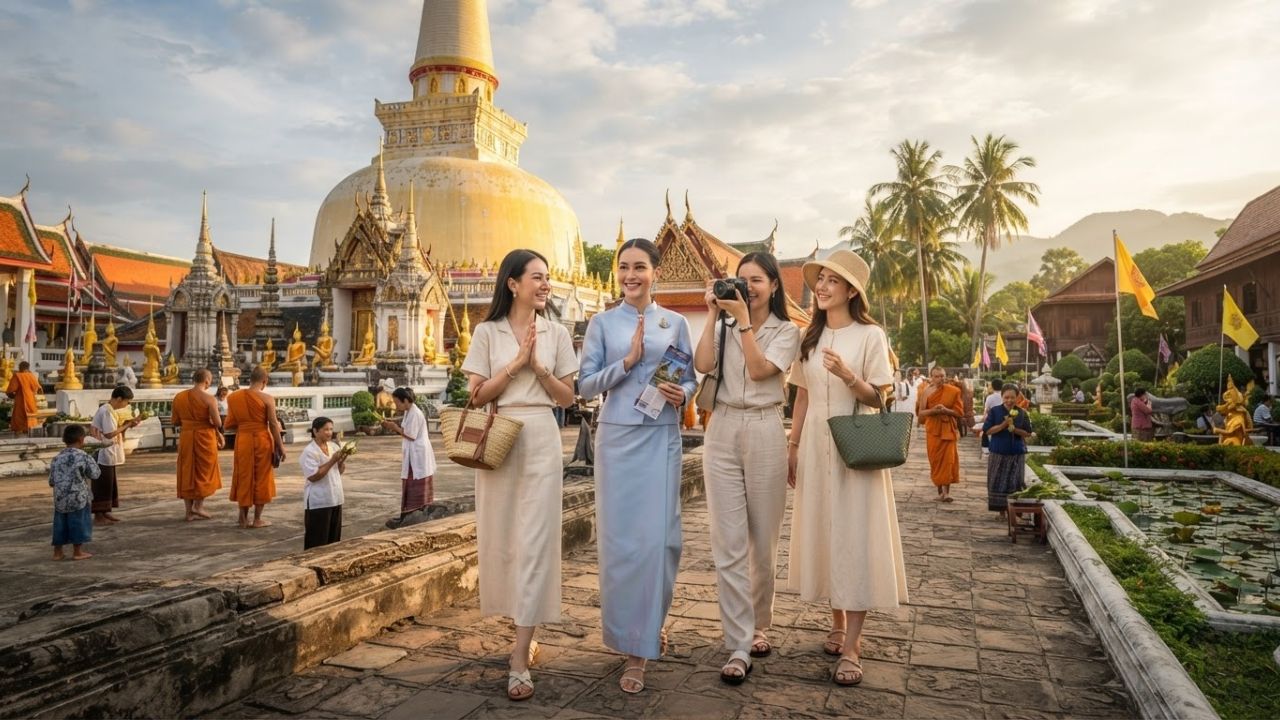
Image generated by AI
Thailand Celebrates UNESCO Inscription of Wat Phra Mahathat
SEO Title: Thailand Wat Phra Mahathat UNESCO Heritage List 2026
Meta Description: Wat Phra Mahathat in Nakhon Si Thammarat joins the UNESCO World Heritage list in 2026. Discover cultural tourism schedules and regional travel updates.
Slug: wat-phra-mahathat-unesco-world-heritage-thailand-tourism-2026
Standfirst: Wat Phra Mahathat Woramahawihan in Nakhon Si Thammarat has been added to the UNESCO World Heritage List, establishing it as Thailand's ninth registered property and its sixth recognized cultural site.
Three Headlines
Factual / News Headline
- Wat Phra Mahathat Woramahawihan in southern Thailand added to UNESCO World Heritage List.
Curiosity-Gap (Discover) Headline
- The centuries-old living Buddhist monastery in Nakhon Si Thammarat earning global recognition from UNESCO.
Problem-Solving (Search) Headline
- How to visit Wat Phra Mahathat and plan a cultural travel itinerary in Nakhon Si Thammarat.
Article
A major milestone is reshaping the cultural sector in Southeast Asia, with Thailand Wat Phra Mahathat UNESCO heritage recognition finalized at the 48th session of the World Heritage Committee in Busan, Republic of Korea. The ancient monastery, located in Nakhon Si Thammarat, was founded in the eighth century. Unlike purely archaeological monuments, the temple complex remains an active center of worship, welcoming daily pilgrims, merit-making rituals, and regional festivals.
Architectural Fusion and Living Heritage
The design of Wat Phra Mahathat reflects over 1,500 years of international trade and Buddhist scholarship:
- International Styles: The complex incorporates artistic and masonry influences from northeastern India, Sri Lanka, central Java, and southern Myanmar.
- Relic Worship: The site features the cloth-wrapping ceremony for the Great Reliquary, attracting thousands of domestic pilgrims annually.
- Traditional Arts: The temple grounds host regular performances of Nora—southern Thailand's traditional dance drama—alongside classical Khon shows during major Buddhist holidays.
Worshippers and local communities continue to use the shrines and meditation halls for their original spiritual purposes, presenting visitors with a preserved record of regional history that remains actively practiced.
Nakhon Si Thammarat Cultural Tourism Initiatives
To manage the expected increase in international visitors, tourism authorities have launched a structured heritage campaign:
- The Twelve Sacred Discoveries: A year-round promotional initiative titled "A Journey to World Heritage." Operating under the theme "Discover the Past. Share the Faith. Shape the Future," the campaign highlights different aspects of the temple's history, architecture, and folklore across changing seasons.
- Decentralized Regional Tourism: Promotion campaigns extend beyond the monastery complex to support local artisan workshops, regional food markets, and historic neighborhoods in Nakhon Si Thammarat.
The integration is intended to distribute economic benefits across southern Thailand's services, lodging, and transport providers while maintaining respect for the active religious community.
Data Table
The table below outlines Thailand's registered UNESCO World Heritage properties:
Thailand UNESCO World Heritage Properties 2026
| Property Name / Category | Inscription Type | Primary Historic / Geographic Feature | Tourism Access Status |
|---|---|---|---|
| Wat Phra Mahathat | Cultural (Ninth property) | 8th-century active Buddhist monastery | Open daily for worship and tourists |
| Historic City of Ayutthaya | Cultural | Ancient Siamese capital ruins | High-density visitor hub |
| Historic Sukhothai & Towns | Cultural | Early Siamese kingdom capital | Restored archaeological park |
| Ban Chiang Site | Cultural | Prehistoric agricultural settlement | Museum and excavation park |
| Ancient Town of Si Thep | Cultural | Dvaravati-era urban settlement | Restored heritage park |
| Phu Phrabat | Cultural | Rock formations & historic murals | Natural-cultural heritage park |
| Thungyai-Huai Kha Khaeng | Natural | Wildlife sanctuaries & nature reserve | Restricted conservation access |
| Dong Phayayen-Khao Yai | Natural | Forest complex & ecological reserve | Popular eco-tourism destination |
| Kaeng Krachan Complex | Natural | Forest reserve & marine sanctuary | Protected conservation access |
Why This Matters
From a logistical perspective, this shift highlights the growth of experiential travel, where visitors seek a deeper connection to local heritage, art, and gastronomy rather than just beach holidays. For travelers planning their summer trips, this means that selecting a destination with diverse activities reduces the risk of weather-related disruptions. If rain or extreme heat makes outdoor sightseeing uncomfortable, visitors can easily pivot to indoor museums, wellness retreats, or culinary tours.
For the travel industry, this trend demonstrates that marketing a country requires highlighting its cultural and conservation assets alongside its natural scenery. Destinations that invest in preserving their historic architecture, supporting local artists, and promoting regional food systems are better positioned to attract high-value, long-stay travelers who contribute more to the local economy than day-trippers.
Industry Outlook
Market trends suggest that the demand for multi-dimensional travel will continue to grow as travelers seek to maximize their holiday budgets. As travel costs remain high, consumers are looking for destinations that offer a variety of experiences within a single geographic area. This pattern favors countries that can offer a blend of outdoor recreation, cultural education, and premium dining.
In response to these trends, local tourism boards are focusing on off-season campaigns to attract visitors during the autumn and winter months, when cultural attractions and historic tours remain fully operational. This strategy helps stabilize the local hospitality sector, ensuring year-round employment and reducing the environmental pressure associated with summer overcrowding.
Related: South Korea Surpasses Pre-Pandemic Tourism Indicators in H1 2026
Related: Vietnam's Luxury Tourism Pivot Highlighted by Amanoi Expansion
Related: Vietnam, Singapore, and Thailand Lead Southeast Asian Travel Boom in 2026
Disclaimer
This article is for informational and educational purposes only. It does not constitute legal, financial, or professional advice. While we strive to provide accurate and up-to-date information, travel policies, regulations, and conditions change rapidly. Always verify information with official sources before making travel decisions. Nomad Lawyer makes no representations about the accuracy, reliability, completeness, or suitability of the information provided. Readers should consult qualified professionals for advice specific to their circumstances. The views expressed in this article are those of the author and do not necessarily reflect the views of Nomad Lawyer.
Raushan Kumar
Founder & Lead Developer
Full-stack developer with 11+ years of experience and a passionate traveller. Raushan built Nomad Lawyer from the ground up with a vision to create the best travel and law experience on the web.
Learn more about our team →