
Vietjet Launches Direct Ho Chi Minh City to Cebu Flights Expanding Southeast Asian Links
Vietjet opens direct thrice-weekly flights connecting Ho Chi Minh City and Cebu starting November 10, 2026, expanding regional tourism under the 2026–2029 bilateral program.

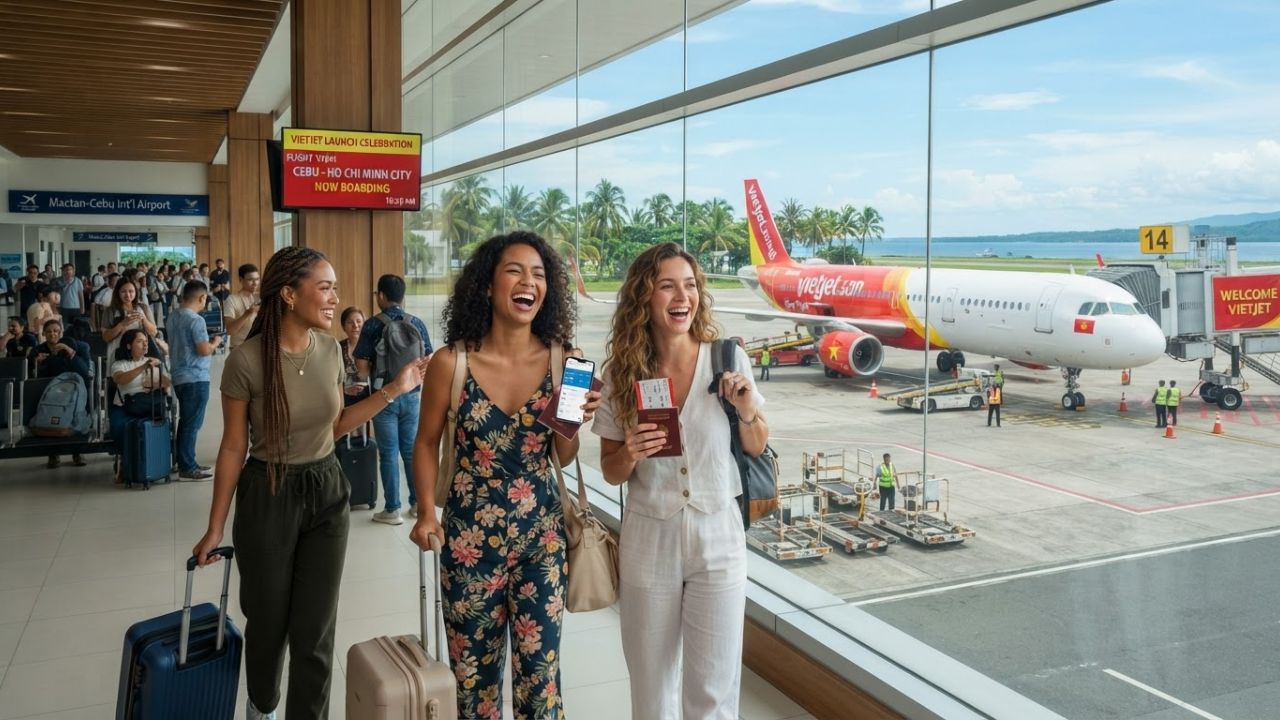
Image generated by AI
Starting November 10, 2026, Vietjet will launch direct thrice-weekly flights between Ho Chi Minh City and Cebu, eliminating the mandatory multi-hour layover in Manila and establishing a seamless air bridge between southern Vietnam and the central Philippines.
Announced on September 5, 2026, the new nonstop service signals a major milestone in regional aviation connectivity. By linking Tan Son Nhat International Airport (SGN) directly with Mactan-Cebu International Airport (CEB), the Vietnamese low-cost carrier provides leisure voyagers, scuba diving enthusiasts, and commercial travelers with a direct travel corridor between two of Southeast Asia’s fastest-growing economic and tourism centers. The route launch coincides with the newly ratified Philippines–Vietnam Tourism Cooperation Program for 2026 to 2029, designed to stimulate bilateral visitor arrivals, streamline visa-free regional travel, and expand joint multi-city tourism packages across the ASEAN corridor.
The Local Trend Revealed: Nonstop Point-to-Point Flying Bypasses Manila
For years, passengers journeying between central Philippine island provinces and Vietnam were forced to transit through Manila’s congested Ninoy Aquino International Airport (MNL), adding four to eight hours of layovers, terminal transfers, and runway holding delays to what should be a straightforward three-hour regional hop.
Vietjet’s new direct route delivers an agile point-to-point alternative:
- Inaugural Flight Date: Scheduled commercial operations commence on November 10, 2026.
- Thrice-Weekly Frequency: Flights will operate three times per week, providing regular capacity for weekend getaways and extended regional vacations.
- Flight Schedules:
- Ho Chi Minh City (SGN) to Cebu (CEB): Departs on Tuesdays, Thursdays, and Saturdays.
- Cebu (CEB) to Ho Chi Minh City (SGN): Departs on Wednesdays, Fridays, and Sundays.
- Expanding Philippine Footprint: The Cebu route expands Vietjet’s existing daily service between Ho Chi Minh City and Manila, while supporting planned future network routes including Hanoi–Cebu and Ho Chi Minh City–Clark.
- Complementary Network Growth: The service joins existing flights operated by Vietnam Airlines between Hanoi and Cebu, giving international travelers comprehensive two-way flight options connecting northern and southern Vietnam with the Visayan islands.
Route Profile: Vietjet Ho Chi Minh City–Cebu Service
| Flight Parameter | Operational Detail | Strategic Traveler Benefit |
|---|---|---|
| Operating Carrier | Vietjet | Affordable low-cost point-to-point regional service |
| Launch Date | November 10, 2026 | Timed ahead of peak winter and dry-season tropical travel |
| Flight Frequency | 3 times weekly | Balanced schedule supporting mid-week and weekend itineraries |
| Outbound Schedule (SGN to CEB) | Tuesdays, Thursdays, Saturdays | Direct evening and morning arrival slots into Mactan |
| Inbound Schedule (CEB to SGN) | Wednesdays, Fridays, Sundays | Seamless return rotations into southern Vietnam's commercial hub |
| Hub Gateways | Tan Son Nhat (SGN) ⇄ Mactan-Cebu (CEB) | Bypasses Manila transfers, saving up to 6 hours of transit time |
| Bilateral Framework | Philippines–Vietnam Tourism Program (2026–2029) | Official government alignment promoting mutual tourist exchanges |
Cultural & Environmental Value: Visayan Marine Conservation Meets Saigon Heritage
Direct point-to-point aviation offers significant environmental efficiency advantages over multi-leg connecting routes. Eliminating intermediate takeoffs, low-altitude approach queues, and prolonged holding patterns over Manila directly reduces carbon dioxide emissions per passenger journey.
For the traveler, this route creates an extraordinary cultural bridge linking two distinct UNESCO-recognized cultural spheres:
- Visayan Coastal Ecosystems: Cebu acts as the central springboard to the protected marine biodiversity of the Coral Triangle. Local conservation initiatives in Moalboal protect vast migratory sardine runs and resident sea turtle populations, while community marine reserves in Malapascua enforce strict eco-diving rules to safeguard thresher shark cleaning stations.
- Saigon Heritage Preservation: Ho Chi Minh City provides visitors with living historical immersion, from the French colonial architectural facades of Notre-Dame Cathedral Basilica and the Central Post Office to the historic riverfront docks of District 1 and the Cu Chi heritage tunnels.
- Community-Based Economic Uplift: Direct visitor spending bypasses capital-city consolidators, flowing directly into locally owned dive shops, boatmen cooperatives, family-operated carinderias (neighborhood eateries) in Cebu, and neighborhood street-food stalls across Saigon’s District 3 and District 5.
Visitor Insider Tips: Navigating Cebu and Ho Chi Minh City
Travelers taking advantage of the new nonstop connection can elevate their journey by applying these practical insider recommendations:
- Seamless Visa-Free Entry for ASEAN Nationals: Under reciprocal ASEAN agreements, Philippine passport holders can enter Vietnam visa-free for stays up to 21 days, while Vietnamese citizens enjoy visa-free entry to the Philippines for up to 30 days. International travelers holding European, North American, or Australian passports can secure an official Vietnamese 90-day multi-entry e-visa online prior to departure.
- Cebu Marine Etiquette at Moalboal & Oslob: When diving or snorkeling along Cebu’s southern reefs, use only mineral-based, reef-safe sunscreen (free of oxybenzone and octinoxate). If viewing whale sharks in Oslob or sardines in Panagsama Beach, maintain a mandatory minimum distance of four meters (13 feet) from marine animals and never touch the marine wildlife.
- Taste Authentic Regional Flavors:
- In Cebu: Savor authentic Cebu Lechon—whole roast pig stuffed with lemongrass, garlic, scallions, and sea salt, slow-roasted over charcoal until the skin turns glass-crisp. Locals eat it by hand with steamed rice and sinamak (spiced coconut vinegar) without heavy gravy. For breakfast, try crispy sun-dried danggit (rabbitfish) at Taboan Public Market.
- In Ho Chi Minh City: Venture beyond basic pho. Order Cơm Tấm (broken rice topped with a caramelized grilled pork chop, steamed egg meatloaf, and scallion oil) at Com Tam Ba Ghien in Phu Nhuan District. Follow it with an authentic cà phê sữa đá (iced drip coffee with sweetened condensed milk) at a pavement stool cafe.
- Avoid Airport Taxi Scams: At Tan Son Nhat Airport (SGN), ignore aggressive touts in the arrivals hall. Head to the official outdoor taxi rank and use metered vehicles from reputable operators (Vinasun or Mai Linh), or book directly through ride-hailing apps like Grab. At Mactan-Cebu International Airport (MCIA), take the official white metered taxis or pre-booked private transfers, or use the affordable MyBus electric shuttle connecting Terminal 2 directly to SM City Cebu.
- Optimal Travel Windows: For dry weather and calm marine waters, plan your Cebu visit between December and May. Ho Chi Minh City experiences pleasant tropical weather during its dry season from December through April, making November through February the ideal sweet spot to experience both destinations on a combined itinerary.
Tourism Outlook: Strengthening the Secondary City Aviation Network
The introduction of direct flights between Ho Chi Minh City and Cebu highlights a broader trend transforming Southeast Asian aviation: the rise of direct secondary hub connectivity. As primary capitals grapple with airspace congestion and airport slot limitations, international carriers are unlocking immense pent-up demand by directly pairing vibrant provincial gateways.
Under the framework of the Philippines–Vietnam Tourism Cooperation Program for 2026 to 2029, both nations are actively promoting twin-destination itineraries to international long-haul visitors from Europe, North America, and Northeast Asia. A traveler can effortlessly pair a weekend exploring the markets and wartime history of southern Vietnam with a week of world-class coral reef diving and white-sand island hopping across the Visayas. With Vietjet, Vietnam Airlines, and regional aviation authorities scaling reciprocal services, the Ho Chi Minh City–Cebu route promises to accelerate cultural exchange and economic vitality across the South China Sea.
Related Travel Guides
Disclaimer
This article is for informational and educational purposes only. It does not constitute legal, financial, or professional advice. While we strive to provide accurate and up-to-date information, travel policies, regulations, and conditions change rapidly. Always verify information with official sources before making travel decisions. Nomad Lawyer makes no representations about the accuracy, reliability, completeness, or suitability of the information provided. Readers should consult qualified professionals for advice specific to their circumstances. The views expressed in this article are those of the author and do not necessarily reflect the views of Nomad Lawyer.
Raushan Kumar
Founder & Lead Developer
Full-stack developer with 11+ years of experience and a passionate traveller. Raushan built Nomad Lawyer from the ground up with a vision to create the best travel and law experience on the web.
Learn more about our team →