Vietnam Calls for Domestic Route Revival as Passenger Traffic Surges 9.5 Percent: The Regional Travel Guide

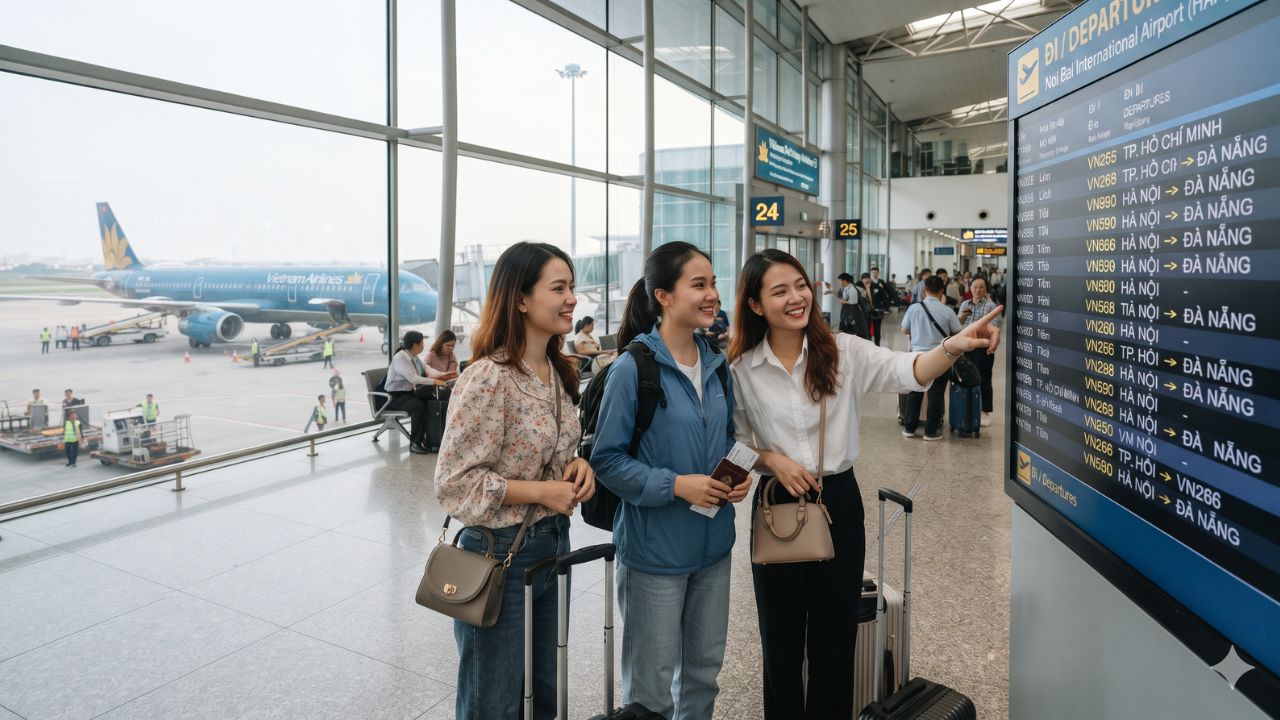
While international visitors often imagine traversing Vietnam aboard nostalgic sleeper trains or coastal motorbikes, domestic airlines carried 33.8 million passengers across the country in just ten months—even as dozens of secondary regional air routes remain suspended following post-pandemic fleet contractions. The sharp divergence between record airport crowds and missing provincial air links prompted the Civil Aviation Authority of Vietnam (CAAV) to issue a formal directive on 24 October 2026, urging commercial carriers to evaluate dormant domestic connections and expand flight frequencies where passenger demand supports sustainable operations. For independent travelers and cultural explorers, this official push highlights an expanding transport network that is preparing to reconnect remote highland valleys, historic battlegrounds, and southern archipelagos directly to the nation's primary international gateways.
Civil Aviation Authority Directs Carriers to Reconnect Secondary Provinces as Airport Traffic Hits 110 Million
The official directive comes against the backdrop of rapid post-pandemic recovery across Vietnamese aviation infrastructure. According to CAAV market data released in late October 2026, total passenger throughput across the nation's airport network reached 110.4 million travelers between January and October 2026, marking a 10.2 percent increase compared to the same period in 2025. International airport traffic grew by 11.3 percent to 42.8 million passengers, while domestic passenger volume handled by Vietnamese airlines expanded 9.5 percent to hit 33.8 million fliers.
Simultaneously, Vietnam’s commercial aircraft fleet has expanded to meet travel demand. As of 15 October 2026, the national registered airline fleet reached 261 aircraft, representing a net gain of 26 airframes over 2025. Yet rather than dictating arbitrary routes, the Civil Aviation Authority of Vietnam instructed carriers including Vietnam Airlines, Vietjet Air, Bamboo Airways, and Vietravel Airlines to build commercially viable schedules in close consultation with local provincial authorities, airport managers, and regional hospitality associations.
| Aviation & Tourism Indicator | Official Reported Metric | Year-on-Year Growth | Strategic Travel & Industry Significance |
|---|---|---|---|
| Total Airport Passenger Volume | 110.4 million passengers | Up 10.2% | Confirms heavy terminal utilization across national aviation hubs. |
| International Airport Throughput | 42.8 million passengers | Up 11.3% | Driven by surging overseas visitor arrivals and foreign business travel. |
| Domestic Passengers on Domestic Carriers | 33.8 million passengers | Up 9.5% | Illustrates strong local mobility, family visits, and domestic holiday trips. |
| International Passengers on Domestic Carriers | 16.3 million passengers | Up 2.0% | Reflects steady expansion on regional East Asian and Southeast Asian routes. |
| Registered National Airline Fleet | 261 commercial aircraft | Net gain of 26 aircraft vs 2025 | Provides airlines with physical capacity to restore mothballed routes. |
| International Visitor Arrivals (Jan–Sep) | Approximately 17.7 million | Up 14.5% | Brings inbound international tourism near historic all-time benchmarks. |
| Domestic Tourist Trips (Jan–Sep) | 126 million individual trips | Broad nationwide volume | Reflects multi-modal travel across rail, coastal ferries, highways, and air. |
| Total National Tourism Receipts (Jan–Sep) | VND 874 trillion (~US$34.4B) | Robust economic intake | Demonstrates the substantial economic weight of the wider visitor economy. |
What Makes Vietnam's Regional Transit Experientially Unique
Stretching over 1,650 kilometers from the emerald peaks of the northern border to the mangrove channels of the Mekong Delta, Vietnam's geography makes point-to-point regional transit essential. The primary trunkline connecting Hanoi Noi Bai International Airport (HAN) and Ho Chi Minh City Tan Son Nhat International Airport (SGN) consistently ranks among the top five busiest domestic air routes on earth. Yet the true beauty of exploring Vietnam lies far beyond this commercial corridor.
Official statistics from the Vietnam National Authority of Tourism reveal that the country welcomed approximately 17.7 million international visitors during the first nine months of 2026, generating VND 874 trillion in overall tourism turnover across 126 million domestic journeys. Restoring secondary air bridges allows independent explorers to bypass multi-day overland journeys and step directly into living heritage regions.
A flight into Dien Bien Phu (DIN) drops travelers into the dramatic mountain basin of the northwest, home to Tai and Hmong communities and historic mid-century battle sites. Landing at Dong Hoi (VDH) grants immediate access to the ancient karst cave networks of Phong Nha-Ke Bang National Park, protected as a UNESCO World Heritage Site. Toward the south, direct services into Can Tho (VCA) open the floating markets of the Mekong Delta, while flights into Con Dao (VCS) and Phu Quoc (PQC) connect divers with coastal marine sanctuaries. When regional flights operate reliably, cultural journeys across diverse provinces become practical within a single two-week itinerary.
Visitor Insider Tips: Booking Internal Flights, Station Transfers, and Hidden Regional Gateways
- Book Flights Directly with Operating Carriers: Third-party online ticket aggregators frequently struggle to communicate schedule adjustments on Vietnamese domestic services. Book directly through official airline portals (Vietnam Airlines, Vietjet Air, Bamboo Airways) to ensure immediate SMS and email alerts if departure gates or departure windows change.
- Strictly Observe Hand Luggage Weight Enforcements: Low-cost carriers like Vietjet enforce the 7-kilogram cabin baggage allowance with digital scales positioned right at the boarding gate. If your backpack exceeds 7 kilograms, gate agents will require you to pay steep last-minute checked baggage fees in cash or local card. Pre-purchase checked luggage allowances online at least four hours before departure to save up to 60 percent.
- Allow Three Hours for Terminal Changes at Tan Son Nhat: In Ho Chi Minh City, Domestic Terminal 1 and International Terminal 2 are separate structures separated by an uncovered outdoor walkway. If you are arriving from an international flight and transferring to a domestic service, you must clear immigration, collect checked luggage, clear customs, walk between terminals, and re-check bags. Never schedule connections under two and a half to three hours.
- Select Early Morning Flight Windows to Avoid Weather Holds: Tropical afternoon thunderstorms frequently roll across southern and central Vietnam between May and November, triggering ground stops at major hubs. Booking early morning departures (between 6:00 am and 9:00 am) significantly reduces the likelihood of weather-related delays and cascading schedule adjustments.
- Pair Regional Flights with Coastal Trains: Do not fly every leg of your journey. For intermediate distances—such as the coastal stretch between Da Nang and Hue—skip airport security lines entirely. Instead, board the daily heritage train over the Hai Van Pass, where open carriage windows frame coastal cliffs and deserted coves that no airplane window can replicate.
Cultural and Environmental Context: Sustainable Tourism Dispersal and Infrastructure Pressures
The push to reactivate regional air routes touches upon the balance between economic development and environmental stewardship in Vietnam. For decades, tourist footfall has concentrated heavily within a handful of iconic magnets: Ha Long Bay, Hoi An Ancient Town, and Da Nang’s beach resorts. This hyper-concentration strains municipal wastewater systems, drives up local housing costs, and generates severe solid-waste challenges in delicate coastal ecosystems.
Expanding flight access into overlooked provincial hubs—such as Pleiku in the Central Highlands, Chu Lai in Quang Nam, or Tuy Hoa in Phu Yen—serves as a powerful mechanism for tourism dispersal. Spreading traveler spending into secondary provinces injects capital directly into rural homestays, artisanal weaving collectives, and sustainable coffee farms, offering agricultural households dignified alternative livelihoods.
Simultaneously, the Vietnamese aviation sector faces mounting carbon accountability. While national authorities expand megaprojects like Long Thanh International Airport outside Ho Chi Minh City and modernize regional passenger terminals, carriers are deploying fuel-efficient Airbus A321neo aircraft equipped with modern high-bypass turbofan engines. By coordinating flight schedules carefully and eliminating half-empty speculative routes, the aviation sector aims to support regional commerce while avoiding needless fuel burn in Southeast Asian skies.
FAQ: Traveling Across Vietnam and Domestic Flights 2026
Have suspended domestic flight routes in Vietnam officially resumed?
Not yet. The CAAV directive instructs airlines to evaluate demand and submit commercial restoration plans. Individual routes will only return once airlines publish confirmed operating timetables on their booking systems.
Will the surge in passenger traffic cause domestic flight prices to drop?
No price reduction is guaranteed. Ticket prices depend on fuel expenses, seasonal demand, and seat availability. Compare complete fares including taxes and baggage fees before booking.
How far in advance should I reserve domestic flights in Vietnam?
For travel during normal months, reserving two to four weeks in advance secures favorable fares. For major holidays such as Lunar New Year (Tet) or national holidays in April and September, book at least two to three months early.
What are the best regional airports for cultural and adventure travel?
Dien Bien Phu (DIN) provides direct access to northern mountain homestays, Dong Hoi (VDH) serves Phong Nha-Ke Bang cave expeditions, and Con Dao (VCS) offers unspoiled marine national park diving.
[As morning mist lifts from the limestone karst towers, connecting with Vietnam’s remote provinces reminds travelers that the heart of the country beat strongest far beyond the main runway lights.]
Related Travel Guides
LOT Polish Airlines Launches Fly&Rail in Switzerland and Sweden: AccesRail Intermodal Booking Guide
The Ultimate Vietnam Internal Flight and Sleeper Train Transit Guide, According To Reddit (Coming Soon)
This article is for informational purposes. Flight routes, passenger regulations, visa rules, and transit advisories are subject to change by airlines and aviation authorities. Readers are advised to verify schedules and travel documentation with relevant carriers and border agencies before departure.
Related Stories
Southeast Asia Aviation Expands Secondary Corridors: Haikou, Sihanoukville, and Siem Reap Travel Guide
Angola Reconnects Lusophone Atlantic as TAAG Launches Direct Cape Verde Flights: Praia and Luanda Travel Guide