
Uzbekistan Triggers Travel Boom As Backpackers Flock To Marvel At Ancient Architecture In Samarkand And Bukhara
Uzbekistan Triggers Travel Boom As Backpackers Flock To Marvel At Ancient Architecture In Samarkand And Bukhara

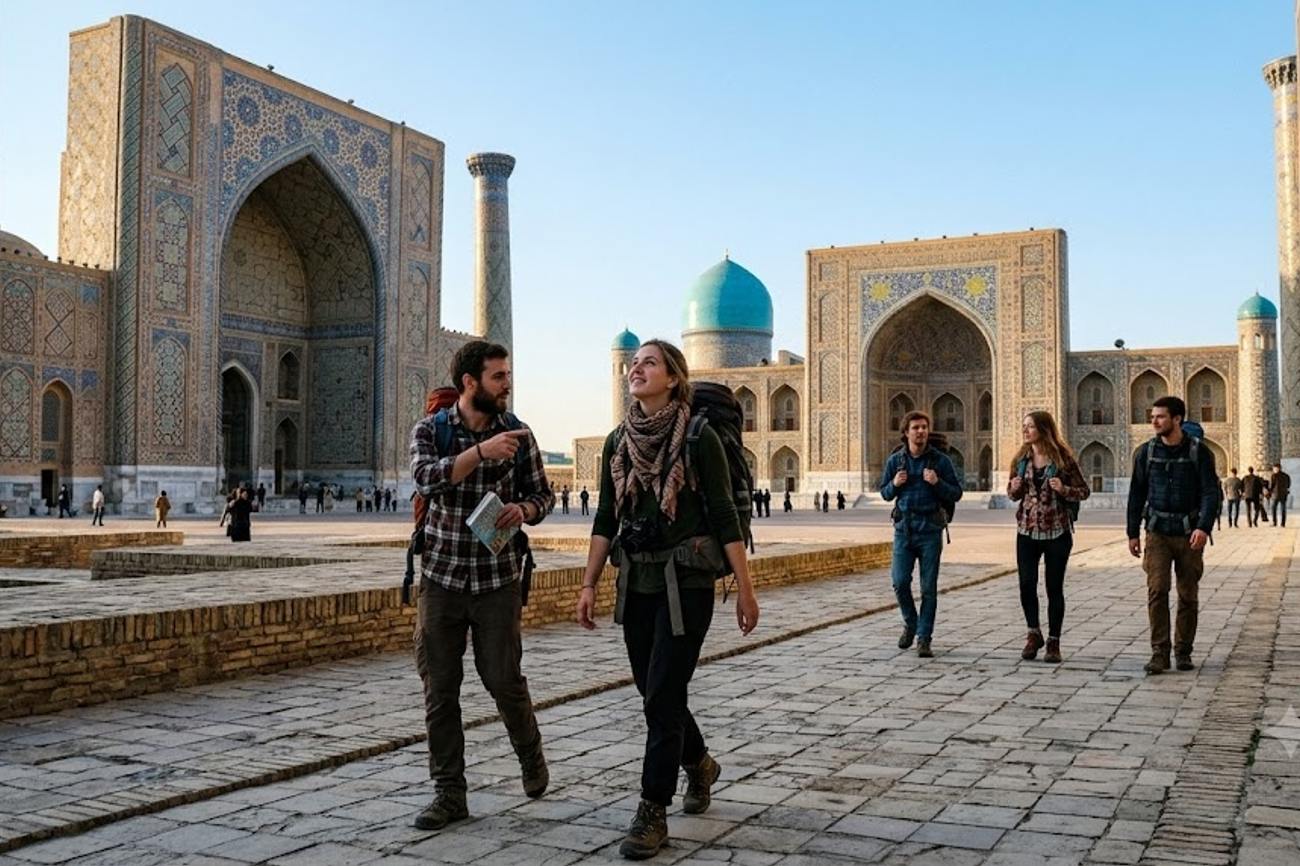
Image generated by AI
[Tashkent, October 2026] — Uzbekistan has ascended to the top position among the world's premier solo travel destinations, outperforming established tourism giants including Italy, Japan, and Portugal.
The surge is driven by a strategic realignment of the global travel industry, as independent explorers abandon overcrowded Western European and East Asian hubs in favor of culturally immersive, cost-effective environments. This shift is underpinned by a rigorous analytical assessment of 26 nations, which measured safety metrics, visa accessibility, and daily expenditures, placing Uzbekistan at the forefront of a new era of "authentic" independent exploration.
The Catalyst for the Central Asian Pivot
The sudden influx of Western travelers is primarily the result of aggressive policy deregulation and the removal of administrative friction. A critical driver is the implementation of a 30-day visa-free entry policy for citizens of the United States, which has eliminated the primary barrier to entry for North American tourists.
This regulatory shift has triggered a chain reaction across the aviation sector. Commercial airlines and global booking platforms are now establishing direct flight routes and integrated transit agreements to capitalize on the rising demand for decentralized, flexible itineraries. By streamlining the entry process, the government has effectively transformed the region from a niche destination into a primary hub for the "nomadic" workforce and solo backpackers.
Market Impact and Visitor Demographics
The transition toward independent travel is not merely a trend but a structural evolution in consumer behavior. Travelers are increasingly prioritizing psychological comfort and personal autonomy over rigid, group-led tours.
The following sectors and demographics are seeing the most significant impact:
- North American Travelers: Experiencing a sharp increase in bookings due to the U.S. Department of State recognized ease of entry and visa-free status.
- Solo Backpackers: Shifting focus toward the historic Silk Road, utilizing the region's low cost of living and high safety ratings.
- Remote Workers: Leveraging the expansion of digital infrastructure to combine professional obligations with long-term cultural immersion.
- Outdoor Enthusiasts: Moving away from commercialized nature trails toward the Nuratau Mountains and the Kyzylkum Desert.
- Hospitality Developers: Pivoting from mass-market hotels to eco-friendly lodging and traditional nomad yurts to meet the demand for authenticity.
What This Means for Travelers
For the modern traveler, this shift represents a move toward "high-value, low-cost" exploration. In plain language, the "Uzbekistan Model" means that a solo traveler can now access world-class historical sites—such as the Registan Square in Samarkand and the ancient corridors of Bukhara—without the exorbitant price tags associated with European capitals.
Travelers booking now will find that the region is optimized for the individual. This includes modernized regional transport, the proliferation of multilingual digital navigation tools, and a hospitality sector that has been specifically recalibrated for the solo guest. The ability to move between vibrant metropolitan centers and remote wilderness areas, such as the shores of Lake Aydarkul, is now supported by a secure, modern infrastructure that minimizes the risks typically associated with Central Asian travel.
Economic Acceleration and Infrastructure Growth
The macroeconomic data confirms that this is a systemic shift rather than a seasonal spike. During the first eight months of 2026, Uzbekistan recorded 9.1 million foreign tourist arrivals. This represents a 21.1% year-over-year increase, signaling a rapid acceleration in capital flow into the region.
Total annual foreign exchange revenues from the travel and hospitality sector have now surpassed $3.5 billion. These funds are being aggressively reinvested into national infrastructure, specifically targeting:
- Sustainable Hospitality: The development of eco-resorts and the preservation of traditional guest houses.
- Transport Modernization: Enhancing the connectivity between UNESCO-recognized hubs and rural hinterlands.
- Digital Integration: Expanding high-speed internet and digital payment systems to accommodate the remote-work demographic.
As the World Tourism Organization (UNWTO) continues to monitor the rise of emerging markets, Uzbekistan's success serves as a blueprint for other nations seeking to attract independent travelers through a combination of visa liberalization and heritage preservation.
The Future of the Silk Road Circuit
The trajectory suggests that Central Asia is positioned to become the permanent global hub for safe, authentic travel. The integration of high-tier safety standards with remarkably low dining and accommodation costs creates a competitive advantage that is difficult for traditional tourism powerhouses to replicate.
Looking forward, the industry expects a continued move toward "decentralized" tourism. Rather than clustering in a single city, travelers are creating multi-city loops that connect the architectural wonders of Samarkand with the rugged terrain of the Nuratau Mountains. This distribution of tourism prevents the "over-tourism" crises currently facing cities like Venice or Kyoto, ensuring that the cultural footprint of the Silk Road remains preserved while providing sustainable economic resilience for local rural communities.
FAQ: Uzbekistan Solo Travel 2026
Do I need a visa to visit Uzbekistan as a U.S. citizen? No. Current policy provides a 30-day visa-free entry for passport holders from the United States, significantly simplifying the arrival process for North American travelers.
Is Uzbekistan safe for solo travelers? Yes. The country has earned a top-tier safety ranking in recent analytical assessments, combining high international peace index metrics with a modern infrastructure designed for independent exploration.
What are the most affordable ways to get around? Travelers can utilize affordable domestic transit options and modernized regional transport to move between major hubs like Tashkent, Samarkand, and Bukhara.
What are the "must-visit" sites for history buffs? The Registan Square in Samarkand and the preserved urban corridors of Bukhara are the primary UNESCO-recognized landmarks reflecting the history of the Silk Road.
The era of the mass tour is ending; the age of the independent explorer has arrived in Central Asia.
#UzbekistanTourism2026 #SilkRoadTravel #TashkentAirport #SoloTravelCentralAsia #UNESCOSamarkand #VisaFreeUzbekistan
Related Travel Guides
Disclaimer
This article is for informational and educational purposes only. It does not constitute legal, financial, or professional advice. While we strive to provide accurate and up-to-date information, travel policies, regulations, and conditions change rapidly. Always verify information with official sources before making travel decisions. Nomad Lawyer makes no representations about the accuracy, reliability, completeness, or suitability of the information provided. Readers should consult qualified professionals for advice specific to their circumstances. The views expressed in this article are those of the author and do not necessarily reflect the views of Nomad Lawyer.
Raushan Kumar
Founder & Lead Developer
Full-stack developer with 11+ years of experience and a passionate traveller. Raushan built Nomad Lawyer from the ground up with a vision to create the best travel and law experience on the web.
Learn more about our team →