
Oman Stands Alongside Heritage Destinations as Falaj Irrigation Unlocks Hidden Tourism Legacy
Oman Stands Alongside Heritage Destinations as Falaj Irrigation Unlocks Hidden Tourism Legacy

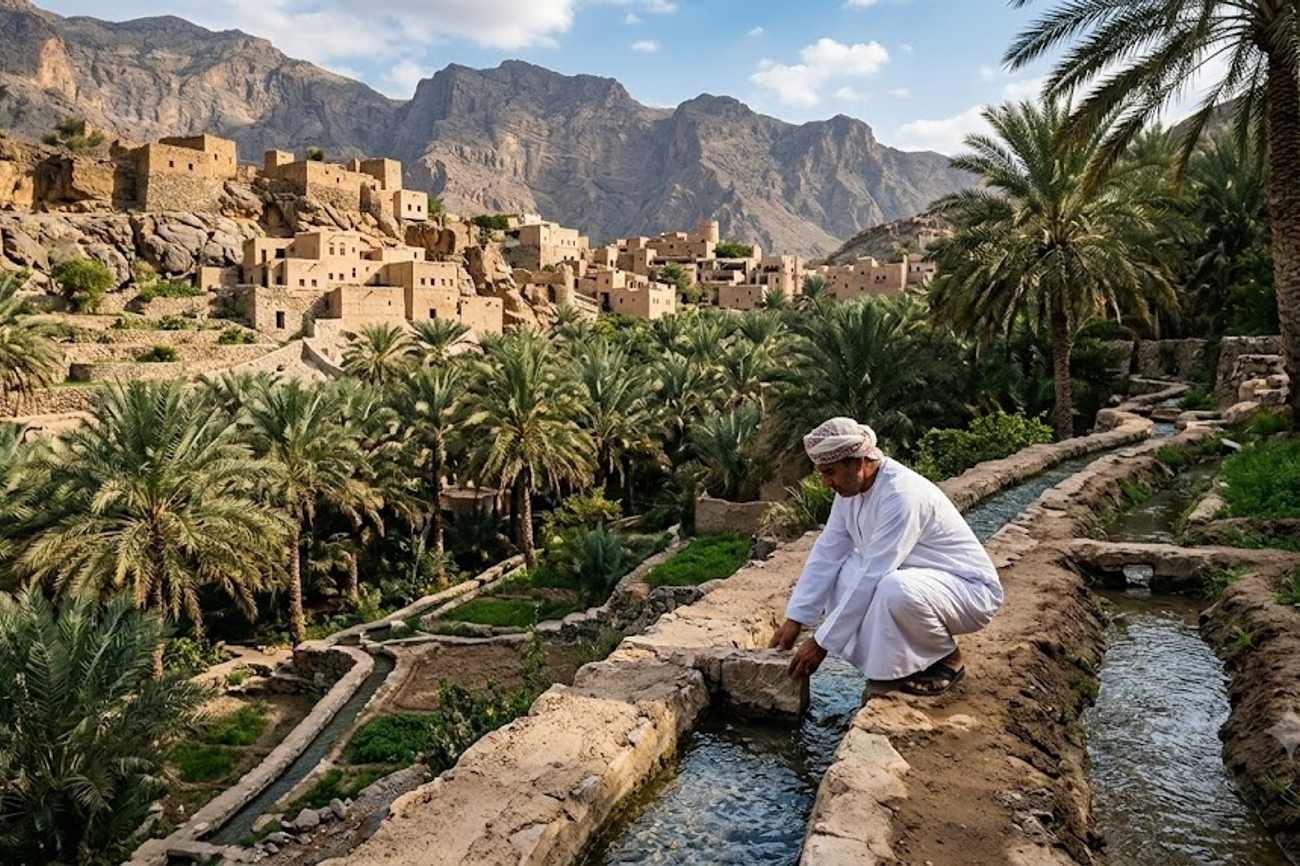
Image generated by AI
Are you planning a journey through Oman's interior and wondering how to move beyond the standard fort-and-market circuit? The key to unlocking the hidden geography of the Al Dakhiliyah region lies in following the aflaj—ancient irrigation networks that dictate exactly where life exists in the desert.
The Aflaj Water Heritage Network
Oman is transitioning its tourism approach from static sightseeing to "water-led" exploration. At the center of this shift are the aflaj (the plural of falaj), a sophisticated system of gravity-fed channels that transport water from underground aquifers, springs, or seasonal flows to farms and villages. These are not dormant ruins; they are active pieces of infrastructure. According to UNESCO, more than 3,000 aflaj remain in operational use across the Sultanate today.
The systems are categorized into three distinct hydrological types: aini, daoudi, and ghaili, each defined by its specific water source. For the traveler, these systems represent a living map. The placement of every mud-brick home, date palm grove, and defensive watchtower was historically determined by the reach of the falaj. This network is so vital to the region's identity that five specific systems—Falaj Al-Khatmein, Falaj Al-Malki, Falaj Daris, Falaj Al-Jeela, and Falaj Al-Muyasser—have been designated as UNESCO World Heritage sites.
While some evidence of irrigation in Oman dates back to 2500 BC, UNESCO notes that the current operational systems likely originated around AD 500. With nearly 4 million inbound visitors recorded in 2025, the Omani government is now encouraging visitors to use these water channels as the primary route markers for their itineraries, linking the urban hub of Nizwa to the high-altitude terraces of Al Jabal Al Akhdar.
Route and Schedule Details
For those planning a heritage-led transit through the Al Dakhiliyah and Sharqiyah regions, the following table outlines the primary sites of interest and their logistical status.
| Route/Site | Primary Feature | Key Infrastructure | Location/Region | Status |
|---|---|---|---|---|
| Nizwa Hub | Urban Gateway | Traditional Markets/Forts | Al Dakhiliyah | Active |
| Birkat Al Mouz | Agricultural Chain | Date Palms & Old Village | Al Dakhiliyah | Active |
| Bayt Ar-Ridaydah | Defensive Water Site | Falaj Al-Khatmein (2.45km) | Wadi Al-Muaydin | Active |
| Al Jabal Al Akhdar | High-Altitude Terraces | 27,000+ Pomegranate Trees | Al Dakhiliyah | Active |
| Falaj Al-Jeela | Mountain Irrigation | UNESCO Heritage Site | Sharqiyah | Active |
Traveler Logistics Guide
Navigating the interior of Oman requires a different strategy than coastal travel. To successfully follow the water-led route from Nizwa to the mountains, follow these operational steps.
1. Vehicle Requirements and Access To reach the mountain terraces of Al Jabal Al Akhdar and the remote aflaj systems, a 4WD vehicle is mandatory. Omani police checkpoints often enforce this rule on the ascent to the Green Mountain; if you are in a sedan, you will be turned back. Ensure your rental agreement includes a 4x4 and that you have a valid license. For official road conditions and regulations, check the Royal Oman Police portal.
2. Route Optimization: The "Water Chain" Sequence Do not treat these sites as isolated stops. To understand the logistics of the falaj, sequence your trip as follows:
- Start in Nizwa to understand the regional administration of Al Dakhiliyah (which covers 31,900 square kilometers across eight wilayats).
- Proceed to Bayt Ar-Ridaydah. Here, you can physically trace the Falaj Al-Khatmein, which runs approximately 2.45 kilometers from its mother well to its distribution point. Note that much of this is underground, so look for the surface emergence points near the 17th-century fort.
- Transition to Birkat Al Mouz to see the "water-to-farm-to-village" chain in action before ascending the mountains.
3. Timing and Seasonal Logistics The best time to visit the Al Jabal Al Akhdar orchards—home to over 27,000 pomegranate trees—is during the harvest season. However, be mindful that mountain weather is significantly cooler than the coast. Check local forecasts via the Oman Meteorology site before departing Nizwa.
4. Cultural Etiquette and Access Because the aflaj are living systems used by local farmers, you are entering active workspaces. Always ask for permission before entering a private farm or touching the irrigation channels. Many of these systems are governed by traditional community rules regarding water shares; observing these from a distance provides a deeper understanding of Omani social organization.
Regional Connectivity Impact
The integration of the aflaj into formal tourism routes is reshaping how travelers move through the interior. Previously, visitors would stop at the Nizwa Fort and then drive straight to the mountain peaks. Now, the "middle ground"—the agricultural plains of Birkat Al Mouz and the forts of Wadi Al-Muaydin—is becoming a primary destination.
This shift redistributes tourism traffic away from the city centers and into the rural wilayats. By following the water, travelers are now spending more time in the foothills, increasing the economic impact on small-scale farmers and local guides. The connection between the five UNESCO-listed systems creates a corridor of heritage that links the Al Dakhiliyah and Sharqiyah regions, encouraging longer stays and slower transit.
Furthermore, the proximity of defensive architecture to water sources—such as the 6,761 square meter footprint of Bayt Ar-Ridaydah—highlights a historical logistics reality: in Oman, whoever controlled the water controlled the route. This perspective transforms a simple road trip into a study of strategic settlement planning.
FAQ: Oman Water Heritage 2025
Do I need a special permit to visit the UNESCO aflaj sites? No special permits are required for general visitation to the public areas of the falaj systems in Nizwa and Birkat Al Mouz. However, access to certain private farms along the channels requires local guide permission.
What is the best way to get from Nizwa to Al Jabal Al Akhdar? The most efficient route is via a 4WD rental. The drive takes you through Birkat Al Mouz and up the mountain ascent. Ensure your vehicle is in good condition as the climb is steep and regulated.
Can I walk the entire length of Falaj Al-Khatmein? While the total length is 2.45 kilometers, significant portions run underground. You can walk the surface sections near Bayt Ar-Ridaydah and the village distribution points, but you cannot follow the water throughout its entire subterranean course.
Is there a specific time of day to visit the irrigation channels? Early morning is optimal. Not only is the temperature more manageable, but you are more likely to see the traditional water-sharing practices in action as farmers manage their daily allotments.
Follow the water, and the map of Oman will reveal itself.
#NizwaTransit2025 #AlJabalAlAkhdarLogistics #OmanAflajHeritage #AlDakhiliyahTravel #UNESCOOmanRoutes
Related Travel Guides
Disclaimer
This article is for informational and educational purposes only. It does not constitute legal, financial, or professional advice. While we strive to provide accurate and up-to-date information, travel policies, regulations, and conditions change rapidly. Always verify information with official sources before making travel decisions. Nomad Lawyer makes no representations about the accuracy, reliability, completeness, or suitability of the information provided. Readers should consult qualified professionals for advice specific to their circumstances. The views expressed in this article are those of the author and do not necessarily reflect the views of Nomad Lawyer.
Naina Thakur
Contributor & Travel Specialist
Travel enthusiast and legal writer covering visa regulations, responsible tourism, and cultural journeys across global destinations.
Learn more about our team →