
UAE Travel Revolution as Etihad Airways and Etihad Rail Unlock Future Integrated Air Rail Connectivity
UAE Travel Revolution as Etihad Airways and Etihad Rail Unlock Future Integrated Air Rail Connectivity

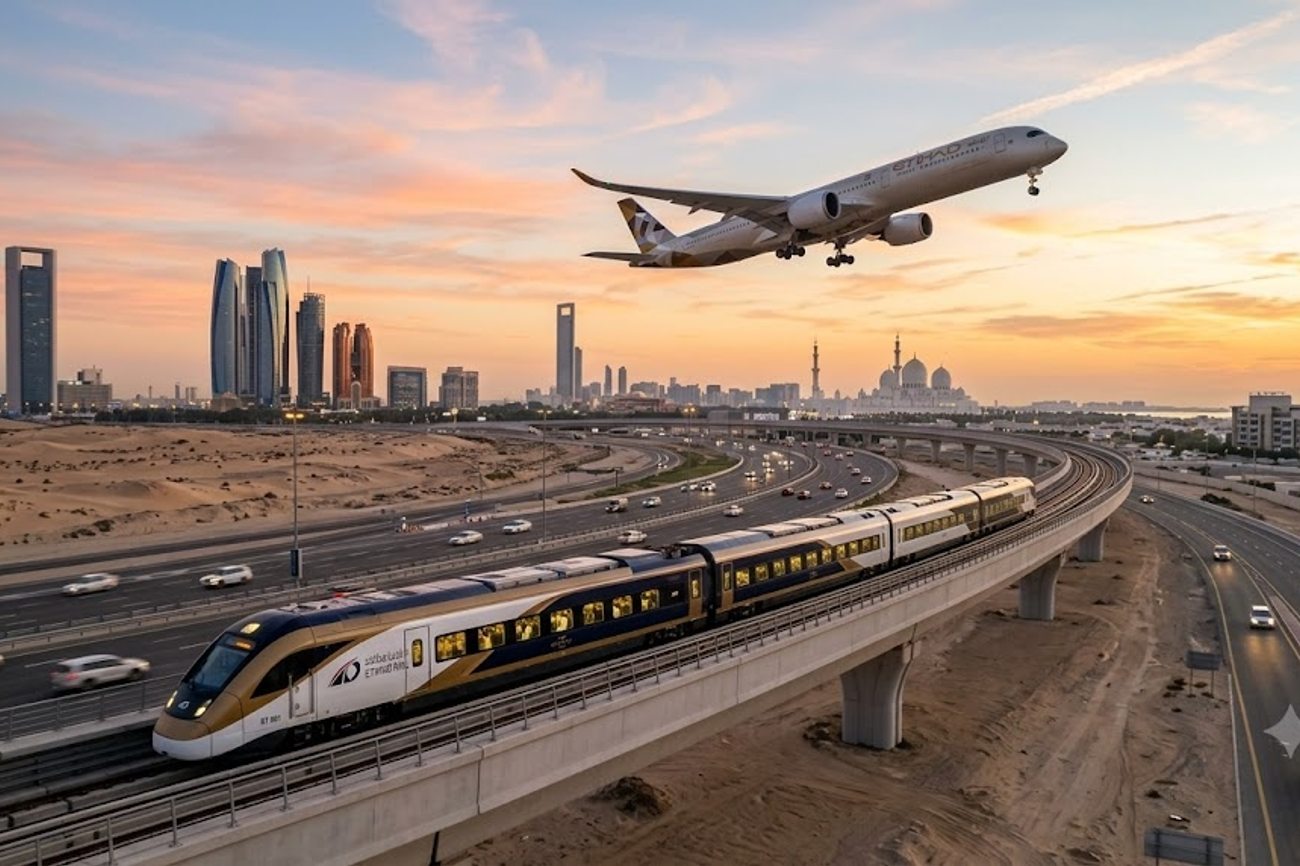
Image generated by AI
The UAE is currently engineering a transition where your flight ticket could soon double as your train pass, effectively turning the entire Emirates into a single, walkable transit hub. While most visitors rely on ride-shares or rental cars to navigate the distance between cities, a new strategic alliance between Etihad Airways and Etihad Rail is studying a model that removes the friction between the tarmac and the tracks.
The Shift Toward Multimodal Transit in Abu Dhabi
The travel rhythm of the UAE is changing. For decades, the experience has been defined by the highway—long stretches of asphalt connecting gleaming skyscrapers. However, a new memorandum of understanding between Etihad Airways and Etihad Rail is designed to pivot this experience toward a multimodal system. The core of this evolution is the creation of a seamless link between Zayed International Airport and the Mohammed Bin Zayed City Passenger Station.
Rather than navigating the chaos of airport arrivals with a taxi app, the goal is to implement dedicated shuttle services that whisk international arrivals directly from the terminal to the rail network. This isn't just about a physical bus or train; it is about a digital overhaul. The two entities are exploring integrated booking platforms. Imagine landing in Abu Dhabi and having your onward rail journey to another emirate already synchronized with your flight arrival, managed through a single digital interface.
This move mirrors a global trend seen in hubs like Paris or Tokyo, where the airport is not the end of the journey but a gateway to a wider rail ecosystem. By studying these integrated solutions, the UAE is attempting to reduce the cognitive load on the traveler, making the transition from international airspace to domestic rail nearly invisible.
What Makes the UAE Rail Experience Different
The UAE's approach to rail is not about commuting—it is about connectivity across a vast, diverse geography. With passenger services having launched in 2026, Etihad Rail is not merely a transport utility; it is a tool for regional discovery. For the first time, the journey between the capital and other emirates is being reimagined as part of the vacation itself.
What sets this apart from traditional rail is the scale of the integration. The focus on the Mohammed Bin Zayed City Passenger Station as a primary node means that the "airport-to-city" pipeline is being replaced by an "airport-to-country" pipeline. This allows travelers to bypass the urban congestion of the city center if their final destination is further afield, effectively decentralizing the tourism experience.
For the nomad or the business traveler, this means the ability to base oneself in a quieter region while maintaining a high-speed link to the global gateway of Zayed International Airport. The integration of passenger services at the stations themselves is also being scrutinized to ensure that the luxury and efficiency found in an Etihad Airways lounge are mirrored the moment a passenger steps onto the rail platform.
Visitor Insider Tips
Navigating the UAE requires a shift in mindset from "destination" to "journey." To make the most of the evolving transport network, keep these local nuances in mind:
Timing Your Transit: If you are using the rail network to explore beyond Abu Dhabi, aim for mid-week travel. The weekend (Saturday and Sunday) sees a surge in domestic tourism, and while the trains are efficient, the surrounding shuttle connections can become crowded.
The "Last Mile" Strategy: While the rail links connect major hubs like Mohammed Bin Zayed City, the "last mile"—the distance from the station to your hotel or site—still largely relies on ride-sharing. Download the local apps before landing to avoid airport roaming fees.
Dress Code for Transit: While the trains are modern and air-conditioned, remember that you are moving through a culturally conservative region. When transitioning from the international terminal to the rail stations, opt for "smart casual" attire that covers shoulders and knees to ensure seamless interactions in public spaces.
Regional Flavors: When stopping at rail hubs, look for local cafeterias serving Karak tea and Luqaimat (sweet dumplings). These are the fuel of the local workforce and offer a more authentic taste of the Emirates than the high-end airport bistros.
Booking Windows: Since integrated booking is still in the study phase, currently you must manage your flight via Etihad Airways and your rail movements separately. Keep digital copies of both bookings on your phone, as physical printouts are rarely requested but digital verification is standard.
Cultural and Environmental Context
The push toward rail is not merely a convenience for tourists; it is a strategic environmental pivot. The UAE has historically been one of the most car-dependent nations on earth. By shifting passenger volume from the roads to the rails, the country is attempting to lower the carbon footprint per capita for domestic travel.
This transition also impacts how heritage is accessed. Many of the UAE's most significant cultural sites, including those recognized by UNESCO, are located away from the primary urban sprawl. An integrated air-rail system democratizes access to these sites, allowing visitors to reach cultural landmarks without needing to navigate complex highway systems.
Furthermore, this infrastructure supports the "National Mobility Framework," which aims to connect remote communities with the economic engines of Abu Dhabi and Dubai. When a tourist uses the rail system, they are participating in a larger socio-economic project to integrate the various emirates, moving away from a series of isolated "city-states" toward a cohesive, interconnected national identity. For more information on official travel guidelines, visitors should consult Visit Abu Dhabi.
FAQ: Visiting UAE 2026
What is the best time to visit the UAE? The window between November and March is ideal. The weather is mild, making the transition between airport shuttles, rail stations, and outdoor sightseeing comfortable. Summer months (June-August) are extremely hot, though the integrated rail and airport systems are fully climate-controlled.
Do I need a visa for the UAE? Visa requirements depend on your nationality. Many passports receive a visa-on-arrival. It is recommended to check the official government portal or your airline's requirements before booking your Etihad flight.
How do I get from Zayed International Airport to the city center? Currently, taxis and ride-shares are the primary options. However, the new partnership is developing dedicated shuttles to the Mohammed Bin Zayed City Passenger Station to facilitate easier rail access across the country.
Is the rail system safe for solo travelers? Yes, the UAE is ranked as one of the safest destinations globally. The rail network is modern, well-monitored, and designed for all types of travelers, including solo visitors and families.
The distance between the runway and the rail is shrinking, turning the Emirates into a seamless circuit of discovery.
#AbuDhabiTravel #EtihadRail #UAETransport2026 #ZayedInternationalAirport #EmiratesMobility #VisitAbuDhabi
Related Travel Guides
- Kazakhstan Transforms Rail Travel as Astana Builds Central Asia’s First Aluminium Train Factory in 2026
- Poland Gains Siemens Rail Powerhouse as New Poznań Hub Targets Europe’s Next Mobility Era in 2026
- France-Based Moment Says the Next Great European Rail Connectivity Opportunity Is to Unlock Better Wi-Fi and Much More
Disclaimer
This article is for informational and educational purposes only. It does not constitute legal, financial, or professional advice. While we strive to provide accurate and up-to-date information, travel policies, regulations, and conditions change rapidly. Always verify information with official sources before making travel decisions. Nomad Lawyer makes no representations about the accuracy, reliability, completeness, or suitability of the information provided. Readers should consult qualified professionals for advice specific to their circumstances. The views expressed in this article are those of the author and do not necessarily reflect the views of Nomad Lawyer.
Kunal K Choudhary
Co-Founder & Contributor
A passionate traveller and tech enthusiast. Kunal contributes to the vision and growth of Nomad Lawyer, bringing fresh perspectives and driving the community forward.
Learn more about our team →