
Uzbekistan Travel Revolution Begins As First China To Iran Block Train Opens Historic Eurasian Rail Gateway
Uzbekistan Travel Revolution Begins As First China To Iran Block Train Opens Historic Eurasian Rail Gateway

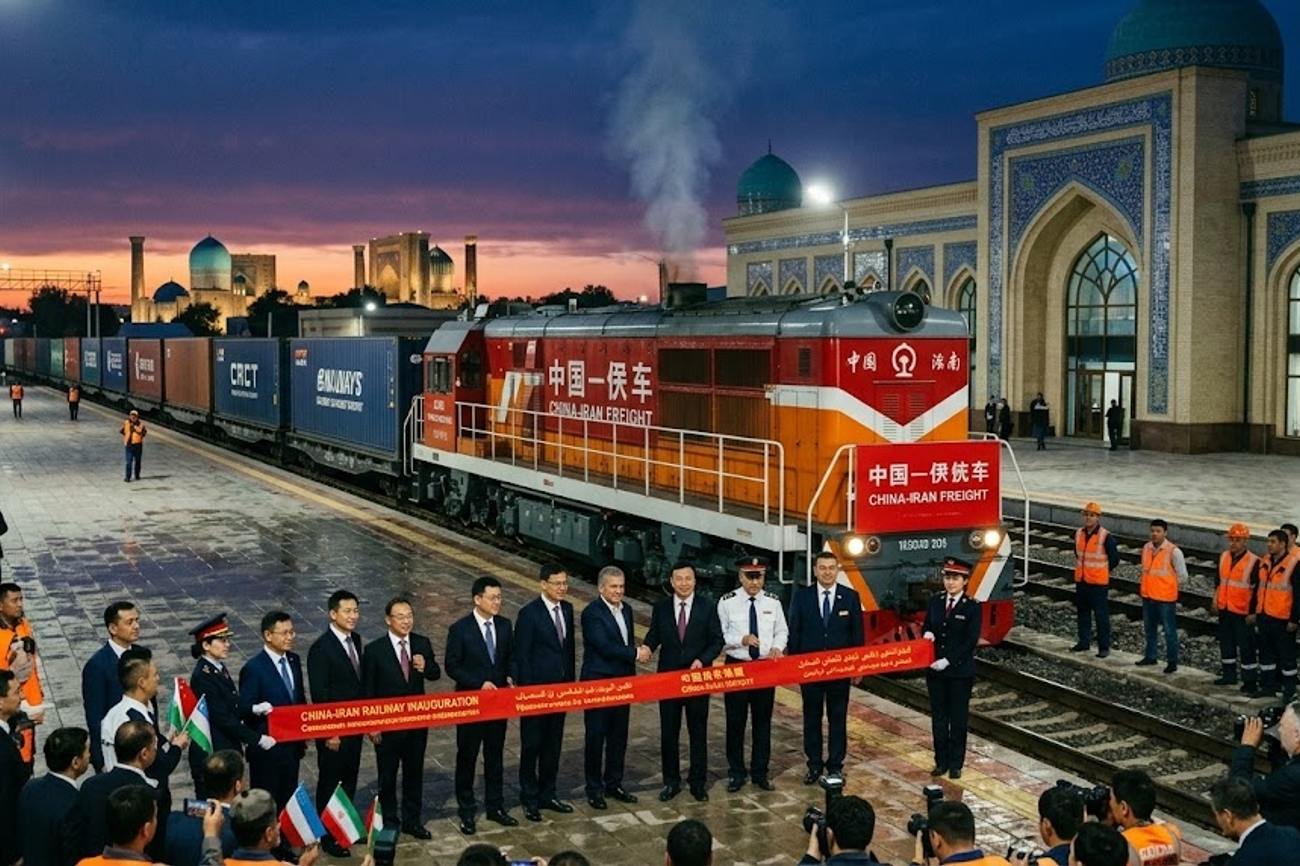
Image generated by AI
A logistics manager in Qingdao now watches a digital dashboard as a high-priority shipment of electronics departs Chengxiang Station, knowing it will bypass the volatile waters of the Strait of Hormuz. This shift in transit strategy is not merely a corporate preference but the result of a systemic overhaul in Eurasian connectivity, as Uzbekistan officially opens a historic rail gateway linking China to Iran.
The China-Central Asia-Iran Rail Corridor Launch
On September 7, 2026, a landmark freight operation commenced, signaling a shift in how goods move across the heart of Asia. A block train departed from Chengxiang Station in China, initiating a journey that spans more than 6,000 kilometres. This new corridor is designed to function as a land-based alternative to maritime shipping, specifically targeting a reduction in transit times and a decrease in reliance on traditional sea lanes.
The operational timeline of this first shipment began with its departure from China, followed by a critical transfer at the Khorgos-Altynkol border crossing. From there, the cargo integrated into the Kazakhstan railway system, departing Altynkol Station on September 7. The route continues through the territories of Kazakhstan, Uzbekistan, and Turkmenistan, eventually terminating at the Sarakhs border crossing into Iran.
The primary objective of this corridor is speed and stability. While sea freight is subject to port congestion and geopolitical instability in maritime chokepoints, this rail link aims for a door-to-door delivery window of 14 to 16 days. This represents a significant acceleration of the supply chain for manufacturers and distributors operating between East Asia and the Middle East.
Affected Routes and Logistics Nodes
The following table outlines the specific transit path and the key infrastructure nodes involved in this new Eurasian gateway:
| Segment | Key Node/Location | Role in Transit |
|---|---|---|
| Origin | Chengxiang Station, China | Departure point for block trains |
| Border Transition | Khorgos-Altynkol Crossing | Transfer to Kazakhstan rail system |
| Transit Node | Altynkol Station | Primary departure point for Central Asian leg |
| Transit Countries | Kazakhstan $\rightarrow$ Uzbekistan $\rightarrow$ Turkmenistan | Core transit corridor |
| Destination Entry | Sarakhs Border Crossing, Iran | Final entry point into the Iranian market |
Your Rights as a Freight Forwarder and Cargo Owner
While this report focuses on a freight corridor rather than passenger aviation, the legal frameworks governing international rail transit are rigorous. For businesses utilizing this new 6,000-kilometre route, understanding the liability and compensation structures is essential.
International rail transport is generally governed by the CIM (Uniform Rules concerning the Contract for International Carriage of Goods by Rail). Under these guidelines, the carrier is liable for the total loss of the goods or their deterioration from the time they take over the goods until delivery.
Key Legal Considerations for Shippers:
- Liability Limits: Compensation for lost or damaged cargo is typically calculated based on the weight of the goods (SDR - Special Drawing Rights per kilogram) rather than the full commercial value, unless a higher value was declared and a supplementary fee paid.
- Delay Compensation: Unlike passenger rights under EU261/2004, rail freight delays rarely trigger automatic cash compensation. Instead, recovery is usually limited to the reimbursement of freight charges if the delay exceeds a contractually agreed-upon window.
- Force Majeure: Given the route passes through multiple jurisdictions, "acts of God" or geopolitical unrest in transit countries can exempt carriers from liability.
For those managing high-value shipments across the China-Iran corridor, it is highly recommended to secure comprehensive cargo insurance that covers "all risks" rather than relying solely on the carrier's limited liability. You can track the real-time movement of these corridors via platforms like FlightRadar24 (for multimodal legs) or specialized rail tracking services.
Rebooking and Logistics Strategy
For companies currently relying on the Strait of Hormuz or traditional maritime routes, the opening of this corridor provides a strategic pivot. When deciding between sea and the new Uzbekistan-led rail link, consider the following trade-offs:
1. The Speed vs. Cost Analysis Maritime shipping remains the cheapest option for bulk commodities. However, for high-value, time-sensitive goods, the 14–16 day delivery window of the rail corridor justifies the higher freight rate. If your current lead times are exceeding 30 days via sea, the rail transition is the logical move.
2. Diversification of Routes Do not move 100% of your volume to a single corridor. We recommend a "split-stream" strategy:
- Primary Stream: Maintain 60% of volume on sea routes for cost efficiency.
- Agile Stream: Move 40% via the China-Central Asia-Iran rail link to ensure a stable supply chain if maritime disruptions occur.
3. Leveraging Multimodal Options Uzbekistan has recently proven the viability of multimodal links. For example, a recent trial saw palm oil move from Malaysia to Tajikistan in 32 days using a combination of sea and rail. Similarly, US-to-Kazakhstan cargo has successfully moved via the port of Qingdao. Shippers should look to the US Department of Transportation for guidelines on international trade compliance when utilizing these complex, multi-country routes.
Infrastructure Expansion and Capacity
To ensure this corridor does not become a bottleneck, Uzbekistan is aggressively expanding its hardware. Uztemiryulkonteyner, which has been a staple of the region's logistics since 2002, has recently integrated 250 new 40-foot high-cube containers into its fleet.
High-cube containers are essential for this route because they allow for increased volume per shipment, reducing the number of trains required to move the same amount of cargo. This is part of a larger 2025-2030 strategic plan to add 1,000 modern, large-capacity containers to the network.
Furthermore, the operational backbone is supported by over 20 logistics centres across Uzbekistan. These centres act as the "sorting offices" of the Eurasian land bridge, allowing for the efficient transfer of containers between different rail gauges and transport modes.
FAQ: China-Iran Rail Corridor 2026
How long does it take for cargo to travel from China to Iran via Uzbekistan? The new block train corridor is designed for door-to-door delivery within 14 to 16 days, significantly faster than traditional maritime routes.
What is the total distance of the new freight route? The corridor covers more than 6,000 kilometres, traversing China, Kazakhstan, Uzbekistan, and Turkmenistan before entering Iran.
Can I get a refund if my rail shipment is delayed? Rail freight typically does not offer automatic refunds for delays. Compensation is usually governed by the CIM contract and often requires proof of financial loss or specific contractual delay clauses.
What are high-cube containers and why are they being used? High-cube containers are taller than standard containers, allowing for more cargo volume. Uzbekistan has added 250 of these to increase efficiency on the China-Iran route.
The Eurasian land bridge is no longer a theoretical concept; it is now a functioning artery of global trade.
Tags: Uztemiryulkonteyner, Sarakhs Border Crossing, CIM Rail Regulations, China-Iran Freight Corridor, Uzbekistan Logistics 2026
Related Travel Guides
- Thailand Strengthens Travel Network As Bangkok Airport Rail Link Gets Temporary Extension To 2027
- Auckland Travel Shock As Historic City Rail Link Faces Delays Hours After Landmark Underground Opening
- Thailand Approves Massive Double-Track Railway Network to Boost Tourism and Cross-Border Connectivity
Disclaimer
This article is for informational and educational purposes only. It does not constitute legal, financial, or professional advice. While we strive to provide accurate and up-to-date information, travel policies, regulations, and conditions change rapidly. Always verify information with official sources before making travel decisions. Nomad Lawyer makes no representations about the accuracy, reliability, completeness, or suitability of the information provided. Readers should consult qualified professionals for advice specific to their circumstances. The views expressed in this article are those of the author and do not necessarily reflect the views of Nomad Lawyer.
Kunal K Choudhary
Co-Founder & Contributor
A passionate traveller and tech enthusiast. Kunal contributes to the vision and growth of Nomad Lawyer, bringing fresh perspectives and driving the community forward.
Learn more about our team →