
Auckland Travel Shock As Historic City Rail Link Faces Delays Hours After Landmark Underground Opening
Auckland Travel Shock As Historic City Rail Link Faces Delays Hours After Landmark Underground Opening

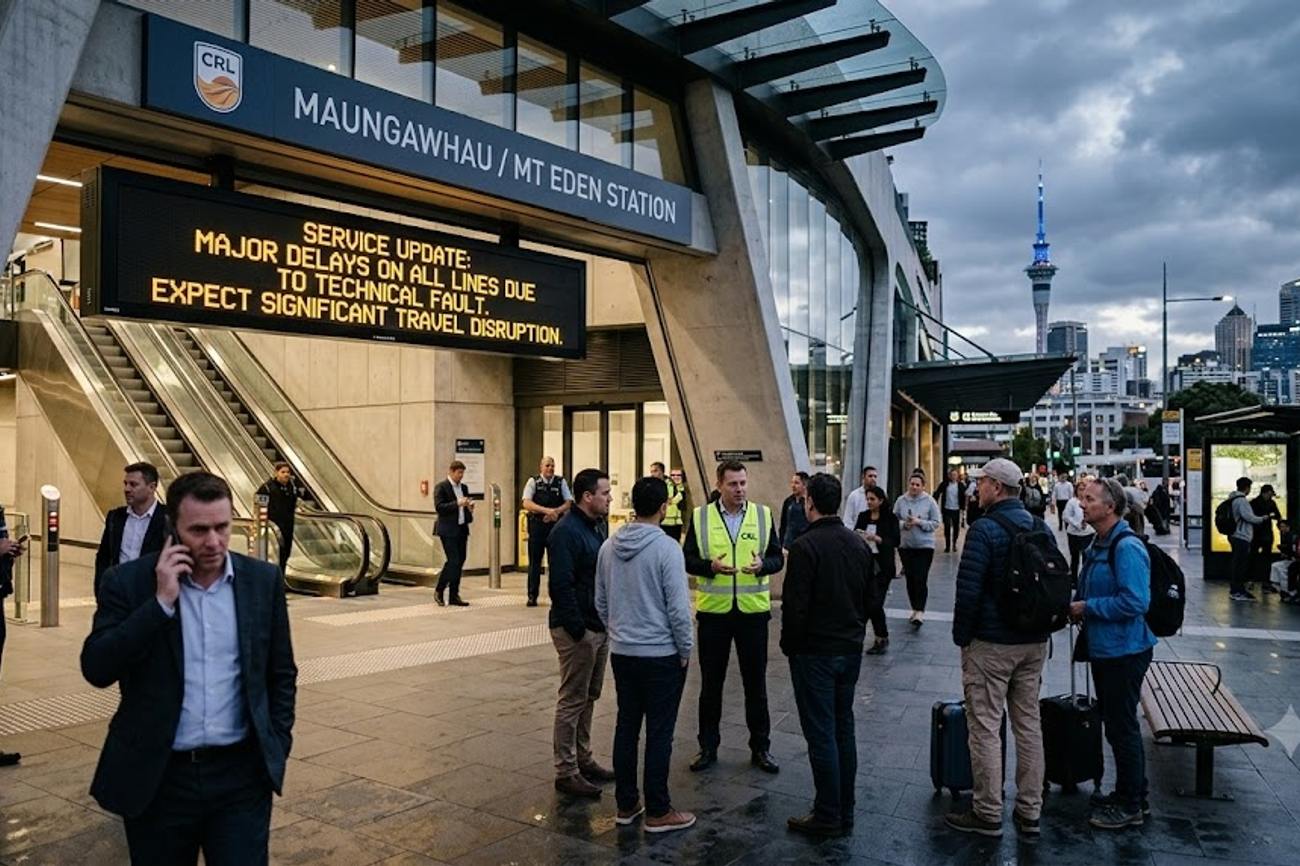
Image generated by AI
Auckland’s rail capacity is projected to increase by nearly 400% following the launch of the City Rail Link (CRL), yet the system's first operational day was marred by a system-wide disruption. This volatility underscores a recurring pattern in global infrastructure: the "stabilization gap" that occurs when legacy networks integrate with high-capital underground systems. While the NZ$5.5 billion investment marks the most expensive transport project in New Zealand's history, the immediate failure at Waitematā Station highlights the fragile transition from construction to live passenger operations.
The CRL Infrastructure by the Numbers
The City Rail Link is not merely a track extension but a fundamental redesign of Auckland's transit geometry. The project involves two underground tunnels spanning approximately 3.45 kilometres, carving a path beneath the central business district to eliminate the inefficiency of a single terminal point. By transforming the network from a "stub" end to a through-system, the city aims to quadruple its passenger capacity.
The financial scale of the project—NZ$5.5 billion—places it in a tier of infrastructure spending rarely seen in the Oceania region. This investment was designed to solve a decades-long bottleneck where trains were forced to reverse out of the city center, a process that severely limited frequency and reliability. The introduction of Waitematā Station as a primary hub was intended to be the crown jewel of this modernization. However, the small fire detected near the upper section of the station on September 13, 2026, triggered immediate cancellations and delays, proving that even the most expensive engineering cannot bypass the risks of the "early operational phase."
Comparative Transit Benchmarks: Auckland vs. Regional Peers
When comparing the CRL to other regional transit expansions, the scale of the capacity leap is significant. Most urban rail expansions in the Asia-Pacific region aim for 20% to 50% capacity increases per phase. Auckland's target of nearly four times the previous capacity suggests an aggressive attempt to leapfrog its current transit limitations to meet future urban growth.
The disruption at Waitematā Station mirrors patterns seen in other global "landmark" openings. According to historical data on urban rail launches provided by the International Association of Public Transport (UITP), initial "teething" issues—ranging from signaling failures to electrical fires—are common in the first 90 days of underground operations. The difference in Auckland is the high stakes: because the CRL is the first major underground rail connection in the country, there is no domestic precedent for managing these specific operational risks.
| Metric | Pre-CRL System | Post-CRL Implementation | Delta/Change |
|---|---|---|---|
| Network Geometry | Single Terminal (Stub) | Through-City Tunnels | Structural Shift |
| Tunnel Length | 0 km (Underground) | 3.45 km (Underground) | +3.45 km |
| Passenger Capacity | Base Level (1x) | Projected 4x Base | +300% |
| Project Investment | N/A | NZ$5.5 Billion | Record High |
| Route Efficiency | High Terminal Congestion | Direct Central Transit | High Improvement |
What This Means for Travelers
For the individual traveler or business nomad visiting Auckland in late 2026, the data suggests a period of "calculated instability." While the long-term utility of the CRL will drastically reduce reliance on road transport, the immediate aftermath of the Waitematā incident indicates that the system is still in a state of calibration.
If you are planning a trip to Auckland in Q4 2026, do not rely on rail for time-sensitive arrivals (such as airport transfers or high-stakes meetings) without a 30-minute buffer. The transition to a through-system means that a single point of failure—like the fire at Waitematā—now has a cascading effect across the entire network rather than just affecting one line. Travelers should monitor real-time updates via the local transport authority, as "temporary adjustments" to stopping patterns are likely to persist while safety inspections are finalized.
Furthermore, the shift in rail geometry means that the most efficient way to navigate the city has changed. The previous "single terminal" logic is obsolete; travelers should now map their journeys based on the new underground hubs to maximize the time-saving benefits of the 3.45 km tunnel system. For a broader look at how urban transit impacts city accessibility, the World Tourism Organization (UNWTO) provides data on how integrated transport networks correlate with increased visitor spend in city centers.
Forward Projection: The Stabilization Curve
Based on the current trajectory, Auckland is entering the "stabilization curve." The initial shock of the Waitematā fire is a data point in a larger trend of infrastructure bedding-in. We can expect a period of "phased reliability," where the network operates at 80-90% efficiency for the first six months before reaching the projected 4x capacity.
The real test for the CRL will not be the handling of small fires, but the management of the projected 300% increase in passenger volume. As the city moves toward this higher capacity, the pressure on the 3.45 km tunnel section will increase. If the operational response to the September 13 incident—which involved quick safety checks and gradual recovery—becomes the standard protocol, the system will likely stabilize by early 2027. However, if systemic electrical or signaling issues persist, the "modernization" of Auckland's transport may face a slower adoption rate than the NZ$5.5 billion price tag suggests.
For investors and analysts tracking the region, the CRL serves as a case study in "high-risk, high-reward" urban planning. The ability of Auckland to scale its transit by 400% will determine whether the city can sustain its growth as a major urban center or if it will remain throttled by the very infrastructure meant to liberate it. Data from OAG often shows that cities with high-efficiency rail hubs see a corresponding increase in short-term business travel and "bleisure" stays, making the successful stabilization of the CRL a primary economic driver for the region.
FAQ: Auckland City Rail Link 2026
Will train fares increase due to the NZ$5.5 billion cost? While the infrastructure cost was massive, fare structures are typically managed by regional government subsidies. There is no current data indicating a direct fare hike linked solely to the CRL construction costs, but operational adjustments may occur.
Is the CRL currently safe for passengers? Yes. The disruption on September 13 was managed through standard safety protocols, including emergency response teams and rigorous safety inspections. The system moved toward recovery quickly after the Waitematā Station area was cleared.
Which stations are most affected by the current disruptions? Waitematā Station was the epicenter of the recent fire. While services are recovering, this hub and the connected 3.45 km tunnel sections are the primary areas where travelers may encounter temporary delays or altered stopping patterns.
How much faster is travel through the city now? By replacing the terminal "stub" with a through-city connection, the CRL eliminates the need for trains to reverse. While specific time-saves per trip vary, the overall network efficiency is designed to support nearly four times the previous capacity.
The cost of progress is often measured in the friction of the first mile.
#AucklandCRL2026 #NZTransportInfrastructure #WaitemataStationDisruption #UrbanRailCapacityGrowth #AucklandTransitModernization
Related Travel Guides
Disclaimer
This article is for informational and educational purposes only. It does not constitute legal, financial, or professional advice. While we strive to provide accurate and up-to-date information, travel policies, regulations, and conditions change rapidly. Always verify information with official sources before making travel decisions. Nomad Lawyer makes no representations about the accuracy, reliability, completeness, or suitability of the information provided. Readers should consult qualified professionals for advice specific to their circumstances. The views expressed in this article are those of the author and do not necessarily reflect the views of Nomad Lawyer.
Raushan Kumar
Founder & Lead Developer
Full-stack developer with 11+ years of experience and a passionate traveller. Raushan built Nomad Lawyer from the ground up with a vision to create the best travel and law experience on the web.
Learn more about our team →