Kazakhstan and China Expand Silk Road Flights: Central Asia Travel Guide 2026

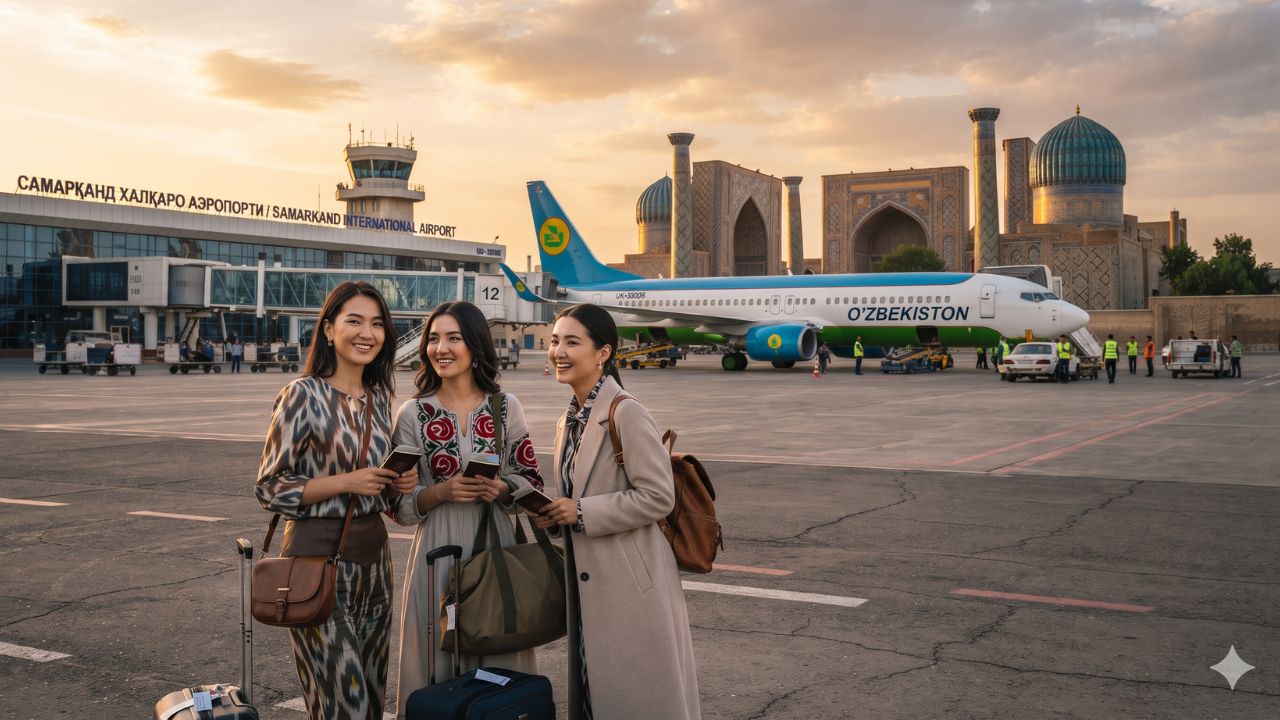
Commercial air passenger traffic across Central Asia surged to 31.7 million travelers in 2025—virtually doubling its 2019 pre-pandemic volume—while regional seat capacity expanded by 7.7% annually, nearly three times the global pace. Concurrently, foreign visitor arrivals in Uzbekistan climbed 20.4% between January and September 2026 to reach 10.3 million, with arrivals from China more than doubling year-on-year in September alone. As trade between China and the five Central Asian republics reached a record US$106.3 billion in 2025 (a 12% rise), the historic Silk Road is experiencing an unprecedented aviation boom that replaces grueling multi-week overland journeys with two-hour regional flights.
The Silk Road Skyway: How 180 Weekly Flights Reshape Central Asian Travel
The latest milestone occurred during the third China–Central Asia C5+1 Civil Aviation Cooperation Working Group conference in Tashkent from 3 to 5 November 2026. Bringing together civil aviation authorities from China, Kazakhstan, Uzbekistan, Kyrgyzstan, Tajikistan, and Turkmenistan, the summit raised permitted bilateral weekly flights between Astana and Beijing from 150 to 180.
The accord added Chengdu and Kashgar to the bilateral network. For millennia, Kashgar was the primary meeting point for Silk Road caravans before crossing the Tian Shan passes into the Fergana Valley.
While regulators authorized 180 weekly services, late October 2026 schedules recorded 117 operating flights across 21 routes (+52% annual growth), carrying over 1 million passengers since January 2026. Kazakhstan, generating 48.7% of regional air traffic in 2025 according to the Eurasian Development Bank, plans to connect to 30 Chinese destinations. Air Astana launched an Astana–Guangzhou route in June and partnered with China Southern Airlines on 30 October 2026 to coordinate schedules. Budget arm FlyArystan launched Almaty to Xi'an in June and Chongqing in September, holding 21% of regional seat capacity under Kazakhstan’s open-skies regime.
Across the border, Uzbekistan welcomed 269,700 Chinese travelers during January–July 2026, exceeding its full-year 2025 total of 278,900. China Eastern Airlines launched four weekly round trips between Shanghai and Tashkent on 30 March 2026 on Airbus A330s, complementing Loong Air’s links from Chengdu and Xi'an. A mutual visa-free policy active since 1 June 2025 permits stays up to 30 days per visit (maximum 90 days within 180 days).
Central Asia and China Aviation Expansion Metrics
The table below outlines verified operational indicators shaping the region in late 2026.
| Performance Dimension | Q3 2026 Verified Metrics | Growth Trend & Baseline | Operational Driver & Traveler Impact |
|---|---|---|---|
| Kazakhstan–China Flight Rights | 180 Permitted Weekly Services | Raised from 150 (November 2026) | Direct links to Chengdu and Kashgar |
| Operating Bilateral Services | 117 Weekly Flights across 21 Routes | +52% annual flight growth | Over 1M passengers flown since January 2026 |
| Central Asian Air Passenger Volume | 31.7 Million Passengers in 2025 | Double 2019 pre-pandemic level | Kazakhstan captures 48.7% of regional volume |
| Annual Seat Capacity Growth | 7.7% Average (2015–2025) | Nearly 3x global growth rate | Budget airlines hold 21% of regional seats |
| Uzbekistan Foreign Tourism | 10.3 Million Arrivals (Jan–Sep 2026) | +20.4% YoY tourist growth | Chinese arrivals rose 2.1x in September 2026 |
| Bilateral Trade & Freight Expansion | US$106.3B Trade; 335,700 Tonnes Cargo | Trade +12% YoY; Cargo 4x since 2023 | Uzbekistan handles ~67% of regional air freight |
| Regional Airport Modernization | 12 Projects / US$5.1B Investment | Active pipeline through 2035 | Terminal upgrades across 12 regional hubs |
What Makes the Central Asian Silk Road Corridor Unique
The Silk Road across Central Asia is an active cultural crossroads where nomadic steppe traditions meet ancient Persian and Islamic urban architecture.
In Kazakhstan, Almaty serves as the gateway to the Tian Shan mountains. Known locally as the "City of Apples," Almaty sits beneath the peaks of the Zailiysky Alatau. Travelers can ride the Kok Tobe cable car, trek Shymbulak, and taste local specialties like beshbarmak at the Green Bazaar. Destination resources from Kazakh Tourism highlight how Almaty bridges leafy avenues with alpine culture.
In Uzbekistan, travelers step into living history. In Samarkand, the turquoise domes of the Registan and the azure mosaics of Shah-i-Zinda date to the Timurid Empire. In Bukhara, covered trading domes that sheltered medieval silk merchants still host copper artisans and carpet weavers, protected by the UNESCO World Heritage Centre. Guidance from the Uzbekistan Tourism Committee highlights how bullet trains and new air corridors make multi-city cultural circuits effortless.
Smaller republics offer distinct adventure appeal: Kyrgyzstan's Guangzhou–Bishkek flights (launched March 2026) unlock Issyk-Kul Lake, while direct flights from Beijing Daxing to Dushanbe (launched June 2025 on Boeing 787 and 737-8 aircraft) unlock the rugged Pamir Highway.
Visitor Insider Tips: Exploring Kazakhstan, Uzbekistan, and Beyond
Smart planning is essential when navigating Central Asia's expanding air network:
- Distinguish Authorized Caps from Published Schedules: Do not assume all 180 bilateral frequencies between Kazakhstan and China are bookable today. Check booking portals for the 117 confirmed flights, especially on new routes to Chengdu and Kashgar.
- Book the Afrosiyob Bullet Train Weeks Ahead: When landing in Tashkent, take the high-speed Afrosiyob electric train to reach Samarkand in two hours and Bukhara in under four. Tickets open 45 days ahead and sell out quickly on Uzbekistan Railways.
- Leverage Almaty Stopovers for Multi-Country Journeys: Flying Air Astana through Almaty allows travelers to use low-cost domestic flights on FlyArystan. Combine hiking in Charyn Canyon with an onward flight to Tashkent or Bishkek.
- Travel in Spring and Autumn Shoulder Months: Summer desert temperatures regularly exceed 42 degrees Celsius, making walking tours exhausting. Plan visits between April and May or September and October for pleasant 22-degree weather.
- Respect Local Etiquette in Sacred Shrines: When entering active mosques and mausoleums—such as Gur-e-Amir in Samarkand or Po-i-Kalyan in Bukhara—dress modestly with shoulders and knees covered. Remove shoes at carpeted entrances.
Cultural and Environmental Context: Ancient Heritage and Sustainable Tourism
The influx of travelers along Central Asian flight paths brings vital economic activity while posing conservation challenges. In historic centers like Samarkand and Bukhara, foot traffic requires careful heritage stewardship to protect centuries-old brickwork and glazed ceramics.
Environmental considerations loom large across Central Asia. Water scarcity throughout the Aral Sea basin and melting glaciers in the Tian Shan and Pamir ranges highlight ecological fragility. Expanding air travel also adds aviation emissions; at IATA’s 82nd Annual General Meeting on 7 June 2026, Director General Willie Walsh noted that global aircraft order backlogs exceeding 18,000 airframes keep older aircraft flying.
In response, Central Asian states are directing portions of their US$5.1 billion airport modernization pipeline toward eco-efficient terminal designs. By supporting local handicraft cooperatives and choosing direct air routes, travelers help preserve the equilibrium between heritage conservation and modernization.
FAQ: Traveling the Silk Road by Air in 2026
What are the new flight routes between Kazakhstan and China?
Kazakhstan and China expanded bilateral flight rights from 150 to 180 weekly services in November 2026, adding direct route permissions for Chengdu and Kashgar alongside established links to Beijing, Urumqi, and Guangzhou.
Do tourists need a visa to visit Uzbekistan and Kazakhstan?
Kazakhstan offers visa-free entry for up to 30 days for citizens of over 70 countries. Uzbekistan provides 30-day visa-free travel to citizens of China (since June 2025) and numerous other nations; other travelers must obtain an easy e-visa.
What is the best way to travel between Tashkent, Samarkand, and Bukhara?
The high-speed Afrosiyob electric train connects Tashkent to Samarkand in approximately two hours and continues to Bukhara in under four hours, providing a reliable alternative to domestic flights.
Is Central Asia safe for independent travelers?
Yes. Kazakhstan and Uzbekistan have very low rates of violent crime, modern tourist police in historic districts, and welcoming hospitality toward foreign visitors. Basic precautions regarding currency exchange and taxi fares apply.
As modern flight corridors bridge ancient desert highways, the storied cities of the Silk Road are once again open to travelers eager to trace history across the heart of Eurasia.
Related Travel Guides
This article is for informational purposes. Flight routes, passenger regulations, visa rules, and transit advisories are subject to change by airlines and aviation authorities. Readers are advised to verify schedules and travel documentation with relevant carriers and border agencies before departure.
Related Stories
Uzbekistan Tourism 2026: Tashkent Airport Passenger Surge Outpaces European Hubs Along the Modern Silk Road

Mount Fuji First Sunrise Flights 2027: Japan Airlines New Year Aerial Guide