European Aviation Security Alerts: Flight Detours and Rail Travel Guide 2026

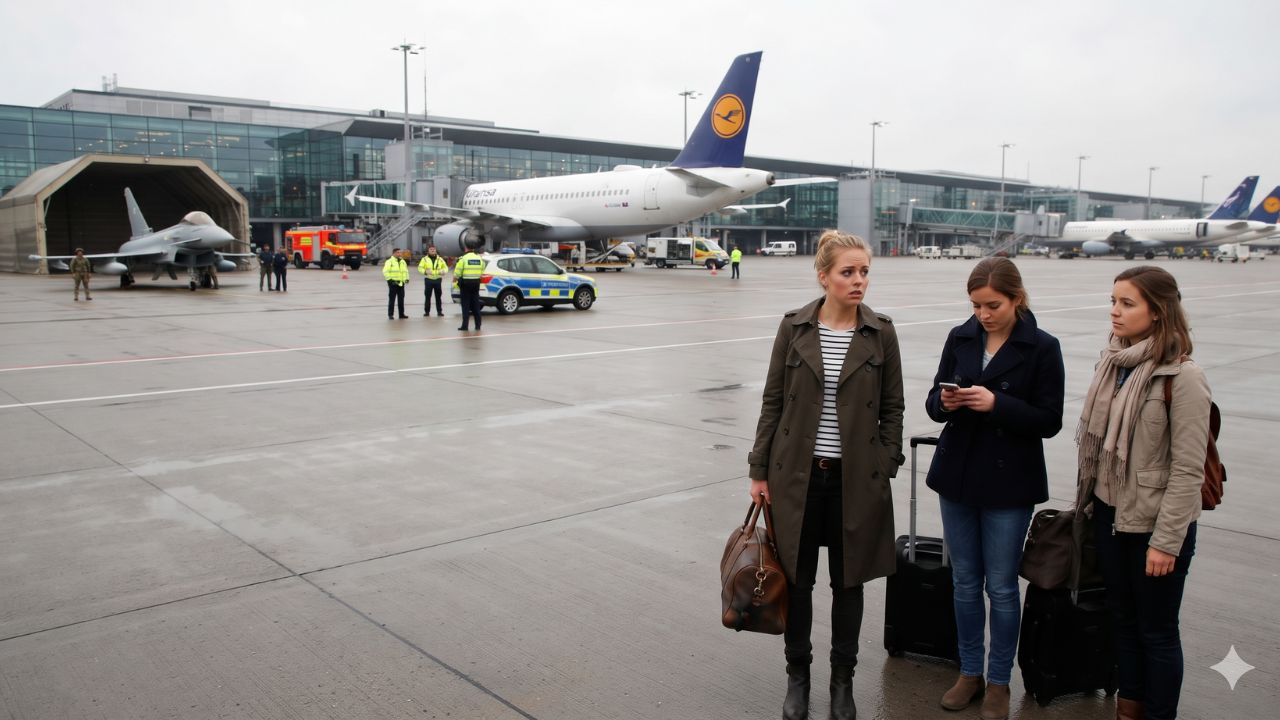
Between 25 and 33 commercial passenger flights operated by ten airlines across more than eight European nations were targeted by coordinated mid-air security hoaxes in a single 24-hour surge on 5 November 2026—forcing fighter jet scrambles, supersonic escorts, and tarmac lockdowns without a single ounce of physical explosives ever being found. Triggering military countermeasures across sovereign borders, these electronic communiqués disrupted scheduled services operated by Ryanair, Aer Lingus, Wizz Air, Finnair, easyJet, Aegean Airlines, Iberia, Air Europa, Air Serbia, and LOT Polish Airlines. For international travelers navigating cultural centers like Rome, Vienna, Prague, and Madrid, this calculated disruption reveals how digital intimidation can paralyze transit corridors, making surface transport knowledge essential for anyone journeying across the continent.
The Under-Threshold Airspace Crisis: How Digital Hoaxes Ground European Skies
European aviation has entered an era of grey-zone disruption where low-cost digital messages trigger tactical paralysis. Peaking on 5 November 2026, identical emailed threats reached airport authorities in Rome, Sofia, and Madrid. Claiming allegiance to the "fighters of the Male State" (Muzhskoye Gosudarstvo)—an outlawed Russian extremist movement founded by Vladislav Pozdnyakov—the messages demanded ransom and threatened detonations within 60 minutes.
Operational responses were swift. In France, Rafale fighters intercepted Aer Lingus Flight EI-DEH from Dublin to Rome, diverting the Airbus A320 with 151 passengers and six crew to Base aérienne 105 at Évreux-Fauville. In Italy, Eurofighter Typhoons escorted Finnair Flight AY1761 into Rome Fiumicino, while Austrian counter-terrorism teams met Finnair Flight AY1471 in Vienna. In Bulgaria, MiG-29s intercepted three Ryanair flights from London Stansted, Copenhagen, and Madrid, splitting traffic between Sofia and Plovdiv.
Italian Defence Minister Guido Crosetto termed these alerts "under-threshold warfare" (guerra sotto soglia), designed to avoid military retaliation while inflicting economic friction. The disruption coincided with cyber strikes across eleven nations that heated supermarket refrigeration to 55 degrees Celsius in Belgium, Sweden, France, Germany, and the Netherlands, alongside attacks on French blood banks. European Union Transport Commissioner Apostolos Tzitzikostas activated emergency information-sharing protocols, urging collective resilience.
Incident Log and Operational Economics of Asymmetric Airspace Disruption
Responding to airborne threats imposes steep financial and regulatory burdens on commercial carriers. The table below outlines verified flight intercepts alongside systemic operational costs recorded during the November 2026 disruption.
| Disrupted Route & Flight | Carrier | Military & Civil Intervention | Facility | Regulatory Driver & Financial Impact |
|---|---|---|---|---|
| Dublin ⇄ Rome (EI-DEH) | Aer Lingus | French Rafale supersonic intercept | Évreux-Fauville Air Base | €35,000–€75,000 EC 261 care; chartered Paris coaches |
| Helsinki ⇄ Rome & Vienna (AY1761 / AY1471) | Finnair | Eurofighter Typhoon escort & tactical response | Rome (FCO) & Vienna (VIE) | €30,000–€60,000 two-ship fighter scramble deployment |
| Milan ⇄ Warsaw & Bucharest (W46387 / WMT3064) | Wizz Air | Austro Control vectoring & SRI boarding | Vienna (VIE) & Bucharest (OTP) | ORO.FTL.205 crew duty expiry; mandatory 10–12h rest |
| London, Madrid, CPH ⇄ Sofia (FR1730 / FR6410 / FR3606) | Ryanair | Bulgarian Air Force combat air patrol | Sofia (SOF) & Plovdiv (PLO) | ICAO Annex 14 IAPP stand isolation; baggage rescreening |
| Warsaw ⇄ Brussels (LO235) | LOT Polish | Tarmac isolation and police canine sweeps | Brussels Airport (BRU) | Ground hold-ups; +50% to +500% war risk insurance |
| UK Origins ⇄ Prague (U23179 / U25629) | easyJet | Holding pattern sequencing by Czech ATC | Václav Havel Prague (PRG) | Quick Reference Handbook (QRH) cabin pressure descents |
What Makes Central and Southern European Transit Different
The geographic density of Central and Southern Europe creates sharp contrasts in transit resilience. In major cultural capitals like Rome, Vienna, and Prague, travelers caught in flight groundings benefit from integrated rail links that bypass airfield closures entirely.
In Rome, passengers landing at Leonardo da Vinci–Fiumicino Airport (FCO) take the non-stop Leonardo Express train to Roma Termini in 32 minutes, connecting to Italy's high-speed rail network. Visitors can tour the Colosseum and Vatican Museums, protected by the UNESCO World Heritage Centre, with destination guidance from the Italian National Tourist Board.
Similarly, Vienna International Airport (VIE) connects to the City Airport Train (CAT), reaching central Wien Mitte in 16 minutes, providing access to Schönbrunn Palace and Ringstraße cafes.
However, peripheral gateways face greater vulnerability. In Ireland, Bulgaria, and Romania, surface links are constrained by seas or limited rail tracks. When flights from Dublin, Sofia, or Bucharest face security holds, travelers cannot easily switch to trains, making contingency planning essential.
Visitor Insider Tips: Navigating European Travel Amid Sky Disruptions
When security alerts trigger flight diversions and airport delays, experienced travelers rely on specific tactical strategies:
- Pivot to High-Speed Rail Corridors: On core routes, choose high-speed rail over regional flights. When flights between Milan and Rome were grounded on 5 November, Trenitalia absorbed travelers onto Frecciarossa trains within three hours, reaching central stations in under 3.5 hours. Similar resilience exists on ÖBB Railjets linking Vienna, Prague, and Budapest.
- Assert Your Rights Under Regulation EC 261/2004: While security hoaxes qualify as "extraordinary circumstances" exempting airlines from cash delay compensation of €250 to €600, Article 9 duty-of-care obligations remain binding. Airlines must provide free hotel lodging, meals, ground transfers, and rebooking.
- Understand Controlled Cohort Disembarkation: If your aircraft parks at an Isolated Aircraft Parking Position (IAPP) under International Civil Aviation Organization Annex 14, expect to park 300 metres from terminals. Police disembark passengers in cohorts of ten while bomb squads sweep luggage.
- Build 24-Hour Buffers in Peripheral Gateways: In peripheral destinations like Ireland, Bulgaria, or the Baltic states where international high-speed rail is unavailable, avoid tight flight connections. Build a 24-hour buffer in hub cities to absorb flight realignments.
- Keep Essential Medication and Layers in Personal Bags: If an aircraft is diverted to a military base lacking commercial terminal amenities—like the Aer Lingus diversion to Évreux-Fauville—checked bags remain locked in cargo holds. Keep prescriptions, chargers, and warm layers in your under-seat bag.
Cultural and Environmental Context: Community Resilience, Tourism Dependence, and Rail Redundancy
The weaponization of aviation safety protocols strikes at European cultural tourism. Across Italy, Spain, and Central Europe, international visitors provide vital economic support for local restaurateurs, craftspeople, and preservation foundations. By generating synthetic crises, hybrid disruptions attempt to erode consumer confidence in cross-border travel.
Yet this crisis highlights the advantages of multi-modal transit. European aviation safety mandates enforced by the European Union Aviation Safety Agency correctly prioritize passenger protection. Simultaneously, coordinating with the EUROCONTROL Network Manager ensures that flights descending rapidly to equalize cabin pressure differentials are safely vectored without paralyzing continental airways.
Shifting short-haul travel to electrified high-speed rail reduces vulnerability to airspace disruption while cutting transport carbon emissions by over 80% compared to regional flights. Travelers who embrace ground rail connections help foster a more resilient, sustainable travel culture.
FAQ: Traveling in Europe During Airspace Security Alerts 2026
What happens if my European flight receives a mid-air security alert?
Pilots follow international Quick Reference Handbooks, often descending to lower altitudes to equalize cabin pressure. Military jets may provide a visual escort to an isolated runway at least 300 metres from terminal buildings for security sweeps.
Am I entitled to compensation if my flight is diverted due to a security hoax?
No direct cash compensation is owed under Regulation EC 261/2004 because security hoaxes are classified as extraordinary circumstances. However, airlines must provide free meals, hotel accommodations, and ground transfers under Article 9 duty-of-care rules.
How quickly can high-speed rail replace a cancelled European flight?
On core European rail routes—such as Milan–Rome, Brussels–Paris, or Vienna–Prague—high-speed trains operated by Trenitalia, Eurostar, and ÖBB run multiple times hourly, absorbing travelers in under three hours with center-to-center travel.
Are European airports safe for international travelers despite these hoaxes?
Yes. Every incident on 5 November 2026 was verified as a malicious hoax. European airports, civilian air traffic agencies, and national defense forces maintain rigorous counter-terrorism protocols to ensure passenger safety remains uncompromised.
When unpredictable skies challenge European journeys, smart travelers discover that the continent's historic rails offer the most steadfast path forward.
Related Travel Guides
This article is for informational purposes. Flight routes, passenger regulations, visa rules, and transit advisories are subject to change by airlines and aviation authorities. Readers are advised to verify schedules and travel documentation with relevant carriers and border agencies before departure.
Related Stories
Mount Fuji First Sunrise Flights 2027: Japan Airlines New Year Aerial Guide
Cambodia Beyond Angkor Wat: Etihad Airways and Tourism Board Travel Guide 2026