Thai Vietjet Expands Tokyo–Bangkok Nonstop Flights: Travel Guide 2026

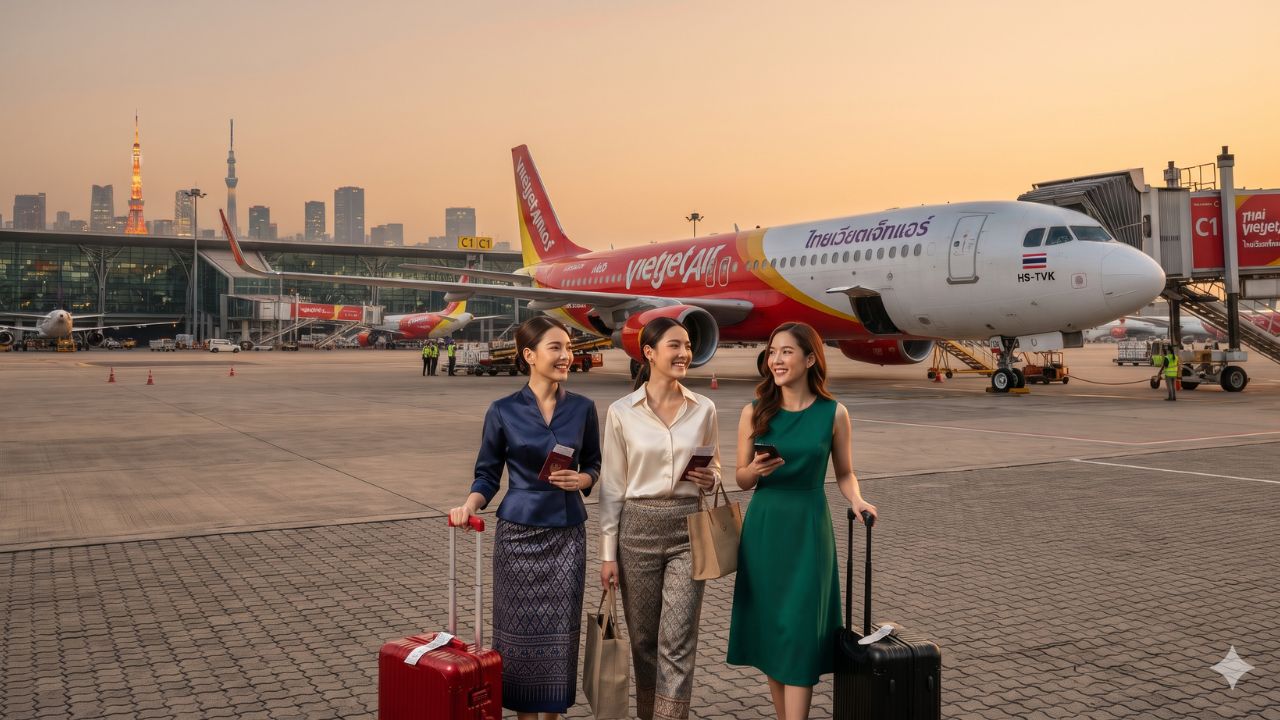
Starting 6 November 2026, budget flight connectivity between Tokyo and Bangkok increases by nearly 60%, with Thai Vietjet Air expanding from seven to 11 weekly return services. On four days each week—Mondays, Wednesdays, Fridays, and Sundays—travelers can now choose between two daily direct departures linking Tokyo Narita (NRT) and Bangkok Suvarnabhumi (BKK). Operating 189-seat Boeing 737-8 aircraft on this 4,600-kilometer trans-Asian corridor, this schedule expansion injects vital seat capacity just as peak winter vacation travel accelerates between Japan and Thailand.
The Tokyo–Bangkok Winter Air Corridor: 11 Weekly Nonstops Across East Asia
The expansion builds upon Thai Vietjet Air's initial daily nonstop service between Bangkok and Tokyo, which launched on 2 February 2026. By adding four weekly round trips, the carrier introduces flexible departure windows for weekend travelers, seasonal holidaymakers, and business travelers moving between Southeast Asia's primary hub and Japan's capital.
Under the updated timetable, the baseline daily service remains anchored by overnight flight VZ830, departing Bangkok Suvarnabhumi at 23:55 and landing at Narita at 07:55 the following morning. Return flight VZ831 departs Narita at 08:55 and arrives in Bangkok at 14:30. Newly added frequencies—flights VZ832 and VZ833—introduce daytime departures from Bangkok and evening returns from Tokyo on selected weekdays and Sundays.
Operating from Terminal 2 at Narita International Airport, the route utilizes Boeing 737-8 (Boeing 737 MAX 8) aircraft configured with 189 economy seats. As a budget carrier, Thai Vietjet unbundles airfare components: base tickets exclude checked luggage, seat selection, and in-flight meals. While no verified November promotional ticket price was confirmed by official authorities at launch, the expanded schedule increases seat inventory during high-demand holiday weeks.
For international visitors, advance entry preparation is essential. Japanese passport holders visit Thailand under visa-exemption rules, but foreign visitors must complete the free Thailand Digital Arrival Card online within three days before arrival via the official Immigration Bureau portal. Travelers heading to Japan must verify visa rules through the Japan National Tourism Organization and ensure passport validity.
Flight Schedule and Route Comparison: Tokyo Narita to Bangkok Suvarnabhumi
The table below outlines published flight numbers, operating days, departure schedules, and traveler impacts for Thai Vietjet Air’s Tokyo–Bangkok service as of November 2026.
| Flight Designation | Operating Sector | Departure Time (Local) | Arrival Time (Local) | Operating Days | Practical Passenger Impact |
|---|---|---|---|---|---|
| VZ830 (Baseline) | Bangkok (BKK) ➔ Tokyo (NRT) | 23:55 | 07:55 (+1 Day) | Daily | Overnight red-eye; saves a night of hotel costs |
| VZ831 (Baseline) | Tokyo (NRT) ➔ Bangkok (BKK) | 08:55 | 14:30 | Daily | Morning departure; reaches Bangkok for afternoon check-in |
| VZ832 (Additional) | Bangkok (BKK) ➔ Tokyo (NRT) | Morning Schedule | Afternoon Schedule | Mon, Wed, Fri, Sun | Daytime travel; ideal for families and older travelers |
| VZ833 (Additional) | Tokyo (NRT) ➔ Bangkok (BKK) | Evening Schedule | Late Night Schedule | Mon, Wed, Fri, Sun | Maximizes final day in Tokyo before flying home |
What Makes the Tokyo–Bangkok Route Experientially Unique
Traveling between Tokyo and Bangkok pairs Tokyo's precision rail networks with Bangkok's spirited canal culture.
In Bangkok, arriving at Suvarnabhumi Airport places travelers 30 kilometers east of the capital. The elevated Airport Rail Link reaches Phaya Thai station in 26 minutes for 45 Thai Baht (approx. US$1.30), connecting to the BTS Skytrain. Beyond malls, visitors can explore riverside heritage along the Chao Phraya River, including Wat Pho with its Reclining Buddha and Wat Arun, recognized by the UNESCO World Heritage Centre. Destination guidance from the Tourism Authority of Thailand highlights street food discoveries from Talat Noi to Thong Lo.
In Tokyo, flights land at Narita International Airport in Chiba Prefecture, 60 kilometers east of the capital. The Keisei Skyliner connects Narita Terminal 2 directly to Ueno in 41 minutes for 2,570 Japanese Yen (approx. US$17), while the JR Narita Express (N'EX) provides one-seat access to Tokyo Station and Shinjuku. In Tokyo, travelers experience Senso-ji temple in Asakusa at dawn, the Shibuya crossing, and seasonal cuisine across Tsukiji Outer Market.
Visitor Insider Tips: Navigating Low-Cost Flights Between Japan and Thailand
Smart planning ensures a smooth journey when booking unbundled low-cost tickets across Asia:
- Tally Full Baggage Charges Before Confirming Bookings: Thai Vietjet enforces strict 7-kilogram cabin baggage allowances. If traveling with winter coats for Tokyo or shopping bags from Bangkok, pre-purchase 20-kilogram checked baggage online at least 24 hours prior to departure, avoiding elevated airport counter fees.
- Match Flight Times to City Transportation Options: Flight VZ830 lands at Narita at 07:55, timed for morning Keisei Skyliner trains into Tokyo. However, if booking late-night return flight VZ833, reach Narita Terminal 2 three hours before departure, as late-evening express trains from central Tokyo become less frequent after 20:00.
- Complete the Thailand Digital Arrival Card Early: Complete the free digital arrival card on the official Thai Immigration Bureau website within 72 hours before boarding, avoiding commercial third-party websites charging fees for this complimentary registration.
- Carry a Refillable Bottle and Light In-Flight Snacks: Low-cost carriers do not supply complimentary meals or water on the six-hour flight between Bangkok and Tokyo. Fill a reusable bottle post-security and pack light snacks, or pre-order hot meals online during ticket booking.
- Arrange Onward Travel with Separate Ticket Buffer Time: If using Bangkok as a springboard for regional flights to Phuket, Chiang Mai, or Krabi, book onward departures at least 3.5 hours later to allow adequate time for immigration, baggage collection, and domestic check-in.
Cultural and Environmental Context: Sustainable Tourism and Cross-Border Exchange
The expanding aerial bridge between Thailand and Japan reflects deep social and commercial ties. Japanese tourism to Thailand provides indispensable revenue for local boutique hoteliers, riverside riverboat cooperatives, and traditional craft markets recovering from shifting international travel trends. Conversely, Thai visitors to Japan represent one of the fastest-growing Southeast Asian traveler cohorts, patronizing regional rail systems and traditional ryokan inns in prefectures surrounding Tokyo.
However, surging flight frequencies across popular routes pose environmental challenges. Operating multiple daily jet sectors across East Asia increases high-altitude carbon emissions. Thai Vietjet's deployment of the Boeing 737-8 (MAX 8) helps mitigate fuel consumption, reducing fuel burn and carbon emissions by roughly 14% compared to previous-generation narrowbody aircraft.
Sustainable travel on this route also depends on visitor behavior on the ground. In Bangkok, using public mass transit like the BTS Skytrain, MRT subway, and public Chao Phraya river express boats reduces city roadway gridlock and urban vehicle emissions. In Tokyo, relying on extensive rail networks and respecting quiet-carriage etiquette preserves the community environment that makes Japanese urban life globally celebrated.
FAQ: Flying Between Tokyo and Bangkok in 2026
How many weekly flights does Thai Vietjet operate between Tokyo and Bangkok?
As of 6 November 2026, Thai Vietjet operates 11 weekly return flights between Tokyo Narita and Bangkok Suvarnabhumi, offering double-daily flights on Mondays, Wednesdays, Fridays, and Sundays.
Do Japanese citizens need a visa to visit Thailand?
No. Japanese tourists can enter Thailand under standard visa-exemption arrangements for tourism, but must complete the complimentary Thailand Digital Arrival Card online within three days before scheduled arrival.
Which terminal does Thai Vietjet use at Tokyo Narita Airport?
Thai Vietjet Air operates its passenger departure and arrival services through Terminal 2 at Narita International Airport (NRT).
What is the fastest ground transit from Narita Airport to central Tokyo?
The Keisei Skyliner train departs directly from Narita Terminal 2, reaching Nippori Station in 36 minutes and Ueno Station in 41 minutes without road traffic delays.
As flexible flight schedules bridge the Pacific and Southeast Asia, travelers can savor morning street noodles in Bangkok and evening sushi in Tokyo on the very same day.
Related Travel Guides
This article is for informational purposes. Flight routes, passenger regulations, visa rules, and transit advisories are subject to change by airlines and aviation authorities. Readers are advised to verify schedules and travel documentation with relevant carriers and border agencies before departure.
Related Stories

Mount Fuji First Sunrise Flights 2027: Japan Airlines New Year Aerial Guide
Cambodia Beyond Angkor Wat: Etihad Airways and Tourism Board Travel Guide 2026