
Thailand Strengthens Travel Network As Bangkok Airport Rail Link Gets Temporary Extension To 2027
Thailand Strengthens Travel Network As Bangkok Airport Rail Link Gets Temporary Extension To 2027

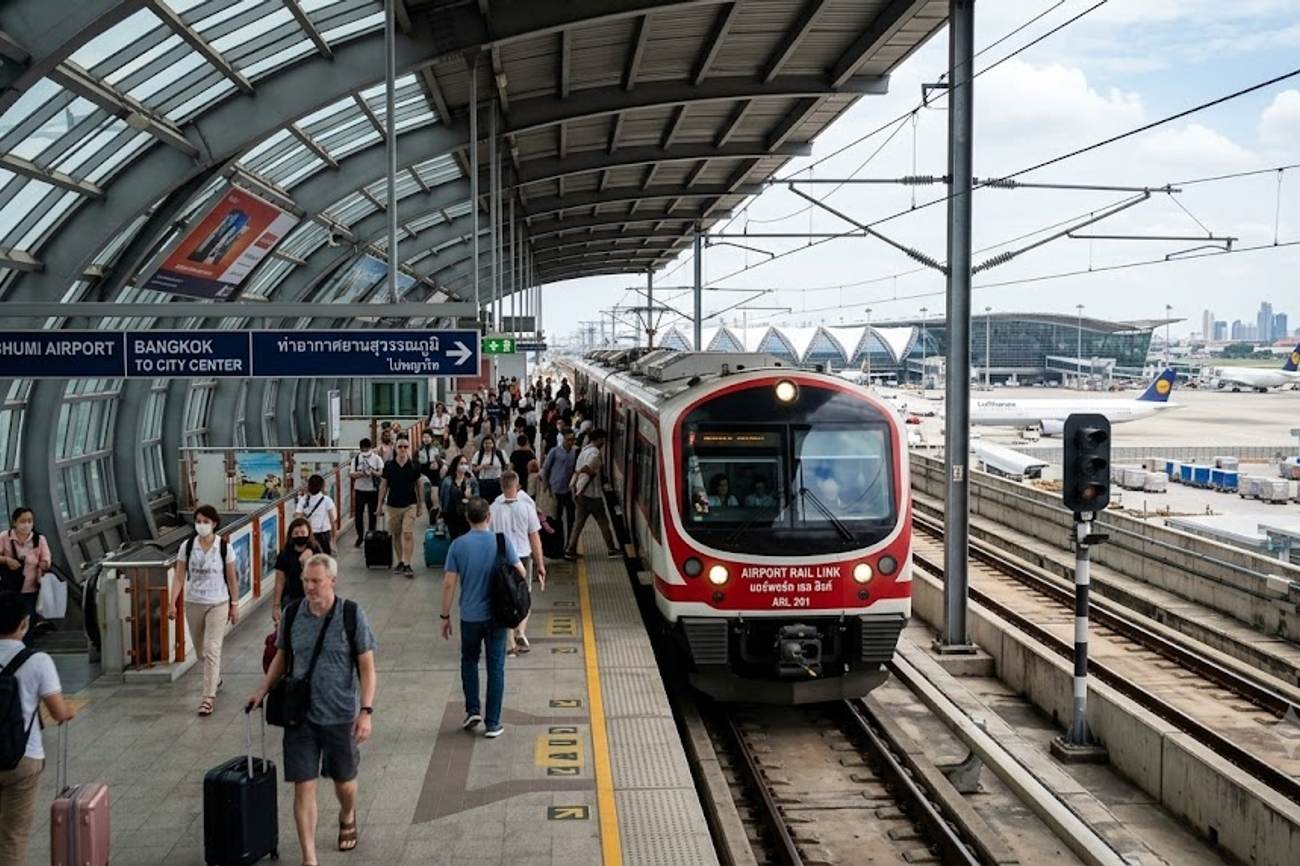
Image generated by AI
The lifeline of Bangkok's airport transit, the Airport Rail Link, has been granted a temporary operational extension until 31 January 2027. This move prevents a potential transport crisis that would have occurred when the previous operating arrangement was set to expire on 30 September 2026.
The Battle for Bangkok's Airport Connectivity
For anyone who has landed at Suvarnabhumi Airport, the rail link is more than just a convenience; it is a shield against the notorious gridlock of Bangkok’s road network. The Thai government's decision to push the service deadline to January 2027 is a strategic pause. It ensures that millions of international arrivals, business travelers, and airport staff aren't suddenly forced into an overstretched taxi fleet or slow-moving buses during a period of contractual uncertainty.
This four-month buffer, stretching from 1 October 2026 through the start of 2027, allows the State Railway of Thailand to resolve complex operational and contractual disputes. While the trains continue to roll, the government is quietly auditing staffing needs and resource allocation. There is a distinct possibility that management will shift to a railway subsidiary to ensure the service doesn't blink during this transition.
The stakes are high because this isn't just about getting to a hotel. The rail link is the primary artery connecting the airport to Phaya Thai station, which serves as the gateway to the city's wider mass transit system. Without it, the pressure on the airport's ground transport would be immense, potentially throttling the very tourism growth Thailand is working to accelerate.
What Makes the Airport Rail Link Different
Unlike the standard BTS Skytrain or the MRT underground, the Airport Rail Link (ARL) operates as a specialized corridor designed for high-volume, long-distance transit. It bridges the gap between the outskirts of the city and the urban core, bypassing the sprawling suburbs that often trap cars for hours.
The current focus has shifted toward fleet reliability. Local commuters and travelers have noted operational hiccups in recent years, prompting a surge in technical repairs and maintenance. The goal is to harden the infrastructure so that the fleet can handle the relentless daily demand of both the tourist surge and the local workforce.
Beyond the immediate commute, this line is a precursor to a much larger vision. It serves as the foundation for the three-airport high-speed railway, a massive project designed to link Don Mueang International Airport, Suvarnabhumi Airport, and U-Tapao Airport. This corridor is intended to integrate Bangkok with the Eastern Economic Corridor, transforming the region into a seamless aviation and rail hub. For the traveler, this means the ARL is not just a shuttle, but a piece of a larger puzzle that will eventually connect the capital to the eastern coast of the country.
Visitor Insider Tips
Navigating Bangkok requires a strategy, especially when moving between the airport and the city center. To make the most of the ARL and the surrounding city, keep these local insights in mind:
Timing the Transit Avoid the "rush hour overlap" between 07:30 and 09:00 and 17:00 and 19:00. While the train avoids road traffic, the platforms at Phaya Thai and the connecting BTS lines become incredibly congested. If you land during these windows, consider grabbing a meal at the airport before heading into the city.
The Phaya Thai Pivot Most visitors take the ARL to the end of the line at Phaya Thai. From here, you can transfer to the BTS Skytrain. To avoid the crowds, follow the signs for the ticket machines carefully; they are often clustered, and queues can be long. If you have a large suitcase, look for the elevators rather than the escalators, as some of the older transfer points have narrow stairs that are difficult to navigate with luggage.
Local Etiquette and Norms On the ARL, you will notice a quiet atmosphere compared to the chaotic energy of the street markets. It is customary to keep noise levels low. When boarding, allow passengers to exit the train completely before attempting to enter. This is strictly observed by local commuters.
Alternative Neighborhoods While many tourists head straight to Sukhumvit, consider basing yourself near the Makkasan station. It is a mid-point on the ARL and offers a quieter experience than the city center while still providing a direct link to the airport and the MRT Blue Line.
Transport Hacks Check the official Tourism Authority of Thailand for updated transit maps. If you plan on using the rail system extensively, look into the integrated payment options available at the stations to avoid queuing for single-trip tokens every time you move.
Cultural and Environmental Context
The expansion and maintenance of the rail network are deeply tied to Thailand's struggle with urban pollution and congestion. Bangkok is frequently ranked among the most congested cities globally. By prioritizing rail over road, the government is attempting to reduce the carbon footprint of the millions of trips made to Suvarnabhumi each year.
However, this modernization comes with friction. The transition toward a high-speed rail network involves complex land use and environmental considerations, particularly as the lines push toward the Eastern Economic Corridor. There is a delicate balance between rapid infrastructure growth and the preservation of local communities that have existed along these corridors for decades.
Furthermore, the reliance on a "temporary extension" highlights the bureaucratic challenges of managing large-scale public utilities in Thailand. The tension between the State Railway of Thailand and private operators often mirrors the broader national conversation about privatization versus state control of essential services. For the visitor, this manifests as occasional service inconsistencies, but for the local, it is a matter of long-term economic stability.
To understand the broader regional impact, travelers can look at the UNESCO World Heritage sites in Thailand, which often face increased pressure as improved transport makes remote cultural landmarks more accessible to mass tourism. The goal is to ensure that the efficiency of the Airport Rail Link doesn't lead to "over-tourism" in fragile heritage zones.
FAQ: Visiting Bangkok 2026-2027
What is the best time to visit Bangkok? The coolest and driest period is from November to February. This coincides with the ARL extension period, making it an ideal time to visit, though you should expect higher crowds during the New Year holidays.
How do I get from Suvarnabhumi Airport to the city center? The Airport Rail Link is the fastest and most reliable method. It takes you directly from the airport to Phaya Thai station in central Bangkok, where you can connect to the BTS Skytrain.
Is the Airport Rail Link safe for solo travelers? Yes, it is highly safe and well-monitored. It is used by thousands of commuters and tourists daily. Security is present at the airport terminal and at major stations.
Do I need a visa to enter Thailand? Visa requirements depend on your nationality. Many countries enjoy visa-exempt entry for tourism. Check the official Thai Embassy or your local consulate for the most current regulations before booking.
The rails are set, the extension is secured, and the gateway to the Land of Smiles remains open.
#BangkokTransport2027 #SuvarnabhumiRail #ThailandTravel2026 #PhayaThaiStation #BangkokInfrastructure
Related Travel Guides
- Auckland Travel Shock As Historic City Rail Link Faces Delays Hours After Landmark Underground Opening
- Thailand Approves Massive Double-Track Railway Network to Boost Tourism and Cross-Border Connectivity
- France’s Cherbourg-Mouguerre Rail Motorway Advances Towards 2027 Opening With Major Railway Upgrades
Disclaimer
This article is for informational and educational purposes only. It does not constitute legal, financial, or professional advice. While we strive to provide accurate and up-to-date information, travel policies, regulations, and conditions change rapidly. Always verify information with official sources before making travel decisions. Nomad Lawyer makes no representations about the accuracy, reliability, completeness, or suitability of the information provided. Readers should consult qualified professionals for advice specific to their circumstances. The views expressed in this article are those of the author and do not necessarily reflect the views of Nomad Lawyer.
Preeti Gunjan
Contributor & Community Manager
A passionate traveller and community builder. Preeti helps grow the Nomad Lawyer community, fostering engagement and bringing the reader experience to life.
Learn more about our team →