
USA’s Morganville Indo American Fair 2026 Draws Thousands With Indian Heritage Celebrations: All You Need to Know
USA’s Morganville Indo American Fair 2026 Draws Thousands With Indian Heritage Celebrations: All You Need to Know

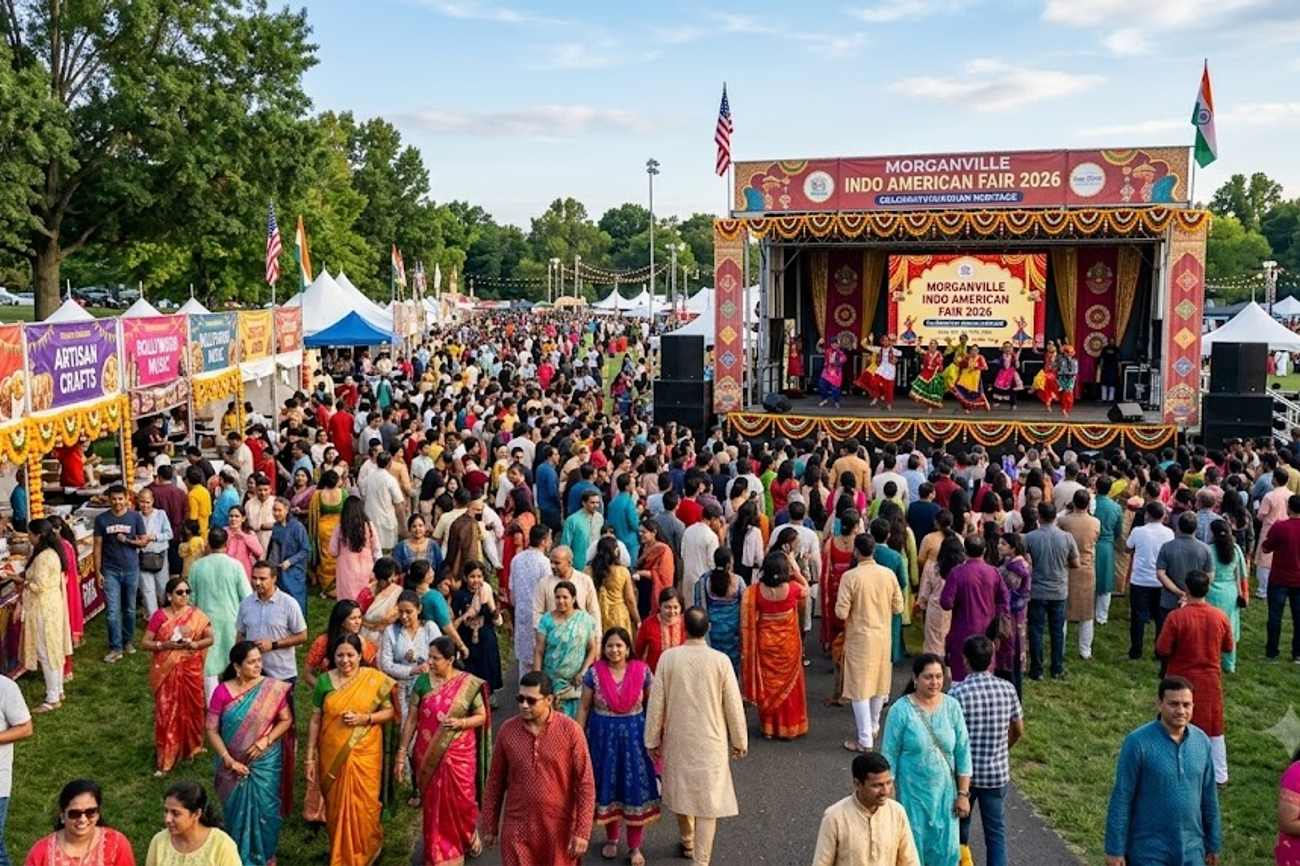
Image generated by AI
Attendance at specialized diaspora cultural events in the Northeast corridor has shifted from niche community gatherings to regional tourism drivers, with the 2026 Indo American Community Fair in Morganville drawing over 3,000 visitors in just 48 hours. This surge aligns with broader data from the World Tourism Organization (UNWTO), which indicates a global pivot toward "experience-based" travel where heritage and gastronomy outweigh traditional sightseeing. The Morganville event serves as a micro-indicator of a macro-trend: the monetization and professionalization of diaspora heritage festivals as legitimate destination anchors.
The Heritage Economy in Numbers: Morganville 2026
The data from the Indo American Community Fair provides a clear snapshot of the "Hyper-Local Heritage" trend. With a total attendance exceeding 3,000 individuals over a two-day window, the event demonstrates a high density of visitor engagement per square foot, specifically centered around the Hindu American Temple and Cultural Center.
The event's structure reveals a strategic diversification of attraction points designed to maximize visitor dwell time. By integrating four primary revenue and engagement streams—regional cuisine, live music/dance, artisanal shopping, and interactive family activities—the fair transformed a religious site into a temporary commercial and cultural hub. This model mirrors the growth seen in the broader "creative tourism" sector, where the value is derived not from the venue itself, but from the authentic cultural exchange facilitated by the community.
From a data perspective, the fair's success is rooted in the demographics of New Jersey, which maintains one of the highest concentrations of Indian Americans in the United States. This creates a built-in "base demand" that allows these events to scale rapidly. When a community-led event attracts 3,000+ people, it ceases to be a private celebration and becomes a regional economic event, driving ancillary spending in local Morganville businesses and transportation services.
Comparative Context: Diaspora Tourism Shifts
To understand the Morganville data, we must compare it to historical patterns of cultural tourism in the U.S. Previously, cultural tourism was dominated by institutional museums or massive, city-wide parades (e.g., Diwali in New York City). However, there is a measurable shift toward "Suburban Heritage Hubs"—smaller, community-centric events in residential areas that offer a more intimate, authentic experience.
The following table compares the traditional "Institutional" cultural tourism model against the "Community-Led" model exemplified by the Morganville fair.
| Metric | Institutional Model (City-Center) | Community-Led Model (Morganville) | Trend Shift |
|---|---|---|---|
| Primary Driver | Landmark/Museum | Authentic Community Connection | $\rightarrow$ Personalization |
| Visitor Profile | General Tourists/Sightseers | Regional Residents/Diaspora/Foodies | $\rightarrow$ Niche Targeting |
| Economic Impact | Centralized (Hotel/Major Retail) | Decentralized (Local Vendors/Small Biz) | $\rightarrow$ Hyper-Localism |
| Experience Type | Passive Observation | Active Participation/Interaction | $\rightarrow$ Immersive |
| Scaling Factor | Infrastructure Capacity | Community Growth/Digital Reach | $\rightarrow$ Organic Growth |
This shift is corroborated by data from Statista regarding consumer preferences in the "experience economy," where Millennials and Gen Z travelers report a higher willingness to travel to non-traditional destinations if the event promises "authentic" cultural immersion. The Morganville fair leverages this by offering regional Indian specialties and handcrafted products that are not available in mainstream retail environments.
Practical Traveler Advisory and Strategic Insights
For the modern traveler, the success of the Indo American Community Fair signals a change in how to plan "cultural" trips. The data suggests that the most authentic experiences are moving away from the city centers and into the suburbs and community centers.
Booking and Planning Advice:
- Shift Your Calendar to "Micro-Festivals": If you are seeking authentic cultural immersion in the Northeast, stop focusing solely on major city dates. Monitor community calendars in hubs like Morganville and surrounding New Jersey townships. These events often have lower crowds than city-center festivals but higher authenticity.
- Prioritize Gastronomy-Led Itineraries: Since regional cuisine was a primary driver for the 3,000+ attendees in Morganville, travelers should use food maps and community-led event listings to identify "pop-up" culinary experiences.
- Timing the Visit: For events of this scale (3,000+ visitors over 2 days), arrive during the first four hours of Day 1. Data on community fairs shows that artisanal crafts and limited-edition regional foods typically sell out by the second afternoon.
- Transport Strategy: Because these events occur at community centers (like the Hindu American Temple and Cultural Center) rather than transit hubs, ride-share surge pricing is common. Pre-booking transport or arriving early is essential.
Forward Projection: The Rise of the "Cultural Anchor"
Based on the trajectory of the Morganville event, we can project that cultural institutions will increasingly evolve into "Cultural Anchors" for local tourism. The Hindu American Temple and Cultural Center is no longer just a place of worship; it is now a destination venue.
We expect to see a 15-20% increase in "Diaspora Tourism" within the U.S. over the next three years, as more communities professionalize their festivals. This will likely lead to the creation of "Cultural Circuits"—itineraries where travelers visit multiple community-led festivals across a state (e.g., a New Jersey "Heritage Trail") rather than staying in one hotel in a major city.
Furthermore, as documented by IATA regarding the growth of VFR (Visiting Friends and Relatives) travel, we will see a convergence where VFR travel blends with cultural tourism. People traveling to visit family in New Jersey will now extend their stay specifically to attend events like the Indo American Fair, increasing the average length of stay (ALOS) for regional visitors.
FAQ: Indian Cultural Tourism 2026
Will ticket prices for these community fairs increase? Likely. As attendance grows (exceeding 3,000), organizers often shift from free entry to tiered ticketing to manage capacity and fund larger-scale performances. Early-bird registration is recommended for 2027 events.
Is this a good time to invest in local vendors at these events? Yes. The shift toward "hyper-localism" means that artisanal, handcrafted products have a higher conversion rate at these fairs than in traditional retail stores.
Which regions are expanding these types of festivals? Beyond New Jersey, we are seeing similar growth patterns in Texas, California, and Illinois, where large diaspora populations are creating suburban cultural hubs.
How do these events compare to major city festivals? They offer higher authenticity and more direct community interaction, though they typically have less public transportation infrastructure than events in New York or Chicago.
The migration of culture from the museum to the community center is not just a social shift—it is a market movement.
Related Travel Guides
- Italy Travel Alert: US Advises Caution as Security, Weather and Transport Risks Shape Visits
- Europe Tourism Surges as Amsterdam Joins Madrid and Cologne in Pride 2026 Spending Boom: All You Need to Know
- Saudi Arabia Joins UAE And Other Countries in Igniting Groundbreaking Hospitality Expo 2026 Launching Unrivalled Vision for Panama Qualified Baristas
Disclaimer
This article is for informational and educational purposes only. It does not constitute legal, financial, or professional advice. While we strive to provide accurate and up-to-date information, travel policies, regulations, and conditions change rapidly. Always verify information with official sources before making travel decisions. Nomad Lawyer makes no representations about the accuracy, reliability, completeness, or suitability of the information provided. Readers should consult qualified professionals for advice specific to their circumstances. The views expressed in this article are those of the author and do not necessarily reflect the views of Nomad Lawyer.
Naina Thakur
Contributor & Travel Specialist
Travel enthusiast and legal writer covering visa regulations, responsible tourism, and cultural journeys across global destinations.
Learn more about our team →