
Italy Travel Alert: US Advises Caution as Security, Weather and Transport Risks Shape Visits
Italy Travel Alert: US Advises Caution as Security, Weather and Transport Risks Shape Visits

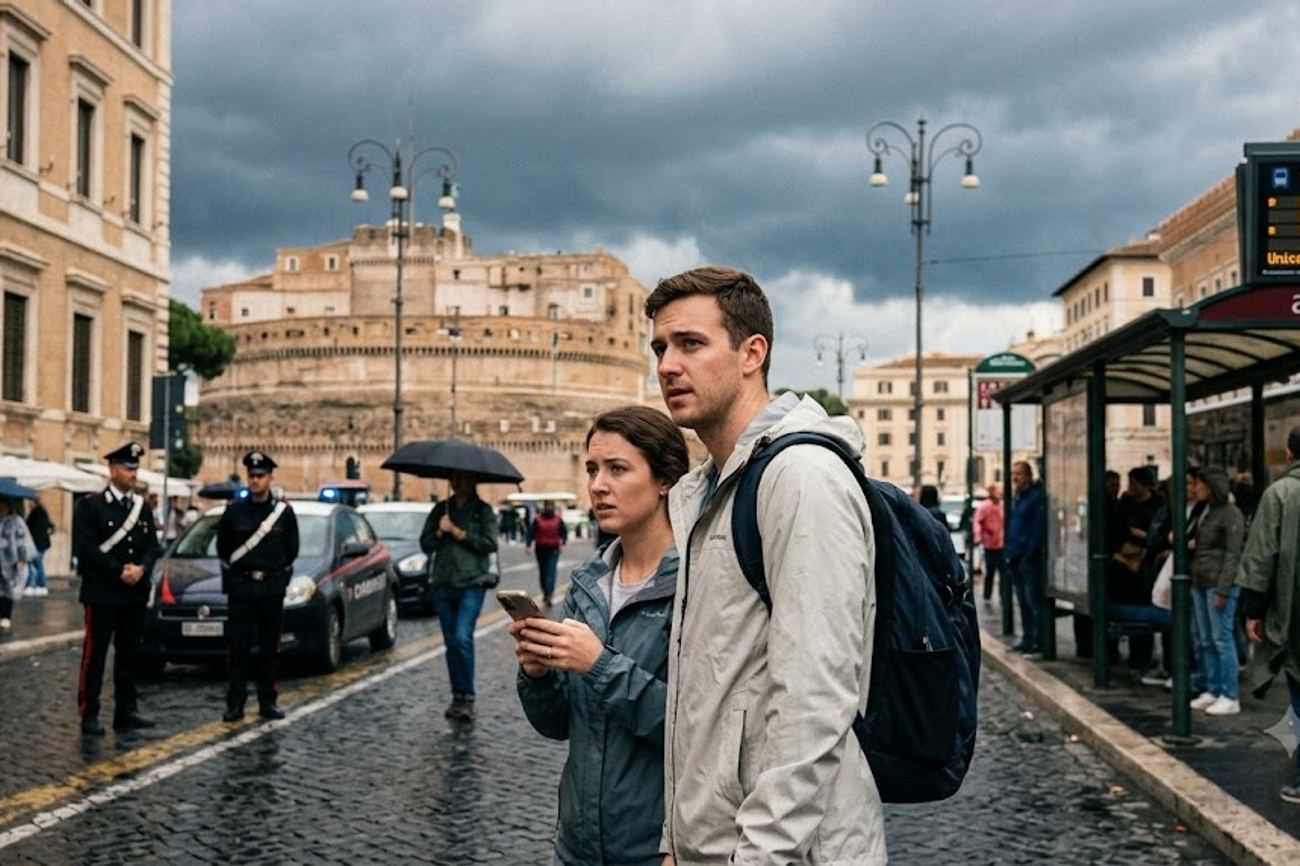
Image generated by AI
Level 2 is the current security designation assigned by the United States Department of State to Italy, a status that mandates "increased caution" for all American citizens visiting the peninsula. This classification does not signal a recommendation to avoid the country, but it serves as a formal regulatory marker that shifts the burden of risk management onto the individual traveler. While Italy remains a global powerhouse in tourism, this advisory highlights a persistent tension between the country's openness to millions of international visitors and the systemic security challenges inherent in managing high-density tourist hubs.
The Mechanics of a Level 2 Advisory
The U.S. Department of State utilizes a tiered system to communicate risk, and the decision to maintain Italy at Level 2 is not a reaction to a single event, but rather a response to a composite of systemic threats. The primary drivers behind this designation are the enduring risks of international terrorism and the prevalence of opportunistic petty crime. These risks are not evenly distributed across the geography of Italy; instead, they are concentrated in "high-friction" zones—areas where large volumes of people converge in confined spaces.
According to the advisory, the specific environments requiring heightened vigilance include airports, hotels, restaurants, shopping districts, and major public events. This suggests that the threat profile is tied to the infrastructure of tourism itself. For the traveler, this means that the very places designed for comfort and leisure—such as a luxury hotel in Milan or a cafe in Rome—are the same locations where security protocols are most critical.
The regulatory framework for entry also adds a layer of complexity. The Italian Ministry of Foreign Affairs and International Cooperation emphasizes that non-Schengen arrivals must maintain rigorous documentation. This includes not only a valid passport but also evidence of financial solvency and clear documentation regarding the purpose of the visit. When a security advisory is active, border officials may exercise more stringent scrutiny regarding these entry requirements to ensure that visitor flows are documented and manageable.
Risk Distribution Across Major Hubs
The security concerns outlined in the U.S. guidance are particularly acute in Italy's "Big Six" tourist destinations. The intersection of historic architecture and modern mass tourism creates logistical bottlenecks that are ideal for both petty crime and larger security breaches.
| Destination | Primary Risk Driver | High-Risk Zones |
|---|---|---|
| Rome | High-density crowds / Terrorism | Colosseum, Vatican City, Termini Station |
| Venice | Extreme pedestrian congestion | St. Mark's Square, Canal-side walkways |
| Florence | Opportunistic theft | Duomo, Uffizi Gallery, Central Market |
| Milan | High-value target theft | Quadrilatero della Moda, Centrale Station |
| Naples | Urban volatility / Petty crime | Historic Center, Port areas |
| Sicily | Natural hazards / Volcanic ash | Mount Etna vicinity, Catania Airport |
In these cities, the "opportunity cost" for criminals is low. The sheer volume of distracted tourists—often focused on landmarks rather than their surroundings—creates a permissive environment for pickpocketing and bag theft. The advisory specifically warns that these incidents occur with little warning, necessitating a proactive rather than reactive approach to personal security.
Expert Analysis: The Logistics of "Increased Caution"
From a journalistic and logistical perspective, the transition to a Level 2 advisory is less about a change in actual danger and more about a change in the legal and insurance landscape of travel. When the U.S. government formalizes a warning, it alters the risk calculus for travel insurance providers and corporate travel departments.
For the independent traveler, the direct consequence is a shift in the "duty of care." By issuing this warning, the State Department effectively notifies the traveler that the environment is inherently unpredictable. The pricing pressure this creates is often seen in the travel insurance market; policies covering "civil unrest" or "terrorism" may see premium adjustments or specific exclusions depending on how the advisory evolves.
Travelers should monitor official safety advisories and entry requirements via the U.S. Department of State to stay informed on security alerts. These guidelines provide critical updates on regional stability and health protocols essential for corporate event planning.
Furthermore, the intersection of security and environmental volatility creates a "compounded risk" scenario. For example, travelers to Sicily must navigate both the security concerns of a Level 2 advisory and the unpredictable aviation disruptions caused by Mount Etna. Volcanic activity can lead to sudden airport closures or flight diversions, which then force travelers into the very "transportation hubs" (like Catania Airport) that the State Department identifies as high-risk areas for security incidents.
The pricing of flights and hotels in Italy remains resilient despite these warnings because the demand for Italy's cultural capital outweighs the perceived risk. However, the operational reality is that the International Air Transport Association (IATA) and local carriers must constantly adapt to both security mandates and the physical disruptions of the Italian landscape, from extreme heatwaves to volcanic ash.
Key Takeaways
- Regulatory Status: Italy is currently at a US State Department Level 2, meaning travelers must exercise increased caution, though travel is not discouraged.
- High-Risk Zones: Security risks are concentrated in transportation hubs, airports, hotels, and crowded tourist landmarks.
- Crime Profile: Petty theft, specifically pickpocketing, is the most frequent risk in Rome, Milan, Florence, and Venice.
- Environmental Hazards: Mount Etna's activity poses a legitimate threat to aviation logistics in Sicily, while extreme summer heat is flagged as a health risk.
- Entry Compliance: Non-Schengen visitors must provide proof of financial means and a valid purpose of travel to avoid entry delays.
FAQ: Italy Travel Safety 2024
Is it safe to visit Italy despite the Level 2 advisory? Yes. A Level 2 advisory is common for many European nations. It does not suggest avoiding the country but encourages visitors to stay alert in crowded areas and follow local authority instructions.
What are the most common crimes targeting tourists in Italy? Pickpocketing and bag theft are the primary concerns, particularly in major railway stations, on public transit (metro/buses), and around world-famous landmarks in cities like Rome and Venice.
How does Mount Etna affect travel to Sicily? Volcanic eruptions can release ash clouds that disrupt flights into and out of Sicily, particularly at Catania Airport. Travelers should monitor airline updates and local aviation notices.
What documents do I need for entry into Italy? You need a valid passport. Depending on your nationality, you may also need a visa, proof of sufficient funds for your stay, and documentation explaining the purpose of your visit.
In the high-stakes world of international tourism, the difference between a seamless journey and a logistical nightmare is often found in the fine print of a government advisory.
Tags: US State Department Level 2, Italy Security Advisory 2024, Mount Etna Aviation Disruptions, Schengen Entry Requirements, Italy Petty Crime Prevention
Related Travel Guides
- Europe Tourism Surges as Amsterdam Joins Madrid and Cologne in Pride 2026 Spending Boom: All You Need to Know
- Saudi Arabia Joins UAE And Other Countries in Igniting Groundbreaking Hospitality Expo 2026 Launching Unrivalled Vision for Panama Qualified Baristas
- Bogotá Redefines Global Corporate Travel: Luxury Venues, Infrastructure & Historic Charm
Disclaimer
This article is for informational and educational purposes only. It does not constitute legal, financial, or professional advice. While we strive to provide accurate and up-to-date information, travel policies, regulations, and conditions change rapidly. Always verify information with official sources before making travel decisions. Nomad Lawyer makes no representations about the accuracy, reliability, completeness, or suitability of the information provided. Readers should consult qualified professionals for advice specific to their circumstances. The views expressed in this article are those of the author and do not necessarily reflect the views of Nomad Lawyer.
Raushan Kumar
Founder & Lead Developer
Full-stack developer with 11+ years of experience and a passionate traveller. Raushan built Nomad Lawyer from the ground up with a vision to create the best travel and law experience on the web.
Learn more about our team →