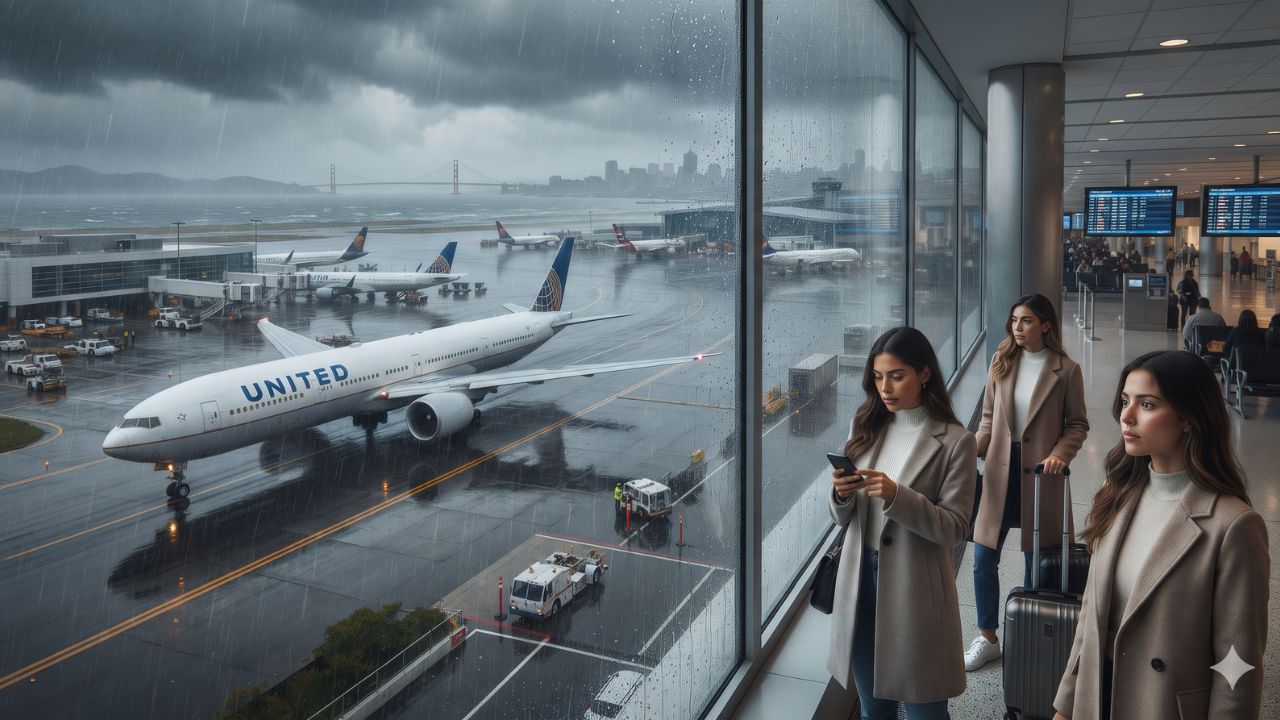
US Flight Delays Top 2,840 as Orlando Leads Airport Gridlock: DOT Refund & Survival Guide

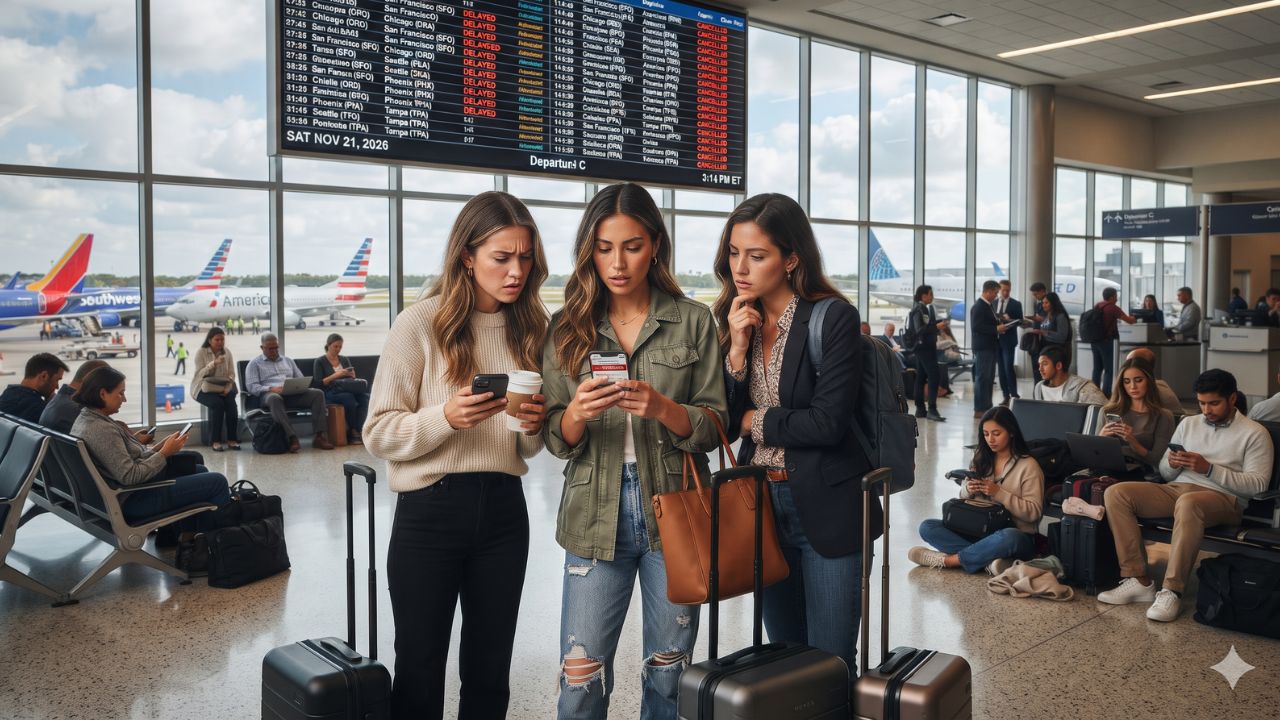
Just three major carriers—Southwest, American, and United—accounted for 1,375 delayed flights on November 20, 2026, driving nearly half of the nation's 2,840 total flight disruptions as Orlando International Airport led all American facilities with 200 delays and a staggering 17% departure failure rate.
According to verified national tracking data compiled from FlightAware and the Federal Aviation Administration (FAA), cascading airspace restrictions, localized convective thunderstorms in Florida, and operational runway realignments in California produced 2,840 domestic and international flight delays alongside 108 outright cancellations. The disruption reached across major holiday gateways, triggering an active FAA ground stop at Seattle’s Boeing Field (BFI) and extended departure delay programs across Tampa, Orlando, and San Francisco. For millions of passengers connecting through these hubs, understanding federal consumer protections—specifically the Department of Transportation's automatic cash refund mandate—is vital to navigating holiday flight irregular operations.
Dissecting the November 20 Flight Disruption Wave
The November 20 operational breakdown reveals how localized weather triggers exponential scheduling strain across point-to-point airline networks. Southwest Airlines absorbed the heaviest single-carrier impact, logging 745 delays and 8 cancellations as its high-frequency network struggled with Florida turnarounds. American Airlines posted 408 delays and 6 cancellations, while United Airlines recorded 222 delays and 20 cancellations.
Simultaneously, regional and commuter operators faced disproportionate schedule collapse due to fleet constraints. Tradewind recorded 21 cancellations and 4 delays, Horizon Air logged 11 cancellations and 30 delays, and Alaska Airlines suffered 9 cancellations and 111 delays. In the Northeast, weather and airspace congestion hit island and regional runways hard: Nantucket Memorial (ACK) recorded 20 cancellations against 2 delays, while Westchester County (HPN) registered 11 cancellations and 11 delays.
The table below breaks down official flight tracking statistics, departure delay rates, and FAA operational advisories across affected carriers and major aviation gateways:
| Air Carrier / Hub Airport | Scheduled Flight Delays | Outright Cancellations | Primary Operational Advisory or Delay Factor | Documented Delay Rate |
|---|---|---|---|---|
| Southwest Airlines | 745 delays | 8 cancellations | Point-to-point aircraft turn delays across Florida and Midwest | Network-wide disruption |
| American Airlines | 408 delays | 6 cancellations | Secondary hub connection friction | Major carrier impact |
| United Airlines | 222 delays | 20 cancellations | Cross-country routing holds | Heavy mainline cancellations |
| Orlando International (MCO) | 200 delays | 4 cancellations | FAA departure delay advisory averaging 30+ minutes | 17% departure delay rate |
| San Francisco International (SFO) | 173 delays | 3 cancellations | FAA advisory averaging 30 minutes; operational runway switch | 9% arrival delay rate |
| Chicago O’Hare (ORD) | 166 delays | 8 cancellations | Midwest metering programs | 5% departure / 6% arrival delay rate |
| Seattle-Tacoma (SEA) & Boeing Field (BFI) | 136 delays (SEA) | 11 cancellations (SEA) | Active FAA Ground Stop at BFI; regional weather | Pacific Northwest holds |
| Phoenix Sky Harbor (PHX) | 135 delays | 5 cancellations | Inter-hub knock-on delays | Desert Southwest transit |
| Tampa International (TPA) | 133 delays | 6 cancellations | FAA departure advisory warning of 90-minute storm delays | Gulf Coast convective storms |
| Harry Reid Las Vegas (LAS) | 117 delays | 8 cancellations | Southwest turnarounds | Western corridor delays |
| Boston Logan (BOS) | 93 delays | 5 cancellations | Northeast regional sequencing | Coastal flow management |
| Philadelphia International (PHL) | 79 delays | 5 cancellations | Airspace metering | Mid-Atlantic bottlenecks |
In Florida, atmospheric instability along the Interstate 4 corridor formed severe thunderstorm squall lines that forced the FAA to issue a departure advisory for Tampa International warning of holds increasing up to 90 minutes. Across the peninsula at Orlando International Airport, ground controllers managed heavy holiday passenger volumes while metering departure corridors, creating average departure holds exceeding 30 minutes that cascaded through evening departure banks.
What Makes Multi-Hub Airspace Cascades Different
Modern airline schedules are calibrated with razor-thin turnaround margins, typically allowing 35 to 45 minutes between an aircraft landing, deplaning, cleaning, boarding, and pushing back. When a primary airport like Orlando (handling over 1,000 daily aircraft movements) experiences a 17% departure delay rate, that aircraft arrives late at its next three destinations.
In a point-to-point carrier model like Southwest Airlines, aircraft do not return to a single mega-hub at night. A Boeing 737 might begin its morning in Baltimore, fly to Orlando, proceed to Nashville, rotate through Chicago Midway, and finish in Denver. If the Orlando segment absorbs a 90-minute thunderstorm delay, the flight crew risks exceeding strict federal duty-time regulations later in the day. Once flight attendants or pilots time out, the airline must cancel downstream flights even if the weather in Chicago or Denver is completely clear.
In San Francisco, the disruption stemmed from airfield geometry rather than severe storms. An operational runway configuration change altered arrival spacing, creating an FAA-monitored 30-minute average departure delay and a 9% arrival delay rate that interrupted transcontinental banks heading east.
Visitor Insider Tips for Beating Holiday Flight Holds
When airspace delays begin multiplying across national tracking boards, passive travelers get stranded. These insider tactics keep your travel itinerary moving:
- Enforce Your DOT Automatic Refund Rights: Under federal rules enacted by the U.S. Department of Transportation, passengers whose domestic flights are delayed by more than three hours—or international flights delayed by more than six hours—are legally entitled to an automatic full cash refund if they choose not to travel. The refund must be credited back to your original payment method within seven business days for credit cards (or 20 calendar days for other methods). You are never obligated to accept airline vouchers or travel credits.
- Understand Airline Weather Obligations: Because thunderstorms in Tampa and FAA traffic management initiatives in Orlando are legally classified as "outside airline control," airlines are not required under federal law to pay for hotel rooms, ground transport, or meals during weather-related delays. Rather than waiting in a 200-person customer service line, open your carrier’s smartphone app to rebook on the next available flight without paying a fare difference.
- Target Morning Schedule Resets: If your flight is delayed past 9:00 PM, rebook immediately onto the first departure the following morning (typically between 5:30 AM and 6:30 AM). Morning flights use aircraft that overnighted at the gate, offering the highest mathematical on-time departure probability before national airspace stacks up.
- Monitor FAA Air Traffic Dashboards in Real Time: Airlines frequently delay updating flight status boards until minutes before boarding. Track ground stops and departure delay programs directly through the FAA Air Traffic Control System Command Center website. If Tampa or Orlando shows an active ground delay program, prepare for downstream connection holds immediately.
- Reroute Around Florida Choke Points: If connecting through Orlando or Tampa during afternoon storm cycles, call your carrier's reservations desk or use airport kiosks to request a routing change through Charlotte, Atlanta, or Dallas, keeping your itinerary outside the Florida convective weather belt.
Cultural and Environmental Context
The November flight breakdown underscores the immense logistical strain placed on the American aviation network heading into peak holiday travel periods. Florida gateways like Orlando and Tampa serve as the world's most concentrated family vacation hubs, handling immense volumes of holidaymakers travelling with young children, elderly family members, and oversized baggage.
When flight delays cascade through these facilities, the emotional and financial toll on families is significant. Crowded boarding areas, long lines at concession stands, and gate changes place exceptional pressure on frontline ground-handling personnel and airport workers, who bear the brunt of passenger frustration during weather disruptions outside their control.
Environmentally, airport departure holds and extended holding patterns generate substantial fuel burn. Hundreds of commercial jetliners idling on taxiways at Orlando, O'Hare, and Tampa burn thousands of pounds of aviation kerosene per hour, releasing localized carbon and particulate emissions into metropolitan air basins while waiting for airspace clearance slots. Air traffic modernization programs seeking to implement trajectory-based operations remain essential to cutting unnecessary ground idling.
FAQ: Managing US Flight Delays and DOT Refund Rights 2026
What are passenger refund rights under DOT rules if a flight is delayed?
If your domestic flight is delayed by more than three hours (or six hours for international routes) and you choose not to travel, you are entitled to a full refund to your original payment method within seven business days for credit card purchases.
Are airlines required to provide hotel rooms during weather delays?
No. Because adverse weather and FAA air traffic control delays are legally deemed uncontrollable events, airlines are not federally required to provide hotel accommodation or meal vouchers.
Which airport experienced the worst flight delays on November 20, 2026?
Orlando International Airport (MCO) led the United States with 200 delayed flights and a 17% departure delay rate, followed by San Francisco (173 delays) and Chicago O'Hare (166 delays).
Which airline had the most delays during the disruption?
Southwest Airlines recorded the highest delay total with 745 delayed flights and 8 cancellations, followed by American Airlines with 408 delays and United Airlines with 222 delays.
When convective weather stacks up Florida runways, knowing your federal passenger rights turns an airport ordeal into a swift, decisive refund.
Related Travel Guides
This article is for informational purposes. Flight routes, passenger regulations, visa rules, and transit advisories are subject to change by airlines and aviation authorities. Readers are advised to verify schedules and travel documentation with relevant carriers and border agencies before departure.
Related Stories
San Francisco SFO Weather Delays: 40 MPH Winds Trigger FAA Ground Stop and 658-Minute Holds
United Airlines Tech Outage Stalls US Departures: Flight Delay Protections, FAA Context, and Passenger Refund Rules