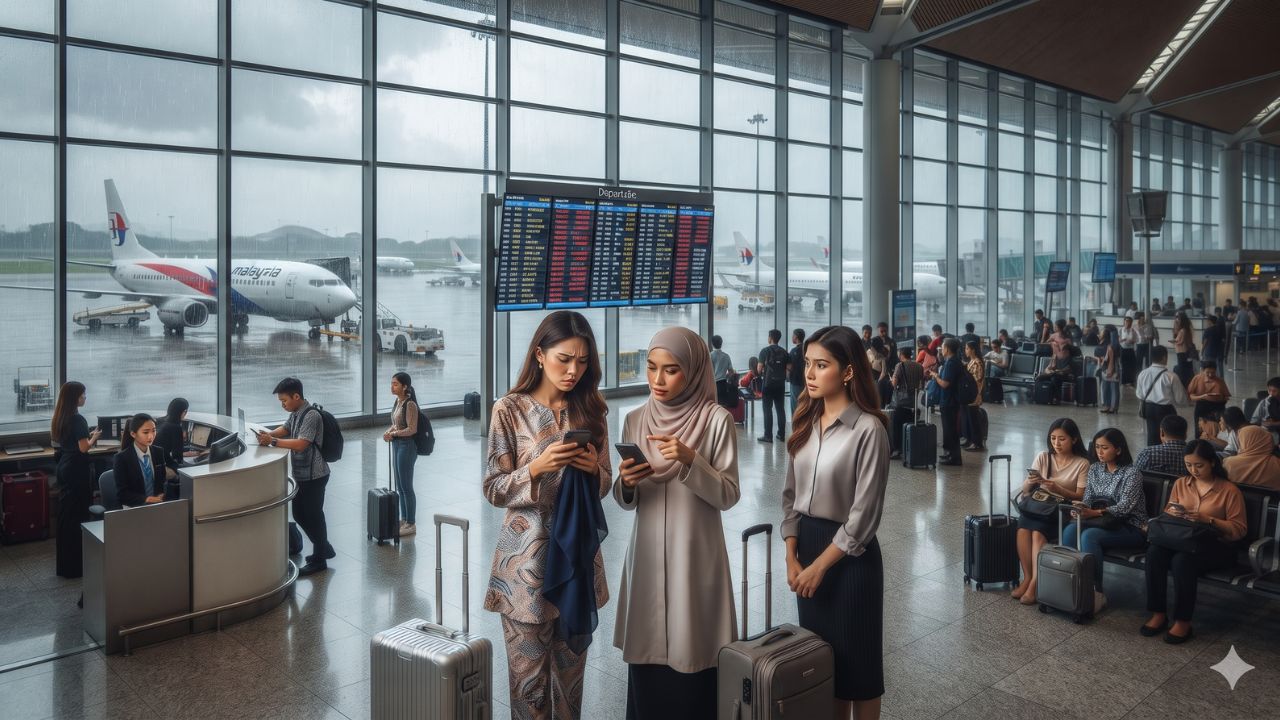
Asia Flight Gridlock: 8,480 Delays and 473 Cancellations as Blizzard and Cyclone Akvan Strike

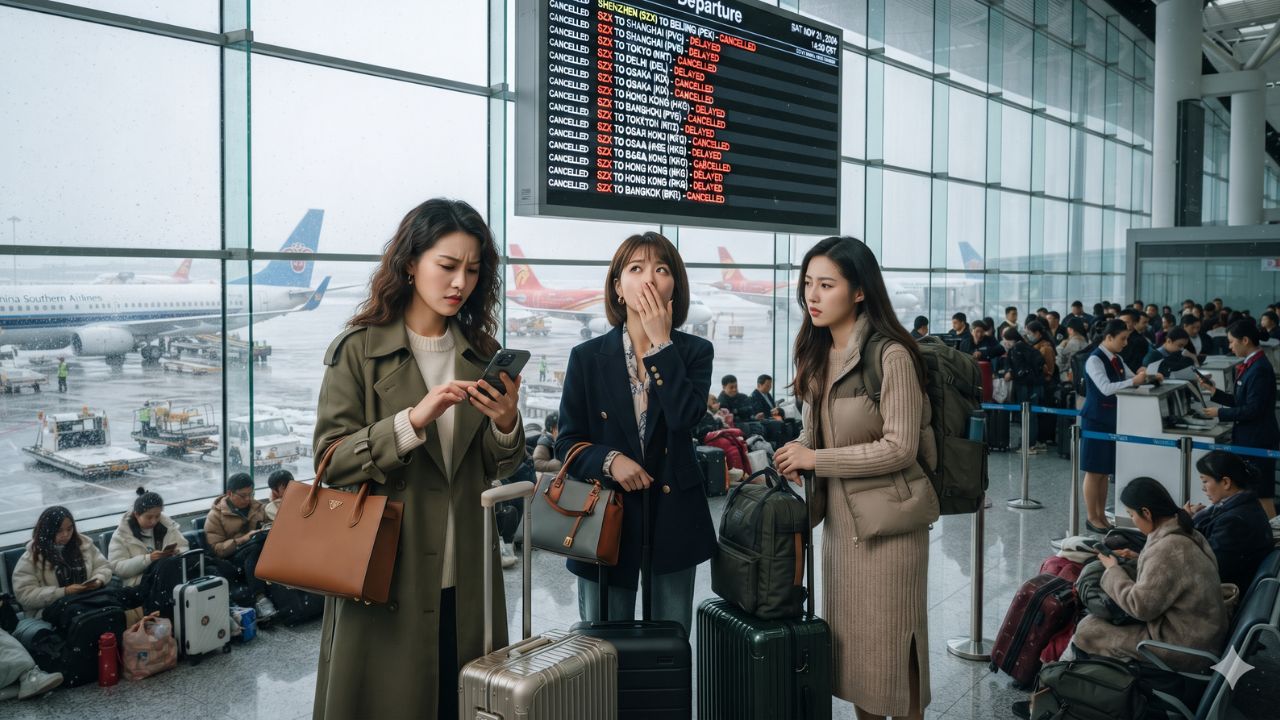
An unprecedented convergence of severe weather fronts and airline operational breakdowns paralyzed trans-Asian air travel on November 21, 2026, generating 8,480 delayed flights and 473 cancellations across 56 airports as Tokyo Haneda absorbed 786 delays and Shenzhen Bao'an led the continent in grounded aircraft.
The sweeping travel crisis stems from three simultaneous disruptions: a punishing winter cold wave across northern and eastern China triggering second-highest-level blizzard warnings; Cyclonic Storm Akvan crashing into eastern India's Odisha coast with 70 to 90 km/h gales; and regulatory fleet groundings in India where carrier SpiceJet operated barely 15 of its 66 scheduled daily winter flights. From the deicing pads of Beijing and Shanghai to connection banks in Bangkok, Manila, and Tokyo, international passengers face extensive missed connections and multi-day rebooking bottlenecks across four distinct Asian aviation zones.
Severe Weather and Airline Distress Spark Continental Disruption
The crisis highlights the fragile interdependence of Asian air routes, where tight multi-leg aircraft rotations allow localized weather events to trigger regional network failures. In East Asia, freezing temperatures and intense snow accumulation forced ground stops across major trunk corridors. Shanghai Pudong logged 548 delays and 16 cancellations, Shanghai Hongqiao absorbed 336 delays and 9 cancellations, while Hangzhou Xiaoshan recorded 367 delays and 13 cancellations. In southern China, Shenzhen Bao'an logged 180 delays alongside 58 cancellations—the highest single-airport cancellation count in Asia—as inbound aircraft from frozen northern hubs failed to materialize.
Across the Bay of Bengal, the India Meteorological Department (IMD) tracked Cyclone Akvan making landfall along the Odisha coastline, lashing regional infrastructure with intense rainfall and high winds. The storm grounded commercial operations across Bhubaneswar's Biju Patnaik International, Kolkata's Netaji Subhash Chandra Bose International (83 delays, 10 cancellations), Visakhapatnam, and connecting departure tracks out of Chennai.
Compounding meteorological havoc, Indian aviation regulator Directorate General of Civil Aviation (DGCA) issued a formal show-cause notice to low-cost carrier SpiceJet. Hamstrung by financial and fleet maintenance constraints, the airline suffered an alarming 61% cancellation rate—logging 73 cancellations against only 5 delays—leaving thousands of domestic and connecting international passengers stranded at Delhi and Mumbai.
Asian Aviation Disruption Breakdown: Worst-Hit Airports and Airlines
Flight tracking metrics compiled from live operations illustrate the geographical concentration of delays and cancellations across 56 regional hubs:
| Airport Hub / Air Carrier | Geographical Zone | Delays Logged (Rate %) | Cancellations Logged (Rate %) | Primary Operational Cause |
|---|---|---|---|---|
| Tokyo Haneda (HND) | East Asia (Japan) | 786 delays | 9 cancellations | Crosswinds, bad weather, and knock-on international delays |
| Shanghai Pudong (PVG) | East Asia (China) | 548 delays | 16 cancellations | Severe winter cold wave, deicing delays, snow alerts |
| Bangkok Suvarnabhumi (BKK) | Southeast Asia (Thailand) | 401 delays | 6 cancellations | High-traffic terminal congestion, late inbound aircraft |
| Hangzhou Xiaoshan (HGH) | East Asia (China) | 367 delays | 13 cancellations | Winter cold wave, regional ground stops |
| Shanghai Hongqiao (SHA) | East Asia (China) | 336 delays | 9 cancellations | Blizzard warnings, deicing queue backlogs |
| Nanjing Lukou (NKG) | East Asia (China) | 282 delays | 4 cancellations | Eastern China trunk route snow congestion |
| Manila Ninoy Aquino (MNL) | Southeast Asia (Philippines) | 284 delays | 7 cancellations | Terminal congestion, airspace capacity limits |
| Beijing Capital (PEK) | East Asia (China) | 259 delays | 7 cancellations | Northern China snow alerts, aircraft rotation delays |
| Tokyo Narita (NRT) | East Asia (Japan) | 253 delays | 4 cancellations | Regional wind shear, international arrival sequencing |
| Mumbai (BOM) | South Asia (India) | 223 delays | 27 cancellations | SpiceJet groundings, domestic network knock-on delays |
| Delhi (DEL) | South Asia (India) | 210 delays | 27 cancellations | Airport passenger advisories, fleet shortages |
| Shenzhen Bao'an (SZX) | East Asia (China) | 180 delays | 58 cancellations | Inbound cancellations from northern blizzards, local rain |
| Bengaluru (BLR) | South Asia (India) | 144 delays | 20 cancellations | Airline schedule collapses, Southern India connections |
| China Eastern Airlines | East Asia (Mainline) | 736 delays (30%) | 26 cancellations (1%) | Heavy mainland China snow delays across hubs |
| IndiGo | South Asia (Mainline) | 460 delays (20%) | 7 cancellations (0%) | Domestic network congestion and cyclone weather holds |
| China Southern Airlines | East Asia (Mainline) | 385 delays (16%) | 1 cancellation (0%) | Trunk route snow delays |
| Air China | East Asia (Flag Carrier) | 300 delays (16%) | 22 cancellations (1%) | Beijing hub snow operations and regional groundings |
| All Nippon Airways (ANA) | East Asia (Japan) | 289 delays (50%) | 5 cancellations (0%) | Half of all scheduled flights delayed by weather |
| SpiceJet | South Asia (Budget) | 5 delays (4%) | 73 cancellations (61%) | Severe fleet maintenance groundings; DGCA show-cause |
| Akasa Air | South Asia (Budget) | 32 delays (13%) | 37 cancellations (15%) | Fleet rotation disruptions |
| Philippine Airlines | Southeast Asia (Mainline) | 73 delays (51%) | 6 cancellations (4%) | Highest delay rate in Asia (51% of scheduled flights) |
In Japan, severe crosswinds monitored by the Japan Meteorological Agency (JMA) slowed terminal acceptance rates across Tokyo Haneda, Narita, Kansai, and Okinawa Naha. In Southeast Asia, Philippine Airlines saw 51% of its flights delayed (73 delays), while Jetstar Asia-Pacific logged 131 delays (33%). In Western Asia, transit bottlenecks at Istanbul (229 delays), Sabiha Gokcen (123 delays), and Dubai International (139 delays, 15 cancellations) intensified as ongoing Middle East transcontinental airspace reroutings forced European flights onto longer southern tracks, eating into turnaround buffers.
What Makes Cross-Asian Flight Cascades Different
International travel across Asia operates through ultra-dense air corridors connecting giant mega-cities. Unlike domestic US travel, where alternative airports often sit within driving distance, international cross-border flights across Asia involve distinct customs regimes, bilateral overflight corridors, and strict slot constraints.
When northern China freezes, trunk routes between Beijing, Shanghai, Guangzhou, and Shenzhen experience immediate air traffic management flow controls. Because wide-body aircraft deployed on domestic Chinese trunk lines frequently rotate directly onto long-haul international routes to Singapore, Bangkok, or London, a two-hour deicing hold in Beijing instantly disrupts onward passengers thousands of miles away.
In India, the situation is exacerbated by airline structural vulnerabilities. With SpiceJet operating barely 15 of its 66 allocated winter slot departures, passengers arriving at Delhi Terminal 1 or Mumbai Terminal 2 find their domestic flights vanished from departure screens, causing them to miss long-haul international flights departing from adjacent international terminals.
Visitor Insider Tips for Navigating Asia Flight Chaos
Navigating wide-scale flight irregular operations across Asian hubs requires decisive self-advocacy and proactive rebooking tactics:
- Audit Aircraft Inbound Tracking via FlightRadar24: Do not trust airport departure display boards during severe weather. Enter your flight number into live tracking apps to pinpoint where your physical aircraft is currently flying. If your inbound plane is stuck on a snow-covered taxiway in Xi'an or Shanghai, your departure from Shenzhen or Bangkok will not depart on time regardless of gate agent statements.
- Avoid High-Risk Carriers During Operational Stress: When booking intra-Indian connections, avoid carriers facing regulatory fleet groundings. SpiceJet's 61% cancellation rate and Akasa Air's 15% cancellation rate leave passengers stranded without reciprocal rebooking agreements. Opt for stable mainline operations like IndiGo or Air India, which absorb delays without dumping entire flight schedules.
- Secure Same-Terminal Transit Hotel Rooms Immediately: If your connection through Tokyo Haneda (786 delays) or Shanghai Pudong collapses after 10:00 PM, do not exit immigration hoping to find a city hotel. Book transit accommodations inside the international terminal (such as Royal Park Hotel at Haneda or the airport transit hotels at Pudong) before thousands of deplaned flyers exhaust available rooms.
- Enforce Indian DGCA Passenger Charter Protections: If your flight in India is cancelled without at least 24 hours' prior notice, the DGCA passenger charter mandates that airlines must provide an alternate flight or a 100% full refund. For passengers who checked in on time and face delays exceeding two to four hours, carriers must provide free refreshments and meals.
- Leverage High-Speed Rail as a China Mainland Backup: If your flight between Shanghai, Hangzhou, Nanjing, and Beijing is cancelled due to runway deicing queues, immediately book China Railway High-Speed (CRH) train tickets via the official 12306 platform. Bullet trains operate on dedicated tracks unaffected by cloud ceilings, reaching 350 km/h and bypassing airport ground stops entirely.
Cultural and Environmental Context
The extreme weather battering Asian aviation hubs reflects accelerating seasonal climate volatility across the continent. Cyclonic storms in the Bay of Bengal are intensifying more rapidly, pushing destructive wind fields deeper into coastal urban centers like Kolkata and Bhubaneswar and threatening fragile estuarine ecosystems in the Sundarbans.
Simultaneously, polar cold air outbreaks across East Asia highlight the immense environmental cost of aviation deicing operations. At airports like Beijing Capital and Shanghai Pudong, ground crews spray tens of thousands of liters of heated propylene glycol onto aircraft wings and tail assemblies every hour during blizzard cycles. Modern airports employ vacuum recovery vehicles to collect spent deicing fluid, preventing chemical runoff into the Yangtze and Yellow River watersheds.
As Asian aviation demand expands toward billions of passengers over the next decade, building climate-resilient infrastructure—including covered deicing stations, automated high-speed snowplow fleets, and interconnected high-speed rail transit hubs—is essential to maintaining regional connectivity during severe weather.
FAQ: Navigating Asian Flight Disruptions 2026
What caused the massive flight cancellations across Asia on November 21, 2026?
Disruptions were caused by severe winter snowstorms in China, Cyclone Akvan striking eastern India with 70–90 km/h winds, and carrier groundings where SpiceJet operated only 15 of its 66 scheduled flights.
Which airport experienced the highest number of flight delays?
Tokyo Haneda International Airport (HND) recorded the highest single-airport delay volume in Asia with 786 delayed flights, followed by Shanghai Pudong with 548 delays and Bangkok Suvarnabhumi with 401 delays.
Which airport had the most cancellations?
Shenzhen Bao'an International Airport (SZX) led all Asian airports in flight cancellations with 58 cancelled flights, driven by knock-on cancellations of inbound flights originating in blizzard-hit northern China.
What should passengers do if their flight in India is cancelled?
Under DGCA regulations, passengers on cancelled flights are entitled to an immediate free seat on an alternate flight or a full cash refund, along with complimentary refreshments if already at the terminal.
Across the winter runways of East Asia and the cyclone-swept coasts of India, tracking inbound airframes before leaving the hotel is the ultimate defense against airport paralysis.
Related Travel Guides
This article is for informational purposes. Flight routes, passenger regulations, visa rules, and transit advisories are subject to change by airlines and aviation authorities. Readers are advised to verify schedules and travel documentation with relevant carriers and border agencies before departure.
Related Stories
Asia Aviation Crisis: Over 4,200 Flights Delayed as Fog, Cyclones, and Airspace Rules Strike Hubs

US Flight Delays Top 2,840 as Orlando Leads Airport Gridlock: DOT Refund & Survival Guide