San Francisco SFO Weather Delays: 40 MPH Winds Trigger FAA Ground Stop and 658-Minute Holds

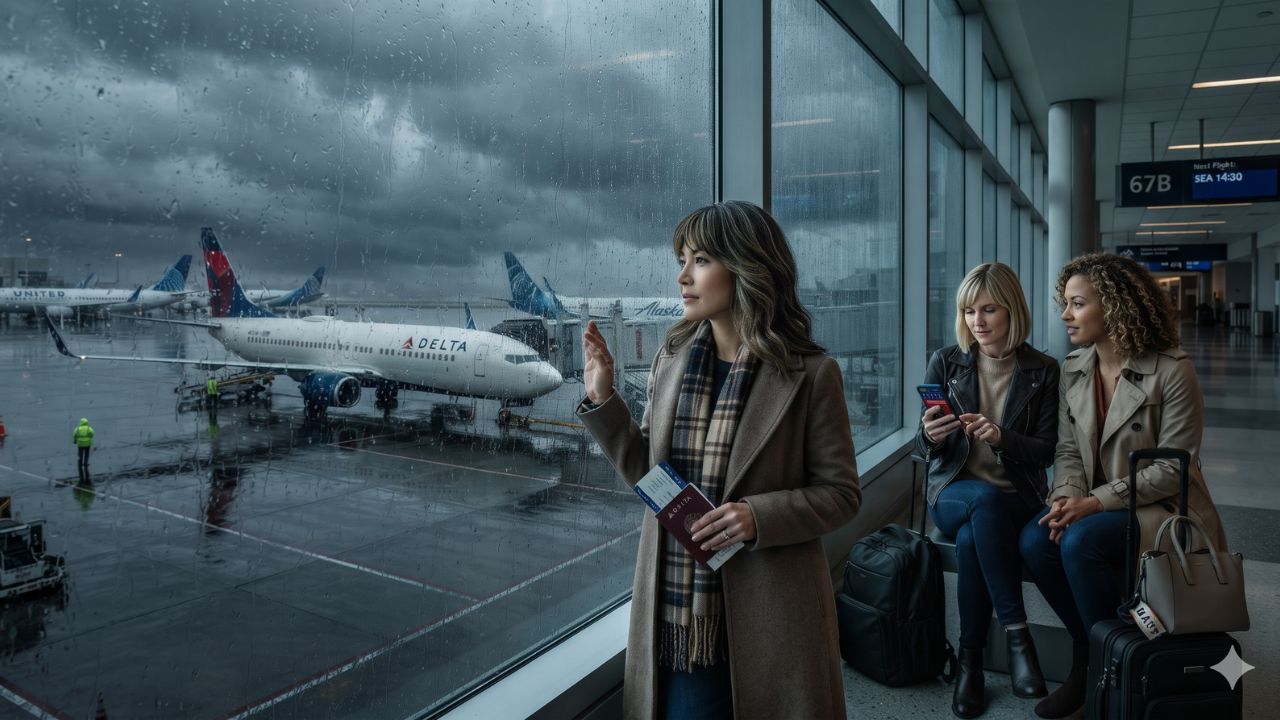
Because San Francisco International Airport's primary parallel runways sit just 750 feet apart, adverse weather winds of 40 miles per hour automatically force air traffic controllers to cancel side-by-side visual approaches—instantly slashing arrival capacity in half and triggering flight holds across North America reaching up to 658 minutes.
On 18 November 2026, an intense Pacific cold front swept across Northern California and northern San Mateo County, bringing strong southerly and southeasterly wind gusts, heavy rainfall, and plunging cloud ceilings. In response to arrival demand severely exceeding safe runway acceptance rates, the Federal Aviation Administration (FAA) placed SFO under a series of ground stops and ground delay programmes. The operational restrictions did not halt every departing flight from SFO itself; instead, they held California-bound aircraft on airport tarmacs spanning seven major US air traffic control regions and three Canadian international departure hubs.
Behind SFO's Runway Geometry and the November 18 Storm Front
San Francisco International Airport operates on an intersecting runway grid extending into San Francisco Bay. Runways 28L and 28R handle the vast majority of commercial arrivals. Under standard clear skies, simultaneous visual approaches allow two aircraft to land side by side. However, Federal Aviation Administration safety regulations require minimum lateral separation of 4,300 feet for independent instrument landings during low-visibility weather, unless specialized precision monitoring radar is active. When heavy cloud layers drop over the coastal mountains and crosswinds exceed operational thresholds, arrivals drop from 60 planes per hour to barely 30.
The meteorological disruption on 18 November began when the National Weather Service flagged approaching squall lines carrying gusts up to 40 mph across San Francisco and the northern peninsula. The FAA issued an initial ground stop advisory between 17:20 and 18:45 UTC, subsequently extending the restriction to 20:00 UTC (12:00 PM Pacific Standard Time). The revised advisory projected an average program delay of 131 minutes, with maximum estimates climbing to 275 minutes.
Once controllers lifted the full ground stop, the FAA transitioned operations into a Ground Delay Programme (GDP) to meter inbound traffic through scheduled departure clearance times. As backlog volume collided with incoming transcontinental and international long-hauls, estimated average delays increased to 186 minutes, with maximum projected wait times topping out at 658 minutes for severely impacted flights.
SFO FAA Ground Stop and Weather Delay Timeline Analysis
Air traffic command logs demonstrate how localized coastal gale patterns quickly cascade into nationwide scheduling friction. The table below details the operational evolution of the 18 November disruption:
| Operational Phase | Time Window (UTC / Local PST) | Primary Traffic Restriction | Geographic Scope / Affected Airspaces | Operational Delay Estimates |
|---|---|---|---|---|
| Initial FAA Ground Stop | 17:20 – 18:45 UTC (09:20 – 10:45 PST) | Complete departure hold on SFO-bound aircraft | Western regional ARTCCs (Oakland, Los Angeles, Seattle) | Baseline metering; aircraft held at origin gates |
| Extended Ground Stop | 18:45 – 20:00 UTC (10:45 – 12:00 PST) | Expanded regional gate holds | Added Salt Lake City, Denver, Albuquerque, Minneapolis ARTCCs; Canadian hubs (YVR, YYC, YEG) | Average delay: 131 minutes; maximum delay: 275 minutes |
| Ground Delay Programme (GDP) | 20:00 UTC onwards (Post-12:00 PST) | Metered EDCT departure slots; diversion recovery | Transcontinental corridors, Midwest feeds, Pacific Northwest routes | Average delay: 186 minutes; maximum delay: 658 minutes |
| Comparative Baseline (Nov 13) | Previous Friday incident | Nationwide FAA telecommunications system outage | 17 of 22 Air Route Traffic Control Centers nationwide | System-wide hardware failure (unrelated to weather) |
Agency records clarify that the 18 November event was purely environmental. It occurred five days after an unrelated nationwide FAA telecommunications failure on 13 November 2026, which destabilized 17 of 22 Air Route Traffic Control Centers nationwide. Aviation officials confirmed no common technological defect linked the two events.
What Makes San Francisco International Airport Vulnerable to Weather Holds
SFO ranks among the busiest transpacific and domestic gateways in North America. According to official airport financial reporting, the facility handled approximately 54.1 million passengers during the fiscal year ending 30 June 2025, marking a 5.5% year-over-year increase. Domestic departures accounted for roughly 19 million passengers, while international terminals processed approximately 8 million travelers.
Because SFO operates near peak runway saturation throughout the mid-morning and late-afternoon connection banks, any reduction in acceptance rates creates exponential stacking. When aircraft bound for San Francisco from Vancouver, Calgary, Edmonton, or regional hubs like Denver and Seattle are held at their departure gates, flight crews risk timing out under strict FAA duty limitations. This causes cancellations that ripple through subsequent flight legs across Asia, Europe, and Latin America.
Furthermore, diversion recovery plans enacted by controllers redirect aircraft carrying low reserve fuel to alternative airfields such as Oakland International Airport (OAK), San Jose Mineta International Airport (SJC), or Sacramento International Airport (SMF), temporarily straining regional ground-handling crews.
Visitor Insider Tips for Managing Bay Area Flight Disruptions
Navigating coastal California during winter storm cycles requires a proactive transit strategy rather than passively waiting at the airport gate:
- Track Airspace Status via Federal Dashboards: Instead of relying solely on airline smartphone notifications, check live airport arrival rates through the FAA Air Traffic Control System Command Center. If SFO is operating under an active Ground Delay Programme with high average delays, your flight from Seattle, Los Angeles, or Denver is likely to receive an Expected Departure Clearance Time (EDCT) hold.
- Utilize Alternative Bay Area Gateways: If your inbound flight is cancelled or delayed past your connection threshold, request immediate re-routing through Oakland (OAK) or San Jose (SJC). Both airports sit outside the tight parallel-runway constraints of SFO and frequently maintain standard arrival rates during southerly wind fronts.
- Use BART to Escape Highway Flooding: During heavy rainfall, US Highway 101 between SFO and downtown San Francisco experiences severe water ponding and traffic congestion. Walk directly to the international terminal station and board BART (Bay Area Rapid Transit) trains, which offer an uninterrupted 30-minute transit into the city center regardless of road gridlock.
- Monitor Airline Schedule Adjustments on SFO Portals: Verify real-time terminal changes, gate assignments, and baggage claim updates directly via San Francisco International Airport. Baggage handling during severe tarmac winds can slow down significantly because ramp operations halt when lightning or sustained gales threaten ground staff safety.
- Protect Connecting International Itineraries: If you are connecting from a domestic regional feed onto an overseas flight departing from the International Terminal, call your airline the moment your first leg shows an EDCT hold. Airlines will often rebook you onto non-stop partner departures from Los Angeles (LAX) or Seattle (SEA) before SFO seats vanish.
Cultural and Environmental Context
The microclimates of San Francisco Bay have shaped maritime and aviation history for over two centuries. The Golden Gate gap and the San Bruno mountain gap funnels marine air, dense advection fog, and Pacific low-pressure systems directly across the airport's mudflat-reclaimed tarmac.
As global winter storm systems grow increasingly volatile, coastal airports face urgent infrastructure dilemmas. SFO has invested heavily in sea-level rise shoreline protection and enhanced runway safety areas. However, physical runway realignment remains environmentally constrained. Expanding runway separation further into San Francisco Bay would require extensive dredging and filling of sensitive tidal wetlands protected under federal wildlife and estuarine conservation acts.
Consequently, airport planners and regional transit authorities continue focusing on airspace modernization and regional high-speed rail connectivity to absorb short-haul California travel demands, preserving scarce airport runway slots for long-haul and international links.
FAQ: Navigating SFO Flight Disruptions 2026
Why does bad weather cause such long delays at San Francisco Airport?
SFO's two main parallel arrival runways are spaced only 750 feet apart. When heavy rain, low clouds, or winds over 40 mph reduce visibility, the FAA halts simultaneous parallel visual landings, cutting arrival capacity by roughly 50%.
How long were flights delayed during the 18 November 2026 ground stop?
The initial ground stop produced estimated average delays of 131 minutes and maximum delays of 275 minutes. The subsequent Ground Delay Programme saw average delays climb to 186 minutes, with maximum estimates reaching 658 minutes.
Does an SFO ground stop mean all departing flights are cancelled?
No. An FAA ground stop primarily holds aircraft scheduled to depart other airports bound for San Francisco. Outbound departures from SFO continue operating based on runway availability and wind orientation.
Which regional airports offer the best backup if SFO is weathered in?
Oakland International Airport (OAK) and San Jose Mineta International Airport (SJC) provide the closest alternatives. Both are accessible via regional highways and public transit networks across the greater Bay Area.
When Pacific gales sweep across San Bruno Mountain, knowing how SFO's runway geography works is the difference between an effortless detour and a 600-minute tarmac hold.
Related Travel Guides
This article is for informational purposes. Flight routes, passenger regulations, visa rules, and transit advisories are subject to change by airlines and aviation authorities. Readers are advised to verify schedules and travel documentation with relevant carriers and border agencies before departure.
Related Stories
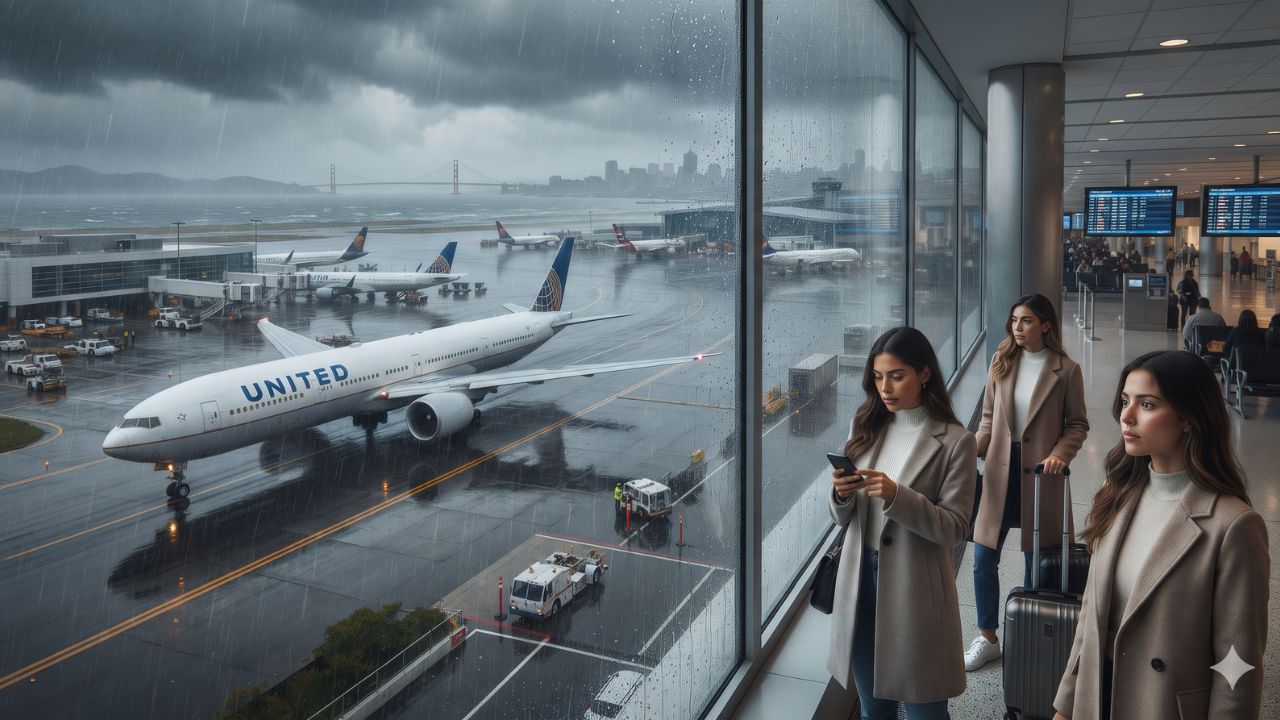
San Francisco Airport Hit by FAA Ground Stop as 40 MPH Gales Push Inbound Delays to 658 Minutes

Middle East Flight Disruptions: Over 880 Delays and 70 Cancellations Hit Dubai, Doha, and Saudi Airports