
US Implements Mandatory Ebola Border Controls and Flight Restrictions for DRC, Uganda, and South Sudan 2026
The US CDC and Department of Homeland Security have mandated enhanced health screenings and temporary entry restrictions for travelers arriving from the Democratic Republic of the Congo, Uganda, and South Sudan due to ongoing Ebola outbreaks.

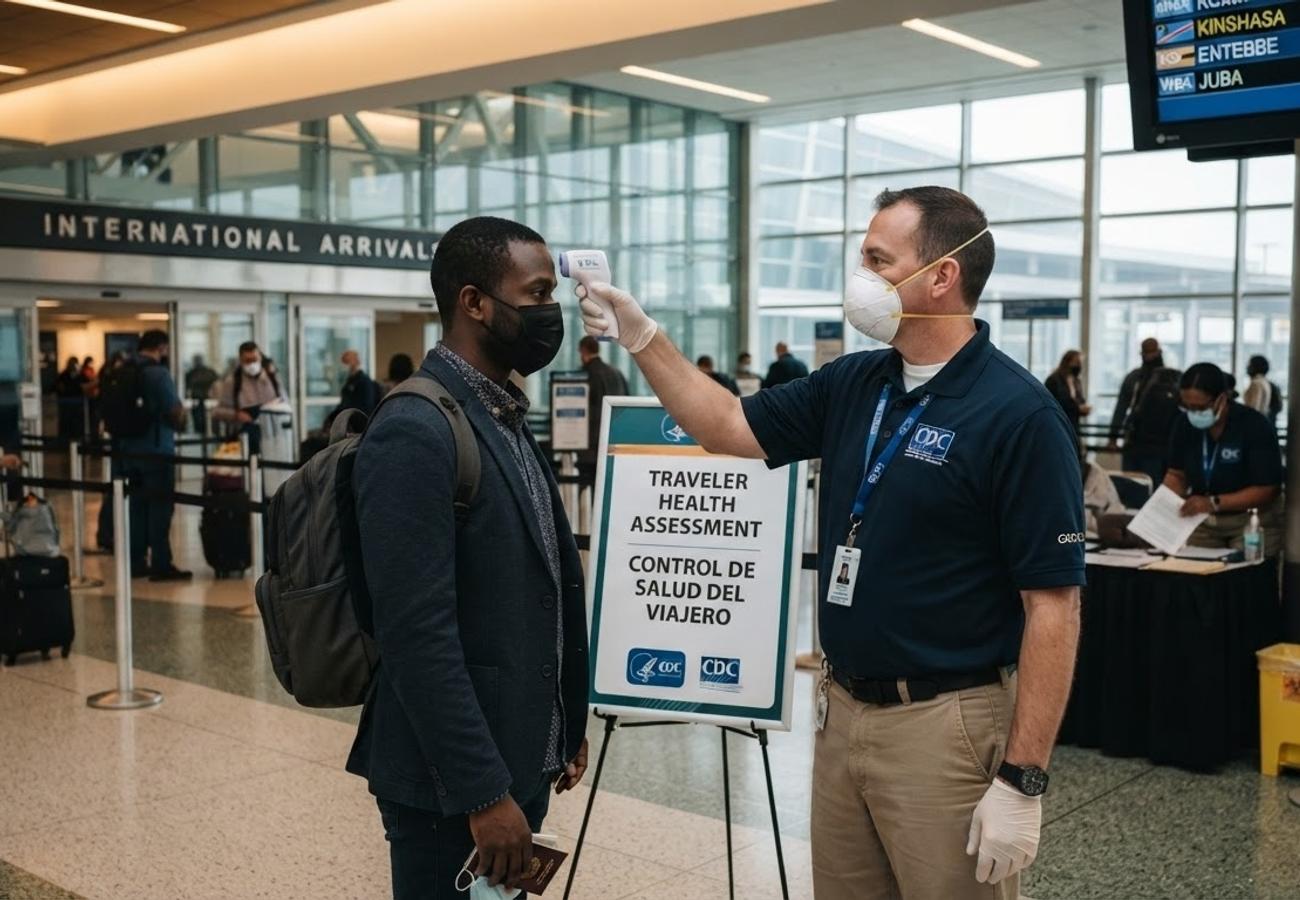
Image generated by AI
The United States has activated stringent public health protocols and temporary entry bans for passengers arriving from Central and East Africa to mitigate the risk of Ebola virus importation.
The US Center for Disease Control and Prevention (CDC), in coordination with the Department of Homeland Security, is enforcing mandatory health screenings and monitoring for all travelers who have recently visited the Democratic Republic of the Congo (DRC), Uganda, and South Sudan. While officials maintain that the overall risk to the general public remains low, the persistent outbreak in the DRC has necessitated a rigid border security framework.
Current Entry Restrictions and Screening Protocols
The severity of restrictions varies by country of origin. Travelers arriving from the Democratic Republic of the Congo face the most stringent barriers. Foreign nationals who have been in the DRC within the previous 21 days are currently subject to temporary entry restrictions. US citizens and eligible travelers are permitted entry but must undergo enhanced public health procedures.
For those arriving from Uganda or South Sudan, the CDC requires entry through specifically designated US airports. These hubs are equipped to handle enhanced public health screenings, which include:
- Comprehensive health assessments.
- Detailed reviews of travel history.
- Mandatory guidance on post-arrival symptom monitoring.
Post-Arrival Health Mandates
A critical component of the current border strategy is the 21-day health monitoring window. Any traveler who has been in the affected regions must monitor their health for 21 days after departure.
The CDC has identified the following symptoms as primary red flags:
- Fever and severe headache.
- Muscle pain, vomiting, and diarrhea.
- General weakness.
- Unexplained bruising or bleeding.
Individuals developing these symptoms are instructed to isolate immediately and contact public health authorities before attempting to visit a medical facility to prevent secondary transmission.
Regional Status Update: Uganda vs. DRC
There is a notable divergence in the health status of the affected nations. Uganda officially declared the end of its latest Ebola outbreak on 28 July 2026. This announcement followed the completion of the World Health Organization’s (WHO) mandatory 42-day monitoring period without new cases.
Despite Uganda's recovery, the DRC continues to battle a significantly larger outbreak. Consequently, the CDC continues to classify the entire DRC and Kampala, Uganda, as areas requiring additional traveler assessment.
Critical Aviation and Travel Data
Primary Departure Hubs for Affected Regions
- DRC: N’djili International Airport (Kinshasa)
- Uganda: Entebbe International Airport
- South Sudan: Juba International Airport
Regional Currency Reference
| Country | Currency |
|---|---|
| Democratic Republic of the Congo | Congolese Franc (CDF) |
| Uganda | Ugandan Shilling (UGX) |
| South Sudan | South Sudanese Pound (SSP) |
| United States | US Dollar (USD) |
Timeline of Regulatory Actions
| Date | Event |
|---|---|
| 18 May 2026 | CDC introduces enhanced Ebola travel measures and entry restrictions |
| 22 May 2026 | Enhanced screening procedures commence at designated US airports |
| 28 July 2026 | Uganda declares Ebola outbreak over (post 42-day WHO period) |
| August 2026 | CDC maintains measures due to ongoing DRC transmission |
Why This Matters: Industry Analysis
From a logistical perspective, these measures signal a shift toward "targeted containment" rather than blanket travel bans. For travelers on these routes, the real impact is the loss of flexibility regarding port of entry; you can no longer choose your arrival airport based on convenience, but must use CDC-designated hubs.
Our analysis of the current flight data suggests that the 21-day monitoring period creates a significant "health liability window" for international business travelers and consultants. The requirement to isolate upon the onset of symptoms—without first visiting a clinic—is a high-friction protocol designed to protect US healthcare infrastructure from accidental contamination.
Furthermore, the fact that Kampala remains under assessment despite Uganda's national "outbreak over" status indicates that the CDC is prioritizing regional contagion risks over official national declarations.
Forward Outlook
Expect these restrictions to remain in place as long as the DRC outbreak persists. Travelers should anticipate that other destination countries may implement similar mirrored restrictions. Until the DRC completes a WHO-verified monitoring period similar to Uganda's, the "designated airport" requirement will likely remain a permanent fixture for East African transit.
Travelers are urged to verify current entry requirements 48 hours prior to departure.
Related Travel Guides
Disclaimer
This article is for informational and educational purposes only. It does not constitute legal, financial, or professional advice. While we strive to provide accurate and up-to-date information, travel policies, regulations, and conditions change rapidly. Always verify information with official sources before making travel decisions. Nomad Lawyer makes no representations about the accuracy, reliability, completeness, or suitability of the information provided. Readers should consult qualified professionals for advice specific to their circumstances. The views expressed in this article are those of the author and do not necessarily reflect the views of Nomad Lawyer.
Preeti Gunjan
Contributor & Community Manager
A passionate traveller and community builder. Preeti helps grow the Nomad Lawyer community, fostering engagement and bringing the reader experience to life.
Learn more about our team →