
Sedona and Four US National Parks Define Geological and Cultural Tourism
Five US destinations (Sedona, Grand Canyon, Yellowstone, Hawaii Volcanoes, Mesa Verde) lead geotourism and Native American co-stewardship initiatives.

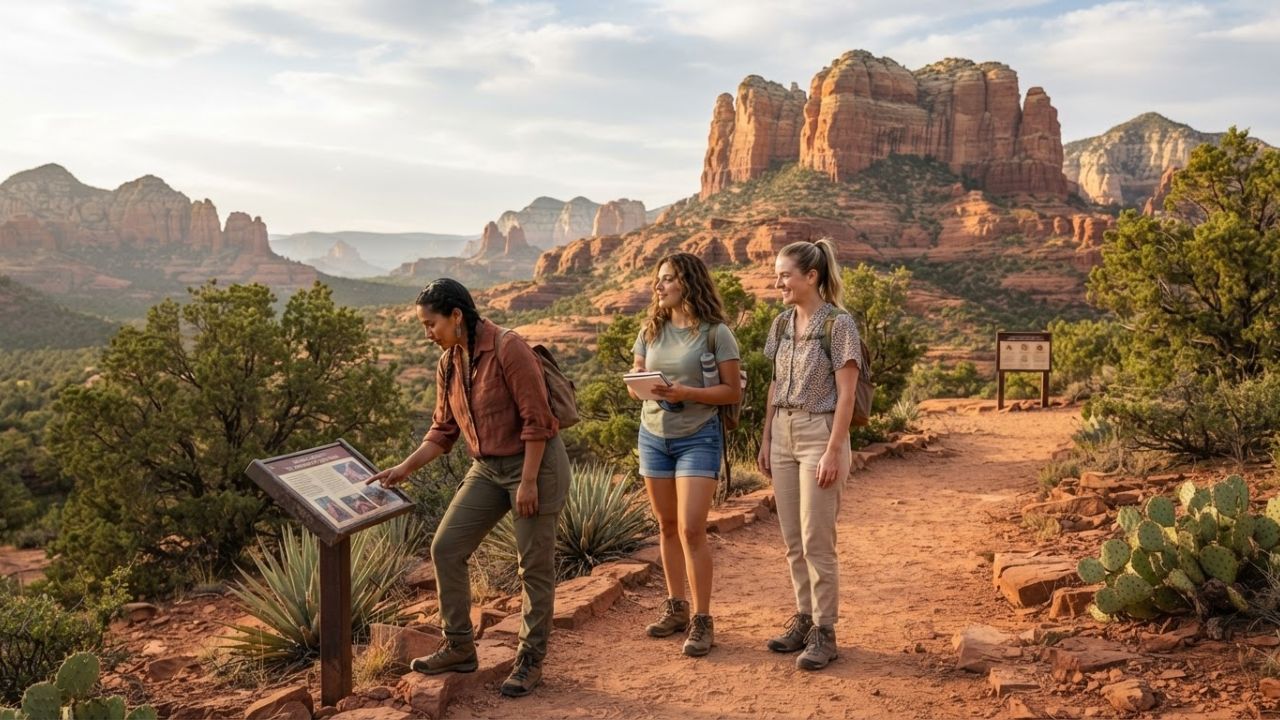
Image generated by AI
Geological and cultural tourism has emerged as a major contributor to regional economies, with five iconic U.S. destinations leading sustainable public land conservation and Native American co-stewardship.
Integrated Heritage Geotourism Shapes Public Land Conservation
Geological and cultural tourism has emerged as a major driver of sustainable economic growth across North American public lands. Coordinated by the National Park Service (NPS) and the U.S. Forest Service (USFS), this management model integrates the study of Earth's natural formations with the protection of Native American heritage sites. This approach is supported by historic federal policies, including the Antiquities Act of 1906, the National Park Service Organic Act of 1916, and the Wilderness Act of 1964, which safeguard public lands from unregulated exploitation.
Five premier U.S. destinations illustrate this integrated model:
- Sedona and Red Rock Country (Arizona): Located in the Coconino National Forest, Sedona's sandstone cliffs expose Permian and Pennsylvanian depositional environments dating back 275 million years, featuring the Schnebly Hill, Supai, Hermit Shale, Coconino Sandstone, and Kaibab Limestone formations. The region includes Sinagua heritage sites (1100 to 1400 CE), such as the V-Bar-V petroglyphs (1,000+ engravings) and Palatki/Honanki cliff dwellings, funded via the Red Rock Pass fee program.
- Grand Canyon National Park (Arizona): Exposes nearly two billion years of Earth history carved by the Colorado River (277 miles long, 18 miles wide, over a mile deep). The park recognizes 11 Associated Tribes and implements Departmental Order 3403 co-stewardship agreements. The historic 1932 Desert View Watchtower has been repurposed into an Inter-tribal Cultural Centre.
- Yellowstone National Park (Wyoming/Montana/Idaho): Established in 1872, the 2.2-million-acre park features the Yellowstone Caldera and geothermal wonders like Old Faithful and Grand Prismatic Spring. It maintains cultural ties to 27 Native American tribes and manages wild bison under the Interagency Bison Management Plan, relocating brucellosis-free bison to tribal lands.
- Hawaiʻi Volcanoes National Park (Hawaiʻi): Protects active shield volcanoes Kīlauea (Halemaʻumaʻu Crater) and Mauna Loa. The region features Nāhuku (a 500-year-old lava tube) and the Puʻu Loa Petroglyphs (23,000+ stone carvings). A disaster recovery project, following the 2018 eruptive sequence, is rebuilding infrastructure in geologically stable areas guided by Native Hawaiian cultural protocols.
- Southwestern Canyon Complexes (Mesa Verde & Chaco Culture): Chaco Culture (New Mexico) contains sandstone Great Houses (like Pueblo Bonito) built between 850 and 1250 CE, featuring solar alignments like the Sun Dagger petroglyph at Fajada Butte. Mesa Verde (Colorado) preserves over 600 alcove cliff dwellings (like Cliff Palace and Spruce Tree House) built in sandstone cliffs during the late 12th and 13th centuries.
Annual Economic Impact of Geotourism
| Geotourism Destination | Annual Recreation Visitors | Gateway Economic Output (USD) |
|---|---|---|
| Sedona / Coconino National Forest | 3.5 million – 4.0 million | $1.2 Billion |
| Grand Canyon National Park | 4.7 million – 5.0 million | $1.0 Billion |
| Yellowstone National Park | 4.5 million – 4.8 million | $830 Million |
| Hawaiʻi Volcanoes National Park | 1.6 million – 1.8 million | $170 Million |
| Mesa Verde & Chaco Culture National Parks | 500,000 – 600,000 | $75 Million |
Native American Co-Stewardship and Ecological Resource Preservation
For the traveler, the real impact of integrated geotourism is the opportunity to learn about Earth history and ancestral heritage directly from descendant communities. Involving Native American educators, park rangers, and cultural ambassadors in presenting history moves visitor services beyond static museum panels to living first-person stories, helping travelers appreciate the sacred values of protected terrains.
The National Travel and Tourism Office (NTTO) and the U.S. Bureau of Economic Analysis (BEA) highlight that outdoor recreation and heritage travel account for 2.2% of current-dollar Gross GDP, with real gross output exceeding $1.1 trillion nationwide. Over 35% of all overseas leisure tourists include visits to national parks on their itineraries. In addition, the National Park Service Social Science Program reports that national parks receive over 320 million visits annually, supporting 370,000 jobs and generating over $50 billion in total economic output (including $24 billion in direct gateway visitor spending within 60 miles of boundaries). Relocating tourism spending to gateway communities helps diversify rural economies away from extractive resource development, protecting natural ecosystems.
Local Insider Tips for Respectful Geotourism in the United States
To make the most of your journey and enjoy these public lands comfortably, keep these practical visitor tips in mind:
- Identify Favorable Off-Peak Windows: Visit popular sites like the Grand Canyon or Yellowstone during the shoulder seasons of late spring (May) or early autumn (September to October) to avoid summer crowds and secure reservation slots. For Sedona, winter visits (December to February) offer quiet trails and crisp desert air.
- Observe Regional Etiquette and Safety Rules: Always stay on designated wooden boardwalks in Yellowstone's thermal basins and follow marked trails in Sedona to protect fragile biological soil crusts. Respect Native American cultural privacy by not photographing ceremonial dances or touching ancient sandstone rock art.
- Savor Local Dining Specialties: Support gateway community businesses. Try local specialties like Bison Burgers or huckleberry-flavored desserts in Wyoming gateway towns. In Sedona, try dishes made with locally harvested prickly pear cactus fruit at independent diners.
- Explore Under-the-Radar Highlights: Instead of only queuing for Old Faithful in Yellowstone, explore the quiet hydrothermal features of the West Thumb Geyser Basin. In Sedona, take a day trip to explore the petroglyph panels at the V-Bar-V Heritage Site along Beaver Creek.
Long-Term Outlook for Sustainable Public Land Management
In the long run, the growth of geotourism and heritage preservation highlights a wider policy shift toward joint federal and tribal resource management. Under Joint Secretarial Order 3403, federal agencies like the National Park Service and the U.S. Forest Service are required to incorporate Indigenous Traditional Ecological Knowledge (ITEK) into environmental plans and visitor services.
To manage increasing visitation, public land managers will continue to expand Timed-Entry reservation systems, zero-emission shuttle fleets, and carrying-capacity frameworks through 2035. This coordinated focus on climate-resilient infrastructure and tribal co-stewardship will continue to protect fragile geological structures and cultural landmarks, ensuring they remain preserved for future generations.
Related Travel Guides
Disclaimer
This article is for informational and educational purposes only. It does not constitute legal, financial, or professional advice. While we strive to provide accurate and up-to-date information, travel policies, regulations, and conditions change rapidly. Always verify information with official sources before making travel decisions. Nomad Lawyer makes no representations about the accuracy, reliability, completeness, or suitability of the information provided. Readers should consult qualified professionals for advice specific to their circumstances. The views expressed in this article are those of the author and do not necessarily reflect the views of Nomad Lawyer.
Raushan Kumar
Founder & Lead Developer
Full-stack developer with 11+ years of experience and a passionate traveller. Raushan built Nomad Lawyer from the ground up with a vision to create the best travel and law experience on the web.
Learn more about our team →