
Dallas Overtakes US Coastal Cities in Leisure Travel Demand and Affordability
Dallas rises to No. 8 in Resonance Best Cities list, driven by affordability, record DFW Airport volumes, and preparations for the 2026 FIFA World Cup.

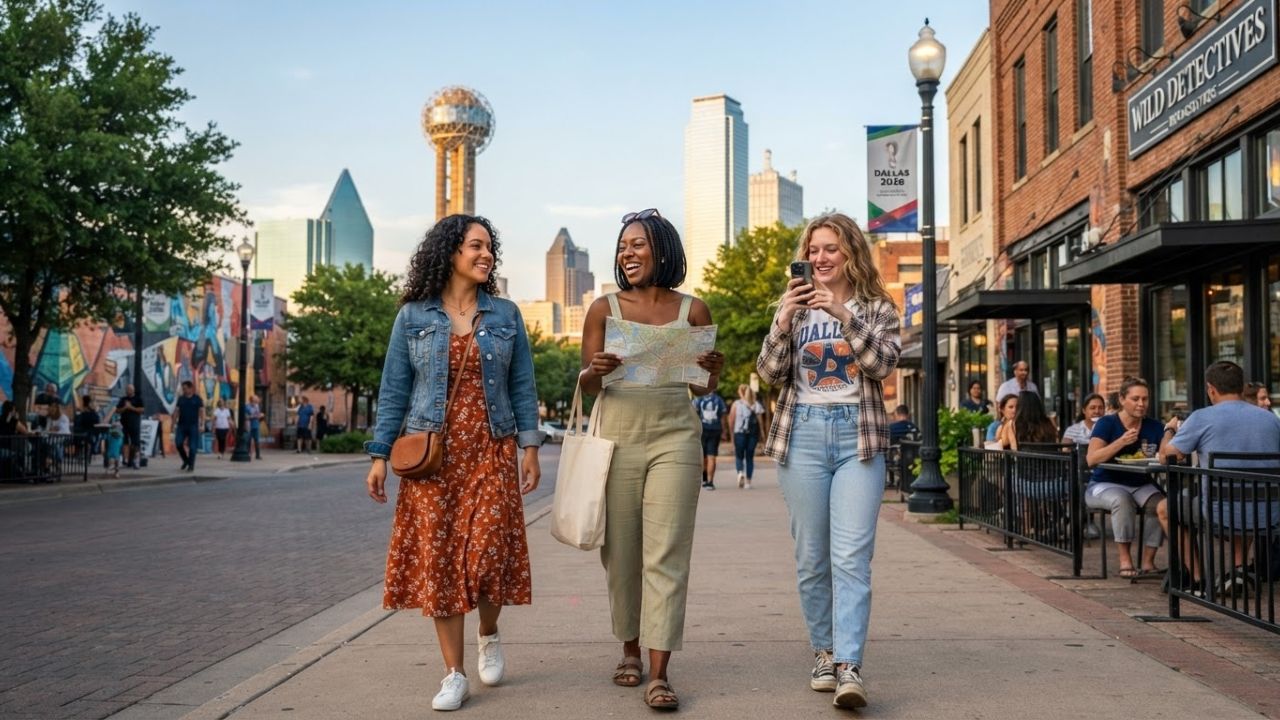
Image generated by AI
Driven by exceptional affordability and preparations to host nine 2026 FIFA World Cup matches, Dallas has climbed to No. 8 in Resonance Consultancy's national rankings, outperforming all other Texas cities.
Dallas Rises to No. 8 on Resonance Best Cities List
Dallas has established itself as one of the top leisure destinations in the United States, outperforming traditional coastal markets. According to the 2026 "America's Best Cities" report published by Resonance Consultancy, Dallas has risen to the No. 8 position nationwide, up from 14th place in 2025. This ranking places Dallas higher than regional rivals Houston and Austin. Additionally, Dallas ranked third nationally for the best job opportunities.
This growth is supported by key travel and infrastructure metrics:
- DFW Airport Volumes: In 2025, Dallas Fort Worth International Airport (DFW) handled 85.7 million passengers. International traffic rose by 1.8 percent to exceed 12.7 million passengers. The airport is currently executing a $12 billion "DFW Forward" capital construction plan and manages an annual cargo volume exceeding 858,000 U.S. tons. Ken Buchanan, DFW's Executive Vice President, noted that these upgrades ensure DFW remains a premier global transit point.
- Visitor Spending and Economic Impact: A benchmark 2022 study by Visit Dallas and Tourism Economics showed that travel generated $9.6 billion in total economic impact, including $6 billion in direct visitor spending. This generated $600 million in state and local tax revenues, representing an average tax savings of roughly $1,203 per household in Dallas and generating over $3.1 billion in direct income for local residents.
- Leisure Tourism Growth: Dallas welcomed 27.5 million visitors in 2023, representing a 5% increase from the previous year. Visitor spending reached over $7.34 billion, with overnight travelers spending an average of $227 per day.
- Hotel Development: During the first quarter of 2025, the local hotel pipeline showed over 4,091 hotel rooms under construction in the Dallas metroplex, helping prevent price inflation.
- FIFA World Cup 2026: AT&T Stadium in Arlington will host nine games, including a semi-final match, acting as a major catalyst for international inbound travel.
Dallas Tourism and Infrastructure Metrics
| Metric Category | Verified Statistical Data |
|---|---|
| Resonance Best Cities Rank (2026) | No. 8 nationwide (Up from 14th in 2025) |
| DFW 2025 Passenger Volume | 85.7 million passengers |
| DFW International Passenger Growth | 1.8 percent (Exceeding 12.7 million travelers) |
| DFW Forward Capital Plan Cost | $12 billion |
| DFW Annual Cargo Volume | Exceeding 858,000 U.S. tons |
| 2022 Total Economic Impact | $9.6 billion (Direct visitor spend: $6 billion) |
| Tourism-Generated Tax Revenue | $600 million (Tax savings of $1,203 per household) |
| Direct Resident Income Generated | Over $3.1 billion |
| 2023 Annual Visitor Volume | 27.5 million visitors (5% year-over-year growth) |
| 2023 Total Visitor Spending | Over $7.34 billion (Daily overnight spend: $227) |
| Hotel Pipeline (Q1 2025) | Over 4,091 hotel rooms under construction |
| 2026 FIFA World Cup Scope | 9 games hosted at AT&T Stadium (including a semi-final) |
| U.S. Travel Spending Forecast (2026) | $1.37 trillion (Leisure: $909 billion; Business: +0.8% growth) |
| U.S. Travel Spending Forecast (2027) | $1.42 trillion |
Investing in Regional Arts Districts and Sustainable Urban Planning
For the traveler, the real impact of Dallas's rebranding is the opportunity to explore rich cultural settings affordably, bypassing high-cost coastal gateways. By investing in public spaces and community-driven events, Dallas allows visitors to direct their travel budgets toward independent galleries, local culinary venues, and neighborhood merchants.
The Texas Economic Development & Tourism office and Visit Dallas emphasize that sustainable urban planning is vital for managing tourism growth. Redevelopment projects like the Kay Bailey Hutchison Convention Center are designed to prioritize pedestrian access and minimize congestion. Decentralizing the tourist footprint across northern suburbs (such as Denton, Lewisville, and McKinney) ensures that economic benefits are distributed equitably, supporting small business owners and preserving regional heritage.
Local Insider Tips for Experiencing Dallas Affordably
To make the most of your journey and enjoy these cultural attractions comfortably, keep these practical visitor tips in mind:
- Identify Favorable Off-Peak Windows: Visit Dallas during the shoulder seasons of spring (March to May) or autumn (September to November) to enjoy mild temperatures and avoid peak summer humidity or winter storms. Early autumn also aligns with the legendary State Fair of Texas, a major cultural experience.
- Observe Local Etiquette: In Texas, warm and polite greetings are standard; a friendly 'howdy' or handshake is common in business and casual settings. Keep in mind that tipping at restaurants and for taxi services is customary, typically between 15% and 20%.
- Savor Local Dining Specialties: Support independent culinary spots. Try authentic Tex-Mex specialties like Brisket Tacos or Pecan Pie at local diners in the historic Deep Ellum district, avoiding expensive hotel restaurant chains.
- Explore Under-the-Radar Highlights: Instead of only visiting major tourist areas, walk through the Dallas Arts District, the largest contiguous urban arts district in the United States, to explore free galleries. Visit the National Cowgirl Museum & Hall of Fame or the moving National Juneteenth Museum to experience regional history.
Long-Term Outlook for Dallas Tourism and Aviation Infrastructure
In the long run, Dallas's rise as a premier leisure destination highlights a wider national trend where consumers prioritize affordability and cultural immersion over high-cost coastal cities. According to Joshua Friedlander, Vice President of Research at the U.S. Travel Association, the travel sector remains a resilient sector of the U.S. economy, with total travel spending projected to reach $1.37 trillion in 2026 and $1.42 trillion in 2027 (including $909 billion in domestic leisure spending in 2026).
As Dallas prepares for the 2026 FIFA World Cup, the city's long-term infrastructure and aviation investments will continue to yield dividends. Aran Ryan, Director of Industry Studies at Tourism Economics, notes that rising long-haul international travel will support the local service economy, helping Dallas maintain its position as a major global hub and an economic leader for decades to come.
Related Travel Guides
Disclaimer
This article is for informational and educational purposes only. It does not constitute legal, financial, or professional advice. While we strive to provide accurate and up-to-date information, travel policies, regulations, and conditions change rapidly. Always verify information with official sources before making travel decisions. Nomad Lawyer makes no representations about the accuracy, reliability, completeness, or suitability of the information provided. Readers should consult qualified professionals for advice specific to their circumstances. The views expressed in this article are those of the author and do not necessarily reflect the views of Nomad Lawyer.
Raushan Kumar
Founder & Lead Developer
Full-stack developer with 11+ years of experience and a passionate traveller. Raushan built Nomad Lawyer from the ground up with a vision to create the best travel and law experience on the web.
Learn more about our team →