
European Airlines Turn 2026 Solar Eclipse Into Landmark Sky-Viewing Experiences
Wizz Air, British Airways, and Iberia turn Europe's August 12, 2026 solar eclipse into an extraordinary sky-viewing experience. Read flight details and tips.

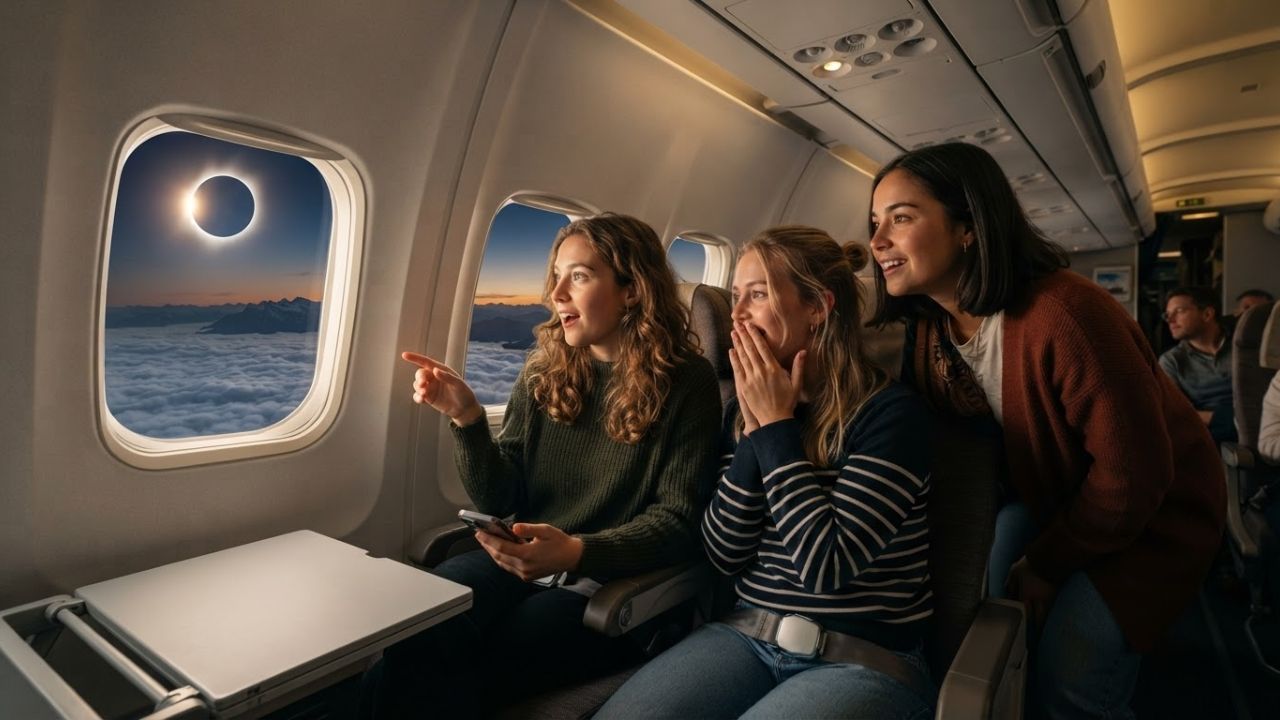
Image generated by AI
Operating at 35,000 feet, European commercial and charter airlines transformed regular routes and science charters into celestial viewing platforms during the August 12, 2026 solar eclipse.
Airlines Convert Scheduled Routes Into Celestial Platforms for the 2026 Solar Eclipse
European commercial carriers and private charter operators turned the total solar eclipse of 12 August 2026 into a landmark astrotourism event, using cruising altitudes of approximately 35,000 feet to provide passengers with unobstructed views above the clouds. The path of totality crossed Greenland, Iceland, and northern Spain, drawing millions of visitors to ground-based locations while enabling flights to become moving observation decks.
Airlines approached the eclipse using different operational models:
- Wizz Air: Passengers on scheduled routes from London Luton to Alicante, Tenerife to Bucharest, Madrid to Budapest, and Katowice to Porto observed the eclipse at 35,000 feet. Senior First Officer Tom Copestake, flying the Luton to Alicante service, described watching the eclipse unfold above the mountains of southern Spain as a career highlight.
- British Airways: Passengers on scheduled flight BA2644 from London Gatwick to Málaga witnessed the eclipse en route to southern Spain.
- Iberia: Operated a dedicated scientific charter flight, IB1473 (named in honor of Nicolaus Copernicus' birth year), carrying researchers from the Shelios project over northern Spain to study the solar corona.
- Brussels Airlines: Partnered with the Urania Public Observatory to operate a sold-out charter flight using an Airbus A320, offering passengers partial eclipse views with a maximum obscuration of 96% above France.
- ASL Group: Provided private VIP charters from Liège, Belgium, using an Embraer E135 aircraft.
- Air Charter Service: Arranged premium charter flights from London toward optimal viewing locations in Valladolid, the Balearic Islands, and Reykjavik.
The following table summarizes the different airline approaches to the eclipse based on verified operational data:
Comparative Analysis of European Eclipse Flights (12 August 2026)
| Airline / Operator | Experience Type | Key Operational Parameter | Primary Objective |
|---|---|---|---|
| Wizz Air | Scheduled flights | Selected routes at 35,000 feet | Routine travel turned into unexpected sky-viewing |
| British Airways | Scheduled flight | Flight BA2644 (Gatwick to Málaga) | Scheduled tourist transit with aerial views |
| Iberia | Scientific charter | Flight IB1473 (Nicolaus Copernicus tribute) | Solar corona research and live public streaming |
| Brussels Airlines | Dedicated flight | Airbus A320 (96% maximum obscuration) | Organized public observatory viewing flight |
| ASL Group | Private VIP charter | Embraer E135 from Liège | Exclusive VIP observation experience |
| Air Charter Service | Premium charter | Custom flights to Spain (Valladolid) & Iceland | Tailored viewing itineraries based on weather |
This alignment of aviation technology and natural events highlights the growing popularity of astronomical tourism across Europe's travel sector.
Astrotourism Encourages Green Travel and Local Community Support
For the traveler, the real impact of aerial eclipse viewing is the opportunity to experience astronomical events sustainably by reducing the local ecological pressures associated with mass tourism on the ground. When thousands of travelers gather in small, fragile eco-systems in northern Spain or Iceland, they can strain regional water supplies, transport networks, and waste management facilities.
The European Space Agency (ESA), Visit Iceland, and the Spanish Tourist Board (Turespaña) emphasize that astrotourism must be managed responsibly to support local environments. By watching from scheduled flights, passengers enjoy a clean viewing experience without increasing vehicle traffic in protected natural reserves. Additionally, visitors traveling to ground-based viewing zones are encouraged to support community-based eco-lodges, hire local guides, and buy from regional artisans, ensuring that tourism spend directly benefits local conservation efforts.
Local Insider Tips for Sky-Viewing and Astrotourism in Europe
To make the most of your journey and enjoy sky-viewing experiences comfortably, keep these practical visitor tips in mind:
- Identify Favorable Off-Peak Windows: If planning to chase future solar eclipses or auroras in Europe, target the shoulder months of late autumn (October to November) or early spring (March to April) to find affordable accommodation and clear night skies. Peak summer travel (July to August) often brings high flight prices and congested gateways.
- Observe Safety and Etiquette Guidelines: When observing solar phenomena from an aircraft window or the ground, always use certified ISO-compliant solar eclipse glasses to protect your eyes from permanent damage. Turn off cabin lights and screen backlights to improve night-sky visibility and avoid disturbing fellow passengers.
- Savor Regional Dining Specialties: Support local food vendors in key viewing regions. In northern Spain (like Valladolid), try traditional Lechazo (roasted milk-fed lamb) at family-run restaurants. In Iceland (Reykjavik), try fresh Kjötsúpa (traditional lamb soup) at neighborhood diners.
- Explore Under-the-Radar Viewing Sites: Instead of traveling to major tourist cities, head to quiet dark-sky preserves such as the Gredos Mountains in Spain or the remote Westfjords in Iceland to experience unobstructed views of the night sky and support rural communities.
Long-Term Outlook for Aviation-Led Astrotourism
In the long run, the success of the 2026 solar eclipse flights represents a growing trend of experience-driven travel in the aviation industry. Airlines and public observatories will continue to develop structured partnerships, packaging rare astronomical events into specialized aviation products.
As consumer interest in science tourism, stargazing, and Northern Lights viewing continues to expand, carriers will leverage next-generation aircraft and real-time weather routing to offer optimized viewing paths. This integration of aviation technology and nature will continue to grow, offering travelers unique, memorable journeys that transform the way we interact with the sky.
Related Travel Guides
Disclaimer
This article is for informational and educational purposes only. It does not constitute legal, financial, or professional advice. While we strive to provide accurate and up-to-date information, travel policies, regulations, and conditions change rapidly. Always verify information with official sources before making travel decisions. Nomad Lawyer makes no representations about the accuracy, reliability, completeness, or suitability of the information provided. Readers should consult qualified professionals for advice specific to their circumstances. The views expressed in this article are those of the author and do not necessarily reflect the views of Nomad Lawyer.
Raushan Kumar
Founder & Lead Developer
Full-stack developer with 11+ years of experience and a passionate traveller. Raushan built Nomad Lawyer from the ground up with a vision to create the best travel and law experience on the web.
Learn more about our team →