
US Flight Delays Surge Past 3,900: Boston Logan 124-Minute Ground Delays, JFK Congestion, and Airline Passenger Rights

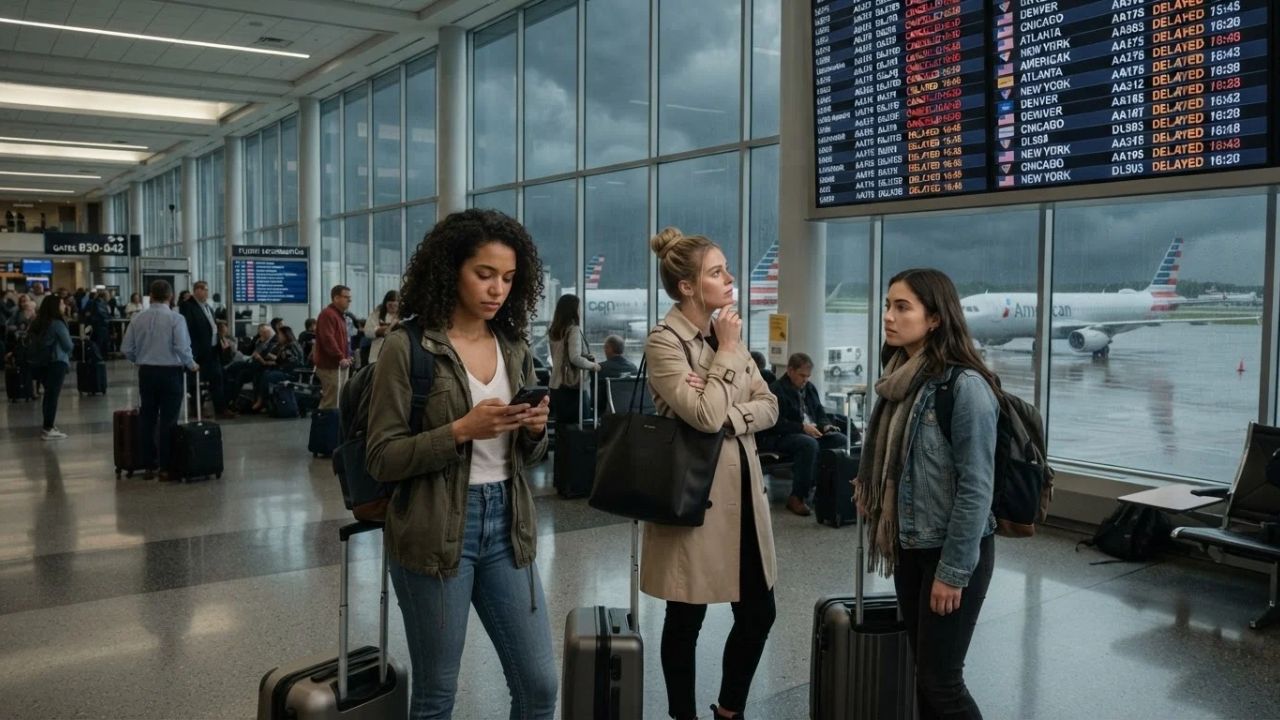
Severe weather, ground delay programs, and congested airspace disrupted air travel across the United States on September 14, 2026, as verified flight-tracking records documented 3,979 flight delays and 175 cancellations nationwide. Impacting major commercial gateways from New England to the Pacific Coast—including Boston Logan, New York JFK, LaGuardia, Miami, and Los Angeles—the widespread schedule friction challenged airline operations, leaving tens of thousands of passengers navigating missed connections, gate holds, and altered travel itineraries.
Real-time aviation data logged on 13 September 2026 at 3:29 pm ET USA via FlightAware confirmed that Boston Logan International Airport (BOS) emerged as the single most disrupted aviation facility in the country, weathering 412 delays and 83 cancellations. Federal Aviation Administration (FAA) operational logs revealed average ground delays of 124 minutes at Boston due to runway construction constraints, while convective thunderstorm cells in the Southeast and gusting wind patterns across the Great Basin introduced compounding departure holds in Miami, Orlando, Houston, and Las Vegas.
Hub-by-Hub Disruption: Where Travel Friction Concentrated
The wave of disruptions affected airports across multiple distinct FAA air traffic control centers, compounding delays across major domestic corridors:
Boston Logan: The Primary Disruption Epicenter
Boston Logan International Airport (BOS) recorded the highest concentration of schedule collapse in the nation, logging 412 delayed flights and 83 cancellations:
- The 124-Minute Ground Delay Program: The FAA initiated an extensive Ground Delay Program (GDP) at Logan averaging 124 minutes per impacted arrival, driven by active runway rehabilitation work that reduced available arrival slots during peak afternoon traffic banks.
- Origin and Destination Strain: By origin, Boston logged a 6% cancellation rate alongside a 23% delay rate. Inbound flights were impacted even more severely, experiencing a 6% destination cancellation rate and a 37% destination delay rate as incoming aircraft were held on departure aprons nationwide.
New York Metropolitan Airspace: JFK and LaGuardia
The tightly interconnected New York flight corridor absorbed heavy secondary delays:
- John F. Kennedy International Airport (JFK): Logged 309 delays and 10 cancellations. Originating departures experienced a 25% delay rate, while arriving destination flights recorded a 23% delay rate.
- LaGuardia Airport (LGA): Recorded 250 delays and 8 cancellations, with departing origin flights facing a 25% delay rate and arriving flights absorbing a 21% delay rate.
Florida and Gulf Coast: Thunderstorm Holds in Miami, Fort Lauderdale, and Orlando
Late-summer convective storm activity triggered cascading ground delays across the Sunshine State:
- Miami International Airport (MIA): Reported 189 delays and 1 cancellation, with FAA air traffic management reporting departure delays averaging 30 minutes and increasing as localized thunderstorms swept coastal runways. Arriving flights weathered a 15% delay rate.
- Fort Lauderdale-Hollywood International Airport (FLL): Recorded 99 delays and 1 cancellation, with departure delays averaging 15 minutes and rising under convective weather patterns.
- Orlando International Airport (MCO): Logged 130 delays and 2 cancellations, with FAA flow-management measures causing departure delays averaging 15 minutes and increasing (an 11% destination delay rate).
- Houston George Bush Intercontinental Airport (IAH): Handled 127 delays and 5 cancellations, with thunderstorms pushing average departure delays upward from 15 minutes (a 12% destination delay rate).
Western Gateways: Wind and Compaction in Las Vegas, Seattle, and Los Angeles
- Harry Reid International Airport (LAS - Las Vegas): Recorded 136 delays, with the FAA noting average departure delays of 15 minutes and increasing due to strong desert crosswinds.
- Los Angeles International Airport (LAX): Logged 158 delays and 4 cancellations, maintaining a 9% destination delay rate.
- Seattle-Tacoma International Airport (SEA): Registered 142 delays and 3 cancellations, with compacted passenger demand and gate congestion generating departure delays averaging 15 minutes and increasing (an 11% destination delay rate).
Airline Impact: Southwest and American Absorb Heaviest Delays
The operational disruption challenged mainline legacy carriers and regional capacity providers alike, as aircraft rotations fell out of sequence:
- Southwest Airlines: Recorded the highest total disruption volume in the nation, logging 642 flight delays and 5 cancellations. Southwest’s high-frequency point-to-point network makes it vulnerable to cascading delays when morning turnarounds in the Northeast and Florida back up.
- American Airlines: Logged 638 delayed flights alongside 2 cancellations, as hub operations in Miami (MIA), Charlotte (CLT), and New York (JFK/LGA) absorbed weather holds and ATC slot restrictions.
- Delta Air Lines: Reported 455 delays and 5 cancellations, managing connecting banks across its Boston (BOS) and New York (JFK/LGA) focus cities.
- United Airlines: Weathered 304 delayed flights and 7 cancellations across its transcontinental hub network.
- Republic Airways: The regional feeder carrier—which operates flights on behalf of American Eagle, Delta Connection, and United Express—recorded 187 delays and 22 cancellations, representing a high cancellation ratio that stranded regional passengers in smaller spoke markets.
- Alaska Airlines: Handled 91 delays and 17 cancellations across its West Coast and transcontinental routes.
The Mechanics of Air Traffic Control Delays: GDPs and Runway Closures
To understand why a clear-weather departure in Chicago or Charlotte faces a two-hour gate delay, travelers must understand the operational tools deployed by the FAA Air Traffic Control System Command Center (ATCSCC).
When an airport's operational capacity is reduced—such as Boston Logan operating with reduced runway inventory during capital construction—the rate of incoming planes exceeds safe landing thresholds. Rather than allowing dozens of jets to circle in holding patterns over New England, burning fuel and creating mid-air congestion, air traffic controllers implement a Ground Delay Program (GDP).
Under a GDP, aircraft bound for the constrained destination are assigned an Expect Departure Clearance Time (EDCT) and held on the tarmac at their origin airports. While passengers experience the frustration of waiting inside an aircraft on a sunny ramp in Atlanta or Dallas, the delay is dictated by runway capacity thousands of miles away.
Passenger Rights and Protection Under US DOT Regulations
Travelers facing substantial flight disruptions benefit from federal protections governed by the United States Department of Transportation (DOT):
1. Automatic Cash Refunds for Significant Delays
Under US Department of Transportation mandates, passengers are legally entitled to a full, prompt cash refund (returned to the original form of payment within 7 business days for credit cards) if:
- A flight is cancelled, and the passenger declines the airline's alternative rebooking offer.
- A domestic flight experiences a "significant delay" (defined as a departure or arrival change of 3 hours or more for domestic itineraries, or 6 hours or more for international flights).
- The airline makes a significant change to the itinerary, such as altering the departure or arrival airport, adding intermediate connecting stops, or downgrading the service cabin.
2. Airline Customer Service Commitments
Under the DOT Airline Customer Service Dashboard, major US carriers have committed to baseline amenities during airline-controllable disruptions (such as mechanical issues or internal crew scheduling failures):
- Meal Vouchers: Provided when delays extend beyond 3 hours.
- Complimentary Hotel Accommodations: Provided for overnight delays, alongside ground transportation between the airport and the lodging facility.
- Interline Rebooking: Airlines such as American, Delta, and United have committed to rebooking stranded passengers on partner or competitor airlines at no additional charge when their own schedules cannot accommodate timely travel.
- Note on Weather: When delays are categorized as "Air Traffic Control" or "Acts of God / Weather," statutory hotel vouchers are not federally mandated; however, travelers may request discounted corporate hotel distress rates from airport customer service desks.
Practical Action Guide: What to Do When Disruption Strikes
When flight schedules unravel, applying proactive operational tactics can save your journey:
- Deploy the "Two-Front Rebooking" Strategy: If your flight is canceled or delayed past your connecting window, join the physical line at the airport customer service desk, but immediately open your smartphone:
- Use the airline’s mobile application to browse available rebooking options, which often update minutes before airport gate agents can process requests manually.
- Call the airline's international customer support phone lines (such as the carrier’s English-speaking customer desks in Australia, the UK, or Singapore). These foreign call centers connect with zero hold times while domestic 1-800 lines face hour-long queues.
- Explore Co-Terminal Alternate Routing: Major metropolitan areas offer co-terminal airports. If your flight to or from New York LaGuardia (LGA) is canceled, ask the agent to rebook you out of JFK or Newark (EWR). In South Florida, compare Miami (MIA), Fort Lauderdale (FLL), and West Palm Beach (PBI).
- Leverage Credit Card Travel Protections: If you purchased your airfare with a premium travel credit card (such as the Chase Sapphire Reserve or American Express Platinum), built-in trip delay insurance typically activates after a 6-hour delay. Keep all itemized receipts for meals, rideshares, and hotel rooms; these policies reimburse up to $500 per covered passenger for reasonable out-of-pocket expenses incurred during unexpected delays.
- Monitor Inbound Aircraft Registration: Do not rely solely on departure board monitors, which often post optimistic 15-minute rolling delays. Use flight-tracking tools (like FlightAware or Flightradar24) to enter your flight number and click "Where is my plane coming from?" Tracking the physical tail number of your assigned aircraft reveals whether your plane is still grounded two states away.
Aviation Outlook: Infrastructure Pressure in Modern Skies
The 3,979 delays and 175 cancellations recorded across American airports demonstrate the ongoing tension between record commercial air travel demand and constrained physical infrastructure. With legacy runways undergoing necessary capital repairs and convective weather patterns testing regional airspace flow, schedule fragility remains an everyday reality for US travelers.
By understanding air traffic management mechanisms, mastering mobile rebooking tools, and knowing their statutory rights under federal DOT rules, passengers can navigate complex airport delays with resilience, minimizing stress and regaining control of their journeys.
Related Travel Guides
- South Africa Launches Digital ETA System: How Visa Modernization Across Africa Is Reshaping Safari Travel
- Spain and EU Join Luzon Economic Corridor: Infrastructure Leap to Transform Philippines Travel Across Subic, Clark, Manila, and Batangas
- Malaysia Airlines Signs Seven Asia-Pacific Tourism Pacts at MATTA Fair 2026 to Boost Regional Travel
Disclaimer
This article is for informational and educational purposes only. It does not constitute legal, financial, or professional advice. While we strive to provide accurate and up-to-date information, travel policies, regulations, and conditions change rapidly. Always verify information with official sources before making travel decisions. Nomad Lawyer makes no representations about the accuracy, reliability, completeness, or suitability of the information provided. Readers should consult qualified professionals for advice specific to their circumstances. The views expressed in this article are those of the author and do not necessarily reflect the views of Nomad Lawyer.
Raushan Kumar
Founder & Lead Developer
Full-stack developer with 11+ years of experience and a passionate traveller. Raushan built Nomad Lawyer from the ground up with a vision to create the best travel and law experience on the web.
Learn more about our team →