US Flight Disruptions 2026: Low Clouds Trigger 580 Delays and 53 Cancellations Across Key Hubs

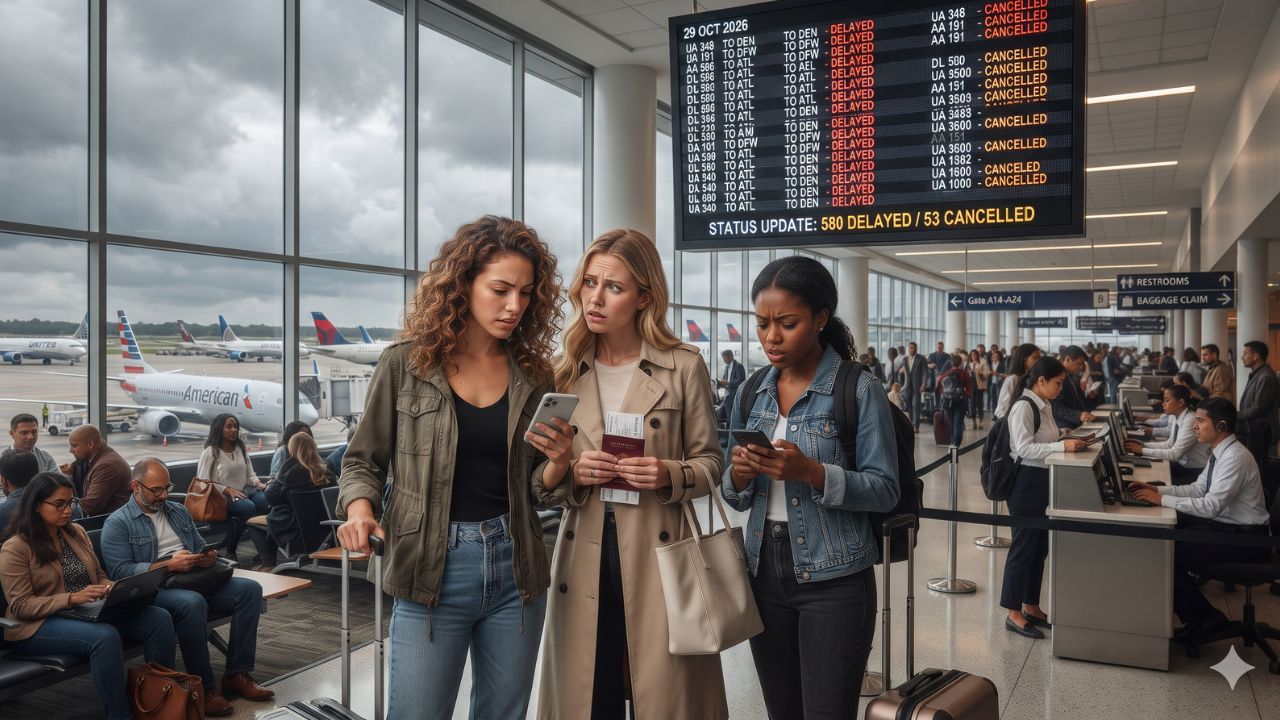
While passengers typically expect winter blizzards or severe supercells to ground commercial aviation, a quiet atmospheric phenomenon—dense low cloud ceilings—slowed air traffic across the United States before 10:06 AM EST on Thursday, October 29, 2026, causing 580 flight delays and 53 outright cancellations. Compiled by FlightAware, the domestic figures formed part of an expansive global aviation bottleneck that registered 8,604 delayed flights and 459 cancellations worldwide, demonstrating how rapidly regional atmospheric conditions can dislocate flight rotations across transcontinental route networks.
The Low-Ceiling Ripple Effect: Morning Slowdowns from Texas to the Capital
The operational drag across American airspace followed targeted advisories issued by the Federal Aviation Administration (FAA), which warned of low cloud decks restricting arrival capacity at critical commercial gateways. The affected hubs spanned three major regions:
- Texas Commercial Hubs: Austin-Bergstrom International Airport (AUS) and San Antonio International Airport (SAT) in Central Texas.
- Pacific Northwest Gateway: Seattle-Tacoma International Airport (SEA) in Washington state.
- National Capital Region: Ronald Reagan Washington National Airport (DCA), Washington Dulles International Airport (IAD), and Baltimore/Washington International Thurgood Marshall Airport (BWI).
When low overcast stratus clouds sink below visual flight minimums, airports transition into Instrument Meteorological Conditions (IMC). Under these operating rules, air traffic control towers cannot permit visual contact approaches, forcing controllers to space arriving aircraft farther apart along final glide slopes.
While FAA status logs recorded arrival gate-hold and taxi delays of 15 minutes or less at both Austin and Seattle during morning monitoring snapshots, these localized flow restrictions generated compounding delays downline. When an aircraft scheduled to fly Austin–Chicago–Boston loses 15 minutes on its opening sector, gate holds, passenger connection transfers, and crew flight-time limits compound throughout the operating day.
Disruption Snapshot: FAA Status and Flight Tracking Metrics
The table below summarizes the operational figures, affected aviation hubs, and federal status reports recorded on October 29, 2026:
| Aviation Metric / Hub | Recorded Operational Data | Regulatory Context & Significance |
|---|---|---|
| US Domestic Delays | 580 flights delayed | Recorded by 10:06 AM EST across domestic and transborder sectors |
| US Flight Cancellations | 53 flights cancelled | Grounded services concentrated across high-density commuter trunks |
| Global Aviation Disruption | 8,604 delays / 459 cancellations | Snapshot compiled from worldwide real-time flight tracking |
| Austin-Bergstrom (AUS) | Holds 15 minutes or less | Morning cloud decks required instrument approach spacing |
| San Antonio International (SAT) | Low cloud warnings | Regional feeder departures delayed into Dallas and Houston banks |
| Seattle-Tacoma (SEA) | Delays 15 minutes or less | Pacific Northwest marine layer lowered ceiling minimums |
| Washington Dulles (IAD) | Operational flow control | Intercontinental arrival pacing into Mid-Atlantic airspace |
| Reagan National (DCA) | Runway visual restrictions | Slot-controlled operations adjusted for cloud cover approaches |
| Baltimore/Washington (BWI) | Commuter traffic metering | High-frequency East Coast shuttle sectors absorbed rolling delays |
| DOT Refund Mandate | Full cash refund eligibility | Applies if a passenger rejects an airline rebooking after cancellation |
Understanding Passenger Rights: US DOT Rules and Rebooking Realities
When flight schedules collapse, understanding federal passenger protection guidelines makes the difference between securing an immediate refund and being stranded at an airport terminal. Under regulations enforced by the U.S. Department of Transportation (DOT), passengers are legally entitled to a full cash refund—not merely an expiring travel credit—if an airline cancels their flight for any reason, including adverse weather, and the traveler chooses not to accept the carrier's alternative itinerary.
This refund entitlement also applies when an airline initiates a significant schedule change or qualifying significant delay, provided the traveler declines the modified itinerary. However, travelers should recognize that under current US federal law, airlines are not legally required to provide complimentary hotel accommodations, taxi vouchers, or meal allowances when flight delays are attributed to weather phenomena.
As ethical travel educator Eryn Gordon emphasized, passengers must look beyond the first rebooking option presented on an airline smartphone application. An automated rebooking that appears to depart quickly might incorporate an unrealistic 35-minute connection at an overcrowded hub, risk overnight stranding without checked luggage, or route baggage onto an entirely separate flight.
Visitor Insider Tips: Navigating US Airport Weather Delays
- Track the Inbound Tail Number on FlightAware: Do not rely solely on departure board monitors at your gate. Search your flight number on FlightAware to identify your aircraft's specific registration (tail number). If the inbound jet is delayed on the ground in Austin or Seattle, your scheduled departure will be delayed, allowing you to arrange rebooking options before gate queues form.
- Decline Problematic Auto-Rebookings via Airline Chat: If your flight is cancelled or delayed past your connecting window, avoid calling overloaded airline phone lines. Use the airline's mobile chat feature or message their dedicated customer service team on social platforms. Politely decline itineraries that feature tight 40-minute transfers or overnight layovers, and request specific direct alternative flights on partner airlines.
- Carry Medication and Electronics in Your Personal Daypack: In the event of a sudden gate hold or cancellation, airlines frequently gate-check rolling carry-on bags due to limited overhead space. Keep essential daily prescription medications, chargers, identification, and a clean change of clothing inside a smaller backpack placed under the seat in front of you.
- Leverage Airport Club Lounges for Expedited Ticketing: When terminal customer service lines extend through concourses, premium airport lounge agents (such as American Admirals Club, Delta Sky Club, or United Club) possess advanced ticketing authority to reroute passengers. Holding a single-entry day pass or qualifying travel credit card can save hours of terminal queueing.
- Explore Overland Alternatives in the Northeast and Texas: If commuter flights between Baltimore (BWI), Washington (DCA), and New York are grounded, book an Amtrak Northeast Regional or Acela train immediately from BWI Rail Station or Washington Union Station. Trains operate unaffected by low cloud ceilings, delivering you directly into central metropolitan stations.
Cultural and Environmental Context: Regional Microclimates and Airspace Constraints
The flight delays experienced on October 29 highlight how regional microclimates interact with modern commercial aviation grids. In the Pacific Northwest, marine air moving off Puget Sound frequently traps cool moisture against the Cascade Mountains, creating stubborn morning marine fog decks that blanket Seattle-Tacoma International Airport until midday sunshine burns through the inversion layer.
In Central Texas, autumnal temperature inversions trap low Gulf moisture beneath warmer upper-level atmospheric layers, producing dense morning cloud decks over Austin and San Antonio. Because modern commercial airspace operates near maximum physical capacity during peak morning banks, even small required increases in aircraft approach spacing trigger disproportionate schedule bottlenecks across the entire country.
Balancing air traffic safety with passenger schedule reliability requires air traffic managers and commercial airlines to invest continuously in satellite-based NextGen navigation, precision runway monitoring, and automated ground-delay algorithms. For travelers, acknowledging the natural realities of autumn weather systems remains the first step toward smart, resilient journey planning.
FAQ: US Flight Delays and Weather Disruptions 2026
What caused the widespread US flight delays on October 29, 2026? The Federal Aviation Administration (FAA) issued advisories for dense low cloud ceilings that reduced arrival rates at major airports serving Austin, San Antonio, Seattle, and the Washington, D.C. region.
How many flights were affected during the morning monitoring window? FlightAware recorded 580 delayed flights and 53 cancellations involving journeys into or out of the United States by 10:06 AM EST, alongside 8,604 delays worldwide.
Am I entitled to a cash refund if my flight is cancelled due to weather? Yes. Under US Department of Transportation (DOT) rules, if an airline cancels your flight for any reason and you choose not to travel on their proposed alternative, you are entitled to a full refund to your original payment method.
Are airlines required to pay for hotel rooms during weather-related delays? No. Under US federal regulations, airlines are not legally obligated to provide complimentary hotel lodging, meal vouchers, or cash compensation for delays or cancellations caused by weather conditions.
When morning cloud layers drop across the nation's premier aviation corridors, travelers who track inbound aircraft, verify DOT refund rights, and pack essentials in their daypacks navigate the skies with peace of mind.
Related Travel Guides
The 10 Best Airport Transit Lounges and Layover Hacks in the United States, According To Reddit (Coming Soon)
This article is for informational purposes. Flight routes, passenger regulations, visa rules, and transit advisories are subject to change by airlines and aviation authorities. Readers are advised to verify schedules and travel documentation with relevant carriers and border agencies before departure.
Related Stories
US Flight Delays and Cancellations: FAA Issues Low Cloud Advisories for Austin, Seattle, and Washington Hubs
US Aviation Squeeze: 1,685 Delays and 84 Cancellations Hit Chicago O’Hare, Los Angeles, and Phoenix