Singapore Airlines Provisionally Schedules Airbus A380 Return to Hong Kong for Winter 2027: Travel Guide

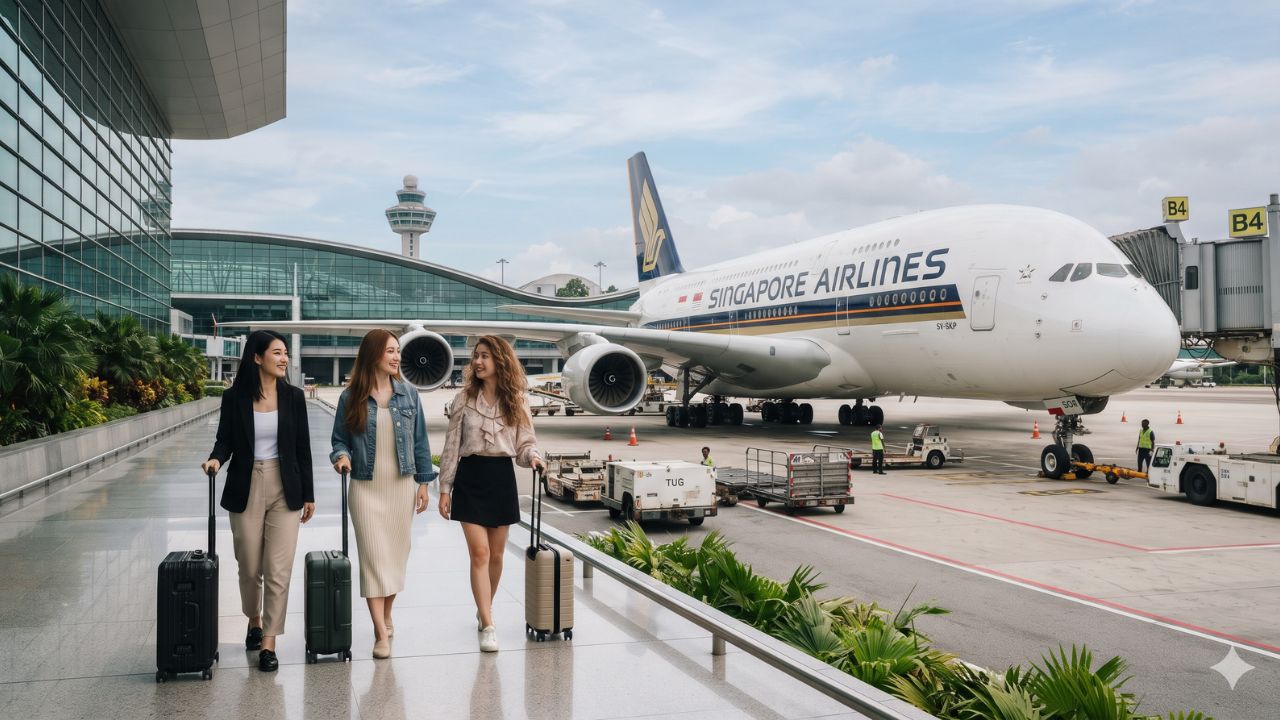
At approximately 2,560 kilometres, the flight path between Singapore and Hong Kong is shorter than an average cross-country domestic journey across North America or Australia—yet between 1 December 2027 and 31 January 2028, it could become one of the rarest opportunities on Earth to fly aboard the world’s largest passenger airliner on a regional journey under four hours. Preliminary schedule filings revealed by airline industry monitoring network AeroRoutes indicate that Singapore Airlines has provisionally slated its flagship double-decker Airbus A380 to return to the high-demand Singapore–Hong Kong corridor for a targeted two-month holiday window during the winter 2027–2028 operating season. Assigned to daily flights SQ882 and SQ883, the planned deployment would temporarily replace the Airbus A350-900, offering passengers an opportunity to experience superjumbo travel across one of Asia's most celebrated air corridors.
Singapore Airlines Provisionally Restores Airbus A380 Flights to Hong Kong for Winter 2027
The preliminary timetable signals a potential comeback for the double-decker aircraft following earlier fleet retrenchments. In July 2026, Singapore Airlines adjusted its forward planning by withdrawing planned Airbus A380 operations that had originally been slated for Hong Kong during June and July 2027. That seasonal removal left Emirates as the sole carrier operating scheduled commercial A380 services into Hong Kong International Airport (HKG). While Singapore Airlines never ruled out a future return to the destination, the newly filed winter 2027–2028 rotation provides the first concrete indication of how the airline plans to deploy widebody capacity during peak holiday travel.
Under the preliminary schedule, the Airbus A380 will operate daily round-trip services on flights SQ882 and SQ883 between Singapore Changi Airport (SIN) and Hong Kong International Airport (HKG) from 1 December 2027 through 31 January 2028. The aircraft replaces the smaller twin-engine Airbus A350-900 currently operating the flight pair. In addition, Singapore Airlines has slated long-range Boeing 777-300ER aircraft to handle a separate flight pair—services SQ874 and SQ875—between 31 October and 27 November 2027, highlighting proactive fleet management to meet seasonal cargo and passenger volume ahead of the December holiday rush.
| Flight Sector / Identifier | Operating Aircraft Type | Scheduled Operating Window | Schedule Status & Operational Context |
|---|---|---|---|
| Singapore to Hong Kong (SQ882) | Airbus A380-800 | 1 December 2027 – 31 January 2028 | Provisional superjumbo schedule; replaces Airbus A350-900 during winter peak. |
| Hong Kong to Singapore (SQ883) | Airbus A380-800 | 1 December 2027 – 31 January 2028 | Outbound return sector; provides multi-class service including Suites. |
| Singapore to Hong Kong (SQ874) | Boeing 777-300ER | 31 October 2027 – 27 November 2027 | Autumn widebody deployment ahead of the December holiday travel season. |
| Hong Kong to Singapore (SQ875) | Boeing 777-300ER | 31 October 2027 – 27 November 2027 | Separate aircraft rotation; does not conflict with SQ882/SQ883 scheduling. |
| Standard Baseline Rotation | Airbus A350-900 | Year-round baseline schedule | Primary workhorse across regional trunk services outside peak surge periods. |
Aviation strategists caution that the published schedule remains a draft allocation. Airlines routinely load aircraft types into reservation systems as operational placeholders while finalizing crew rotations, airframe maintenance schedules, and route profitability models. Singapore Airlines has not confirmed whether the A380 will remain on the Hong Kong route beyond 31 January 2028. Furthermore, the preliminary listing does not establish whether the deployment represents a permanent commercial strategy or a seasonal repositioning to optimize aircraft utilization between long-haul European or Australian assignments.
| Flight Parameter | Confirmed Route Metrics | Practical Significance for Travelers |
|---|---|---|
| Great Circle Flight Distance | Approximately 2,560 kilometres | Exceptionally short sector for an aircraft designed for 14-hour journeys. |
| Average Flight Duration | 3 hours 45 minutes to 4 hours | Rare chance to enjoy double-decker amenities without severe jet lag. |
| Origin Airport Hub | Singapore Changi Airport (SIN) | World-leading transit hub featuring Jewel indoor rain vortex and gardens. |
| Destination Airport Hub | Hong Kong International Airport (HKG) | Premier Pearl River Delta gateway connected directly to high-speed rail. |
| Flagship Cabin Options | First Class Suites, Business, Premium, Economy | Standalone double-bed Suites available on a regional Asian hop. |
For aviation enthusiasts, the prospect of an A380 flight between Singapore and Hong Kong is thrilling. Long-haul superjumbo journeys to London, Sydney, or New York often require premium fares or substantial loyalty miles. A four-hour regional flight across the South China Sea allows travelers to sample the quiet cabin architecture, wide stairs, and upper-deck luxury of the superjumbo at a fraction of intercontinental costs.
What Makes the Singapore to Hong Kong Corridor Culturally and Experientially Unique
Connecting two of Asia's most dynamic harbor cities, the Singapore–Hong Kong route links maritime crossroads shaped by distinct colonial histories, Cantonese traditions, and modern architectural vision. While both cities are renowned global financial centers, their daily urban rhythms offer captivating contrasts. Singapore unfolds as a carefully planned garden city where historic shophouses sit beside leafy rain trees and modern biophilic skyscrapers. Hong Kong, by contrast, is a vertical marvel carved directly into granite mountain ridges, where double-decker Ding Ding streetcars rattle through narrow urban canyons beneath neon signs and bamboo scaffolding.
Arriving in Hong Kong during December and January rewards visitors with the territory's finest weather. Unlike the sweltering humidity of summer, winter brings crisp, sunny days with temperatures hovering pleasantly between 15°C and 20°C. In neighborhoods like Sheung Wan and Sai Ying Pun, the scent of dried oysters, shiitake mushrooms, and aged tangerine peels drifts from traditional apothecary storefronts along Des Voeux Road West. Down narrow stone steps, century-old dai pai dongs—open-air street kitchens—serve steaming bowls of beef brisket noodles and toasted buns condensed with sweetened milk over roaring gas burners.
Across Victoria Harbour, the cultural focus shifts toward the West Kowloon Cultural District, where the M+ Museum showcases modern visual culture and the Hong Kong Palace Museum displays ancient imperial treasures on loan from Beijing. Yet mere minutes from the high-density districts of Tsim Sha Tsui and Central, wild subtropical nature awaits. More than 40 percent of Hong Kong’s land area is preserved within designated country parks. Hikers can leave the glitzy financial district on the MTR Corporation rail system and within 25 minutes be scaling the dramatic ridgelines of the Dragon’s Back or climbing Lion Rock for sweeping sunset views over the Kowloon peninsula.
Visitor Insider Tips: Dim Sum Rituals, Ding Ding Trams, and Peak Hiking Trails
- Master the Two-Finger Tap at Traditional Dim Sum Parlors: When enjoying morning tea (yum cha) at heritage institutions like Lin Heung Lau in Central or Luk Yu Tea House, observe local tea etiquette. When dining companions or waitstaff refill your porcelain teacup with hot pu'er or jasmine tea, gently tap your bent index and middle fingers twice on the table. This subtle gesture expresses silent gratitude without interrupting table conversation, a tradition dating back to Qing dynasty imperial disguises.
- Rely on the Ding Ding Tram for Scenic Island Transit: Skip underground transit when traveling between Kennedy Town, Central, Wan Chai, and Causeway Bay. Board the historic double-decker electric trams, affectionately known as Ding Dings, which have operated along Hong Kong Island’s northern shoreline since 1904. Climb to the front row of the upper deck for an elevated view of street markets for just HK$3.00, paying with an Octopus card upon exiting at the front door.
- Bypass Peak Tram Lines by Walking the Historic Morning Trail: Avoid long queues at the lower Peak Tram terminus in Central. Instead, take the MTR to HKU Station (Exit A2) and hike up through the tree canopies along the paved Hatton Road Morning Trail to Victoria Peak. The brisk 45-minute uphill walk passes historic stone boundary markers from 1903 and leads directly to Lugard Road, where you enjoy the most iconic panoramic harbor overlook without spending a dollar.
- Explore Sham Shui Po for Authentic Electronics and Street Fare: For an unfiltered look at everyday Kowloon life, head to Sham Shui Po. Wander along Apliu Street’s flea market for vintage audio gear and electronics, then grab a stool at Oi Man Sang, one of Hong Kong's oldest surviving dai pai dongs, where chefs toss black pepper garlic crab in blistering woks over roaring open flames.
- Coordinate Flight SQ882 with Star Ferry Sunsets: If Singapore Airlines confirms flight SQ882 arriving in the mid-afternoon, clear customs at Chek Lap Kok and board the Airport Express train directly to Kowloon Station in 22 minutes. Walk down to the Tsim Sha Tsui pier by 5:30 PM to board the green-and-white Star Ferry across to Central just as neon building illuminations ignite across Victoria Harbour.
- Consult Official Destination Guides for Seasonal Festivals: Check the Hong Kong Tourism Board and Singapore Tourism Board portals before traveling to coordinate with winter festivities, including the Hong Kong WinterFest light displays along the harborfront and Singapore’s New Year countdown celebrations around Marina Bay.
Cultural and Environmental Context: Superjumbo Aviation Economics and Urban Heritage Preservation
Deploying a massive double-decker aircraft on a short 2,560-kilometre corridor illustrates the unique operational dynamics of Asian megacity air travel. In Europe and the Americas, airlines have largely phased out four-engine superjumbos in favor of efficient twin-engine widebodies like the Airbus A350 and Boeing 787. However, slot constraints at congested primary airports like Hong Kong International and Singapore Changi make high-capacity aircraft an attractive solution for moving large passenger volumes during seasonal travel surges without consuming scarce runway slots.
At the same time, operating four-engine aircraft requires careful carbon management. The Airbus A380 achieves favorable fuel burn per passenger only when flying near full capacity. By restricting its Hong Kong A380 operations to the peak two-month December and January holiday travel season, Singapore Airlines ensures high passenger load factors, avoiding the operational inefficiencies of flying underfilled cabins during off-peak autumn weeks.
On the cultural front, both Singapore and Hong Kong face ongoing battles to preserve fragile urban heritage amid relentless commercial development. In Hong Kong, civic organizations have rallied to safeguard the territory's dwindling open-air dai pai dongs, century-old herbal tea shops, and hand-carved mahjong tile workshops against urban renewal projects. Conscious travelers who explore working-class neighborhoods like Yau Ma Tei and Tai O fishing village provide valuable economic support to small-scale generational merchants, helping keep traditional Cantonese craft traditions alive in a modern metropolis.
FAQ: Flying Singapore Airlines A380 to Hong Kong 2027
When is Singapore Airlines provisionally flying the A380 to Hong Kong?
Preliminary schedule filings indicate the Airbus A380 will operate daily flights SQ882 and SQ883 between Singapore and Hong Kong from 1 December 2027 to 31 January 2028.
Is the Singapore–Hong Kong A380 service permanently confirmed?
No. The schedule is currently a provisional draft published by AeroRoutes and remains subject to operational adjustments, aircraft availability, and official airline confirmation before ticket sales.
What other aircraft is Singapore Airlines flying on the route in late 2027?
Singapore Airlines has also provisionally scheduled Boeing 777-300ER widebody aircraft on flights SQ874 and SQ875 between 31 October and 27 November 2027.
How far is the flight between Singapore and Hong Kong?
The flight covers approximately 2,560 kilometres with an average flight duration of three hours and 45 minutes, making it one of the shortest scheduled routes flown by an Airbus A380.
[Whether floating above the South China Sea in an upper-deck suite or crossing Victoria Harbour on the wooden benches of the Star Ferry, this legendary route captures the enduring magic of Asian travel at its grandest scale.]
Related Travel Guides
The Insider Guide to Hong Kong Dai Pai Dongs, Star Ferry Hacks, and Singapore Hawker Centers, According To Reddit (Coming Soon)
This article is for informational purposes. Flight routes, passenger regulations, visa rules, and transit advisories are subject to change by airlines and aviation authorities. Readers are advised to verify schedules and travel documentation with relevant carriers and border agencies before departure.
Related Stories
KLM Debuts Airbus A350 Passenger Flights on Amsterdam–Toronto Route: Transatlantic Travel Guide 2026
Air France Launches Nonstop Paris Flights to San Diego and Nashville in May 2027: Transatlantic Travel Guide