US Flight Delays and Cancellations: FAA Issues Low Cloud Advisories for Austin, Seattle, and Washington Hubs

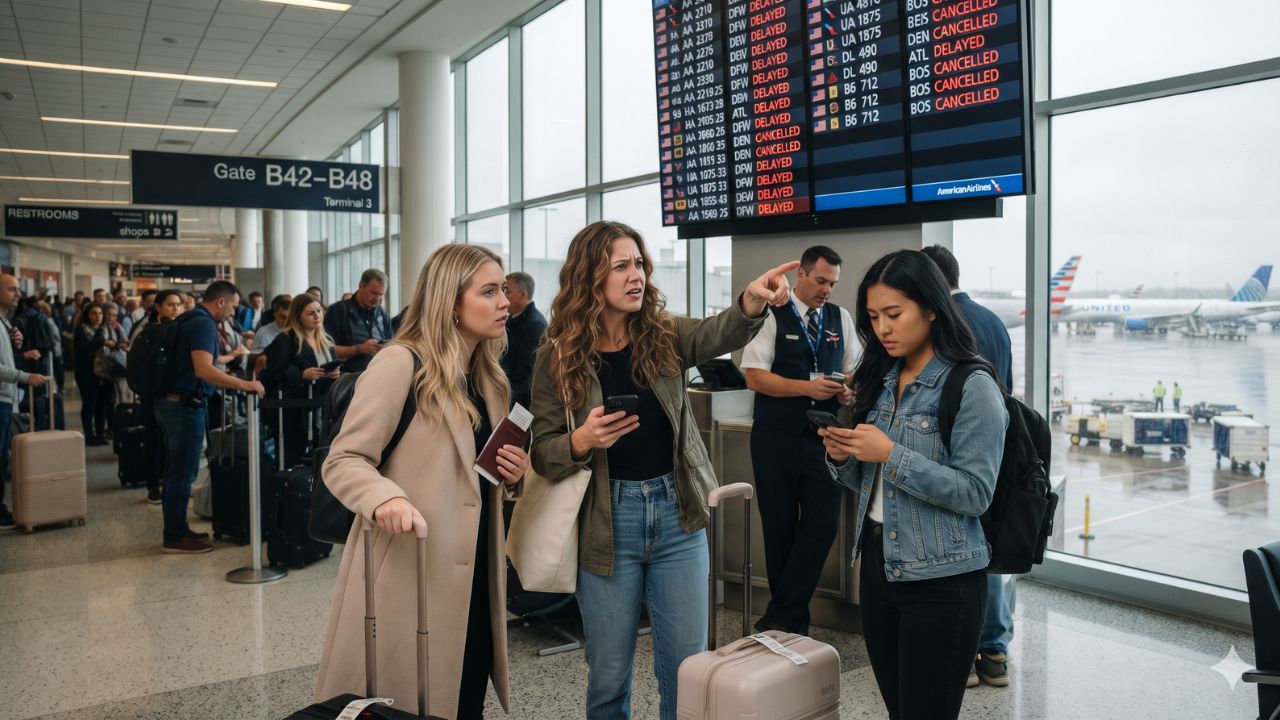
While severe squall lines and blizzards typically dominate headlines about nationwide air travel halts, a deceptively quiet atmospheric condition—dense low cloud ceilings—triggered delays for more than 580 flights and grounded 53 departures across the United States before 10:06 AM EST on 29 October 2026. According to tracking data published by FlightAware, the domestic disruptions formed part of a broader international aviation bottleneck that logged over 8,604 delayed flights and 459 cancellations worldwide. At the center of the American slowdown, the Federal Aviation Administration (FAA) flagged reduced cloud ceilings and degraded visibility across critical hubs in Texas, the Pacific Northwest, and the Mid-Atlantic, forcing air traffic managers to meter arrival and departure rates to preserve safe separation standards.
The Low-Ceiling Ripple Effect: Morning Bottlenecks from Texas to the Capital
The operational friction on 29 October concentrated around key commercial gateways: Austin-Bergstrom International Airport (AUS) and San Antonio International Airport (SAT) in Central Texas, Seattle-Tacoma International Airport (SEA) in Washington state, and the tri-airport airspace surrounding the national capital—Ronald Reagan Washington National Airport (DCA), Washington Dulles International Airport (IAD), and Baltimore/Washington International Thurgood Marshall Airport (BWI).
When low overcast decks drop below Visual Flight Rules (VFR) minimums, airports transition to Instrument Meteorological Conditions (IMC). This regulatory shift prevents air traffic control towers from running visual approaches, requiring wider spacing between arriving aircraft on final approach paths. In Austin and Seattle, initial morning FAA status reports recorded gate-hold and taxi delays held to 15 minutes or less, alongside airborne arrival holds averaging under 15 minutes. However, because commercial airlines operate tightly wound aircraft rotations, minor 15-minute gate holds at regional origin airports quickly cascade into compound delays downline, causing missed passenger connections in subsequent hub banks across Chicago, Dallas, and Atlanta.
Flight Disruption Metrics and FAA Airport Advisory Status (29 October 2026)
The snapshot below details the morning operational statistics, global figures, and specific FAA airport weather advisories recorded on 29 October 2026:
| Operational Parameter | Reported Metric (as of 10:06 AM EST) | Operational Significance |
|---|---|---|
| Total US Domestic Delays | 580 flights | FlightAware tracked arrivals and departures |
| Total US Domestic Cancellations | 53 flights | Airline-initiated flight cancellations |
| Global Air Travel Delays | 8,604 flights | Worldwide aviation tracking benchmark |
| Global Cancellations | 459 flights | International disruption total |
| Texas Airports Under Advisory | Austin (AUS) & San Antonio (SAT) | FAA warning for low morning cloud ceilings |
| Pacific Northwest Gateway | Seattle-Tacoma (SEA) | Marine cloud layer restricting arrival rates |
| Washington, D.C. Airspace Hubs | DCA (Reagan), IAD (Dulles), BWI (Baltimore) | Low visibility impacting Mid-Atlantic corridors |
| Reported Taxi & Gate Holds | 15 minutes or less (AUS & SEA updates) | Localized ground metering during morning banks |
| Consumer Protection Mandate | US DOT Refund Regulations | Mandatory cash refunds for cancelled departures |
Ground Delay Programs: The Invisible Air Traffic Brake
To prevent terminal airspace from becoming dangerously saturated when runway capacity falls, the FAA routinely activates Ground Delay Programs (GDP). Under a GDP, air traffic control holds inbound planes on the ground at their departure airports rather than allowing them to take off and burn excessive fuel in airborne holding patterns near the congested destination.
For travelers waiting at the gate in Denver, Phoenix, or Minneapolis, an announcement stating their flight to Austin or Washington Dulles is delayed due to weather can seem perplexing when skies outside the gate window are completely sunny. Aviation safety experts emphasize that the delay originates from capacity caps at the destination runway, not weather at the departure gate. As the aircraft awaits its metered release time, flight crews risk timing out under mandatory duty limits, creating staffing shortages that can turn a simple morning weather hold into an outright afternoon flight cancellation.
Visitor Insider Tips: Navigating FAA Ground Holds, Reroutes, and DOT Rights
Experienced air travelers navigating US weather advisories rely on strategic tools, regulatory protections, and airport alternatives:
- Monitor Live NAS Status Directly: Rather than waiting for airline text notifications, monitor the official FAA National Airspace System Status page. It displays real-time ground delay programs, airport closure notices, and average arrival delay minutes long before airline mobile applications update boarding passes.
- Know Your Federal Refund Rights Under DOT Rules: Under updated federal rules enforced by the U.S. Department of Transportation Aviation Consumer Protection, passengers are entitled to a full cash refund (not just a flight voucher) if an airline cancels a flight or initiates a significant schedule change and the traveler declines the alternative offered. Crucially, this refund mandate applies regardless of whether the cancellation is caused by low clouds, severe storms, mechanical problems, or crew timeouts.
- Evaluate Washington, D.C. Co-Terminals: If your flight into Reagan National (DCA) is heavily delayed or cancelled due to localized river fog, check same-day availability into Washington Dulles (IAD) or Baltimore/Washington (BWI). Most legacy carriers allow complimentary co-terminal rebookings across the three D.C.-area airports during active weather advisories.
- Pack Critical Medication in Cabin Bags: Never check prescription medicines, contact lens supplies, infant formula, or essential laptop chargers into hold luggage during volatile weather days. If your flight diverts or experiences a protracted tarmac delay, gate agents cannot retrieve checked baggage from aircraft cargo holds.
- Look Beyond the Earliest Flight Option: When rebooking after a cancellation, avoid reflexively accepting the earliest suggested flight if it includes a short 35-minute layover at a secondary hub. Tight connections during active FAA flow-management programs drastically increase the risk of being stranded overnight without luggage.
Cultural and Environmental Context: Gridlock and Aviation Fuel Burn
Modern commercial aviation operates on razor-thin efficiency margins. The hub-and-spoke architecture favored by American carriers maximizes route connectivity, but it also creates structural vulnerabilities: a single localized weather inversion over an airport like Austin-Bergstrom International Airport sends immediate ripples across coast-to-coast travel schedules.
From an environmental standpoint, FAA ground management programs serve as critical fuel-conservation tools. Holding aircraft on the tarmac with engines shut down eliminates millions of pounds of carbon emissions that would otherwise be exhausted by wide-body and narrow-body aircraft flying circular holding patterns in cloudy skies. By prioritizing safety and environmental efficiency over uncalibrated throughput, air traffic managers maintain airspace integrity while challenging travelers to adopt informed, proactive travel habits.
FAQ: Navigating US Flight Delays and Cancellations in 2026
Can I get a cash refund if my flight is cancelled due to weather? Yes. Under US Department of Transportation regulations, passengers are entitled to a full refund to their original payment method if an airline cancels their flight and they choose not to travel on the offered alternative, regardless of the weather cause.
What is an FAA Ground Delay Program? An FAA Ground Delay Program slows air traffic into an airport where weather or runway capacity is restricted by holding departing aircraft on the ground at their departure points.
Which airports were affected by the 29 October low cloud advisory? The FAA advisory covered Austin-Bergstrom (AUS), San Antonio (SAT), Seattle-Tacoma (SEA), and the Washington, D.C. area hubs: Reagan National (DCA), Washington Dulles (IAD), and Baltimore/Washington (BWI).
Where can passengers check live airport delay statuses? Travelers can check real-time air traffic operations and airport delays directly on the FAA National Airspace System Status portal (nasstatus.faa.gov).
When quiet morning clouds slow the pace of transcontinental flight, informed passengers transform airport waiting areas into calculated layovers of resilient travel.
Related Travel Guides
The 10 Best Airport Layover Lounges and Same-Day Flight Change Hacks in the US, According To Reddit (Coming Soon)
This article is for informational purposes. Flight routes, passenger regulations, visa rules, and transit advisories are subject to change by airlines and aviation authorities. Readers are advised to verify schedules and travel documentation with relevant carriers and border agencies before departure.
Related Stories
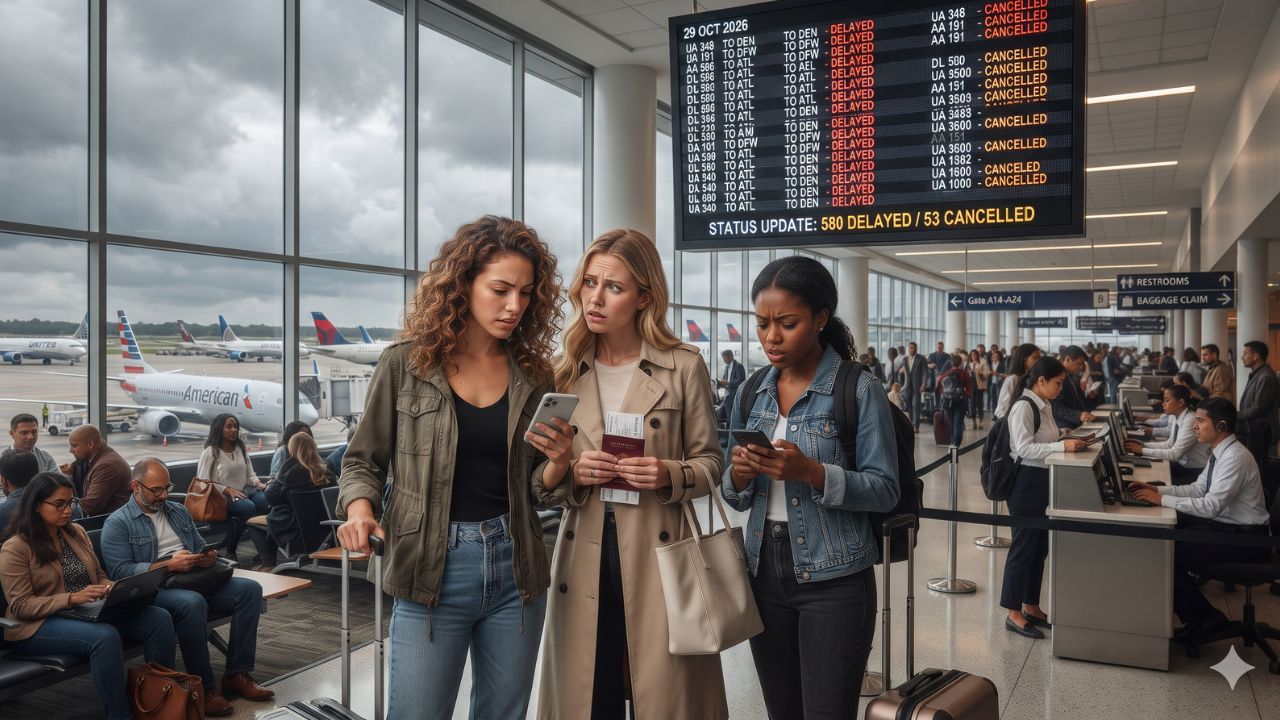
US Flight Disruptions 2026: Low Clouds Trigger 580 Delays and 53 Cancellations Across Key Hubs
US Aviation Squeeze: 1,685 Delays and 84 Cancellations Hit Chicago O’Hare, Los Angeles, and Phoenix