
FAA Advances Dynamic Flight Routing to Ease Transcontinental Congestion Across US Airspace
The FAA and US airlines roll out dynamic flight routing and machine-learning trajectory tools, targeting up to 14-minute savings on transcontinental routes.

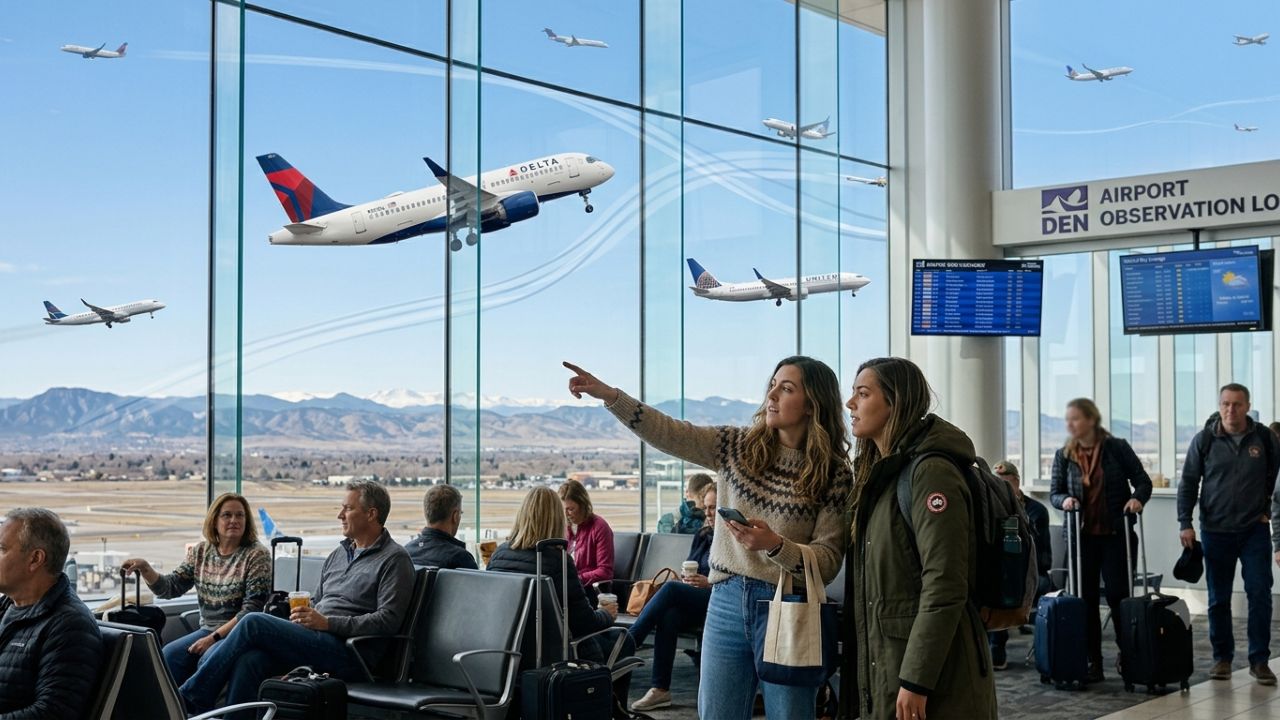
Image generated with AI
The Federal Aviation Administration and major United States airlines are accelerating the deployment of dynamic flight routing and machine-learning trajectory management, aiming to dismantle chronic bottlenecks across the nation’s busiest transcontinental air corridors. Operating in close coordination with carrier dispatch centers, the Federal Aviation Administration (FAA) program integrates satellite-enabled Performance-Based Navigation (PBN) and Trajectory-Based Operations (TBO) to replace rigid, pre-filed flight plans with flexible, real-time routing adjustments. Focusing heavily on high-density coast-to-coast arteries connecting New York (JFK, EWR), Chicago (ORD), Los Angeles (LAX), and San Francisco (SFO), the algorithmic modernization targets reported en-route savings of up to 14 minutes per flight while significantly curtailing tactical airborne holding patterns.
Rather than locking commercial jetliners into static high-altitude Victor airways and Jet routes established during the mid-20th century, dynamic routing continuously ingests real-time atmospheric data, convective thunderstorm developments, special-use military airspace closures, and terminal arrival rates. By predicting congestion hours before aircraft reach terminal airspace, air traffic managers can meter arrivals smoothly, saving millions of gallons of aviation fuel and mitigating the cascading flight delays that routinely paralyze hub networks.
Breaking the Transcontinental Gridlock: Why Fixed Jet Airways Fail
The United States National Airspace System (NAS) handles more than 45,000 commercial flights daily, with the heaviest concentration funneled through coast-to-coast transcontinental corridors. East Coast international hubs like New York’s John F. Kennedy International and Newark Liberty serve as primary European gateways, while West Coast powerhouses Los Angeles International and San Francisco International handle transpacific arrivals. Anchoring the continent's interior, Chicago O’Hare acts as the primary connecting nexus between coastal networks.
Historically, flights across these trunk routes have been assigned static, one-size-fits-all flight paths hours before departure. However, transcontinental aircraft traverse multiple weather regimes, regional jet stream variations, and shifting military warning areas during a typical five-to-six-hour cross-country journey. When unexpected convective cells erupt over the Midwest or Great Plains, static routes force controllers to issue tactical en-route doglegs or ground-stop aircraft at departure gates.
Dynamic flight routing fundamentally changes this paradigm by empowering airline dispatchers and air traffic control command centers to collaboratively modify 4D trajectories (latitude, longitude, altitude, and time) while aircraft are in cruise.
| Transcontinental Route Corridor | Key Hub Gateways | Primary Historical Bottleneck | Legacy Flight Management | Dynamic Routing / TBO Solution |
|---|---|---|---|---|
| New York to Los Angeles | JFK / EWR to LAX | Midwestern squall lines & Western arrival metering | Rigid Q-routes, step-down descents, vectoring | Real-time weather re-routes & Continuous Descent Operations |
| New York to San Francisco | JFK / EWR to SFO | High-altitude Rocky Mountain turbulence & Bay Area fog | En-route holding stacks over Reno / Sacramento | Pre-sequenced speed adjustments 300+ miles out |
| Chicago to West Coast | ORD to LAX / SFO | En-route sector capacity caps & afternoon departure banks | Miles-in-trail (MIT) spacing restrictions | Time-based trajectory metering with automated PBN spacing |
Satellite Precision and Trajectory-Based Operations (TBO)
The technological backbone of dynamic flight management rests on the transition from ground-based radar beacons to satellite positioning. Under Performance-Based Navigation (PBN), modern jet transports utilize Area Navigation (RNAV) and Required Navigation Performance (RNP) avionics to execute precise, curved flight paths with sub-mile navigational accuracy.
Trajectory-Based Operations takes PBN a step further by treating each flight as a continuous, four-dimensional trajectory managed through space and time. Instead of relying on radar controllers to issue reactive heading vectors every few minutes, the FAA’s Air Traffic Control System Command Center (ATCSCC) in Warrenton, Virginia, coordinates with airline operations centers using System Wide Information Management (SWIM) digital architecture.
COLLABORATIVE TRAJECTORY-BASED OPERATIONS (TBO)
| Column 1 |
|---|
| SWIM DIGITAL DATA EXCHANGE PLATFORM |
| - Ingests ADS-B satellite telematics & airborne winds aloft |
| - Machine-learning engine computes dynamic conflict-free routes |
By anticipating bottlenecks hundreds of miles prior to arrival, en-route centers can instruct aircraft to adjust cruise speeds by just a few knots hours before arrival. This gentle speed metering absorbs delays in fuel-efficient high-altitude cruise rather than burning thousands of pounds of fuel in low-altitude circular holding patterns near destination airports.
Machine Learning in Modern Air Traffic Management
Processing the millions of operational variables required to dynamically reroute transcontinental aircraft exceeds human cognitive capacity during severe weather events. To assist controllers, the FAA and airline partners are integrating predictive machine-learning algorithms into tactical decision support systems.
Machine-learning engines ingest:
- High-Resolution Meteorological Forecasts: Convective storm growth, cloud-top heights, en-route clear-air turbulence, and shifting upper-level jet stream cores.
- Sector Workload Telemetry: Real-time sector complexity metrics evaluating how many aircraft an individual air traffic controller is actively handling.
- Airport Acceptance Rates (AAR): Runway configurations, surface ground movements, and visual vs. instrument meteorological conditions (VMC/IMC).
Aviation safety experts emphasize that machine-learning algorithms serve an advisory function rather than an autonomous command role. The National Air Traffic Controllers Association (NATCA) maintains that human air traffic controllers retain absolute legal authority over all routing clearances and separation standards. Machine-learning recommendations must conform strictly to standard radar separation rules—typically five nautical miles lateral separation en route and 1,000 feet vertical separation under Reduced Vertical Separation Minimum (RVSM) rules.
Eliminating Tactical Holding and Reducing Emissions
Among the most tangible consumer and environmental benefits of dynamic flight routing is the reduction of airborne holding. In traditional air traffic management, when arrival runways reach saturation, controllers funnel trailing aircraft into stacked oval holding patterns, requiring continuous low-altitude throttling and high fuel burn.
===========================================================================
             LEGACY HOLDING VS. DYNAMIC CONTINUOUS DESCENT
===========================================================================

 LEGACY AIRBORNE HOLDING PATTERN:
  [Cruise 35,000 ft] ---> [Stepped Descent] ---> [Low-Altitude Holding Stack]
                                                       (Burning 2,500+ lbs fuel)
                                                                 |
                                                          [Final Approach]

 DYNAMIC ROUTING & TBO PROFILE:
  [Cruise 35,000 ft] -------------------------> [Continuous Descent Profile]
   (Speed managed en route via data link)        (Smooth idle-thrust glide)
                                                                 |
                                                          [Direct Touchdown]
===========================================================================
The reported operational savings of up to 14 minutes per transcontinental flight would deliver transformative financial and environmental benefits across the airline industry. On a typical Boeing 737 or Airbus A321 transcontinental service, saving 14 minutes in flight time equates to reducing fuel burn by approximately 250 to 350 gallons per flight. Scaled across hundreds of daily coast-to-coast flights operated by United, American, Delta, and Alaska Airlines, dynamic routing has the potential to eliminate tens of thousands of metric tons of carbon dioxide emissions annually.
Network Domino Effects and Airline Hub Reliability
In a hub-and-spoke airline network, delays never occur in isolation. An inbound aircraft arriving 30 minutes late from San Francisco into Chicago O’Hare often triggers missed connections for dozens of international passengers, delays subsequent evening departures to East Coast destinations, and pushes flight crews past contractual duty-time limits.
By smoothing en-route trajectories and minimizing arrival volatility, dynamic flight routing injects predictability into airline schedule buffers. Ground crews can plan gate turnarounds with higher confidence, baggage handling systems avoid transfer gridlock, and travelers enjoy more reliable connections.
However, aviation industry analysts caution that technology alone cannot completely solve air travel disruptions. Dynamic routing cannot expand the physical number of concrete runways at constrained airports like Newark, nor can it eliminate flight delays caused by airline crew scheduling breakdowns or severe ground equipment failures. Its true value lies in extracting maximum efficiency from existing airspace assets while keeping passenger safety paramount.
Frequently Asked Questions: FAA Dynamic Flight Routing
What is dynamic flight routing in air traffic control?
Dynamic flight routing allows air traffic managers and airline dispatchers to adjust an aircraft's en-route flight path in real time based on weather, wind patterns, and airspace congestion, rather than relying on rigid pre-filed routes.
How much flight time can dynamic routing save on transcontinental flights?
Operational trials and program reports indicate that dynamic routing and optimized en-route sequencing can save up to 14 minutes per flight on high-density transcontinental routes between the East and West coasts.
Does machine learning replace human air traffic controllers?
No. Machine-learning tools function purely as decision-support systems that analyze airspace patterns. Certified human FAA controllers retain full authority over flight clearances and must maintain strict radar separation standards.
How does dynamic routing reduce airline carbon emissions?
By replacing low-altitude airborne holding patterns with smooth continuous descent operations and optimal high-altitude wind paths, dynamic routing cuts flight times and significantly reduces jet fuel consumption.
Related Travel Guides
Disclaimer
This article is for informational and educational purposes only. It does not constitute legal, financial, or professional advice. While we strive to provide accurate and up-to-date information, travel policies, regulations, and conditions change rapidly. Always verify information with official sources before making travel decisions. Nomad Lawyer makes no representations about the accuracy, reliability, completeness, or suitability of the information provided. Readers should consult qualified professionals for advice specific to their circumstances. The views expressed in this article are those of the author and do not necessarily reflect the views of Nomad Lawyer.
Kunal K Choudhary
Co-Founder & Contributor
A passionate traveller and tech enthusiast. Kunal contributes to the vision and growth of Nomad Lawyer, bringing fresh perspectives and driving the community forward.
Learn more about our team →