
US Aviation Crisis 2026: 689 Cancellations and 4,798 Delays Hit Chicago O'Hare and New York Hubs
Severe thunderstorms trigger FAA traffic-management restrictions across the US, resulting in 4,798 delays and 689 cancellations, with Chicago O'Hare and JFK airports emerging as the primary disruption hotspots.

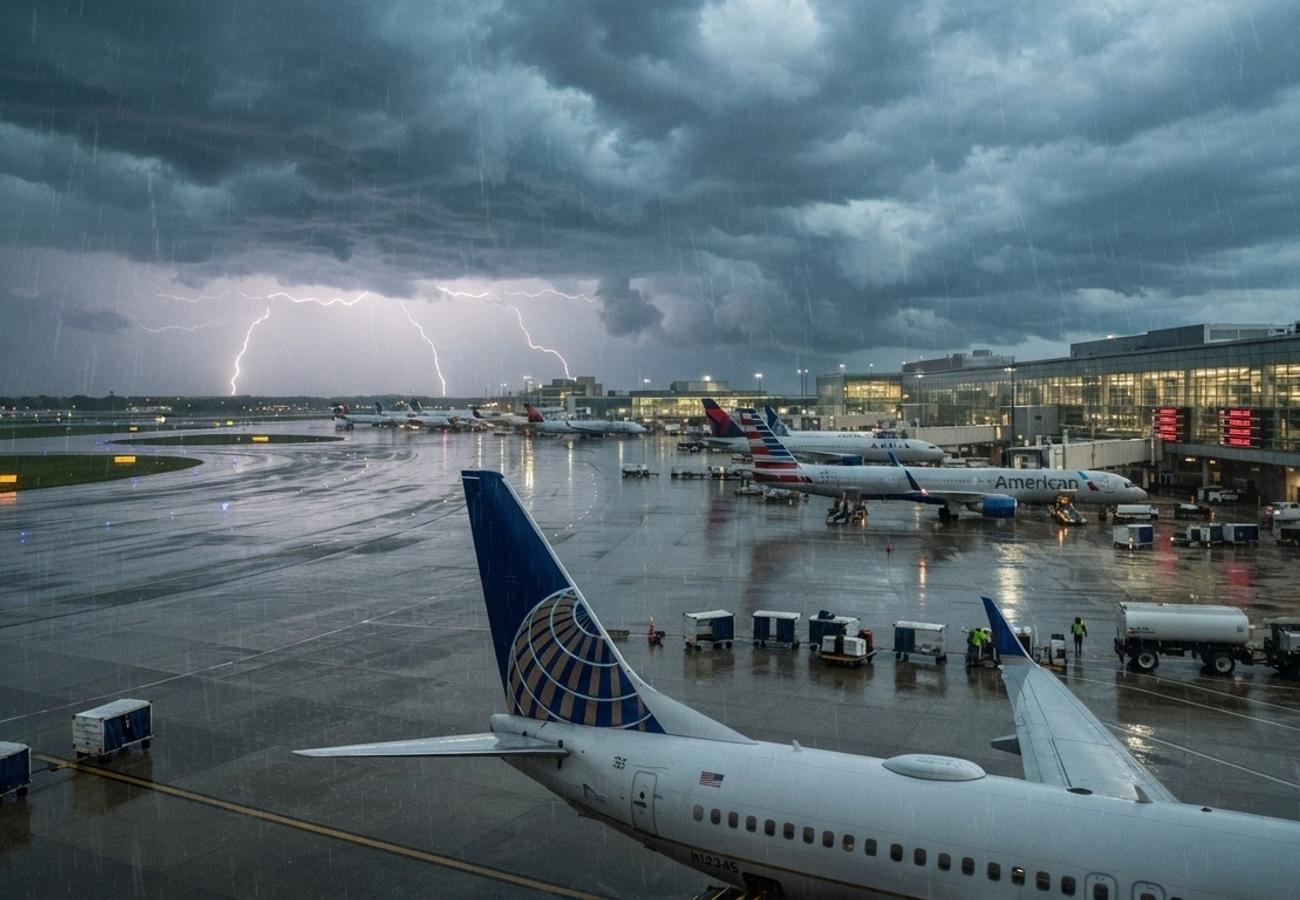
Image generated by AI
Severe thunderstorms have triggered FAA traffic-management restrictions across the United States, resulting in 4,798 delays and 689 cancellations. Chicago O’Hare has emerged as the primary disruption hotspot, accounting for nearly 39% of all national cancellations.
Nationwide Aviation Disruption Analysis
The US aviation network is currently experiencing concentrated operational failure, specifically within the Midwest and Northeast corridors. The Federal Aviation Administration (FAA) has implemented ground stops and ground-delay programs to manage thunderstorm activity, creating a tiered level of disruption where some hubs are absorbing massive delays while others are cancelling flights outright.
Chicago O’Hare (ORD) is the epicenter of the crisis, recording 1,055 delays and 266 cancellations. To put this in perspective, O'Hare's cancellation volume represents 38.6% of the 689 total cancellations nationwide. In contrast, John F. Kennedy International (JFK) is seeing a higher proportion of outright cancellations relative to its delay volume, with 141 cancellations accounting for 20.5% of the national total.
The nature of the disruption varies by hub. Hartsfield-Jackson Atlanta (ATL) exemplifies a "delay-heavy" model, reporting 381 delays but only six cancellations. This indicates that while aircraft are moving, the system is operating at a severe deficit in timing, whereas airports like JFK and LaGuardia are opting for schedule removals to maintain safety and flow.
Hub-Specific Operational Data
The following table details the precise impact on the most affected US airports:
| Airport | Delays | Cancellations | Avg. Delay Status | Current Trend |
|---|---|---|---|---|
| Chicago O’Hare (ORD) | 1,055 | 266 | 75 Minutes | Decreasing |
| John F. Kennedy (JFK) | 317 | 141 | 177 Minutes | Stable/High |
| LaGuardia (LGA) | 354 | 89 | 30 Minutes | Decreasing |
| Reagan National (DCA) | 296 | 72 | 59 Minutes | Stable |
| Newark Liberty (EWR) | 269 | 60 | 15 Minutes | Increasing |
| Hartsfield-Jackson (ATL) | 381 | 6 | 60 Minutes | Increasing |
| Boston Logan (BOS) | 205 | 26 | N/A | Stable |
| Philadelphia (PHL) | 151 | 30 | N/A | Stable |
Airline Performance and Pressure Points
The operational burden is not distributed equally across carriers. American Airlines is currently facing the highest volume of timing disruptions, while Republic Airways is seeing the most significant impact on total scheduled flights.
- American Airlines: 423 delays, 54 cancellations.
- Republic Airways: 304 delays, 145 cancellations (Highest national cancellation total).
- SkyWest: 357 delays, 76 cancellations.
- Endeavor Air: 261 delays, 100 cancellations.
- JetBlue: 261 delays, 68 cancellations.
Traveler Logistics Guide: Navigating the Gridlock
From a ground-level perspective, the best way to navigate this specific type of weather-induced gridlock is to monitor the "Trend" column of airport performance rather than the "Average Delay" number.
1. Understanding the Trend If you are flying through Newark Liberty or Atlanta, be aware that delays are currently increasing. In these scenarios, an initial 15 or 60-minute delay often cascades into a 3-hour wait as the FAA restricts flow. Do not head to the airport based on the first notification; wait for a "confirmed" boarding window.
2. Connection Strategy For those connecting through Chicago O'Hare, the trend is currently decreasing. This suggests that the ground-stop pressure is easing. However, given that 266 flights were cancelled, the risk of "misconnects" is high. If your arrival and departure are on different airlines, ensure you have a minimum of 4 hours between flights during this window.
3. Digital Transit Policies Ensure your airline notifications are set to "Push" rather than "Email." In high-volatility environments like JFK, gate assignments change rapidly. Use the airline's mobile app to track the aircraft's "Inbound Flight" status; if the plane coming to pick you up is still grounded in another city, your flight will be delayed regardless of the local weather at your hub.
4. Customs and Security During mass delay events, security checkpoints often become congested as passengers from cancelled flights linger in the terminal. If you are utilizing digital identity programs (such as TSA PreCheck or Clear), be prepared for longer-than-usual queues as staff manage the overflow of displaced passengers.
Infrastructure Impact Assessment
This event highlights a systemic vulnerability in the US Northeast and Midwest aviation corridors. The fact that a single hub (O'Hare) can account for nearly 40% of national cancellations during a weather event suggests a lack of diversionary capacity. When primary hubs freeze, the surrounding regional airports lack the infrastructure to absorb the overflow, leading to the "ground-stop" phenomenon seen today. This reinforces the need for increased investment in weather-resilient air traffic management systems and more flexible routing protocols to prevent total regional paralysis.
Aviation stability remains fragile as weather patterns continue to challenge hub-and-spoke efficiency.
Related Travel Guides
Disclaimer
This article is for informational and educational purposes only. It does not constitute legal, financial, or professional advice. While we strive to provide accurate and up-to-date information, travel policies, regulations, and conditions change rapidly. Always verify information with official sources before making travel decisions. Nomad Lawyer makes no representations about the accuracy, reliability, completeness, or suitability of the information provided. Readers should consult qualified professionals for advice specific to their circumstances. The views expressed in this article are those of the author and do not necessarily reflect the views of Nomad Lawyer.
Kunal K Choudhary
Co-Founder & Contributor
A passionate traveller and tech enthusiast. Kunal contributes to the vision and growth of Nomad Lawyer, bringing fresh perspectives and driving the community forward.
Learn more about our team →