
US Aviation Crisis 2026: 310 Cancellations and 2,989 Delays Hit Denver and Hawaii Hubs
Severe weather, including Tropical Storm Lala in Hawaii and thunderstorms in Colorado, triggered 2,989 delays and 310 cancellations across 15 major US airports.

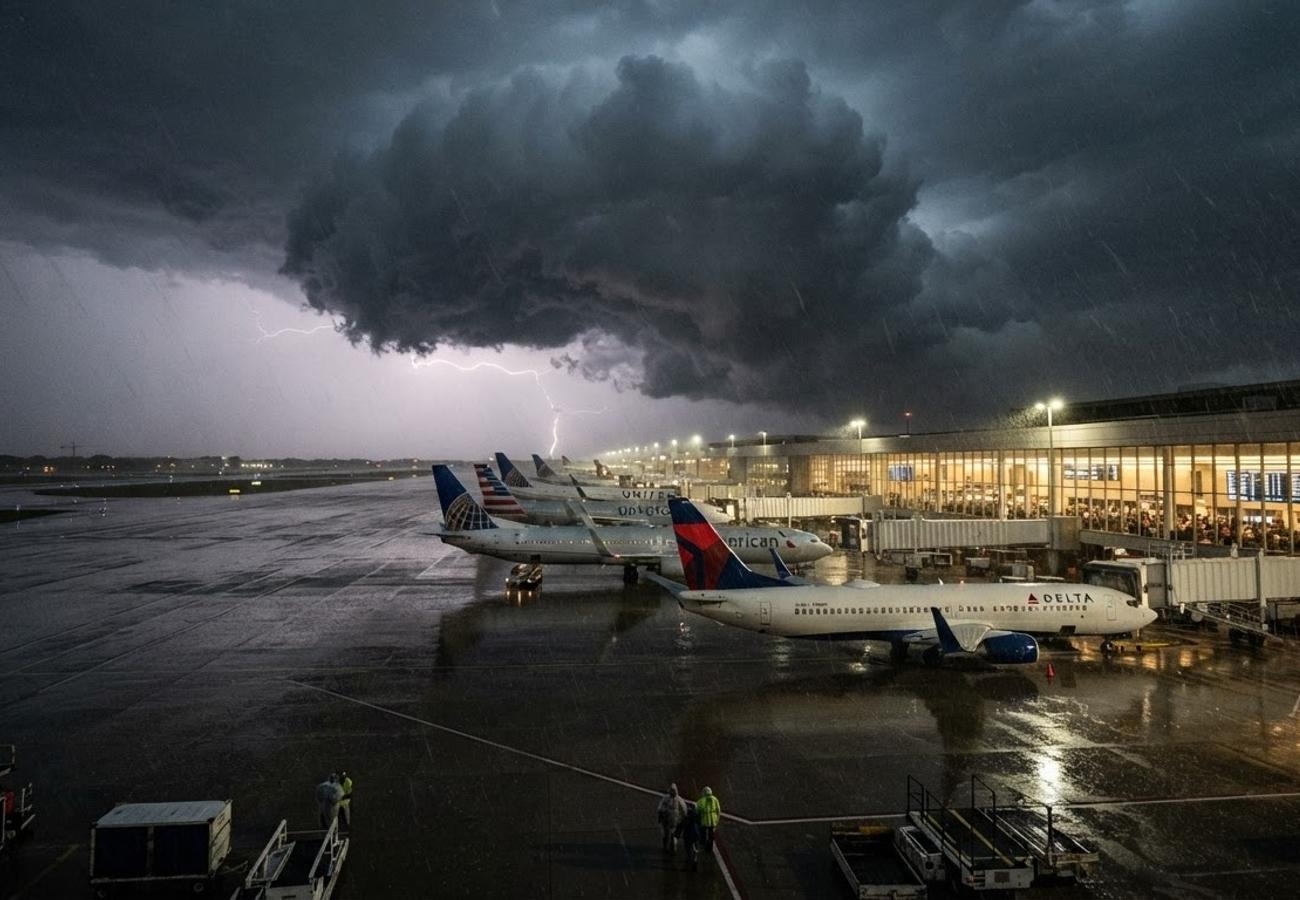
Image generated by AI
Severe weather patterns have paralyzed US airspace, resulting in 2,989 flight delays and 310 cancellations. Tropical Storm Lala has crippled Hawaiian aviation hubs, while flash flood warnings in Colorado have turned Denver into the nation's primary delay center.
The United States aviation network faced significant operational instability on August 15-16, 2026, as two distinct weather systems triggered widespread disruptions. Data from FlightAware indicates that the impact was concentrated across 15 major airports, with a sharp divide between regions suffering from systemic delays and those facing total flight cancellations.
The most acute crisis is currently centered in Hawaii, where Tropical Storm Lala has strengthened near the Big Island. The National Hurricane Center has issued hurricane warnings for the region, citing wind gusts of 70 mph (113 km/h) and projected rainfall of up to 25 inches (63.5 centimeters) in higher elevations. These conditions have created a high risk of life-threatening mudslides and have rendered several island airports nearly inoperable.
Simultaneously, the Mountain West is struggling with severe thunderstorms. Denver International Airport became the epicenter of mainland disruptions, where a flood watch remained in effect from 2 p.m. to 10 p.m., shifting the operational burden from cancellations to massive scheduling delays.
Regional Operational Impact Data
The following table outlines the specific disruption metrics across the most affected transit hubs.
| Airport | Delays | Cancellations | Primary Driver |
|---|---|---|---|
| Denver International (DEN) | 316 | 60 | Thunderstorms / Flood Watch |
| Daniel K. Inouye Intl (HNL) | 26 | 83 | Tropical Storm Lala |
| San Francisco Intl (SFO) | 184 | 13 | Systemic Ripple Effect |
| Hartsfield-Jackson Atlanta (ATL) | 168 | 10 | Systemic Ripple Effect |
| Los Angeles Intl (LAX) | 135 | 22 | Systemic Ripple Effect |
| Kahului (OGG) | 8 | 51 | Tropical Storm Lala |
| Kona (KOA) | 9 | 47 | Tropical Storm Lala |
| Seattle-Tacoma (SEA) | 128 | 21 | Systemic Ripple Effect |
| Harry Reid Las Vegas (LAS) | 94 | 15 | Systemic Ripple Effect |
| Lihue (LIH) | 6 | 19 | Tropical Storm Lala |
Airline Performance and Reliability Metrics
Carrier-specific data reveals that Southwest Airlines bore the heaviest overall burden, while Hawaiian Airlines suffered the most severe percentage of cancellations.
- Southwest Airlines: Recorded 529 delays (16% of total flights) and 81 cancellations.
- United Airlines: Recorded 273 delays (9% of total flights) and 57 cancellations.
- Hawaiian Airlines: Recorded 14 delays and 57 cancellations, representing a 25% cancellation rate—the highest in the US.
- Delta Air Lines: Recorded 240 delays (7% of total flights) and 24 cancellations.
- Alaska Airlines: Recorded 60 delays (6% of total flights) and 25 cancellations.
Traveler Logistics Guide: Navigating Severe Disruptions
From a ground-level perspective, the best way to navigate these disruptions is to distinguish between "delay-heavy" hubs and "cancellation-heavy" hubs.
For Hawaii Travelers: If you are transiting through Honolulu, Kahului, Kona, or Lihue, do not proceed to the airport without a confirmed "Active" status on your flight. The current pattern shows cancellations far outweighing delays; if a flight is flagged, it is more likely to be scrapped than rescheduled. Monitor the National Hurricane Center updates for the Big Island specifically.
For Mainland Hub Travelers (DEN, SFO, ATL, LAX): In Denver and other major hubs, the issue is volume-based delays. The best strategy here is to allow an additional 3–5 hours for connections. If you have a tight layover (under 90 minutes) in Denver during a flood watch, contact your airline immediately to explore rebooking on a later flight to avoid being stranded.
Digital Transit Protocols: Ensure your airline app notifications are enabled for push alerts. For those utilizing digital identity frameworks like Digi Yatra or similar biometric boarding in international hubs, ensure your documents are updated offline, as airport Wi-Fi often bottlenecks during mass delay events.
Infrastructure Impact Assessment
This event highlights a growing vulnerability in the US aviation infrastructure: the "ripple effect." While the primary weather events were localized to Hawaii and Colorado, airports in Atlanta, San Francisco, and Los Angeles saw hundreds of delays. This indicates that the current hub-and-spoke model lacks the elasticity to absorb regional shocks without affecting the entire national grid.
The high cancellation rate of Hawaiian Airlines (25%) underscores the precarious nature of island-hopping logistics during the hurricane season, where limited runway alternatives make total shutdowns inevitable.
Safe travels require constant vigilance during the 2026 storm season.
Related Travel Guides
Disclaimer
This article is for informational and educational purposes only. It does not constitute legal, financial, or professional advice. While we strive to provide accurate and up-to-date information, travel policies, regulations, and conditions change rapidly. Always verify information with official sources before making travel decisions. Nomad Lawyer makes no representations about the accuracy, reliability, completeness, or suitability of the information provided. Readers should consult qualified professionals for advice specific to their circumstances. The views expressed in this article are those of the author and do not necessarily reflect the views of Nomad Lawyer.
Preeti Gunjan
Contributor & Community Manager
A passionate traveller and community builder. Preeti helps grow the Nomad Lawyer community, fostering engagement and bringing the reader experience to life.
Learn more about our team →