
United States Introduces AI Air Traffic Control System in Washington DC to Transform Travel With Faster Flights and Fewer Delays
United States Introduces AI Air Traffic Control System in Washington DC to Transform Travel With Faster Flights and Fewer Delays

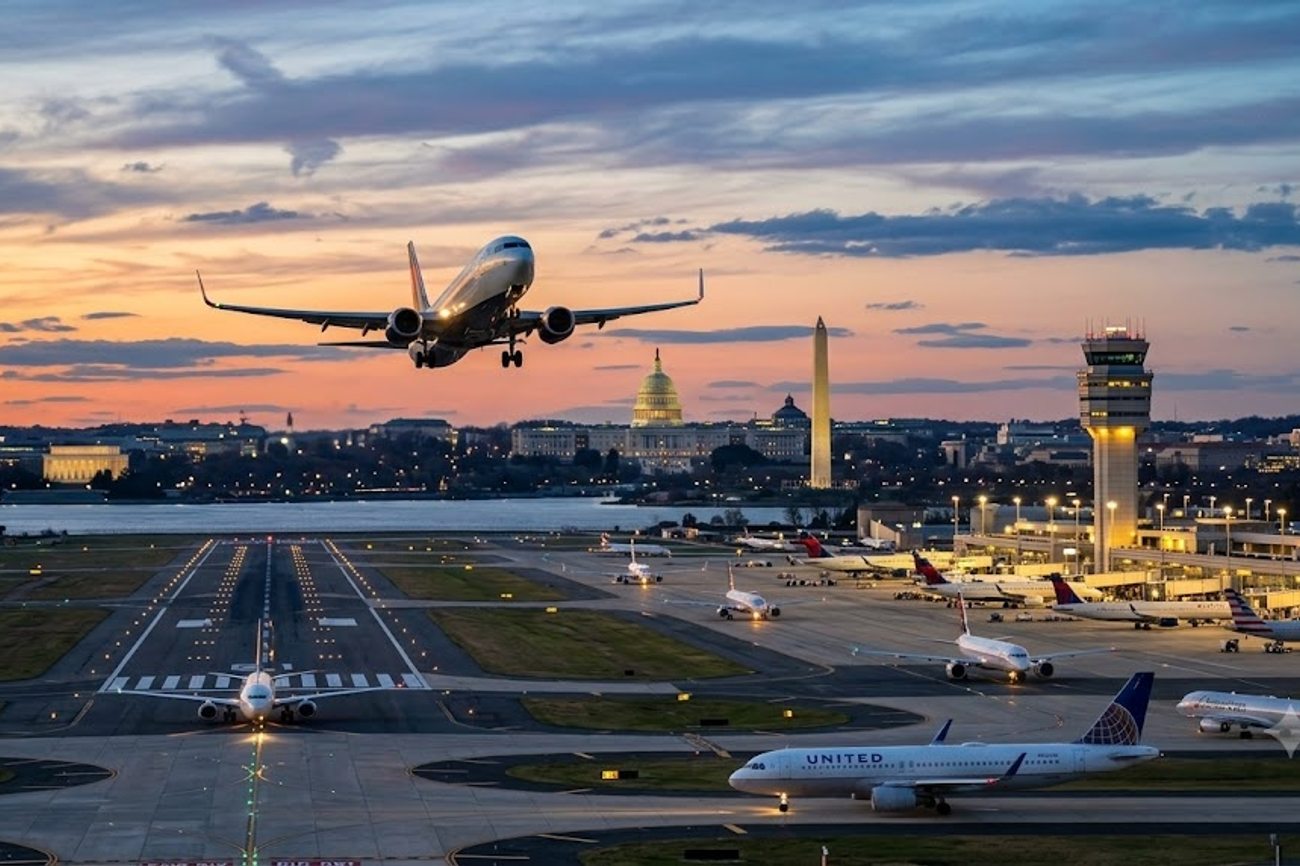
Image generated by AI
[Washington, D.C., May 2024] — The Federal Aviation Administration (FAA) is launching a high-stakes pilot program in the Washington, D.C. region to test "Smart," a new artificial intelligence platform designed to modernize air traffic management. This initiative marks a pivotal shift toward predictive aviation operations, moving away from reactive delay management to a system that anticipates conflicts before they materialize in the sky.
The Federal Aviation Administration (FAA) has commissioned Air Space Intelligence to lead the development of the platform under a massive 12-year contract valued at $875 million. By integrating real-time data on weather, airspace restrictions, and runway capacity, the Smart system aims to streamline one of the most congested and politically sensitive corridors of airspace in the United States. If the D.C. trial proves successful, the agency intends to scale the technology across the entire national airspace system.
The Catalyst for AI Integration
The push for the Smart platform stems from a volatile combination of rising passenger demand and stagnant physical infrastructure. Current air traffic management systems are struggling to keep pace with a more complex operating environment characterized by constrained facility capacity and an increase in flight volumes.
Traditional management relies heavily on manual coordination and reactive adjustments. When a disruption occurs—such as a sudden thunderstorm or a runway closure—the resulting delays often trigger a "chain reaction" that ripples across the network, affecting crew schedules, aircraft rotations, and connecting passengers thousands of miles away. The FAA is investing in AI to break this cycle by providing controllers with a "central intelligence" layer that can process vast amounts of operational data faster than humanly possible.
High-Risk Testing: Why Washington, D.C.?
The FAA selected the Washington, D.C. airspace specifically because it is one of the most difficult environments to manage globally. The region serves as a stress test for the AI because it requires the simultaneous coordination of diverse and often conflicting aviation needs.
The following factors make the D.C. region the primary testing ground:
- High Commercial Volume: Intense pressure on existing airspace capacity due to heavy passenger traffic.
- Restricted Airspace: The presence of government-mandated "no-fly" zones and high-security restricted areas that complicate routing.
- Multi-Airport Coordination: The need to synchronize movements across several major hubs and regional airports.
- Weather Volatility: Frequent weather-related disruptions that lead to systemic cancellations.
- Rigid Flexibility: Limited available airspace for diversions or holding patterns.
By deploying Smart in this environment, the FAA can determine if the AI can successfully identify potential conflicts in a high-pressure scenario before they impact flight schedules.
What This Means for Travelers
For the average passenger, the implementation of the Smart platform is not about the technology itself, but about the reduction of "friction" during the travel experience. While the AI operates behind the scenes, the tangible impacts will be felt at the gate and in the air.
1. Reduced "Cascade" Delays Currently, a 30-minute delay in D.C. can cause a two-hour delay for a passenger in Atlanta or Chicago because the aircraft or crew is displaced. AI-driven predictive routing aims to resolve these bottlenecks earlier, preventing a single local disruption from paralyzing a national network.
2. More Accurate Departure Times Because the system analyzes runway capacity and weather in real-time, airlines can provide more accurate boarding and departure windows. This reduces the time passengers spend idling on the tarmac waiting for a takeoff slot.
3. Improved Reliability During Storms Instead of blanket cancellations during severe weather, the AI can help aviation officials identify alternative routing options and balance airport arrivals and departures more efficiently, potentially saving flights that would otherwise be scrapped.
4. Stable Scheduling Better coordination between the FAA and commercial airlines means aircraft movements can be scheduled with higher precision, leading to better on-time performance across the board.
The Human Element: Support, Not Replacement
A critical component of the Smart rollout is the preservation of human oversight. The FAA has explicitly stated that this AI technology is designed to enhance the capabilities of air traffic controllers, not replace them.
The AI functions as a sophisticated advisory tool. It will handle the "heavy lifting" of data analysis—processing flight schedules, aircraft movements, and operational limitations—and then present operational recommendations and early warnings to human experts. However, the final decision-making authority remains with the trained aviation professionals. The FAA maintains that human judgment, communication skills, and accountability are irreplaceable, particularly during unexpected emergencies or highly complex maneuvers where AI may lack the nuance required for safe execution.
The $875 Million Roadmap
The partnership with Air Space Intelligence is a long-term commitment. The 12-year contract reflects the complexity of integrating AI into a legacy infrastructure. The Smart platform is intended to be the digital cornerstone of a broader modernization strategy that includes upgrading aging communications hardware and digital infrastructure.
As the system evolves, it will move from a regional tool in Washington, D.C., to a national intelligence platform. The goal is to create a seamless, data-driven network where every airport and air traffic control center in the U.S. is operating from the same predictive data set. This would allow for a level of synchronization previously impossible under fragmented, human-led reporting systems.
FAQ: FAA AI Integration 2024
Will AI be flying the planes or controlling the traffic? No. The Smart system is a decision-support tool. It analyzes data and suggests the most efficient routes or schedules, but licensed air traffic controllers continue to make all final operational decisions and give direct orders to pilots.
How will this affect my current flight bookings? In the short term, you won't see a change in how you book. In the long term, the goal is a measurable increase in on-time arrivals and a decrease in the number of flights cancelled due to "air traffic control" or "network" issues.
Is the system safe for passengers? Yes. The system is designed to increase safety by identifying potential traffic conflicts earlier than traditional methods. It adds a layer of predictive analysis to the existing safety protocols managed by the FAA.
When will this be available outside of Washington, D.C.? The FAA has not provided a specific date for national rollout, but the 12-year contract with Air Space Intelligence suggests a phased deployment following the successful testing of the D.C. pilot.
A new era of predictive skies begins in the nation's capital.
#FAA #AirSpaceIntelligence #WashingtonDC #AviationAI #FlightDelays #AirTrafficControl
Related Travel Guides
- Sweden Unlocks Viking Heritage Travel With Authentic History Experiences Beyond Myths
- Nepal Set To Enter A New Travel Era With Powerful Passport Free System For Millions Of Foreign Visitors
- United Arab Emirates AlongSides Bahrain Unlock the Next Big Tourism Boom With Advanced Connectivity and Smart Travel Solutions
Disclaimer
This article is for informational and educational purposes only. It does not constitute legal, financial, or professional advice. While we strive to provide accurate and up-to-date information, travel policies, regulations, and conditions change rapidly. Always verify information with official sources before making travel decisions. Nomad Lawyer makes no representations about the accuracy, reliability, completeness, or suitability of the information provided. Readers should consult qualified professionals for advice specific to their circumstances. The views expressed in this article are those of the author and do not necessarily reflect the views of Nomad Lawyer.
Raushan Kumar
Founder & Lead Developer
Full-stack developer with 11+ years of experience and a passionate traveller. Raushan built Nomad Lawyer from the ground up with a vision to create the best travel and law experience on the web.
Learn more about our team →