
United Kingdom Tourism Gains Momentum as Halton Visitor Economy Reaches £225 Million in 2025
United Kingdom Tourism Gains Momentum as Halton Visitor Economy Reaches £225 Million in 2025

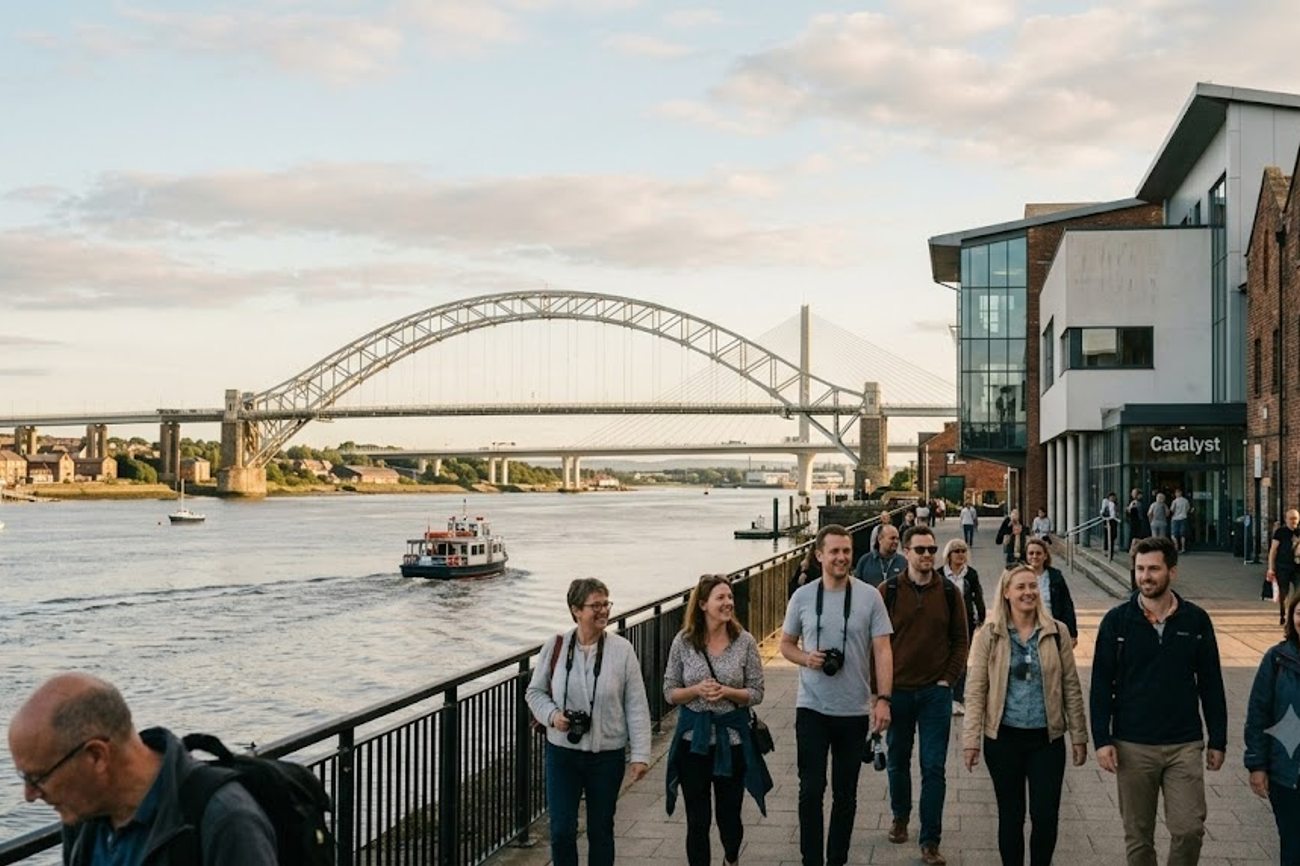
Image generated by AI
The visitor economy in Halton has surged to £225.04 million in 2025, representing a 4.9 per cent increase in economic value over a single year. This growth mirrors a broader structural shift within the Liverpool City Region, where the total visitor economy has climbed to £6.834 billion, signaling a pivot away from concentrated urban tourism toward diversified regional hubs.
The Halton Tourism Metric: 2025 Performance Data
The latest independent STEAM (Scarborough Tourism Economic Activity Monitor) research indicates that Halton is no longer merely a transit point but a primary destination. In 2025, the borough recorded 3.08 million visitors, a 2.4 per cent increase compared to 2024 figures. This volume of traffic is split between two distinct traveler profiles: the high-volume day-tripper and the high-value overnight guest.
Day-trip volume remains the primary driver of footfall, with 2.74 million visitors utilizing the borough for short-term leisure. However, the more critical data point for long-term economic sustainability is the overnight stay metric. Halton welcomed 340,000 overnight visitors in 2025, a 2 per cent increase year-over-year. This specific growth is vital because it reverses a previous trend of declining overnight stays, suggesting that the borough is successfully converting "stop-over" traffic into "stay-over" revenue.
The economic ripple effect of this increased footfall is evident in the labor market. Tourism-supported employment in Halton rose by 4.7 per cent, bringing the total number of sector-connected jobs to 2,165. When analyzed alongside the 4.9 per cent increase in total visitor economy value, the data suggests a highly efficient conversion of visitor volume into local employment and spending.
Regional Benchmarking: Halton vs. Liverpool City Region
To understand Halton's performance, it must be viewed as a component of the wider Liverpool City Region (LCR) ecosystem. The LCR has seen a massive influx of activity, with total visitor numbers reaching over 61.5 million, a 7.8 per cent increase. While Halton's visitor growth of 2.4 per cent is more conservative than the regional average, its ability to grow its visitor economy value by 4.9 per cent suggests that visitors to Halton may be spending more per capita than the regional mean.
The regional spending increase of 9.3 per cent across the LCR indicates a strong inflationary or behavioral shift toward higher-spend tourism. Halton is capitalizing on this by leveraging niche heritage and science-based attractions—such as the Catalyst Science Discovery Centre and Norton Priory Museum & Gardens—which typically attract family demographics with higher average transaction values than solo urban explorers.
The following table breaks down the performance metrics of Halton relative to the broader Liverpool City Region for 2025:
| Metric | Halton (Borough) | Liverpool City Region (Total) | Regional Variance/Context |
|---|---|---|---|
| Total Visitor Volume | 3.08 Million | 61.5 Million | Halton represents ~5% of LCR volume |
| Visitor Growth (%) | 2.4% | 7.8% | LCR growing faster in raw volume |
| Economic Value | £225.04 Million | £6.834 Billion | Halton is a key regional contributor |
| Economy Value Growth | 4.9% | 9.3% | Strong growth, though below LCR avg |
| Tourism Employment | 2,165 Jobs | 57,591 Jobs | 4.7% growth in Halton employment |
| Overnight Visitors | 340,000 | Not Specified | 2% increase in Halton |
This distribution of growth suggests a "hub-and-spoke" model of tourism. While the primary city centers act as the hubs, boroughs like Halton serve as the spokes, absorbing the overflow of tourists and extending the duration of their stay within the region. According to data patterns often tracked by the World Travel & Tourism Council (WTTC), this decentralization is a key strategy for reducing overtourism in city centers while boosting GDP in outlying municipalities.
What This Means for Travelers
The data indicates a clear shift toward "slow tourism" and experiential travel in the North West of England. For the individual traveler, this means that the traditional "city break" is evolving into a "regional exploration."
If you are planning a visit to the Liverpool City Region in 2026, the data suggests the following actionable strategies:
- Diversify Your Itinerary: With the 2 per cent increase in overnight stays in Halton, there is a growing infrastructure for longer visits. Instead of basing yourself exclusively in Liverpool, consider a split-stay model. Allocating 1-2 nights to the Halton area allows access to the Bridgewater Canal and the Mersey Gateway Bridge without the congestion of urban centers.
- Target Niche Heritage: The growth in Halton is driven by specific assets like the Lewis Carroll connections in Daresbury and the 900-year history of Norton Priory. Travelers seeking "authentic" experiences over "tourist traps" should prioritize these sites, as they are currently seeing increased investment and promotion.
- Timing Your Visit: Given the 2.4 per cent rise in visitor numbers, peak weekends are becoming more crowded. To avoid the surge in day-tripper volume (which accounts for 2.74 million of the total visitors), mid-week visits to the Catalyst Science Discovery Centre or Spike Island will provide a more seamless experience.
For those monitoring travel costs, the 9.3 per cent increase in regional spending suggests that hospitality prices in the LCR are likely trending upward. Booking accommodations in the outskirts—specifically within the Halton borough—may offer a more competitive price point than city-center hotels while still providing access to the region's primary attractions.
Projection: The Decentralization of UK Tourism
The trajectory of Halton’s visitor economy points toward a permanent shift in how the UK manages its domestic tourism. We are seeing a move away from "landmark-centric" travel toward "cluster-centric" travel. By integrating science (Catalyst), history (Norton Priory), and nature (River Mersey), Halton is creating a multi-modal attraction profile that appeals to diverse demographics.
Based on current growth rates, we can expect the Liverpool City Region to continue its aggressive expansion, likely surpassing 65 million visitors by 2027 if the 7.8 per cent growth rate holds. As urban centers reach capacity, the pressure will increase on boroughs like Halton to expand their overnight capacity. We should expect to see an increase in boutique hotel developments and short-term rental permits in the Halton area to accommodate the rising demand for overnight stays.
This trend aligns with global shifts reported by UN Tourism (UNWTO), where travelers are increasingly seeking "secondary cities" and rural corridors to avoid the pitfalls of mass tourism. Halton's ability to grow its employment base by 4.7 per cent proves that this is not a temporary spike but a sustainable economic expansion.
FAQ: Halton Tourism Trends 2025
Are travel costs increasing in the Liverpool City Region? Yes. With regional tourism spending increasing by 9.3 per cent in 2025, travelers should anticipate higher prices for dining and accommodation. Booking in secondary hubs like Halton may provide a more cost-effective alternative to city-center pricing.
Is Halton a viable destination for a multi-day trip? Absolutely. The 2 per cent increase in overnight visitors (340,000 total) indicates a growing trend toward longer stays. The combination of the Bridgewater Canal, Daresbury’s literary history, and the Catalyst Science Centre supports a 48-to-72 hour itinerary.
Which attractions are driving the most growth in Halton? Growth is diversified across heritage and education. Key drivers include Norton Priory Museum & Gardens, the Catalyst Science Discovery Centre, and the industrial waterfront at Spike Island, alongside nature-based routes along the River Mersey.
How does Halton compare to the rest of the region in terms of growth? While Halton's visitor volume grew by 2.4 per cent—lower than the LCR's 7.8 per cent—its economic value increased by 4.9 per cent. This suggests Halton is attracting high-value visitors who contribute significantly to the local economy.
The shift toward regional diversification is transforming the UK's tourism map, turning quiet boroughs into economic powerhouses.
#HaltonVisitorEconomy2025 #LiverpoolCityRegionGrowth #UKRegionalTourismData #STEAMTourismMetrics #NorthWestEnglandTravelTrends
Related Travel Guides
- Abu Dhabi Boosts Tourism Strategy 2030 With New Digital Platform for Island and Sea Experiences
- Turkey Aligns With France And More Countries In Attracting Tourists As 8% European Travellers Fuel New Tourism Opportunities
- California’s Carlsbad Coastal Bluff Emergency Raises Fresh Risks for Beach Travel Ahead of El Niño
Disclaimer
This article is for informational and educational purposes only. It does not constitute legal, financial, or professional advice. While we strive to provide accurate and up-to-date information, travel policies, regulations, and conditions change rapidly. Always verify information with official sources before making travel decisions. Nomad Lawyer makes no representations about the accuracy, reliability, completeness, or suitability of the information provided. Readers should consult qualified professionals for advice specific to their circumstances. The views expressed in this article are those of the author and do not necessarily reflect the views of Nomad Lawyer.
Preeti Gunjan
Contributor & Community Manager
A passionate traveller and community builder. Preeti helps grow the Nomad Lawyer community, fostering engagement and bringing the reader experience to life.
Learn more about our team →