
United Airlines Flight 739 Suffers Landing Gear Tire Damage at Chicago O'Hare in 2026
United Airlines Flight 739 experienced significant tire damage during landing at Chicago O'Hare, marking the second major safety event at the hub within a single day.

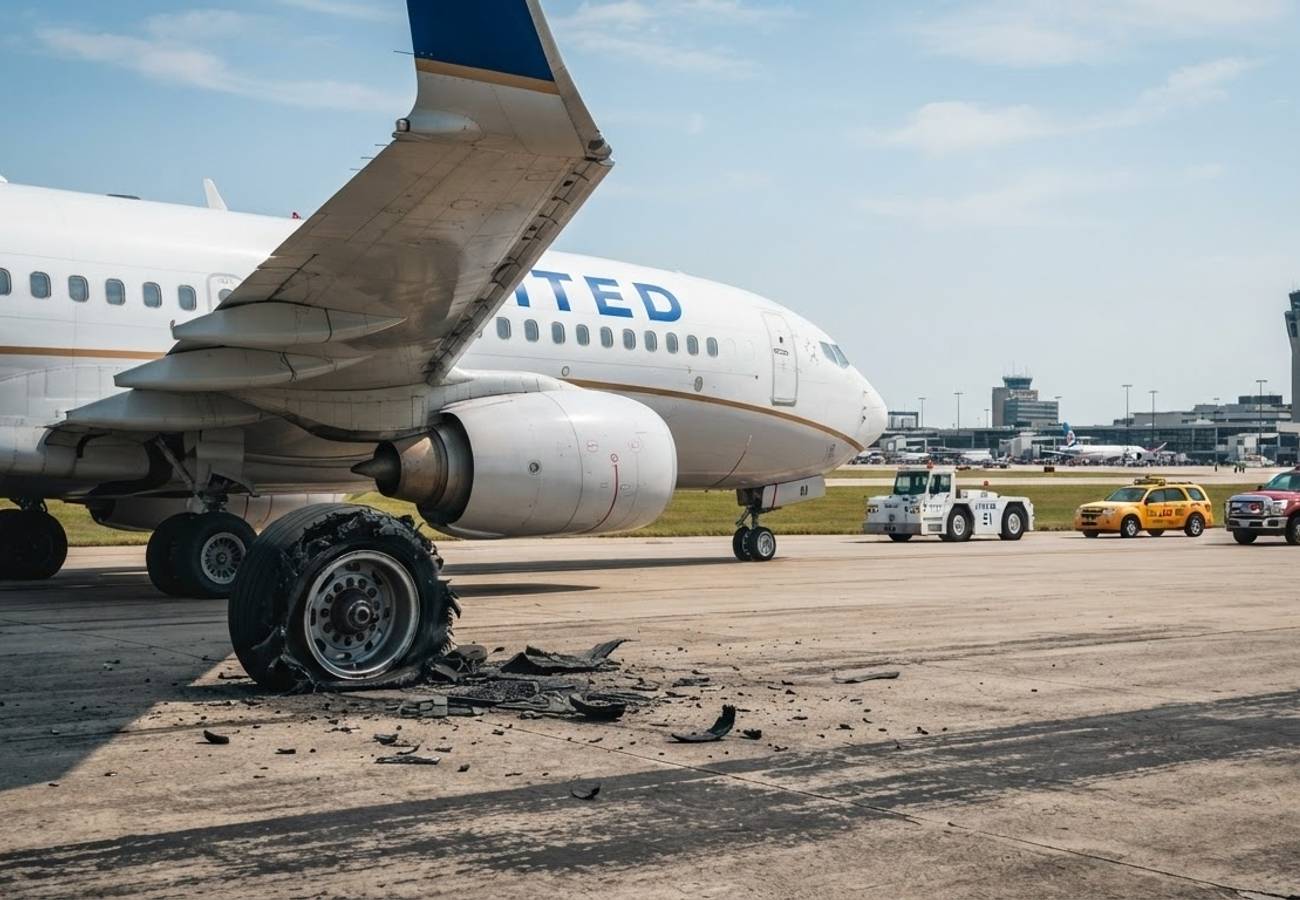
Image generated by AI
Two unrelated safety incidents at Chicago O'Hare International Airport within a single day have placed significant pressure on hub operations and ramp crews during the peak summer travel window.
Incident Analysis: United Flight 739 Landing Gear Failure
On Monday, August 19, 2026, United Airlines Flight 739 experienced a technical failure during its arrival at Chicago O'Hare International Airport. Following a landing described by passengers as "firm," ground crews identified significant damage to at least one of the aircraft's landing-gear tires.
The aircraft was unable to taxi to the terminal under its own power. Following standard safety protocols, the jet remained on the runway for an immediate inspection, and passengers were evacuated via ground vehicles to the terminal.
Hub Impact and Operational Breakdown
The United incident occurred only hours after a separate emergency involving an American Airlines flight at the same airport. While the two events were unrelated, their proximity in timing created a compounding effect on airport infrastructure.
- Flight Affected: United Flight 739.
- Primary Issue: Shredded/severely worn landing-gear tires discovered after rollout.
- Airport Response: Activation of runway safety protocols, including debris and surface checks to protect subsequent arrivals.
- Traffic Flow: Temporary runway closures forced air traffic controllers to reroute traffic to parallel surfaces, increasing taxi times and causing downstream network delays.
- Concurrent Event: An American Airlines emergency earlier that day required the staging of fire and rescue vehicles, further straining ramp resources.
Passenger Rights & Advisory
For passengers affected by the United Flight 739 delay or subsequent cancellations due to aircraft substitution, our analysis of aviation policy suggests the following:
Rebooking and Duty of Care Because the aircraft could not taxi to the gate, passengers experienced an unconventional terminal transfer. For the affected passenger, this means the airline is responsible for ensuring they reach their final destination via the fastest available route. If the tire damage resulted in a missed connection, United is obligated to provide rebooking on the next available flight.
Compensation Eligibility Under standard aviation guidelines, technical failures such as tire bursts are generally categorized as "extraordinary circumstances" if they result from foreign object debris (FOD) on the runway. However, if the damage is linked to deferred maintenance or poor tire wear, passengers may have grounds for compensation.
Actionable Steps for Travelers:
- Document the Delay: Save all timestamps of the runway hold and the subsequent transfer to the terminal.
- Request Maintenance Logs: If seeking compensation, passengers should inquire if the incident was caused by "unforeseen technical failure" or "maintenance oversight."
- Monitor App Notifications: During hub disruptions at O'Hare, gate reallocations happen rapidly; rely on official airline apps over airport signage.
Industry Analyst View
The occurrence of two safety-related events in a single day at a primary hub highlights the stress placed on US aviation infrastructure during high-demand periods. While modern commercial jets utilize paired or clustered main-wheel assemblies to ensure that a single tire failure does not compromise aircraft controllability, the operational ripple effect is significant.
Sustained high utilization of aircraft fleets in 2026 has increased the scrutiny on maintenance intervals. When a hub as critical as O'Hare faces multiple disruptions, it reveals the thin margins of error in current scheduling. Regulatory agencies are expected to review the runway surface conditions and maintenance logs for Flight 739 to determine if a pattern of component reliability issues exists.
Safety redundancies prevented a catastrophic outcome, but operational fragility remains a concern for peak-season travel.
Related Travel Guides
Disclaimer
This article is for informational and educational purposes only. It does not constitute legal, financial, or professional advice. While we strive to provide accurate and up-to-date information, travel policies, regulations, and conditions change rapidly. Always verify information with official sources before making travel decisions. Nomad Lawyer makes no representations about the accuracy, reliability, completeness, or suitability of the information provided. Readers should consult qualified professionals for advice specific to their circumstances. The views expressed in this article are those of the author and do not necessarily reflect the views of Nomad Lawyer.
Kunal K Choudhary
Co-Founder & Contributor
A passionate traveller and tech enthusiast. Kunal contributes to the vision and growth of Nomad Lawyer, bringing fresh perspectives and driving the community forward.
Learn more about our team →