
Chiang Mai Transport Guide: Routes, Costs, and Tips for Rot Daang, Buses, and Scooters
A comprehensive overview of moving through Chiang Mai, from the red songthaew and RTC buses to scooter rentals, boat cru

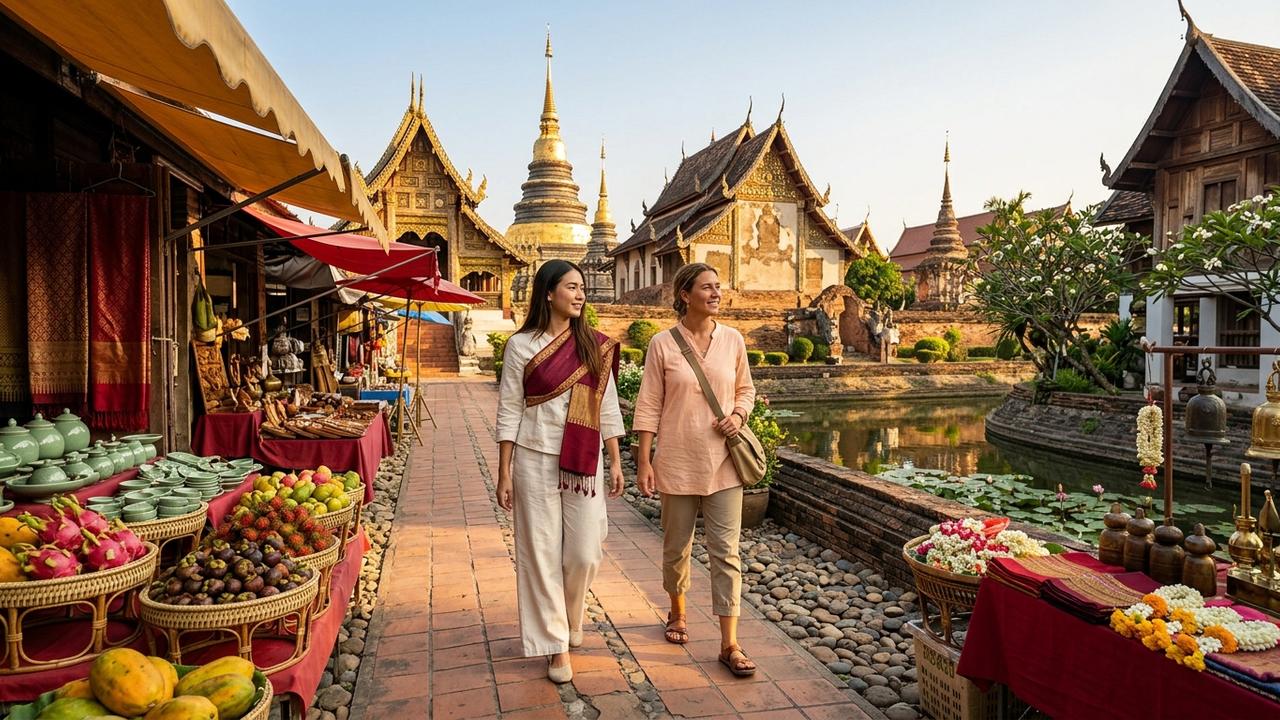
Image generated by AI
Chiang Mai offers a distinct travel rhythm compared to Thailand's capital. As the northern hub, the city features a historic center bounded by ancient walls and a moat that is logically laid out and relatively light on traffic. However, exploring beyond these boundaries requires navigating busy arterial roads, expressways, and a dynamic market culture that frequently impacts road access.
While two-wheeler rentals are common, many visitors find chartered pickup trucks or shared public transport more efficient for covering ground. Whether navigating the old city's labyrinth of monasteries, escaping to the hillside waterfalls, or catching a long-distance bus, understanding the local transport ecosystem is essential for a smooth experience.
Navigating Chiang Mai International Airport
Airport transfers are streamlined and cost-effective. Upon exiting Arrivals at Exit 9, travelers can access a licensed airport taxi service that provides direct routes to the Old City. For budget-conscious movers, shuttle and minibus services offer slightly lower fares. Rideshare options, including Uber and Grab, typically price between licensed taxis and shuttles.
When departing, travelers can arrange transfers through their accommodation, summon a rideshare app, or flag down a local pickup truck near the terminal.
The Rot Daang: Shared and Charter Pickup Transport
The red songthaew, locally known as rót daang, form the backbone of urban transit. These converted pickup trucks operate as shared taxis along the city's main thoroughfares. Unlike fixed-route buses, songthaew do not follow set paths; passengers flag them down and inform the driver of their destination. Drivers will typically accept passengers heading in the same general direction.
For travel outside the city center, visitors can hire a rót daang on a charter basis. This mode serves day trips to waterfalls, elephant camps, hill temples, and rural attractions. While the charter rate exceeds a shared fare, splitting the cost among a group often makes it a highly affordable option for full-day excursions.
RTC Blue Buses and Long-Distance Terminals
Chiang Mai's municipal bus network provides an air-conditioned, affordable alternative for downtown movement. Operated by RTC City Bus, the blue bus fleet runs nine routes across central areas. Services launched in 2018 and offer real-time tracking via the CM Transit mobile application.
Fares are flat at 50 baht per ride, payable by cash or the Rabbit stored-value card. The Rabbit card can be purchased at the RTC counter in the airport and recharged at convenience stores throughout the city.
For intercity travel, passengers should proceed to specific terminals based on their destination:
- Chang Phueak Bus Terminal: Located on Thanon Chotana (Thanon Chang Pheuak), this terminal handles services to the north of Chiang Mai Province.
- Arcade Bus Terminal: Situated near the junction of Thanon Kaew Nawarat and Route 11, this terminal serves other long-distance destinations.
Local blue songthaew also connect the city to surrounding towns.
Tuk Tuks and Cycle Rickshaws
Tuk tuks provide a chartered, open-air transport option popular with visitors. Fares are generally higher than songthaew rates, and riders should be aware that some drivers may suggest stops at commission-paying shops or less reputable venues. Despite the cost, the experience offers a lively way to view the city.
Traditional cycle rickshaws, or samlor, remain visible in specific zones, particularly near Talat Warorot market. These rides are inexpensive and support local artisans, offering a brief, nostalgic trip through the streets.
Taxis and Rideshare Apps
Metered taxis exist in Chiang Mai but rarely cruise the streets for hailing. Passengers typically arrange rides via phone call using services like CnxTaxi Chiang Mai. Rideshare platforms Uber and Grab maintain driver availability in the city, though operators have faced periodic regulatory challenges that may affect service stability.
Walking and Two-Wheeler Mobility
The Old City's dense concentration of temples makes walking the optimal transport mode. Key sites such as Wat Chedi Luang, Wat Phan Tao, and Wat Phra Singh are best explored on foot, along with the vibrant market streets. Pedestrians should exercise caution when crossing roads due to fast-moving motorcycles and songthaew.
Renting a scooter or motorcycle unlocks access to day trips beyond the urban core. Popular routes include:
- Wat Phra That Doi Suthep: The iconic hilltop temple.
- Mae Sa Valley and Samoeng: Scenic loops through valleys and hillside villages.
- Wiang Kum Kam: Ruins of the former Lanna capital.
- Si Lanna National Park: Jungle waterfalls, including the "Sticky Waterfall."
Rental outlets cluster in the southern section of the Old City. Operators often require a passport as security. Legal compliance is critical; riders must carry a valid driving license, an International Driving Permit (IDP), and photo ID. Helmets are mandatory, and insurance coverage for vehicle damage and medical costs is strongly recommended.
Bicycles suit slower exploration of quiet Old City lanes. However, the ring roads encircling the historic center feature heavy traffic, making them unsafe for casual cyclists. For off-road cycling, specialized companies such as Chiang Mai Mountain Biking & Kayaks, Trailhead, and Spice Roads offer mountain bikes and transport to downhill trails within Doi Suthep-Pui National Park.
Boat Travel on the Mae Ping River
The Mae Ping River supports limited commercial transport but hosts popular tourist cruises. Departing from Wat Chaimongkhon on Thanon Charoen Prathet, south of the center, boats offer scenic routes. Daytime cruises navigate toward the ruins of Wiang Kum Kam, while evening services provide floating dinner experiences.
Accessibility Considerations
Chiang Mai's downtown is largely flat, but infrastructure presents challenges for mobility-impaired travelers. Sidewalks are often narrow, obstructed by drains or obstacles, and lack reliable ramps. Road crossings rarely include adapted signals. Budget accommodations frequently feature steps without elevator access; accessible rooms are more common in higher-tier properties.
The RTC bus fleet can accommodate wheelchairs. However, folding wheelchairs are often easier to manage via chartered songthaew or minivans. Local residents are generally helpful, but traveling with a companion is advisable. Visitors should note that many monasteries have entry steps and uneven pathways that may be difficult to navigate with limited mobility.
Chiang Mai Transport Fares and Key Details
| Transport Mode | Estimated Cost / Fare | Key Details & Coverage |
|---|---|---|
| Airport Taxi | Fixed/Licensed Rate | Exit 9 Arrivals; direct to Old City. |
| Shuttle / Minibus | Lower than Taxi | Budget airport transfer option. |
| Rideshare (Uber/Grab) | Mid-Range | Available for airport and city trips; subject to regulatory changes. |
| Rot Daang (Shared) | Low / Negotiated | Red songthaew; flag down on streets; no fixed routes; shared with others. |
| Rot Daang (Charter) | Higher per trip | Ideal for day trips to waterfalls/temples; affordable when split. |
| RTC Blue Bus | 50 Baht | 9 routes; AC; CM Transit app tracking; Rabbit card or cash. |
| Tuk Tuk | Higher than Songthaew | Charter basis; limited routes; commission shop risks. |
| Samlor (Rickshaw) | Inexpensive | Near Talat Warorot; supports local tradition. |
| Metered Taxi | Metered | Rare to hail; use CnxTaxi Chiang Mai call service. |
| Scooter Rental | Daily Rate | Passport deposit common; License + IDP required; insurance advised. |
| Chang Phueak Terminal | Varies by Route | Thanon Chotana; long-distance buses to Northern Province. |
| Arcade Terminal | Varies by Route | Thanon Kaew Nawarat / Route 11; other long-distance routes. |
| Mae Ping Cruises | Tourist Rate | Departs Wat Chaimongkhon; day trips and dinner cruises. |
Key Takeaways
- Rot Daang Dominance: The red songthaew is the most versatile transport option, offering shared rides for low-cost urban travel and charter trips for affordable day excursions.
- Bus Efficiency: The RTC blue bus network provides a reliable, air-conditioned flat-fare system (50 baht) with real-time tracking via the CM Transit app.
- Market Traffic Impact: Road access is restricted during major markets; Thanon Wualai closes on Saturdays, Thanon Ratchadamnoen on Sundays, and Thanon Chang Khlan is congested nightly.
- Two-Wheeler Safety: Scooter rentals offer extensive range but require strict adherence to documentation (License, IDP, Passport) and insurance due to police checks and accident risks.
- Accessibility Gaps: While downtown is flat, sidewalk obstacles, poor ramp integration, and hotel infrastructure limit accessibility; chartered vehicles are often the most practical solution for wheelchair users.
FAQ
What is the best way to get from Chiang Mai Airport to the Old City? Licensed airport taxis at Exit 9 provide direct service to the Old City. Shuttles and minivans are slightly cheaper, while rideshare apps offer mid-range pricing.
How do I pay for the Chiang Mai blue bus? Fares are 50 baht per ride. Payment is accepted in cash or via the Rabbit stored-value card, which can be purchased and recharged at convenience stores.
Can I use a metered taxi in Chiang Mai? Metered taxis are rarely seen cruising the streets. It is more effective to book via the CnxTaxi Chiang Mai service or use rideshare apps like Grab, though app availability can fluctuate.
Where do I catch long-distance buses in Chiang Mai? Buses to the north of Chiang Mai Province depart from the Chang Phueak Bus Terminal on Thanon Chotana. Other long-distance routes leave from the Arcade Bus Terminal near Route 11.
Is it safe to rent a scooter in Chiang Mai? Scooters are widely rented and offer great freedom, but safety depends on the rider. Always wear a helmet, carry a valid driving license and International Driving Permit, and ensure your rental includes insurance for medical and third-party coverage.
Related Travel Guides
Disclaimer
This article is for informational and educational purposes only. It does not constitute legal, financial, or professional advice. While we strive to provide accurate and up-to-date information, travel policies, regulations, and conditions change rapidly. Always verify information with official sources before making travel decisions. Nomad Lawyer makes no representations about the accuracy, reliability, completeness, or suitability of the information provided. Readers should consult qualified professionals for advice specific to their circumstances. The views expressed in this article are those of the author and do not necessarily reflect the views of Nomad Lawyer.
Kunal K Choudhary
Co-Founder & Contributor
A passionate traveller and tech enthusiast. Kunal contributes to the vision and growth of Nomad Lawyer, bringing fresh perspectives and driving the community forward.
Learn more about our team →