
UK Regional Rail Revival Gains Momentum As Penrith Keswick Link Could Transform Lake District Travel
UK Regional Rail Revival Gains Momentum As Penrith Keswick Link Could Transform Lake District Travel

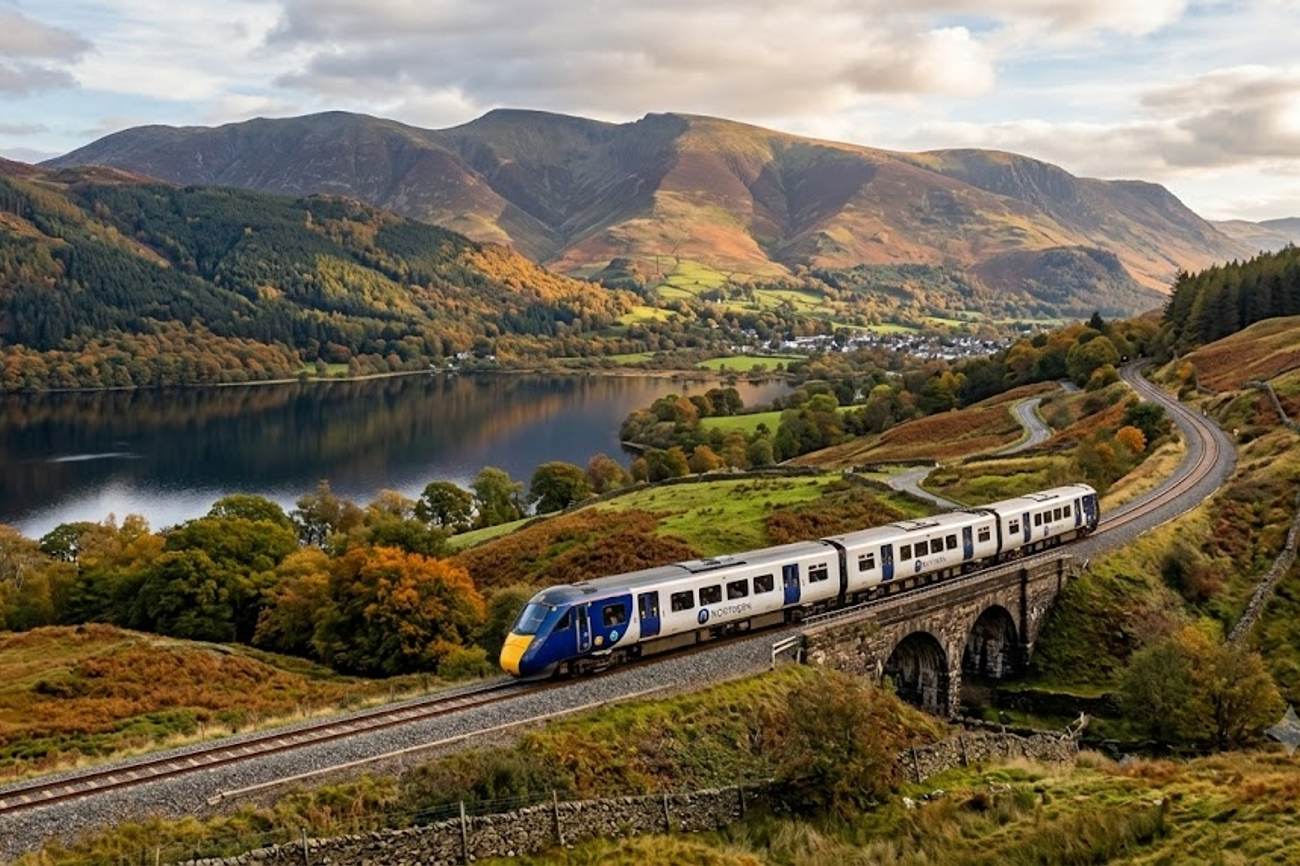
Image generated by AI
[Penrith, October 2023] — Proposals to reinstate the historic rail link between Penrith and Keswick have resurfaced, sparking a high-stakes debate over sustainable transport and regional connectivity in England’s Lake District. The movement seeks to restore a passenger corridor that has been dormant for over five decades, aiming to alleviate chronic road congestion and reduce the region's dependence on private vehicles.
The initiative centers on the former Cockermouth, Keswick and Penrith Railway, where passenger services were officially terminated in 1972. Advocates are now urging regional policymakers and the Department for Transport to treat the restoration as a modern infrastructure priority rather than a heritage project. By reconnecting Keswick to the West Coast Main Line via Penrith, the project would create a strategic gateway for tourists and residents entering one of the UK's most environmentally sensitive regions.
The Catalyst for Restoration
The current push for rail reinstatement was reignited by public advocacy and recent correspondence in Cumbrian media, highlighting the unsustainable nature of current transit patterns. Keswick, a primary hub for Lake District tourism, currently lacks a direct rail connection, forcing nearly all visitors to rely on road transport, taxis, or buses. This reliance has created a bottleneck effect, particularly during peak seasonal surges, where local road networks struggle to accommodate the volume of traffic.
Supporters argue that the 1972 closure created a structural void in the region's transport architecture. As the Lake District faces increasing pressure from climate change and over-tourism, the argument for a low-carbon alternative to the A66 corridor has become an economic and environmental imperative. The proposal suggests that a modern regional transport corridor would serve three distinct demographics: daily commuters, local residents accessing essential services, and international tourists.
Impacted Routes and Markets
The proposed restoration would primarily affect the transit flow between the West Coast Main Line and the northern Lake District. The following table outlines the specific areas and sectors that would be impacted by the return of passenger rail:
| Impact Area | Primary Effect | Strategic Goal |
|---|---|---|
| Keswick Hub | Direct rail access for the first time since 1972 | Reduction in town-center parking demand |
| Penrith Interchange | Increased passenger volume as a gateway station | Seamless transition from national to regional rail |
| A66 Corridor | Potential decrease in private vehicle throughput | Lowered road congestion and carbon emissions |
| Local Workforce | Improved access to employment and healthcare | Enhanced regional economic resilience |
| Tourism Sector | Shift toward "car-free" holiday planning | Sustainable growth in visitor numbers |
The project would require coordination with Network Rail to ensure that the integration with the existing national network is technically viable and does not disrupt current West Coast Main Line schedules.
What This Means for Travelers
For the modern traveler, the restoration of this line would fundamentally change the logistics of visiting the northern Lake District. Currently, a trip to Keswick typically requires a car or a multi-stage bus journey from the nearest railhead. A reinstated service would allow passengers to travel from major UK cities directly to Penrith and transfer to a short-haul regional train into the heart of the Lake District.
Practical implications include:
- Reduced Transit Stress: Travelers would no longer need to navigate the congested A66 or search for limited parking in Keswick’s town center.
- Sustainable Itineraries: The ability to book a "rail-and-walk" trip becomes possible, aligning with the growing trend of eco-tourism.
- Improved Accessibility: For those without private vehicles, the Lake District’s northern peaks and lakes become significantly more accessible.
- Intermodal Connectivity: The success of the rail link depends on "last-mile" connectivity; travelers would likely use the train to reach Keswick and then utilize local bus networks or walking trails for further exploration.
However, travelers should note that this remains a proposal. There are currently no active ticket sales, scheduled services, or confirmed construction dates. Any immediate travel to Keswick still requires reliance on existing road and bus infrastructure.
The Path to Implementation
Before a single sleeper is laid, the project must clear a rigorous series of hurdles. The primary challenge is the "feasibility gap"—the distance between a conceptual desire for rail and the engineering reality of a 50-year-old abandoned route.
The required roadmap includes:
- Technical Assessments: Engineers must determine if the original track alignments, bridges, and crossings are still viable or if land-use changes since 1972 have blocked the path.
- Financial Modeling: A comprehensive business case must be developed to estimate construction costs versus projected passenger revenue and government subsidies.
- Environmental Impact Studies: Because the route traverses the Lake District National Park, any construction must meet stringent environmental protections to avoid damaging the very landscape the railway is intended to protect.
- Policy Alignment: The project requires formal backing from Transport for the North, local Cumbrian authorities, and national government funding.
The debate has shifted from "if" the railway is historic to "how" it can be functional. The current objective is to move the proposal from public discussion into a formal feasibility study funded by regional or national grants.
FAQ: Penrith-Keswick Rail Restoration 2023
Can I book tickets for the Penrith to Keswick line now? No. The railway is currently a proposal for restoration. Passenger services have not operated on this route since 1972. You must use buses or private vehicles to reach Keswick.
Will this railway replace the A66 road? No, it is intended to complement the A66 by providing an alternative for those who wish to avoid driving, thereby reducing overall traffic congestion for everyone.
How will this affect Lake District National Park conservation? The goal is to promote sustainable tourism. By moving passengers from cars to trains, the project aims to reduce carbon emissions and decrease the physical pressure of parking on the landscape.
Who is funding the potential restoration? Funding has not yet been secured. Advocates are calling for a combination of local authority support, regional investment from Transport for the North, and national government grants.
A historic route reborn as a modern solution for a congested paradise.
#Penrith #Keswick #LakeDistrictRail #CumbriaTransport #SustainableTourism2023 #WestCoastMainLine
Related Travel Guides
- United Kingdom’s St Pancras Railway Capacity Takes Centre Stage as Virgin Builds London–Paris Travel Plans
- UK Rail Network Introduces BVLOS Drone Response System to Improve Passenger Safety and Emergency Operations
- UAE Fujairah Abu Dhabi Rail Cargo Corridor Creates New Trade Route Connecting Maritime Gateway With Industrial Heartland
Disclaimer
This article is for informational and educational purposes only. It does not constitute legal, financial, or professional advice. While we strive to provide accurate and up-to-date information, travel policies, regulations, and conditions change rapidly. Always verify information with official sources before making travel decisions. Nomad Lawyer makes no representations about the accuracy, reliability, completeness, or suitability of the information provided. Readers should consult qualified professionals for advice specific to their circumstances. The views expressed in this article are those of the author and do not necessarily reflect the views of Nomad Lawyer.
Kunal K Choudhary
Co-Founder & Contributor
A passionate traveller and tech enthusiast. Kunal contributes to the vision and growth of Nomad Lawyer, bringing fresh perspectives and driving the community forward.
Learn more about our team →