Pitchfork Music Festival Paris 2026: Multi-Venue Indie Takeover, Historic Parisian Venues, and Urban Travel Guide

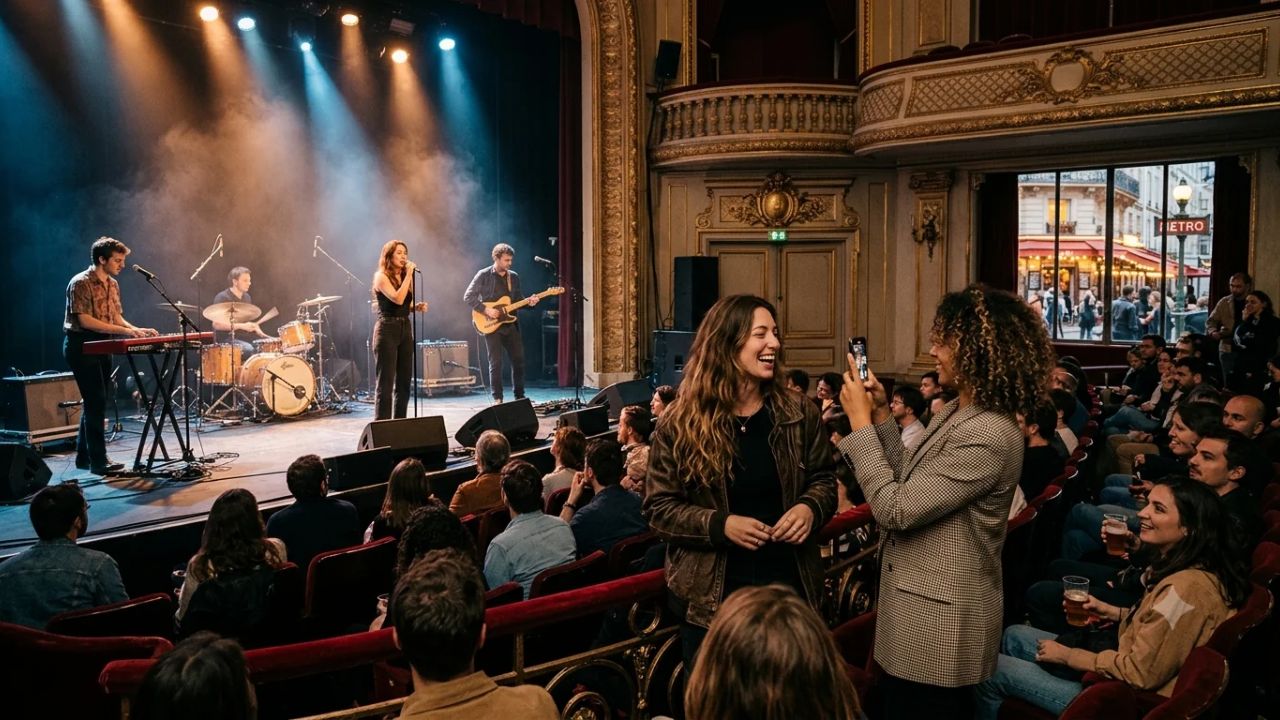
PARIS, France — The autumn cultural calendar across the French capital reaches its musical crescendo as Pitchfork Music Festival Paris 2026 deploys its decentralized, multi-venue independent music gathering across historic theaters, underground clubs, and storied concert halls.
Originally established in 2011 as the European counterpart to the Chicago-born music publication's flagship festival, the Paris edition has evolved far beyond its traditional origins. Rather than confining performances within a single exhibition hall, the contemporary festival operates across a carefully curated network of more than ten independent music venues dispersed throughout northern and eastern Paris.
From Belle Époque theaters in Montmartre to subterranean electronic clubs in the 11th arrondissement and the grand boulevards of the 9th, the week-long gathering converts the French capital into an interconnected sonic laboratory.
For international travelers and indie music enthusiasts, the decentralized festival model presents a compelling synthesis of cultural tourism and live music discovery. Attending Pitchfork Music Festival Paris is not merely about watching back-to-back performances; it is an immersive exploration of Parisian urban geography, historic theater architecture, local bistro culture, and the municipal transit network that links them together.
+----------------------------------------------------------------------------------------------------+ | PITCHFORK MUSIC FESTIVAL PARIS 2026: OPERATIONAL EVENT SCORECARD | +----------------------------------------------------------------------------------------------------+ | Event Name | Pitchfork Music Festival Paris 2026 | | Primary Dates | Early to Mid-November 2026 (Core Weeklong Run) | | Geographical Footprint | Paris, France (2nd, 9th, 11th, 18th, and 19th Arrondissements) | | Operating Model | Distributed Multi-Venue Urban Club Circuit & Grand Theater Nights | | Core Discovery Circuit | Pitchfork Avant-Garde (Multi-venue discovery pass in 11th Arr.) | | Marquee Heritage Venues | Le Trianon, L’Élysée Montmartre, L’Olympia, Le Trabendo | | Intimate Club Network | Café de la Danse, Le Badaboum, Supersonic, POPUP!, Les Disquaires | | Exclusive Late-Night Hub | Silencio (2nd Arrondissement subterranean club) | | Ticketing Platform | Digital distribution via DICE (Modular Single-Venue & District Pass)| | Municipal Transit Backbone | Paris Métro (Lines 2, 5, 8, 9, 12) & Noctilien Night Buses | +----------------------------------------------------------------------------------------------------+
The Decentralization Revolution: From Grande Halle de la Villette to a Citywide Club Circuit
The operational structure of Pitchfork Music Festival Paris reflects one of the most innovative evolutions in modern European festival design. When the event launched in October 2011, it adopted a traditional, centralized indoor arena format inside the monumental Grande Halle de la Villette—a magnificent 19th-century cast-iron and glass former livestock pavilion in the 19th arrondissement.
For its first nine editions (2011–2019), the Grande Halle functioned as a self-contained musical village. Two giant stages stood facing each other at opposite ends of the vast nave, allowing audiences to pivot between alternating 45-minute sets without missing a single performance. While this centralized setup delivered seamless scheduling and shelter from autumn rain, it isolated festivalgoers from the surrounding city. Attendees arrived at Porte de Pantin in the late afternoon and remained sealed inside the hall until the early hours of the morning.
THE EVOLUTION OF PITCHFORK PARIS: 2011 TO 2026
=============================================================================================
THE INITIAL ERA (2011–2019): MONOLITHIC PAVILION MODEL
[Grande Halle de la Villette] ---> Single Venue | Dual Alternating Stages | 3-Day Wristband
* Enclosed Mega-Arena Environment
* High Overhead for Temporary Arena Staging
* Minimal Economic Benefit to Local Neighborhood Eateries & Clubs

THE MODERN ERA (2021–2026): DISTRIBUTED URBAN NETWORK
[Montmartre Hub: Trianon & Élysée] <---> [11th Arr. Avant-Garde Club Circuit]
                                   <---> [Parc de la Villette: Le Trabendo]
                                   <---> [Grands Boulevards: L’Olympia]
                                   <---> [2nd Arr. Late-Night: Silencio]
* 10+ Permanent Architectural Venues Across Diverse Arrondissements
* Modular Ticketing via DICE: Venue-Specific Tickets & District Discovery Passes
* Full Integration with Paris Métro, Neighborhood Bistros & Boutique Hotels
=============================================================================================
Following the global live entertainment hiatus, festival directors initiated a decisive structural pivot. Recognizing the shifting desires of independent music fans for intimate, acoustically refined spaces, Pitchfork dismantled the singular arena format in favor of a distributed club and theater model.
This decentralized architecture delivers three distinct advantages:
- Acoustic and Atmospheric Alignment: A quiet, atmospheric folk singer-songwriter performs inside the wood-paneled, velvet-seated auditorium of Le Trianon, while an aggressive post-punk band shakes the concrete walls of Supersonic, and an experimental modular synthesizer producer fills the subterranean chambers of Silencio.
- Civic and Economic Integration: Rather than spending tourism dollars exclusively at temporary festival concession stalls, attendees disperse across Parisian neighborhoods, dining at local natural wine bars in Oberkampf, picking up espresso in Bastille, and browsing vinyl at independent record stores in Montmartre.
- Operational Sustainability: By leveraging permanent, year-round music venues, the festival avoids the massive carbon footprint, energy waste, and construction costs associated with temporary festival staging.
The Pitchfork Avant-Garde Circuit: 11th Arrondissement Discovery Crawl
The heart of Pitchfork Paris’s discovery ethos is Pitchfork Avant-Garde, a multi-venue showcase staged over two consecutive evenings across the 11th arrondissement.
Long celebrated as the historic cradle of Parisian working-class resistance and the epicentre of modern creative counterculture, the 11th arrondissement—particularly the triangle bounded by Rue de la Roquette, Rue de Charonne, and Rue Oberkampf—houses an extraordinary concentration of independent music halls, dive bars, and performing arts cafes located within easy walking distance of one another.
THE PITCHFORK AVANT-GARDE DISCOVERY TRIANGLE (11TH ARRONDISSEMENT)
=============================================================================================
        [BASTILLE MÉTRO] (Lines 1, 5, 8)
               |
               v
  +--------------------------+          +--------------------------+
  |    CAFÉ DE LA DANSE      |          |       LE BADABOUM        |
  | Historic former theater; |          | Cutting-edge sound lab;  |
  | 500 cap; intimate tiers  |          | 400 cap; live & club sets|
  +--------------------------+          +--------------------------+
               \                                      /
                \                                    /
                 v                                  v
       +------------------------------------------------------+
       |           SUPERSONIC (RUE BISCORNET)                 |
       | 300 cap indie rock sanctuary; industrial mezzanine;  |
       | explosive guitar sets & energetic late-night dancing |
       +------------------------------------------------------+
                 ^                                  ^
                /                                    \
               /                                      \
  +--------------------------+          +--------------------------+
  |         POPUP!           |          |      LES DISQUAIRES      |
  | Rue Héricart; 150 cap;   |          | Rue des Taillandiers;    |
  | subterranean indie lab   |          | vinyl cafe & live lounge |
  +--------------------------+          +--------------------------+
The Avant-Garde Experience
Under the Avant-Garde pass, attendees purchase a single district-wide ticket on the DICE platform, which is exchanged for a physical fabric wristband at a central box office hub (typically located near Place de la Bastille).
With wristbands secured, festivalgoers navigate freely between micro-venues:
- Café de la Danse: Tucked away in a quiet cobblestone passage off Rue de Lappe, this 500-capacity theater features steep tiered seating and exceptional natural acoustics, making it the premier space for lush art-pop, ambient electronics, and delicate indie balladry.
- Le Badaboum: A former theater turned hybrid electro-live room on Rue de Taillandiers, offering a specialized Martin Audio sound system and dual mezzanine levels that transition smoothly from live band showcases into four-on-the-floor DJ club programs.
- Supersonic: Situated beside the Bassin de l'Arsenal, Supersonic is Paris’s undisputed cathedral of modern indie rock and post-punk. With an open floor overlooked by an industrial balcony, the venue generates electric, sweat-soaked energy where breakthrough international acts perform right in front of the crowd.
- POPUP! & Les Disquaires: Intimate basement rooms where audiences of 100 to 150 people stand mere inches from touring artists, capturing the raw magic of early-career discovery.
Practical Touring Note: Because Avant-Garde wristbands grant access to all participating circuit venues, individual rooms operate on a strict capacity basis. Popular breakthrough artists generate queues outside smaller venues like Café de la Danse. Seasoned festivalgoers arrive at their chosen venue at least 20 minutes before performance times to guarantee entry.
Historic Theaters and Marquee Showcases: Montmartre and Grands Boulevards
While the Avant-Garde circuit focuses on rapid-fire discovery across intimate rooms, Pitchfork Paris anchors its marquee headliner programs in some of the most architecturally distinguished performance spaces in Western Europe.
MARQUEE HISTORIC CONCERT VENUES OF PITCHFORK PARIS
| Column 1 |
|---|
| 1. LE TRIANON (Boulevard de Rochechouart, 18th Arr.) |
| - Opened in 1894; designed by architect Joseph Cassien-Bernard. |
| - Opulent Belle Époque interior, curved Italianate balconies, carved caryatids, and |
| plush red velvet seating accommodating 1,000 spectators. |
| - Renowned for pristine natural reverberation, hosting orchestral indie and dream-pop. |
| 2. L’ÉLYSÉE MONTMARTRE (Boulevard de Rochechouart, 18th Arr.) |
| - Founded in 1807; historic ballroom where the French Can-Can was born. |
| - Steel framework engineered by Gustave Eiffel; survived an extensive fire in 2011 to |
| re-emerge as a 1,380-capacity flat-floor temple of high-energy alternative rock. |
| 3. L’OLYMPIA (Boulevard des Capucines, 9th Arr.) |
| - The oldest surviving music hall in Paris (opened 1893); iconic red neon marquee. |
| - Sacred ground graced by Edith Piaf, Jacques Brel, and The Beatles; offers 2,000 |
| spectators unmatched sightlines and deep cultural prestige for festival headliners. |
| 4. LE TRABENDO (Parc de la Villette, 19th Arr.) |
| - Designed by architectural theorist Bernard Tschumi; striking geometric red pavilion. |
| - 700-capacity intimate room featuring stepped viewing platforms and an outdoor terrace; |
| hosts the festival’s most intense electronic, hyperpop, and experimental club nights. |
| 5. SILENCIO (Rue Montmartre, 2nd Arr.) |
| - Subterranean private salon and cinema conceived and designed by filmmaker David Lynch. |
| - Asymmetric gold-leaf arches, bespoke furniture, and intimate acoustics accommodating |
| curated late-night after-hours DJ sets and exclusive electronic showcases. |
The Boulevard de Rochechouart Pairing
The geographic pairing of Le Trianon and L’Élysée Montmartre on the Boulevard de Rochechouart creates a magnificent dual-venue focal point at the base of Montmartre hill. Positioned directly next door to each other, these two 19th-century monuments allow festivalgoers to experience contrasting architectural masterworks within a single evening.
Between headline sets, concertgoers spill onto the broad Parisian boulevard, taking in views of the illuminated dome of the Basilique du Sacré-Cœur perched high on the hill above, before stepping back inside for midnight encores.
The Live Music Economics: Why Decentralized Indoor Festivals Outperform Outdoor Mega-Fests
The ongoing success of Pitchfork Paris’s distributed indoor format offers a valuable case study in the economics of 21st-century live entertainment.
Across Europe, traditional greenfield music festivals—massive summer gatherings held in rural fields—face compounding operational crises:
- Infrastructure Cost Inflation: The price of renting temporary staging, perimeter security fencing, diesel generators, mobile lighting towers, and modular chemical toilets has risen by 35 to 50 percent since 2022.
- Climate Volatility and Weather Disruptions: Summer heatwaves reaching 40 degrees Celsius, severe flash floods, and violent windstorms have forced multiple high-profile European outdoor festivals to cancel days of programming, leaving organizers with catastrophic insurance liabilities.
- Supply Chain and Site Restoration Risks: Restoring churned-up farmland after wet weekends costs hundreds of thousands of euros in local municipal environmental penalties.
THE FESTIVAL BUSINESS MODEL COMPARISON
=============================================================================================
OUTDOOR GREENFIELD MEGA-FESTIVAL                DECENTRALIZED URBAN INDOOR FESTIVAL
* High Construction & Tear-Down Overhead        * Zero Temporary Staging Construction Costs
* Extreme Climate & Storm Vulnerability         * 100% Weatherproof Indoor Concert Halls
* Diesel Generator Carbon Footprint             * Powered by Permanent Municipal Electrical Grids
* Monolithic "All-or-Nothing" Financial Risk    * Modular Ticket Risk Distributed Across Venues
* Complex Off-Site Shuttle & Camping Logistics  * Seamless Integration with City Subway & Hotels
=============================================================================================
By transitioning to an urban, indoor multi-venue network, Pitchfork Paris circumvents these operational vulnerabilities. The festival relies on permanent venues equipped with state-of-the-art d&b audiotechnik and L-Acoustics sound rigs, permanent rigging points, professional in-house acoustic treatment, and full-time venue security staff.
If an unexpected transit delay or production issue affects one hall, the remaining nine venues continue operating without disruption. This modular resilience protects festival promoters financially while ensuring ticket buyers enjoy consistent, studio-quality sound reproduction regardless of November weather conditions.
Urban Mobility and Transit Logistics: Métro, Noctilien, and Vélib'
Navigating a festival dispersed across Paris requires an understanding of the city's comprehensive public transportation network, operated by the RATP (Régie Autonome des Transports Parisiens).
Because Pitchfork Paris is fully embedded within the municipal grid, attendees can move between distinct neighborhood quarters in 15 to 25 minutes using the Métro:
THE FESTIVAL TRANSIT ARTERY: CONNECTING PITCHFORK HUBS
=============================================================================================
MONTMARTRE HUB (Trianon / Élysée)              THE 11TH ARRONDISSEMENT CIRCUIT
[MÉTRO LINE 2: ANVERS STATION]                 [MÉTRO LINE 8 / 1 / 5: BASTILLE STATION]
                   |                                           |
                   v                                           v
[Transfer at Stalingrad or Jaurès]              [MÉTRO LINE 9: OBERKAMPF STATION]
                   |                                           |
                   +-------------------+-----------------------+
                                       |
                                       v
                        [MÉTRO LINE 5: PORTE DE PANTIN]
                        Parc de la Villette (Le Trabendo)
Essential Transit Lines
- Métro Line 2 (Blue): Connects the Montmartre cluster. Board at Anvers station directly outside Le Trianon and L'Élysée Montmartre, providing rapid westbound links toward Pigalle and Charles de Gaulle–Étoile, or eastbound links to Nation via Belleville.
- Métro Line 8 (Purple) & Line 9 (Yellow): Service the 11th arrondissement Avant-Garde circuit. Stations at Bastille, Ledru-Rollin, Saint-Ambroise, and Oberkampf drop attendees within a 3-minute walk of Café de la Danse, Supersonic, and Le Badaboum.
- Métro Line 5 (Orange): The vital diagonal link. Line 5 runs directly from Bastille in the southeast through République and Gare du Nord up to Porte de Pantin in the northeast, providing direct, single-train transit to Le Trabendo inside Parc de la Villette.
Operating Hours and Late-Night Logistics
- Standard Métro Operating Hours: On Sunday through Thursday evenings, the Paris Métro operates until approximately 01:15. On Friday and Saturday evenings, service is extended by one full hour until 02:15.
- The Noctilien Night Bus Network: After the Métro closes, the RATP Noctilien bus network takes over. Circular lines N01 and N02 ring the exterior boulevards, while radial routes (including N11, N12, and N16) depart every 10 to 15 minutes from Place du Châtelet, ensuring safe, inexpensive transit back to accommodations across any arrondissement at 03:00 or 04:00.
- Vélib’ Métropole Shared Bicycles: Paris features one of the densest municipal bicycle networks in the world. With protected bidirectional bike lanes running down Boulevard Voltaire, Rue de Rivoli, and along the Canal Saint-Martin, cycling between Bastille and Montmartre takes approximately 20 minutes on an electric Vélib' bike.
Participating Venues, Capacities, Arrondissements, and Transit Access
The following operational matrix details the primary venues participating in Pitchfork Music Festival Paris 2026, outlining capacities, architectural character, and precise transit connections:
| Venue Name | Arrondissement & District | Audience Capacity | Architectural Style / Setting | Closest Métro Station | Key Programmatic Focus |
|---|---|---|---|---|---|
| Le Trianon | 18th Arr. (Montmartre) | 1,000 (Seated & Standing) | 1894 Belle Époque Theater; ornate balconies | Anvers (Line 2) | Mainstage indie headliners, orchestral pop, acoustic sets |
| L’Élysée Montmartre | 18th Arr. (Montmartre) | 1,380 (Flat-floor Hall) | 1807 Historic Ballroom; Gustave Eiffel steel frame | Anvers (Line 2) | High-energy alternative rock, electronic indie, post-punk |
| L’Olympia | 9th Arr. (Grands Boulevards) | 2,000 (Historic Hall) | 1893 Legendary Music Hall; iconic red neon facade | Madeleine / Opéra (Lines 8, 12, 14) | Premium festival marquee performances & special events |
| Le Trabendo | 19th Arr. (Parc de la Villette) | 700 (Multi-tiered Club) | Modernist red concrete pavilion by Bernard Tschumi | Porte de Pantin (Line 5) | Experimental electronics, hyperpop, late-night dance clubs |
| Café de la Danse | 11th Arr. (Bastille) | 500 (Tiered Intimate Room) | Historic theater tucked in historic passage | Bastille (Lines 1, 5, 8) | Avant-Garde circuit: art-pop, ambient, singer-songwriters |
| Le Badaboum | 11th Arr. (Charonne) | 400 (Split-level Room) | Industrial-chic club with dedicated cocktail lounge | Ledru-Rollin (Line 8) | Avant-Garde circuit: electronic live acts & midnight DJs |
| Supersonic | 11th Arr. (Bassin de l'Arsenal) | 300 (Mezzanine Rock Bar) | Multi-level loft space with central performance floor | Bastille (Lines 1, 5, 8) | Avant-Garde circuit: abrasive post-punk, garage rock, indie |
| POPUP! (du Label) | 12th Arr. (Gare de Lyon border) | 150 (Basement Stage) | Intimate underground room beneath cultural bistro | Ledru-Rollin (Line 8) | Avant-Garde circuit: emerging bedroom pop & experimental debuts |
| Les Disquaires | 11th Arr. (Taillandiers) | 120 (Vinyl Lounge) | Intimate neighborhood bar and live performance salon | Voltaire (Line 9) | Avant-Garde circuit: stripped-back showcases & indie soul |
| Silencio | 2nd Arr. (Bourse) | 250 (Subterranean Salon) | David Lynch-designed gold-leaf underground sanctuary | Bourse (Line 3) | Exclusive late-night festival after-parties & ambient sets |
Ticketing Protocols, Age Regulations, and Sound Etiquette
Securing admission and navigating festival policies requires attention to specific ticketing mechanics:
TICKETING & ADMISSION REGULATORY BLUEPRINT
| Column 1 |
|---|
| 1. DIGITAL-FIRST TICKETING VIA DICE |
| - Tickets are distributed exclusively via the DICE mobile application, locking passes to |
| the purchaser’s registered smartphone to eliminate secondary market ticket scalping. |
| - Dynamic QR codes activate only 2 hours prior to scheduled door opening times. |
| 2. MODULAR PRICING TIERS |
| - Single-Venue Tickets: Booked individually for marquee nights at Trianon, Élysée, etc. |
| - Pitchfork Avant-Garde Pass: A unified 2-day district pass granting admission to all |
| participating 11th arrondissement venues during the discovery weekend. |
| 3. PHYSICAL WRISTBAND EXCHANGE PROTOCOL |
| - Holders of multi-venue Avant-Garde passes must exchange their DICE digital voucher for |
| a fabric RFID wristband at a central box office hub before accessing venue doors. |
| 4. AGE RESTRICTIONS & IDENTIFICATION CHECKS |
| - Evening theater showcases welcome all ages (minors accompanied by a legal guardian). |
| - Club programs scheduled past 23:00 at Le Badaboum, Trabendo, and Silencio are |
| strictly 18+. Physical government-issued photo ID (Passport/National ID) is mandatory. |
| 5. SOUND VOLUME COMPLIANCE (FRENCH DECREE NO. 2017-1244) |
| - All Parisian venues operate under strict statutory sound limits: maximum 102 dBA |
| averaged over any 15-minute window. Free disposable foam earplugs are provided by law |
| at all coat-check points; high-fidelity acoustic filters are strongly recommended. |
Actionable Festival Itinerary: The Curated 4-Day Paris Music Immersion
To extract the maximum cultural and musical richness from Pitchfork Music Festival Paris 2026, independent travelers should balance live evening concert hopping with daytime exploration of Paris’s iconic culinary, artistic, and record-collecting districts:
THE DEFINITIVE 4-DAY PITCHFORK PARIS URBAN BLUEPRINT
| Column 1 |
|---|
| DAY 1 (THURSDAY): MONTMARTRE MARQUEE NIGHT |
| - 14:00: Browse vintage vinyl at Balades Sonores (Avenue Trudaine, 9th Arr.). |
| - 16:30: Coffee and fresh financiers at a traditional zinc bar on Rue des Martyrs. |
| - 18:30: Doors open at Le Trianon; admire the Belle Époque ceiling frescoes. |
| - 19:30: Opening dream-pop and orchestral indie showcases in Le Trianon auditorium. |
| - 21:30: Walk next door to L’Élysée Montmartre for high-energy co-headliner rock set. |
| - 23:30: Late-night natural wine and charcuterie at natural wine bar Le Verre Volé. |
| DAY 2 (FRIDAY): PITCHFORK AVANT-GARDE CIRCUIT (PART I) |
| - 15:00: Exchange digital DICE ticket for festival wristband at central Bastille hub. |
| - 16:00: Explore record bins at Born Bad Record Shop (Rue Saint-Sabin, 11th Arr.). |
| - 18:00: Early acoustic performance in the intimate tiered stalls of Café de la Danse. |
| - 20:00: Stroll to Supersonic; catch an explosive UK post-punk breakthrough band. |
| - 22:00: Transition to Le Badaboum for cutting-edge live electronic indie productions. |
| - 01:00: Dance until late at Badaboum’s club night or take Noctilien N01 back to hotel. |
| DAY 3 (SATURDAY): AVANT-GARDE (PART II) & SUBTERRANEAN SESSIONS |
| - 12:00: Lunch at a bistro on Rue de Charonne (fresh sourdough, oysters, and cider). |
| - 14:30: Contemporary art browsing at Palais de Tokyo or MEP (Maison Européenne Photo). |
| - 17:30: Early evening basement discovery showcase at POPUP! du Label. |
| - 19:30: Catch a rising French indie-pop act at Les Disquaires. |
| - 21:30: Final explosive guitar set at Supersonic. |
| - 00:30: Exclusive after-hours entry into David Lynch’s subterranean club Silencio. |
| DAY 4 (SUNDAY): GRAND FINALE AT LE TRABENDO |
| - 13:00: Leisurely walk along Canal de l'Ourcq and through Parc de la Villette. |
| - 15:30: Visit the Philharmonie de Paris Museum of Music instruments collection. |
| - 17:30: Doors open at Le Trabendo for the festival’s closing electronic extravaganza. |
| - 20:00: Hyperpop, bass music, and modular synth performances on the red concrete stage. |
| - 23:30: Final festival toast on Le Trabendo’s outdoor covered terrace. |
Essential Neighborhood Recommendations for Music Lovers
- Where to Stay: Choose boutique accommodations in the 11th arrondissement (Bastille/Oberkampf) or the 9th/10th arrondissement (Canal Saint-Martin/South Pigalle). Properties like the Hôtel Fabric (a converted 19th-century textile factory in the 11th) or The Hoxton Paris (in the 2nd) position travelers equidistant from both the Montmartre theaters and the eastern club circuits.
- Essential Independent Record Shops: Dedicate daytime hours to visiting Paris’s legendary record stores:
- Born Bad Record Shop (11 Rue Saint-Sabin): The premier French sanctuary for garage rock, punk, coldwave, and underground indie releases.
- Balades Sonores (1–3 Avenue Trudaine): An enchanting boutique near Montmartre featuring independent European vinyl, cassette tapes, and acoustic in-store performances.
- Walrus Disquaire Café (34 Rue de Dunkerque): A hybrid coffee bar and record store where music collectors browse vinyl while sipping craft beer or flat whites.
- Bistro Dining Etiquette: In popular dining districts like the 11th, popular neighborhood bistros (such as Clamato, Septime, and Le Chateaubriand) book out weeks in advance. For flexible, reservation-free dining before concerts, target natural wine bars (bars à vin naturels) along Rue Saint-Maur and Rue Jean-Pierre Timbaud, which serve seasonal small plates and cheese boards until late.
By bridging iconic 19th-century architecture with cutting-edge 21st-century music culture, Pitchfork Music Festival Paris 2026 establishes a gold standard for urban cultural events. For the global music traveler, it offers an unforgettable invitation to experience the French capital as a living, breathing concert hall.
Related Travel Guides
- Paris Cultural Immersion: Navigating Historic Theaters, Art Districts, and Canal Living
- European Music Festival Masterclass: Navigating Urban Multi-Venue vs. Greenfield Events
- French Rail and Paris Métro Navigation: Ticketing, High-Speed TGV, and Late-Night Transit
- The Sound of Europe: Exploring Historic Concert Halls from London’s Royal Albert to Paris Olympia
This article is for informational purposes. Flight routes, passenger regulations, visa rules, and transit advisories are subject to change by airlines and aviation authorities. Readers are advised to verify schedules and travel documentation with relevant carriers and border agencies before departure.
Related Stories
Shillong Cherry Blossom Festival 2026: Global Music Lineup, Himalayan Autumn Blooms, and Meghalaya Travel Guide
Estonia Gears Up for Winter Tourism Surge as Jet2 Expands UK Flights and Tallinn’s Historic Christmas Market Returns for 2026