Thessaloniki Wins Best City Break at Greek Travel Awards 2026 in London as Northern Greece Expands Year-Round Urban Tourism

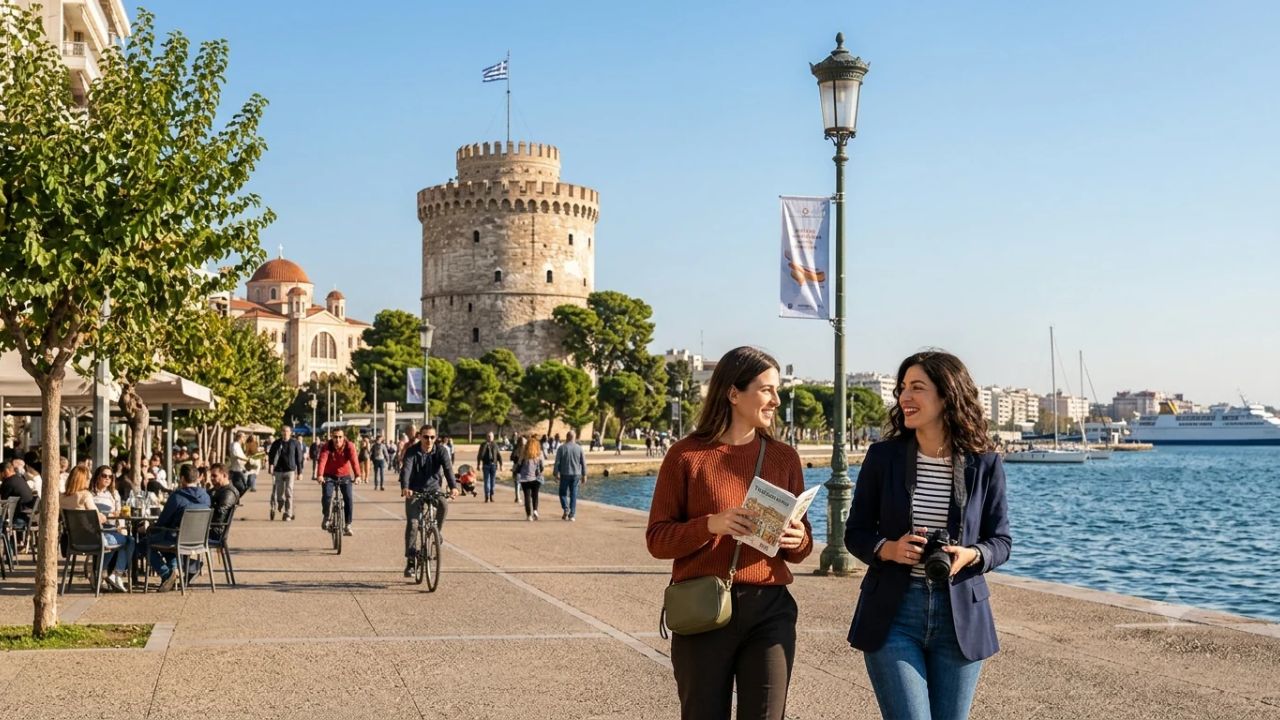
LONDON, United Kingdom — Thessaloniki has captured the title of Best City Break destination for the second consecutive year at the Greek Travel Awards 2026, held in the historic surroundings of Saddler’s Hall in London during World Travel Market (WTM) 2026.
Organized by the Greek National Tourism Organisation (GNTO), the awards ceremony convened international travel executives, destination managers, and British tourism professionals to celebrate destinations driving Greece's evolution into a diversified, year-round European holiday destination. By securing the Best City Break accolade in back-to-back years (2025 and 2026), northern Greece's primary metropolis reinforces its status as one of Europe's fastest-rising urban short-break destinations.
The consecutive victory comes at a pivotal moment for Mediterranean travel. As classic Greek island hotspots like Santorini, Mykonos, and Rhodes contend with summer overtourism, strained public water grids, and proposed cruise passenger levies, Thessaloniki offers an entirely different proposition. Combining 2,300 years of living history across Roman, Byzantine, and Ottoman eras with UNESCO-recognized culinary distinction, an expansive seafront promenade, and the newly operational Thessaloniki Metro, the city demonstrates how Greece is successfully broadening its international appeal far beyond seasonal beach tourism.
+----------------------------------------------------------------------------------------------------+ | THESSALONIKI: STRATEGIC DESTINATION & CITY-BREAK SCORECARD | +----------------------------------------------------------------------------------------------------+ | Distinction Won | Best City Break Destination (Greek Travel Awards 2025 & 2026) | | Award Ceremony Venue | Saddler’s Hall, London, United Kingdom (During WTM London 2026) | | Organizing Entity | Greek National Tourism Organisation (GNTO / EOT) | | Destination Custodian | Thessaloniki Tourism Organisation (TTO) | | Key Target Consumer Market | United Kingdom (Direct flights from LHR, LGW, STN, MAN, BHX) | | UNESCO Designations | 15 Early Christian & Byzantine Monuments; UNESCO City of Gastronomy | | Signature Infrastructure | Driverless Thessaloniki Metro with In-Station Archeological Sites | | Waterfront Asset | Nea Paralia (5 km contiguous pedestrianized coastal promenade) | | Core Cultural Catalysts | Thessaloniki International Film Festival (TIFF), Dimitria Festival | | Regional Gateways | Mount Olympus, Vergina Royal Tombs (Aigai), Halkidiki Peninsulas | +----------------------------------------------------------------------------------------------------+
The London Distinction: WTM 2026 and the British Outbound Market
Receiving the Best City Break award at Saddler's Hall in London carries substantial commercial weight. The United Kingdom represents one of Greece's two largest outbound tourism markets, generating more than 4.5 million visits and contributing billions of euros to the national economy annually.
Historically, British travelers have associated Greece almost exclusively with summer island holidays—booking chartered package flights to the Ionian and Aegean islands between May and October. However, shifting macroeconomic realities and evolving travel preferences across Britain have accelerated demand for value-oriented, culturally immersive urban getaways during autumn, winter, and spring:
THE EVOLVING BRITISH TRAVEL APPETITE FOR EUROPEAN CITY BREAKS
=============================================================================================
CONVENTIONAL SUMMER CHARTER BEHAVIOR            THE NEW SHOULDER-SEASON URBAN ESCAPE
* July–August High-Season Concentration         * November–April Year-Round Travel Windows
* Sun, Sand & Sea Resort Packages               * Gastronomy, Living History & Architecture
* Rising Peak Airfares & Extreme Summer Heat    * Moderate Mediterranean Winter Temperatures
* Overcrowded Island Infrastructure             * Walkable, Authentic Urban Neighborhoods
                      \                                         /
                       \                                       /
                        v                                     v
             +---------------------------------------------------------+
             |         THESSALONIKI'S COMPETITIVE PROPOSITION          |
             | - Direct 3.5-Hour Flights from Major UK Hubs            |
             | - Exceptional Value in Dining, Culture & Accommodations |
             | - UNESCO Gastronomy Combined with Walkable Heritage     |
             | - Seamless Transit via Driverless Metro and Sea Shuttles|
             +---------------------------------------------------------+
To capture this market, the Thessaloniki Tourism Organisation (TTO) has pursued targeted digital campaigns and airline partnerships. Direct air routes operated by British Airways, easyJet, Ryanair, and Jet2 connect Thessaloniki’s Makedonia Airport (SKG) with London Heathrow, London Gatwick, London Stansted, Manchester, and Birmingham.
By winning this recognition at WTM London—one of the global travel trade's most influential commercial exhibitions—Thessaloniki solidifies its standing among British travel agents and independent weekend travelers seeking sophisticated alternatives to traditional city-break destinations like Barcelona, Rome, Lisbon, and Prague.
Breaking Greece's Island Sun-and-Beach Monoculture
For decades, the global marketing of Greece centered on a single, romanticized aesthetic: whitewashed Cycladic cube houses, blue-domed churches, and azure Aegean waters. While this visual identity established Greece as an international tourism titan, it also fostered a precarious economic monoculture.
During the peak summer months, popular islands experience intense visitor congestion. Historic ports like Fira on Santorini struggle to accommodate multiple mega-cruise ships simultaneously, while local municipal services in Mykonos face acute water shortages and waste management challenges. In response, Greece's central government has enacted strategic policy shifts, including peak-season cruise passenger debarkation fees and strict caps on short-term vacation rentals in over-touristed zones.
GREEK TOURISM GEOGRAPHIC REDISTRIBUTION
=============================================================================================
SATURATED SUMMER ISLAND CORRIDOR                YEAR-ROUND MAINLAND URBAN CORRIDOR
[Santorini / Mykonos / Rhodes / Corfu]          [Thessaloniki & Central Macedonia]
* Seasonal Operation (May to October)           * Continuous 12-Month Visitor Economy
* Infrastructure Strained by Mega-Cruises       * Balanced Domestic & International Arrivals
* Exorbitant Peak Accommodation Pricing         * Affordable Premium Gastronomy & Hotels
* Severe Overtourism & Local Housing Crises     * Preserved Civic Life & Living Heritage
                      \                                         /
                       \                                       /
                        v                                     v
             +---------------------------------------------------------+
             |        GNTO "GREECE: A 365-DAY DESTINATION" STRATEGY    |
             | Dispersing International Footfall to Northern Hubs      |
             | Promoting Urban Culture, Gastronomy & Regional Touring  |
             +---------------------------------------------------------+
Thessaloniki represents the linchpin of the Greek National Tourism Organisation's "365-Day Destination" initiative. As Greece's second-largest city and the historic co-capital (symprotevousa) of the Byzantine Empire, Thessaloniki possesses an authentic, functioning civic economy that does not shut down when summer ends.
Instead of an artificial tourism enclave, visitors discover a dynamic student metropolis of over one million residents, anchored by Aristotle University—the largest university in the Balkans. The city’s everyday rhythm is defined by open-air food markets, waterfront strolls, independent bookshops, seaside tavernas, and world-class cultural festivals, providing the authentic urban texture that modern travelers demand.
UNESCO Creative City of Gastronomy: The Culinary Soul of Northern Greece
If Athens represents Greece's political and philosophical mind, Thessaloniki is undeniably its culinary heart. In 2021, Thessaloniki became the first city in Greece to be inducted into the prestigious UNESCO Creative Cities Network for Gastronomy, an accolade that continues to anchor its international identity.
Thessaloniki's cuisine is distinct from the simpler, olive-oil-and-lemon-based cooking typical of southern Greece. Because of its historical position as a major crossroads connecting Europe, Anatolia, and the Levant, Thessaloniki's culinary traditions represent a complex historical synthesis of Greek, Ottoman Turkish, Sephardic Jewish, Armenian, Pontic, and Balkan influences:
THE CULINARY PALIMPSEST OF THESSALONIKI
=============================================================================================
HISTORICAL TRADITION           SIGNATURE CULINARY INFLUENCE & SPECIALTY
---------------------------------------------------------------------------------------------
Byzantine Heritage             Extensive use of warming spices (cinnamon, clove, allspice);
                               delicate phyllo pastry baking; sweet custards and fruit preserves.
Ottoman Influences             Slow-cooked clay-pot stews; roasted meats with cumin and paprika;
                               spiced soutzoukaki meatballs simmered in rich cumin tomato sauce.
Sephardic Jewish Memory        Huevos haminados (slow-roasted brown eggs); pastelikos pastries;
                               delicate savory vegetable pies incorporating wild greens and cheese.
Pontic & Asia Minor Refugees   Peynirli (canoe-shaped leavened cheese breads); handmade pasta;
                               robust pickled vegetables; stuffed vine leaves (sarmadakia).
Thermaic Gulf Waters           Freshly harvested mussels steamed with white wine and feta;
                               grilled sardines; octopus marinated in vinegar; salted roe.
=============================================================================================
Street Food and Market Culture
The city's street food culture is legendary across the Mediterranean. Mornings begin with bougatsa—golden, hand-stretched phyllo dough filled with sweet semolina custard and dusted with powdered sugar and cinnamon, or savory variations stuffed with salty feta or spiced minced beef. Walking down Egnatia or Tsimiski Avenue, vendors sell warm koulouri, crisp circular breads coated in toasted sesame seeds that have fueled city residents since Byzantine times.
At the center of Thessaloniki's gastronomic life are its historic markets:
- The Modiano Market (Agora Modiano): Originally designed in 1922 by architect Eli Modiano (a prominent member of the city's Sephardic Jewish community), this historic covered market recently completed a multi-million-euro restoration. Today, it combines traditional butchers, artisanal cheesemakers, and spice merchants with contemporary gourmet food stalls, wine bars, and craft beer taps.
- The Kapani Market: Located adjacent to Modiano, Kapani is the oldest public market in the city, retaining its sensory, open-air trading atmosphere. Here, fishmongers hawk fresh catches from the Aegean Sea, while vendors display mountains of northern Greek olives, dried herbs from Mount Olympus, and regional cheeses like feta, graviera, and smoked metsovone.
In quarters like Ladadika—a historic district of cobblestone alleys once dedicated to wholesale olive oil storage—and nearby Valaoritou, former industrial warehouses have been transformed into lively mezedopolia (small-plates tavernas). Diners sit outdoors beside neoclassical facades, sharing plates of steamed local mussels, fried zucchini flowers, and slow-roasted pork knuckles accompanied by regional Macedonian wines and chilled tsipouro.
Urban Infrastructure Renaissance: The Thessaloniki Metro and Waterfront Expansion
A primary catalyst behind Thessaloniki’s repeated city-break honours in London is the transformative modernization of its municipal infrastructure, culminating in the opening of the Thessaloniki Metro.
THESSALONIKI METRO: THE ARCHEOLOGICAL TRANSIT REVOLUTION
=============================================================================================
STATION PLATFORM & TUNNELS                      STATION CONCOURSE ARCHEOLOGICAL MUSEUM
[Driverless Automated Subway Trains]            [Venizelou & Agia Sofia Metro Stations]
* Siemens Automatic Train Control (ATC)          * Preserved Decumanus Maximus (Roman Highway)
* 90-Second Peak Service Frequencies            * Original 4th-Century Marble Pavement Intact
* Platform Screen Doors on All Stations         * Byzantine Tetrapylon Foundations & Shops
* Rapid 18-Minute Downtown Transit              * Over 300,000 Excavated Historical Artifacts
                      \                                         /
                       \                                       /
                        v                                     v
             +---------------------------------------------------------+
             |         WORLD-FIRST INTEGRATED CULTURAL TRANSIT         |
             | Commuters Walk Directly Over Roman and Byzantine Ruins   |
             | Subway Stations Function as 24-Hour Public Museums      |
             +---------------------------------------------------------+
The Archeological Wonder of the Metro
The completion of the 9.6-kilometer initial subway line represents one of the most complex engineering achievements in Europe. Rather than tunneling beneath modern soil, engineers excavated directly through centuries of historic strata, uncovering more than 300,000 antiquities.
At flagship stations like Venizelou and Agia Sofia, the project achieved a world-first preservation breakthrough:
- Decumanus Maximus Preservation: Instead of removing artifacts to distant museums, the original 4th-century Roman marble-paved avenue (Decumanus Maximus) and surrounding Byzantine shopfronts were painstakingly conserved and reassembled directly within the underground station concourse.
- Commuter Museums: Passengers boarding state-of-the-art driverless trains walk over transparent glass walkways suspended directly above 1,700-year-old Roman colonnades, public drainage channels, and early Christian mosaics. This seamless integration of modern mass transit and living archeology provides international visitors with an immediate cultural encounter as part of their routine transit.
Nea Paralia and Airport Modernization
Complementing the metro is the renowned Nea Paralia (New Waterfront), an award-winning, five-kilometer-long continuous pedestrianized seaside promenade. Stretching from the historic Port Warehouses past the iconic 15th-century White Tower and the dynamic bronze Umbrellas sculpture by Giorgos Zongolopoulos to the Thessaloniki Concert Hall, the waterfront functions as the city's communal living room. Bounded by bicycle lanes, manicured thematic gardens, and open-air cafes facing the Thermaic Gulf, it offers stunning views of the distant snow-capped peaks of Mount Olympus across the water.
Simultaneously, Fraport Greece's extensive expansion of Makedonia Airport (SKG)—incorporating a new terminal building, expanded duty-free spaces, and advanced automated baggage handling—has doubled international passenger capacity, ensuring smooth entry for arriving weekend travelers.
Byzantine Palimpsest: Open-Air UNESCO Living History
Unlike many European capitals where historical monuments are confined to isolated museum compounds, Thessaloniki is an open-air historical palimpsest where antiquity and contemporary urban life coexist side by side.
The city boasts 15 individual UNESCO World Heritage monuments, representing the pinnacle of Early Christian and Byzantine art and architecture:
UNESCO WORLD HERITAGE BYZANTINE & ROMAN TREASURES
=============================================================================================
Monument Name                  Historical Era       Architectural & Cultural Highlight
---------------------------------------------------------------------------------------------
The Rotunda of Galerius        4th Century AD       Imposing circular Roman temple converted into
                                                    a Byzantine church; majestic gold mosaics.
Arch of Galerius (Kamara)      305–311 AD           Roman triumphal arch carved with intricate
                                                    reliefs depicting campaigns against Persians.
Church of Hagia Sophia         8th Century AD       Monumental domed Byzantine basilica based on
                                                    Constantinople's namesake; Ascension mosaic.
Church of Saint Demetrios      5th–7th Century AD   Sprawling basilica dedicated to the city's
(Agios Dimitrios)                                   patron saint; subterranean Roman crypt.
Ano Poli (Upper Town) & Walls  4th–14th Century AD  Steep Ottoman-era timber houses, winding stone
                                                    alleys, and imposing Byzantine fortress walls.
Church of the Holy Apostles    14th Century AD      Late-Byzantine architectural masterpiece with
(Agioi Apostoloi)                                   intricate exterior brickwork and frescoes.
=============================================================================================
The Upper Town: Ano Poli
Perched above the modern downtown grid is Ano Poli (the Upper Town), the only district to largely survive the devastating Great Fire of 1917. Enclosed by massive 4th-century Byzantine defensive walls, Ano Poli is an evocative enclave of narrow cobblestone lanes, traditional Ottoman-Macedonian timber-framed houses, hidden courtyards filled with blooming jasmine, and quiet neighborhood squares.
At the summit sits the Heptapyrgion (Eptapyrgio), an ancient fortress and former prison that commands breathtaking 360-degree panoramic views over the city, the Thermaic Gulf, and the Aegean horizon.
The "Mother of Israel": Sephardic Jewish Heritage
Thessaloniki’s historical identity is inextricably linked to its Jewish community. Following their expulsion from Spain in 1492, tens of thousands of Sephardic Jews found refuge in Thessaloniki, then under Ottoman rule. For more than four centuries, Jews constituted the majority of the city's population, earning Thessaloniki the revered title of Madre de Israel (Mother of Israel). The city was renowned across the Mediterranean as a center of commerce, printing, and rabbinical scholarship, with Ladino (Judeo-Spanish) spoken widely across the port and markets.
Although tragedy struck during World War II when the Nazi occupation decimated 96 percent of the Jewish population, modern Thessaloniki actively honors this profound heritage. Visitors can explore the Jewish Museum of Thessaloniki, pay respects at the evocative Holocaust Memorial along the waterfront, and admire historic neoclassical residences built by prominent Jewish families, such as Villa Bianca and Villa Allatini.
Thessaloniki vs. Europe's Top Tier-Two City Break Rivals
To understand why Thessaloniki secured top honours in London, consider how it compares with other leading European tier-two urban destinations:
| Destination | Primary Appeal | Average Weekend Cost (2 Persons) | Walkability & Sea Access | Core Seasonality | Key Competitive Edge |
|---|---|---|---|---|---|
| Thessaloniki (Greece) | UNESCO Gastronomy, Byzantine Monuments, Sea Promenade | €380 – €550 | Exceptional; 5 km flat waterfront, new automated metro | Year-round (Autumn & Spring peaks) | Unrivaled culinary depth, low crowds, seamless Roman/Byzantine integration |
| Porto (Portugal) | Port Wine Cellars, Douro River, Historic Trams | €520 – €750 | Good; Steep hills, scenic riverfront bridges | Spring through Autumn | Distinctive wine culture, historic architecture |
| Valencia (Spain) | City of Arts & Sciences, Paella, Mediterranean Beach | €480 – €680 | High; Vast Turia park, flat coastal layout | Spring through Autumn | Futuristic architecture, family-friendly cycling, warm winters |
| Bologna (Italy) | Italian Culinary Capital, Porticoes, Renaissance Towers | €550 – €800 | High; Endless covered porticoes, medieval center | Autumn and Spring | Renowned pasta gastronomy, central European rail connectivity |
| Krakow (Poland) | Rynek Glowny Square, Wawel Castle, Royal History | €320 – €480 | High; Compact pedestrianized old town | Summer and Winter (Christmas) | Highly affordable dining, preserved medieval core, festive atmosphere |
The Gateway to Macedonia: Beyond the City Limits
While Thessaloniki offers more than enough culture, art, and gastronomy to fill a four-day urban getaway, its strategic geographic position also establishes it as the premier launchpad for exploring northern Greece:
REGIONAL NORTHERN GREEK EXCURSION NETWORK
=============================================================================================
HALKIDIKI PENINSULAS                            ROYAL TOMBS OF VERGINA (AIGAI)
* Kassandra & Sithonia Coasts                   * UNESCO World Heritage Underground Tumulus
* Pine Forests Descending to Turquoise Seas     * Intact Golden Larnax & Royal Crown of Philip II
* 60 to 90 Minutes Southeast by Road            * Monumental Palace of Alexander the Great
                      \                                         /
                       \                                       /
                        v                                     v
             +---------------------------------------------------------+
             |         THESSALONIKI: THE NORTHERN GREEK HUB            |
             | Basecamp for Nature, Archeology & Spiritual Wonders      |
             +---------------------------------------------------------+
                        /                                     \
                       /                                       \
                      v                                         v
MOUNT OLYMPUS & DION                            THE METEORA MONASTERIES
* Mythological Home of the 12 Ancient Gods      * Spectacular Sandstone Rock Towers
* Alpine Hiking Trails in Enipeas Gorge         * 14th-Century Cliff-Hanging Monasteries
* Ancient Sanctuary of Zeus at Dion             * 2.5 Hours Southwest by Modern Highway
=============================================================================================
1. The Royal Tombs of Vergina (Aigai)
Located less than an hour's drive west of Thessaloniki lies Vergina, ancient Aigai, the original capital of the Macedonian Kingdom. Inside an underground museum built directly within the Great Tumulus burial mound, travelers stand before the unlooted tomb of King Philip II of Macedon (father of Alexander the Great). The subterranean exhibition showcases Philip’s magnificent solid gold funerary urn (larnax), his intricate golden oak wreath crown, ceremonial weapons, and ivory portrait carvings, representing one of antiquity's greatest archeological discoveries.
2. Mount Olympus and Dion
Rising dramatically to 2,917 meters above the Aegean coastline, Mount Olympus—the mythological residence of the twelve Olympian gods—is located an hour south of the city. Outdoor enthusiasts can hike the forested Enipeas Gorge starting from the picturesque mountain village of Litochoro. At the foot of the mountain lies ancient Dion, the sacred religious sanctuary where Alexander the Great offered sacrifices to Zeus before launching his eastward Persian conquest.
3. Halkidiki's Turquoise Escapes
During the warm shoulder months of September, October, and May, travelers can easily combine urban culture with pristine coastal relaxation in Halkidiki. Composed of three distinct peninsulas—Kassandra (lively beach clubs and resorts), Sithonia (secluded coves, pine forests, and crystal-clear waters), and Mount Athos (the autonomous monastic republic populated by Eastern Orthodox monks)—Halkidiki provides world-class coastal beauty less than 45 minutes from Thessaloniki's international airport.
The Tourism Economy: Sustainable Growth and Local Stakeholder Coalitions
Thessaloniki’s repeat triumph at the Greek Travel Awards in London is not an accident of marketing; it reflects disciplined, coordinated destination management. The Thessaloniki Tourism Organisation has brought together municipal authorities, the regional government of Central Macedonia, the Thessaloniki Chamber of Commerce, and local hoteliers into a cohesive promotional alliance.
Key priorities guiding the city's sustainable visitor economy include:
- Smoothing Seasonality: By heavily marketing cultural events like the Thessaloniki International Film Festival (TIFF) held each November in historic port warehouses, the city maintains healthy hotel occupancy rates throughout the late autumn and winter months, providing continuous employment for hospitality workers.
- Promoting Neighborhood Dispersion: Promotional itineraries actively guide visitors beyond central Aristotle Square into surrounding residential quarters like Toumba, Kalamaria, and Ano Poli, distributing economic benefits across neighborhood bakeries, independent coffee roasters, and family workshops.
- Decarbonizing Urban Mobility: With the driverless metro now active, expanded dedicated waterfront bicycle lanes, and seasonal coastal sea-shuttle boats connecting the port with coastal suburbs like Peraia, Thessaloniki is reducing vehicular emissions while enhancing pedestrian accessibility.
Actionable Travel Blueprint: The Definitive 72-Hour Thessaloniki Urban Itinerary
For international travelers planning their first visit to northern Greece’s cultural capital, this curated 72-hour itinerary provides an optimal balance of living history, market culture, and world-class gastronomy:
THE DEFINITIVE 72-HOUR THESSALONIKI CITY-BREAK BLUEPRINT
| Column 1 |
|---|
| DAY 1: BYZANTINE GLORY, MARKET SOUNDS & LADADIKA MEZEDES |
| - 09:00: Breakfast bougatsa with warm semolina custard at Bougatsa Bantis (Panagia Fan.) |
| - 10:30: Explore the Church of Agios Dimitrios and descend into the subterranean crypt. |
| - 12:30: Sample olives, cheeses, and grilled octopus inside the historic Kapani Market. |
| - 15:00: Visit the Roman Rotunda and marvel at 4th-century gilded ceiling mosaics. |
| - 18:00: Golden hour stroll along Nea Paralia; photograph Zongolopoulos's Umbrellas. |
| - 20:30: Feast on slow-cooked soutzoukaki and local tsipouro in the Ladadika quarter. |
| DAY 2: THE UPPER TOWN, SEPHARDIC MEMORY & ARTHOUSE CINEMA |
| - 09:30: Fresh koulouri and Greek mountain tea while riding the bus up to Ano Poli. |
| - 10:30: Walk along the Byzantine Fortress Walls and admire panoramas from the Eptapyrgio. |
| - 12:30: Descend via winding stone alleys to the Jewish Museum of Thessaloniki. |
| - 14:30: Gourmet lunch inside the restored Modiano Market; artisanal Greek wine tasting. |
| - 16:30: Explore contemporary photography and art galleries in the historic Port Warehouses |
| - 19:30: Attend an evening indie cinema screening at the Thessaloniki Film Festival hub. |
| - 21:30: Late-night craft cocktails and jazz along pedestrianized Valaoritou Street. |
| DAY 3: UNDERGROUND ANTIQUITIES & ROYAL EXPEDITIONS |
| - 09:00: Ride the new driverless Metro; inspect Roman ruins at Venizelou Station. |
| - 10:30: Morning road excursion to Vergina (Aigai); explore the Royal Tombs of Philip II. |
| - 14:00: Traditional Macedonian vineyard lunch in Naoussa; taste bold Xinomavro reds. |
| - 17:30: Return to Thessaloniki; final sunset espresso at a rooftop bar on Aristotle Sq. |
| - 20:00: Farewell seafood feast: steamed Thermaic mussels with white wine, garlic & feta. |
Essential Practical Advice for Visitors
- Best Times to Visit: April to June and September to November offer ideal daytime temperatures (18°C to 24°C), mild evenings, and uncrowded monuments. November is particularly special due to the cultural energy generated by the International Film Festival.
- Airport Transit: Makedonia Airport (SKG) is located 15 kilometers south of the city center. The 24-hour express bus service (Line 01X by day, Line 01N by night) connects the terminal with Aristotle Square and the Central Railway Station in 35 to 45 minutes for under €2. Taxis charge a flat rate of approximately €25 to €30.
- Dining Etiquette: Dinner in Thessaloniki is a leisurely, social affair that rarely starts before 21:00. Order multiple small sharing plates (mezedes) for the center of the table rather than individual main courses, allowing everyone to taste the full spectrum of northern Greek flavors.
As Thessaloniki celebrates its second consecutive Best City Break title at Saddler’s Hall in London, it confirms what seasoned Mediterranean travelers have long known: Greece’s greatest urban discovery is not an island, but a city whose ancient stones, seaside breezes, and generous kitchens welcome visitors every single day of the year.
Related Travel Guides
- Northern Greece Travel Guide: Exploring Thessaloniki, Vergina, and Mount Olympus
- Athens City Break Masterclass: Navigating Classical Antiquity and Modern Neighborhoods
- The Meteora Monasteries Guide: How to Visit Greece’s Cliff-Hanging Monastic Sanctuaries
- Greek Island Hopping vs. Mainland Exploration: Choosing Your Ideal Greek Journey
This article is for informational purposes. Flight routes, passenger regulations, visa rules, and transit advisories are subject to change by airlines and aviation authorities. Readers are advised to verify schedules and travel documentation with relevant carriers and border agencies before departure.
Related Stories
Mount Fuji First Sunrise Flights 2027: Japan Airlines New Year Aerial Guide
Cambodia Beyond Angkor Wat: Etihad Airways and Tourism Board Travel Guide 2026