
UK Rail Network Introduces BVLOS Drone Response System to Improve Passenger Safety and Emergency Operations
UK Rail Network Introduces BVLOS Drone Response System to Improve Passenger Safety and Emergency Operations

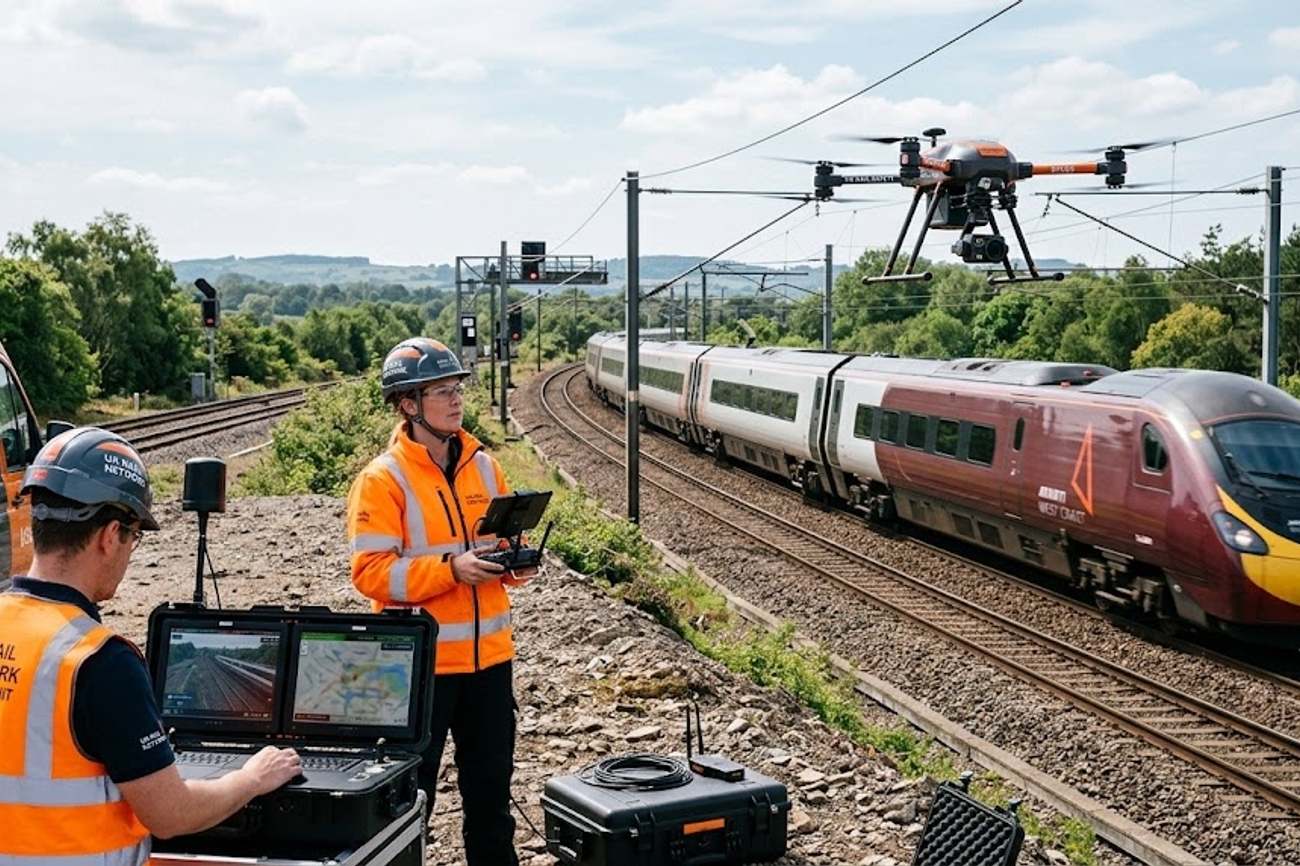
Image generated by AI
19,300 trespass incidents recorded across the UK rail network during 2023/2024 underscore the immense logistical challenge of securing a transport system that spans over 20,000 miles. To combat these vulnerabilities, the British Transport Police (BTP) and BT Business have deployed a Beyond Visual Line of Sight (BVLOS) drone network, fundamentally altering how the state monitors and responds to railway emergencies. By decoupling the drone operator from the aircraft, the BTP can now project aerial surveillance across vast distances without needing a pilot physically present at the site of an incident.
The Shift to Remote Aerial Intelligence
The traditional model of railway policing relies on "boots on the ground," where officers must travel to a reported incident to assess the situation. In a network as expansive as the UK's, this creates a critical intelligence gap between the first report of a trespass or welfare issue and the moment an officer arrives on the scene. This lag often leads to preemptive service suspensions, where trains are halted out of caution, causing cascading delays for thousands of passengers.
The new BVLOS framework eliminates this gap. By utilizing "drone-in-a-box" technology, the BTP has automated the deployment process. These units act as localized hubs that house, charge, and launch drones without human intervention. Once airborne, these aircraft are not controlled by a local pilot but are managed remotely from the BTP operations center located at London Bridge. This centralized command structure allows for a rapid transition from an emergency call to a live, ultra-high-definition video feed of the incident site.
The operational backbone of this system is provided by BT Business through a specialized Drone SIM solution. This ensures that the command-and-control links remain stable via the EE mobile network, allowing for the transmission of high-bandwidth data over distances that would be impossible for standard radio-controlled drones. This integration of telecommunications and aviation is a prerequisite for scaling drone operations across national infrastructure.
Deployment Scale and Technical Specifications
The rollout is currently in its initial phase, focusing on strategic nodes of the rail network to maximize coverage. The transition from manual flight to automated, remote-controlled missions represents a significant regulatory leap, as BVLOS operations require stringent safety certifications to ensure aircraft do not interfere with other airspace or rail operations.
| Deployment Metric | Current Status | Planned Expansion (2-Year Target) |
|---|---|---|
| Drone-in-a-Box Stations | 7 Locations | 14 Locations |
| Command Center | London Bridge (BTP) | London Bridge (BTP) |
| Network Reach | UK Rail Network | Expanded UK Rail Network |
| Primary Connectivity | BT Drone SIM / EE Network | BT Drone SIM / EE Network |
| Target Infrastructure | 20,000+ Miles of Track | 20,000+ Miles of Track |
The technical synergy here is between the hardware (the drones and their automated docks) and the connectivity layer. For the BTP, the value is not in the drone itself, but in the "situational awareness" it provides. When a trespasser is reported in a remote section of the track, the drone can arrive minutes before the first responder, allowing the operations center to determine if the situation requires a full network shutdown or if a more surgical response is possible.
Expert Analysis: The Economic and Logistical Ripple Effect
For the frequent traveler or the digital nomad relying on UK rail, the implementation of BVLOS drones is less about "police surveillance" and more about "uptime optimization." In the aviation and rail industries, the cost of a "dark" period—where the cause of a delay is unknown—is exponentially higher than the cost of a known disruption. When a train is stopped and the reason is "unconfirmed report of a person on the tracks," the operator must assume the worst-case scenario, leading to total line closures.
The direct consequence of this technology is the reduction of "precautionary delays." By providing real-time visual verification, the BTP can confirm the exact nature of an incident—whether it is a genuine welfare crisis, a false alarm, or a minor trespass—within minutes. This allows the Office of Rail and Road (ORR) and other regulatory bodies to see a shift toward data-driven safety management.
Furthermore, this deployment signals a market consolidation of "Infrastructure-as-a-Service." The partnership between a government police force and a telecommunications giant like BT indicates that the future of transport safety will be built on integrated connectivity. For other global rail networks, this serves as a blueprint: the goal is to move the "eyes" of the operator to the scene of the incident instantly, regardless of where the "brain" (the controller) is located. The pricing pressure this creates for traditional security firms is significant, as automated aerial response is more cost-effective than maintaining high-density physical patrols across 20,000 miles of steel.
Key Takeaways
- Rapid Assessment: The BTP can now deploy drones from 7 automated stations (expanding to 14) to provide live UHD video of incidents before officers arrive.
- Connectivity Backbone: The system relies on BT Drone SIMs and the EE mobile network to maintain secure, long-distance command and control.
- Operational Efficiency: The primary goal is to reduce passenger disruption by replacing "precautionary" shutdowns with informed, data-backed decisions.
- Scale of Challenge: The technology addresses a network of over 20,000 miles of track, which saw 19,300 trespass incidents in the 2023/2024 period.
- Centralized Control: All missions are managed from a single operations hub at London Bridge, removing the need for on-site pilots.
FAQ: UK Rail Drone Safety 2024
Will these drones be used to monitor passengers? The primary objective of the BVLOS program is incident response, such as managing trespassers, welfare checks, and network disruptions. The focus is on operational safety and emergency response rather than routine passenger surveillance.
How does this reduce my travel delays? Drones provide immediate visual confirmation of an incident. This prevents the rail operator from shutting down entire lines based on unconfirmed reports, allowing them to keep trains moving if the incident is localized or a false alarm.
Is it safe to have drones flying over active train lines? Yes. These drones operate under strict BVLOS regulations and use secure communication links via the EE network to ensure they remain under constant control and do not interfere with rail operations.
Where are the drone stations located? The BTP has currently installed 7 "drone-in-a-box" stations at strategic points across the UK network, with plans to double that number to 14 within the next two years.
The transition from physical patrols to automated aerial intelligence marks the end of the 'blind response' era for the British railway.
Tags: British Transport Police, BT Business, BVLOS Drones, UK Rail Network, London Bridge Operations Centre, EE Mobile Network
Related Travel Guides
Disclaimer
This article is for informational and educational purposes only. It does not constitute legal, financial, or professional advice. While we strive to provide accurate and up-to-date information, travel policies, regulations, and conditions change rapidly. Always verify information with official sources before making travel decisions. Nomad Lawyer makes no representations about the accuracy, reliability, completeness, or suitability of the information provided. Readers should consult qualified professionals for advice specific to their circumstances. The views expressed in this article are those of the author and do not necessarily reflect the views of Nomad Lawyer.
Naina Thakur
Contributor & Travel Specialist
Travel enthusiast and legal writer covering visa regulations, responsible tourism, and cultural journeys across global destinations.
Learn more about our team →